

Today I’d like to address a topic that isn’t only close to our hearts, but also fundamental to every aspect of our lives: emotional expression and recognition. It’s the invisible thread that connects us to ourselves and to each other and plays a crucial role in our personal growth and the depth of our relationships.
Think about it. How many times have you felt a surge of joy, a wave of sadness, or a storm of anger and struggled to put it into words? Or perhaps you’ve been on the other side, witnessing a loved one’s emotional turmoil, unsure of how to respond. It’s a universal experience, and yet, navigating the complex world of emotions can be like trying to solve a puzzle without all the pieces.
This brings us to the heart of our journey together: How can we effectively express and recognize emotions? It’s a question that holds the key to deeper connections, improved mental well-being, and a more empathetic world. Whether it’s in a boardroom, a living room, or inside our own minds, mastering this art can transform our interactions and our lives.
So, whether you’re looking to strengthen your relationships, enhance your communication skills, or just get a little better at understanding what’s going on inside you, you’re in the right place.
Let’s embark on this journey of emotional discovery together, unlocking the power of our feelings, one word, one gesture, one moment at a time. Welcome aboard!
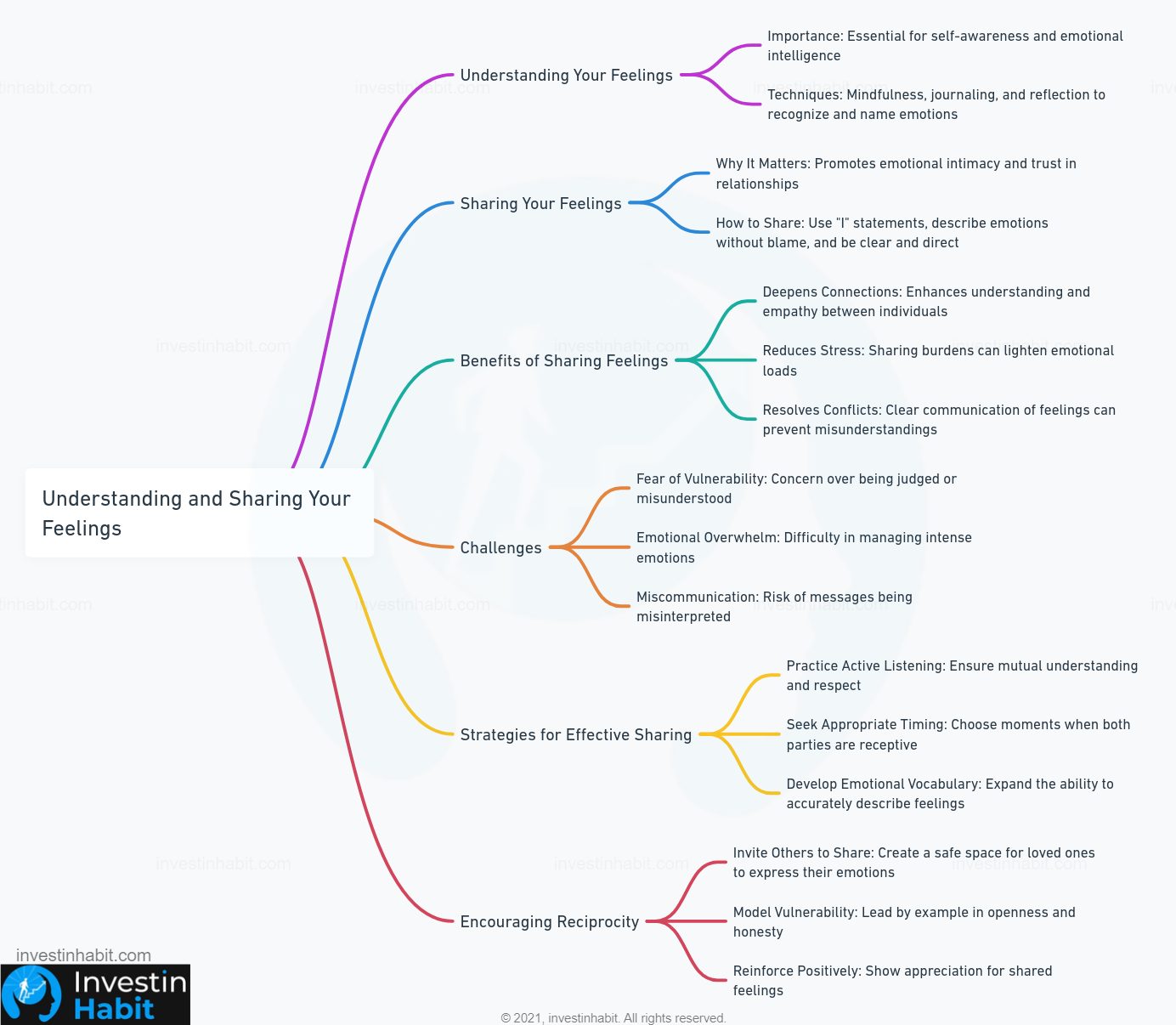
Inside this Article
Understanding Your Own Emotions
Welcome to the first stop on our journey: Understanding Your Own Emotions. It’s like becoming a detective in your own emotional world. Ready to dive in? Great, let’s go!

1. Self-Reflection Techniques: Your Personal Emotion Map
Ever felt like your emotions are a tangled web? You’re not alone. The first step in untangling this web is self-reflection. It’s all about pausing and asking yourself, “How am I really feeling?” Think of it as having a heart-to-heart with yourself. I often like to keep a feelings journal. It’s a safe space where you can express yourself freely.
You’ll be surprised at how much you can learn about yourself just by writing down your thoughts and emotions!
2. Emotional Vocabulary Expansion: Finding the Right Words
Have you ever struggled to find the right words for how you’re feeling? It happens to the best of us. But here’s a cool tool to help – the world’s longest list of feeling words (check it out here).
It’s like having a thesaurus for your emotions. Next time you’re feeling something you can’t quite pinpoint, take a look at this list.
It can be a game-changer in understanding and expressing your emotions more accurately. Trust me, it’s like adding new colors to your emotional palette!
3. Mindfulness Practices: Tuning Into Your Emotional Frequency
Mindfulness – you’ve probably heard the term thrown around a lot. But what does it really mean in terms of understanding your emotions? It’s about being present in the moment and tuning into your feelings without judgment. Simple practices like deep breathing or meditating for a few minutes each day can really help. It’s like turning down the volume of the world to listen to your inner self. I like to think of it as giving my emotions a cozy space to make themselves heard.
Remember, understanding your own emotions is a journey, not a destination. Be patient with yourself.
It’s okay if it feels a bit awkward or difficult at first. With practice, you’ll become a pro at navigating your emotional landscape.
Stay tuned for the next part of our journey, where we’ll dive into the art of expressing these emotions effectively.

Transform Your Life with InvestInHabit

Ready for real change? Join us and get over:
- 200+ Personal Development Worksheets,
- 100+ Blog Post MindMaps
for FREE! 😍 + Our newsletter offers the latest in habit formation and self-improvement, straight to your inbox.
Subscribe now and Start redefining your mindset today! Join our community committed to success!
Expressing Emotions Effectively
Now that we’re getting better at understanding our emotions, let’s talk about how to express them in a way that’s honest, clear, and, most importantly, effective. Are you ready? Let’s jump right in!

1. Honesty and Vulnerability: The Courage to Be You
Opening up about our emotions can be scary, right? But here’s the thing – being honest and vulnerable about how we feel is incredibly brave. It’s like taking off a heavy armor and saying, “Hey, this is the real me.” Next time you’re feeling something deeply, try sharing it with someone you trust. Start with something small, like, “I’m feeling a bit overwhelmed today.”
Remember, it’s not about being perfect; it’s about being real. And you know what? The more you practice, the easier it gets.
2. Communication Skills: Speak Your Emotional Truth
Now, let’s talk about how to put our feelings into words. It’s kind of like painting a picture that others can understand. The key is to be clear and assertive, yet sensitive. For example, instead of saying, “You make me angry,” try, “I feel upset when this happens.” See the difference?
It’s about owning your feelings and expressing them in a way that’s not confrontational. And listen, it’s totally okay to take a moment to gather your thoughts before you speak. It’s better to take your time than to say something you might regret.
3. Managing Negative Emotions: Constructive Expression
We all deal with tough emotions like anger or sadness. The trick is to express them in a way that’s constructive, not destructive.
For instance, if you’re angry, it might be tempting to lash out, but that often just makes things worse. Instead, try saying, “I need to cool off for a moment,” and step away. Or if you’re sad, let yourself cry if you need to. It’s not a sign of weakness; it’s a sign of being human. And remember, it’s always okay to seek help if you’re struggling to manage your emotions. Sometimes, talking to a friend, a family member, or a professional can make a world of difference.
And there you have it! Expressing our emotions effectively is all about being true to ourselves and respectful to others. It’s a skill, and like any skill, it takes practice. But I believe in you, and I know you’ve got this.
Recognizing Others’ Emotions
Now that we’re getting the hang of understanding and expressing our own emotions, let’s turn our attention to others. Recognizing what someone else is feeling is like decoding a secret language, and it’s a superpower in any relationship. Ready to become an emotion detective? Let’s do this!

1. Empathy Development: Walking in Someone Else’s Shoes
Empathy is all about feeling with someone, not just feeling for them. It’s like putting on their shoes and walking a mile or two. Here’s a little trick I use: try to imagine how you would feel in their situation. Ask yourself, “If I were them, what would I need right now?”
Sometimes, just acknowledging someone’s feelings can make a huge difference. A simple “That sounds really tough” can be so comforting. And remember, empathy is a muscle – the more you use it, the stronger it gets.
2. Non-Verbal Cues: The Silent Language of Emotions
Words tell us a lot, but body language and facial expressions often tell us even more. Have you noticed how someone’s eyes can light up with joy or how their shoulders slump when they’re sad? Paying attention to these non-verbal cues can give us insights into what someone might be feeling, even if they’re not saying it out loud.
Next time you’re chatting with someone, take a moment to really observe them. You might pick up on things you’ve never noticed before!
3. Active Listening: The Art of Truly Hearing
Now, let’s talk about active listening. It’s like turning up the volume on your empathy speaker. It’s not just about hearing the words; it’s about understanding the emotions behind them.
When you’re listening to someone, try to really focus on what they’re saying. Nod your head, make eye contact, and maybe even repeat back a bit of what they said, like “So, you’re feeling overwhelmed because of the workload?” It shows you’re really with them, in that moment. Trust me, being a good listener can make you a superhero in someone’s eyes.
Also, check out this article about reflective listening which is even deeper than active listening.
And there we go!
Recognizing others’ emotions is all about empathy, attention to detail, and active engagement. It might seem like a lot, but with a little practice, you’ll be amazed at how much deeper and more meaningful your connections with others can become. Stick with me, and in our next section, we’ll explore how to navigate emotional conversations with grace and understanding.
Navigating Emotional Conversations
Now let’s get ready for some more difficult terrain – having emotional conversations. You know, those conversations that can get a little intense or awkward? We all deal with them, and they’re not always easy. But don’t worry, I’ve got a few tips for you to help you have these conversations like a pro. Let’s dive in!

1. Difficult Conversations: Stepping into the Arena with Grace
Handling emotionally charged conversations can feel like walking a tightrope, right? The key here is balance – balancing honesty with sensitivity. When you’re in such a conversation, remember to keep your cool. Take deep breaths, and don’t let your emotions hijack the conversation.
I find it helpful to remind myself that it’s not about winning; it’s about understanding. And hey, it’s totally okay to say, “I need a moment to think,” if things get too heated. Grace under pressure – that’s our mantra here!
2. Conflict Resolution: The Dance of Emotional Intelligence
Conflicts are a natural part of any relationship, but resolving them doesn’t have to be a battleground. It’s more like a dance, where emotional intelligence leads the way.
Start by acknowledging the other person’s feelings – a simple “I see where you’re coming from” can work wonders. Then, share your side without blame. Phrases like “I feel…” instead of “You make me feel…” keep the doors of communication open. And remember, sometimes finding a middle ground is more valuable than being right.
Fair Fighting Rules for Couples: Resolve Conflict and Fight Fair
3. Supporting Others: Being a Pillar of Emotional Strength
Sometimes, the best thing we can do in a conversation is to offer support and validation. When someone opens up to you about their emotions, it’s like they’re handing you a delicate piece of their heart. Hold it gently. Show them you’re there for them, with a listening ear and an open heart. Simple words of encouragement, like “I’m here for you,” or “Your feelings are valid,” can be incredibly powerful. It’s about being present, both physically and emotionally, for someone who needs you.
And that’s how we navigate the sometimes stormy waters of emotional conversations! Remember, it’s a learning process, and it’s okay to not get it right every time. What matters is that you’re trying, and that’s something to be proud of. Next up, we’ll tackle the last section of our journey, where we’ll discuss overcoming challenges and barriers in emotional expression.
Overcoming Challenges and Barriers
We’ve come a long way together, haven’t we? Now, let’s talk about some of the trickier parts of our emotional journey: overcoming challenges and barriers. These can be tough, but hey, you’ve already shown how resilient and committed you are. So, let’s tackle these hurdles together with the same courage and heart. Ready?
Let’s get to it!

1. Cultural and Social Considerations: Navigating the Emotional Landscape
Our culture and society play a big role in how we express our emotions, don’t they?
Sometimes, it feels like there are unwritten rules about what’s okay to feel and what’s not. It’s like walking through a maze with invisible walls. But here’s the thing: it’s okay to challenge these norms. It’s okay to say, “This is how I feel, and my feelings are valid.”
Remember, your emotional truth is yours, and it deserves to be heard, regardless of cultural or social expectations. Let’s break those invisible barriers together!
2. Personal Barriers: Facing Your Emotional Fears
We all have our own personal dragons to slay when it comes to expressing emotions. Maybe you’re afraid of being vulnerable, or perhaps you’re worried about how others will react. I get it; I’ve been there too. The first step is recognizing these fears.
Take a moment to reflect on what holds you back. Is it a past experience? A deep-seated belief? Understanding your barriers is the first step to overcoming them. And trust me, each time you face these fears, they become a little less scary.
3. Seeking Help: It’s Okay to Reach Out
Sometimes, the bravest thing you can do is to admit you need help. If you’re struggling with emotional difficulties, reaching out to a professional can be a game-changer. It’s not a sign of weakness; it’s a sign of strength. Whether it’s a therapist, a counselor, or another mental health professional, these experts can provide guidance, support, and tools to help you navigate your emotional world.
Remember, asking for help is just another step in your journey of emotional growth.
Conclusion: Embracing the Journey of Emotional Mastery
We’ve reached the end of our journey together, and what an incredible journey it’s been. From understanding our own emotions to expressing them, from recognizing what others feel to navigating complex emotional conversations, and finally, overcoming the challenges and barriers – we’ve covered a lot of ground!
Let’s take a moment to look back on what we’ve discovered. Emotional expression and recognition aren’t just skills; they’re essential parts of being human. They deepen our connections, enrich our experiences, and yes, sometimes they challenge us. But most importantly, they help us understand ourselves and others on a level that’s profound and meaningful.
Now, I encourage you – actually, I challenge you – to take these skills and weave them into the fabric of your daily life. Start small if you need to. Share a feeling with a friend, recognize an emotion in a colleague, or simply take a moment to reflect on your own feelings. The more you practice, the more natural it becomes.
Remember, this isn’t about perfection; it’s about progress.
There will be days when you feel like you’ve got it all figured out, and days when it feels like you’re starting from scratch. That’s okay – it’s all part of the journey. Each step, each challenge, each triumph is a part of your growth.
So, keep exploring, keep feeling, and keep growing. Your emotional mastery is a gift – to yourself, to your loved ones, and to the world. And hey, if you ever feel lost, just remember that you’re not alone on this journey. We’re all in this together, learning and growing.
Transform Your Habits, Transform Your Life
Are you ready to turn the page to a new chapter in your life?
Stop dreaming, start achieving. Our exclusive newsletter delivers:
- Science-backed hacks: Master the psychology of habit formation used by CEOs and Olympians.
- Actionable strategies: No fluff, just practical steps to crush procrastination and dominate your goals.
- + a FREE surprise bonus 🎁 to jumpstart your transformation!
Don’t settle for mediocre. Subscribe now!