

Welcome to the intriguing world of Spiral Dynamics, a psychological model that maps out the evolution of human consciousness and values. This framework, which emerged from the work of Dr. Don Beck and Dr. Clare Graves, offers a kaleidoscopic lens through which we can understand the complex tapestry of human thought, culture, and societal development.
At its core, Spiral Dynamics identifies distinct stages or “vMEMEs” – systems of values that govern individual and collective behavior. Each stage represents a unique worldview, driving how people think, act, and interact with their environment and each other.
In this exploration, we turn our focus to one of the most advanced stages in this model: the Yellow stage. Emergent in the latter part of the 20th century, the Yellow stage represents a paradigm shift in consciousness, one that transcends the limitations of previous stages.
This stage is characterized by a systemic, integrative, and flexible way of thinking, unbound by rigid ideologies and dogmas that often constrain earlier stages. Individuals and societies operating from the Yellow stage exhibit a deep understanding of complexity, interdependence, and a capacity for adaptive, holistic problem-solving.
The journey into the Yellow stage of Spiral Dynamics is not just a theoretical exploration. It represents a significant shift in personal and collective consciousness, with profound implications for how we understand our place in the world, how we relate to others, and how we tackle the complex challenges of our time. As we delve into the nuances of the Yellow stage, we invite you to reflect on its relevance and application in your personal journey and the wider societal context. This stage isn’t just a step in human evolution; it’s a gateway to a more fluid, interconnected, and compassionate understanding of our world and ourselves.

Transform Your Life with InvestInHabit

Ready for real change? Join us and get over:
- 200+ Personal Development Worksheets,
- 100+ Blog Post MindMaps
for FREE! 😍 + Our newsletter offers the latest in habit formation and self-improvement, straight to your inbox.
Subscribe now and Start redefining your mindset today! Join our community committed to success!
Inside this Article
A Brief Stroll Through Spiral Dynamics
Now, let’s take a moment to stroll through the history and development of Spiral Dynamics. Imagine we’re walking together through a gallery of human evolution and consciousness, with each stage of Spiral Dynamics framed like a unique piece of art, each telling a story of our collective journey.
The theory of Spiral Dynamics was born out of the work of Dr. Clare W. Graves, a psychology professor who sought to understand human nature in a comprehensive way. His work was later expanded and popularized by Don Beck and Chris Cowan, who envisioned these stages of human development not just as steps, but as a dynamic, evolving spiral. Think of it as a dance of colors, each color representing a stage of human consciousness and values.
As we walk past the early stages, from Beige to Green, we see the tapestry of our growth. Remember Beige? That’s where it all started – basic survival, the dawn of human consciousness. Here, life was about fulfilling fundamental needs, like food and safety.

Moving on, we encounter Purple, where the magic happens – literally! This stage is all about mystical bonds, traditions, and tribal loyalty. It’s like stepping into a world where rituals and ancestors play a crucial role.
Then, there’s Red, the power stage. It’s bold and assertive, think of a warrior spirit, driven by impulse, power, and conquest. This is where the individual emerges from the tribe, standing out to make a mark.
Following Red, we see Blue, the stage of order and stability. Here, life is about structure, purpose, and meaning, governed by rules and regulations. It’s like a blueprint for living within a community, where each has a role and a sense of duty.
Next up, Orange. It’s vibrant and screams progress and achievement. This stage is all about striving for success, innovation, and exploring the physical world. It’s where science and reason take the front seat.
Lastly, before we reach Yellow, there’s Green. Ah, Green – the caring stage, emphasizing love, harmony, and community. It’s about connecting with others and valuing shared experiences and feelings.
Each of these stages is a chapter in our story, leading us to where we are now. But remember, no stage is ‘better’ than the other. Each is a necessary step in our complex journey of growth.
So, here we are, at the threshold of Yellow, a stage that stands on the shoulders of all that came before. It’s where we begin to see not just with our eyes, but with our minds and hearts, understanding the interconnected tapestry of life.
As we explore Stage Yellow, remember that it’s not about leaving the other stages behind. It’s about integrating them, learning from each, and moving forward in a more holistic, inclusive way.
Transition: From Green to Yellow
The transition from the Green to the Yellow stage is a significant evolution in Spiral Dynamics, marking a shift from group-centric to integrative thinking. While the Green stage focuses on equality, community, and shared values, it can sometimes become trapped in groupthink or ideological rigidity. In contrast, Yellow thinking transcends this, recognizing the value of multiple perspectives and the limitations of any single ideology.
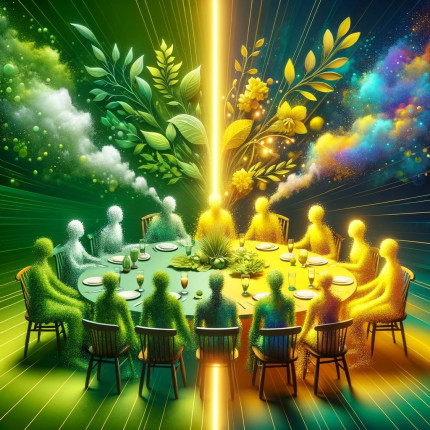
Imagine you’re at a family dinner, where everyone agrees on most things, from politics to pizza toppings. That’s a bit like the Green stage – it’s all about harmony, community, and shared values. But then, you start to notice that not every problem can be solved by group consensus. Maybe your cousin loves pineapple on pizza, and you’re thinking, “Well, that’s different, but maybe there’s something to it.” That’s the beginning of Yellow thinking.
As individuals move from Green to Yellow, they begin to see the limitations of consensus-based decision-making and the need for more nuanced, individualistic approaches to complex problems. They start to appreciate that harmony and agreement are not always possible or desirable, especially in complex and diverse societies. This shift leads to a greater emphasis on personal responsibility, autonomy, and the development of internal moral compasses that is not solely reliant on group norms.
So, as you start embracing Yellow, you begin to realize that it’s okay to disagree, and that harmony isn’t always the answer. It’s like suddenly seeing the world in full color after only seeing shades of green. You start appreciating that each person brings their unique shade to the picture. You become more about personal responsibility and less about just going with the group flow. It’s like being the director of your own movie rather than just a character in someone else’s script.
In summary, the essence of the Yellow stage is a profound cognitive leap, where individuals and societies begin to operate with an awareness of the intricate tapestry of life, embracing its complexity with a flexible and open mind. This stage represents a significant departure from the more simplistic, absolutist thinking of earlier stages, ushering in a new era of integrative and adaptive consciousness.
The Essence of Yellow
Core Values: Systemic Thinking, Flexibility, and Emergence
At the heart of the Yellow stage in Spiral Dynamics are three fundamental values: systemic thinking, flexibility, and emergence.
Systemic thinking refers to the ability to see and understand the interconnectedness and complexity of systems, be they social, ecological, or conceptual. It involves recognizing patterns, relationships, and dynamics that are not immediately apparent, going beyond linear cause-and-effect reasoning.
Imagine looking at a complex machine and seeing not just gears and cogs, but a symphony of movement, each part connected to and affecting the others. That’s how Yellow views the world. It understands that everything is interconnected – society, environment, economics, you name it. It’s like having a bird’s eye view of a vast, interconnected network, seeing how pulling one thread affects the whole tapestry.
Flexibility in the Yellow stage is reflected in the adaptability of thoughts and actions. Unlike previous stages where beliefs and behaviors might be more rigid and dogmatic, Yellow thinking is fluid and open to change. This flexibility allows for a greater tolerance of ambiguity and uncertainty, and a willingness to revise opinions in the face of new evidence or perspectives.
They are adept at taking multiple perspectives on reality, akin to looking through a camera with multiple lenses, and are extremely open-minded. This trait can be likened to a scientist who explores various theories and methods without being limited by traditional boundaries.
Emergence, the third pillar, signifies a profound understanding that in complex systems, the whole manifests properties and behaviors which transcend the sum of its individual parts. This phenomenon indicates that these overarching characteristics cannot be deduced solely by examining each component in isolation.
In other words, the system as a whole can exhibit qualities that cannot be predicted just by analyzing its individual components.
- For example, think about a flock of birds moving in unison. The way the flock moves and changes direction seems to have a life of its own, a pattern or behavior that you couldn’t predict by studying one bird alone. The coordinated movement of the flock is an emergent property arising from the interaction of each bird with its neighbors.
This value underscores a respect for spontaneity and organic development, an appreciation for the novel and unexpected outcomes that arise when diverse elements interact.
Life Philosophy: Embracing Complexity and Interdependence
The life philosophy at the Yellow stage is marked by an embrace of complexity and interdependence. Yellow recognizes that simple, one-dimensional answers are inadequate for complex problems. It embraces complexity, looking for solutions that address the multifaceted nature of challenges.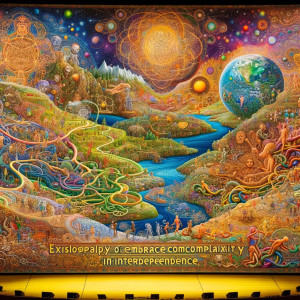
This stage moves beyond the simplicity of black-and-white thinking, embracing a world where multiple truths can coexist. This philosophy acknowledges that life’s complexities cannot be easily compartmentalized or solved through simplistic solutions. Instead, Yellow thinking embraces the messiness and unpredictability of life, seeking to understand and work within these complexities rather than simplifying or avoiding them.
Interdependence in the Yellow worldview recognizes that all aspects of life are connected. This holistic perspective appreciates that actions taken in one area can have far-reaching consequences in others, often in ways that are not immediately obvious. This leads to a more conscientious and responsible approach to decision-making, one that considers the broader impact on the whole system.
Crafting Holistic Solutions for Every Stage of the Spiral
Imagine you’re looking at a complex, multi-layered jigsaw puzzle. Each piece represents a different stage in Spiral Dynamics, from the survival-focused Beige to the community-oriented Green. Now, in the Yellow stage, you’re not just focused on one piece or even a few pieces. You’re looking at how all these pieces fit together to complete the entire puzzle. That’s what designing solutions for the whole Spiral is all about.
Yellow thinkers have this unique ability to understand and appreciate the values, needs, and challenges of each stage in the Spiral. It’s like being a skilled diplomat who can speak the language of all countries. They recognize that solutions can’t be one-size-fits-all because what works for one stage may not work for another.
So, when Yellow thinkers design solutions, they’re not just solving problems for a single group or perspective. They’re thinking about how their solutions will impact everyone, from individuals still struggling with basic survival needs to those seeking higher purpose and community.

This approach is incredibly inclusive and empathetic. It’s about acknowledging the diversity of human experience and striving to create systems, policies, and innovations that support growth and development at every level. It’s like a teacher who can tailor their lessons to meet the needs of every student in the class, ensuring that no one is left behind.
In essence, designing solutions for the whole Spiral is a commitment to understanding and addressing the complexities of human society. It’s a holistic, empathetic, and strategic approach to problem-solving that seeks to elevate humanity as a whole, not just parts of it. And that’s a pretty amazing and noble endeavor, if you ask me!

Characteristics of the Yellow Stage
Overview of Key Traits
The Yellow stage of Spiral Dynamics is marked by several distinctive characteristics that set it apart from earlier stages. These include:
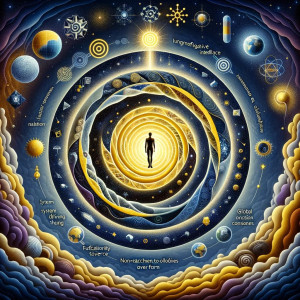
- Integrative Intelligence: This is the capability to integrate diverse and often contradictory pieces of information into a coherent whole. People at the Yellow stage can hold multiple perspectives simultaneously and synthesize them into more comprehensive understandings. This trait allows for more nuanced and inclusive problem-solving approaches.
- Systemic Thinking: Yellow perceives systems not just as mechanical processes but as dynamic, living entities with their own emergent properties. This understanding fosters a more empathetic and effective approach to problem-solving.
- Non-Attachment to Ideologies: Unlike previous stages where specific ideologies or belief systems might be rigidly adhered to, Yellow thinking is characterized by a non-dogmatic approach. Individuals at this stage are open to ideas from various sources and are not bound by a single paradigm. Yellow recognizes that in a complex world, rigid adherence to any single set of values or beliefs is insufficient. This fluidity in thought allows for greater adaptability and responsiveness to changing circumstances.

- Focus on Functionality Over Form: At the Yellow stage, there’s a pragmatic approach to life and its challenges. The emphasis is on what works effectively, rather than on what conforms to pre-existing norms or aesthetics. This practical mindset often leads to innovative solutions that may defy conventional methods or appearances.
- Holistic Perspective: Unlike previous stages, Yellow doesn’t reject the values of earlier stages but rather integrates them into a more comprehensive understanding of human experience. This leads to solutions that are more nuanced, adaptable, and sustainable.
- Global Consciousness: There’s an expansion from focusing on personal or group concerns to considering global impacts and implications. Decisions are made with an awareness of how they affect the broader system, including future generations.
Let’s go a little deeper.
Systemic and integrative thinking
Let’s talk about how folks in the Yellow stage of Spiral Dynamics think – it’s like they’ve got this superpower of seeing the world as this big, interconnected puzzle. Picture yourself as an urban planner, but not just any planner. You’re the kind who looks at a city and sees more than just buildings and roads; you see a living, breathing organism.
Imagine you’re walking through a bustling city. Now, if you’re in the Yellow mindset, you’re not just seeing streets and skyscrapers. You’re thinking about how the parks affect people’s moods, how the traffic flow impacts daily life, and how each neighborhood tells its own unique story. You’re considering how all these elements – from the air quality to the community centers – fit together like pieces in a giant jigsaw puzzle.
And here’s the really cool part – as someone embracing Yellow thinking, you don’t just see the problems; you see opportunities for creative solutions. You’re not stuck in the old ways of doing things. Instead, you’re designing systems that are open, fluid, and adaptable. This means creating structures and processes that can easily evolve and adjust in response to new information, changing environments, and diverse perspectives.
It’s like being a chef in a kitchen full of diverse ingredients, where you’re constantly experimenting with new recipes that bring out the best in each component, always ready to tweak the recipe based on feedback and new ideas.
So, when you’re thinking in Yellow, you’re not just looking at life’s surface. You’re diving deep into the layers, understanding how everything is connected in this intricate dance of systems and flows. It’s like having a 3D map of the world in your head, where you can zoom in and out, exploring the tiny details and the big picture all at once.
Yellow stage in spiral dynamics is like a light shining through the fog – the recognition that behind many human problems lie deeper systemic issues. This stage brings an awareness that’s both enlightening and essential for addressing the challenges we face today.
Let’s unpack this a bit:
- Seeing Beyond the Surface: Imagine looking at a complex machinery and understanding that the real issue isn’t just one faulty part, but the way the whole system operates. That’s how Yellow thinkers approach human problems. They see beyond surface-level symptoms to the systemic roots beneath. It’s like being a detective who doesn’t just solve the crime but also understands the societal factors that contribute to it.
- Interconnectedness of Problems: In Yellow, there’s a keen awareness that problems are interconnected, much like a web. A social issue in one area can be linked to an environmental problem in another. This stage appreciates that in our global village, everything is related – economic policies, cultural beliefs, environmental practices, and so forth.
- Addressing Root Causes: Armed with this systemic understanding, Yellow thinkers aim to address the root causes of issues rather than just applying temporary fixes. It’s like a doctor who treats the underlying illness, not just the symptoms. This approach leads to more sustainable and long-term solutions.
- Holistic Problem-Solving: Yellow’s approach to problem-solving is holistic. They look at the entire ecosystem and consider how changes in one area will impact the whole. This could mean devising strategies that account for economic, social, and environmental factors simultaneously.
- Evolving Solutions for Complex Issues: Finally, Yellow thinkers recognize that as our world evolves, so must our solutions. They’re not stuck in old ways of thinking; they adapt and evolve, understanding that what worked yesterday might not work tomorrow. They’re like navigators who continually adjust their course based on the shifting winds and tides of societal change.
Multiperspectival and open-minded thinker
Let’s dive into the mind of a Multiperspectival Thinker. You know, it’s a bit like being a world-class photographer, but instead of snapping photos, you’re capturing ideas from every possible angle.
Picture this: you’re faced with a tricky problem, something that’s really got you scratching your head. Now, if you’re thinking like a Yellow, you don’t just look at it from your usual point of view. Nope, you switch lenses, just like a photographer swapping out a wide-angle for a macro lens to get a different perspective.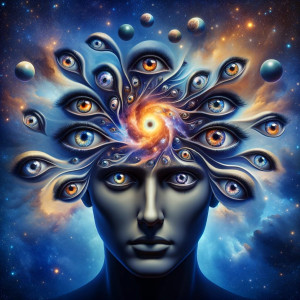
Imagine you’re trying to understand a complex issue – say, climate change. A Multiperspectival Thinker doesn’t just stick to one discipline. Oh no, they’re like a bee buzzing from flower to flower. They’ll dive into science, economics, politics, even art, to get a full picture. It’s like they have this superpower to zoom in on the details and then zoom out to see the whole landscape, all at once.
And the best part? They know that every perspective, no matter how odd it might seem at first, has something valuable to offer. It’s like they’re at a grand buffet of ideas, and they want to taste a little bit of everything. They understand that even the most unconventional viewpoints can shed light on a problem, just like how a photographer discovers beauty in the most unexpected places.
So, when you think like a Multiperspectival Thinker, you’re not just looking for the ‘right’ answer. You’re putting together a a big puzzle. Each idea or viewpoint you consider is like a puzzle piece. As you fit these pieces together, you start to see the whole picture. Each piece is important because it helps you understand the problem better.
So, you’re not just gathering different opinions; you’re combining them to get a clearer, more complete understanding of the situation. It’s like making the whole picture clearer, one piece at a time.
It’s a thrilling, eye-opening way to explore the world, full of surprises and ‘aha!’ moments.
In essence, being a Multiperspectival Thinker is all about embracing the richness and diversity of life’s perspectives.
Visionary and Focused
Let’s chat about how folks at the Yellow stage of Spiral Dynamics are like visionary geniuses, and how they’re different from the go-getters at the Orange stage.
You know how in movies, there’s always that one character who has these wild, out-of-the-box ideas? That’s kind of like our friends in Yellow. They’re the ones dreaming up ideas that can change the world. They’ve got this amazing ability to see beyond today, thinking about tomorrow, next year, even the next century. It’s not just about making a quick buck or winning the race; it’s about making a lasting impact.
Now, let’s contrast this with the Orange stage. Imagine Orange as the ultra-successful business person, always looking for the next big breakthrough, the next innovation that’s going to skyrocket their company to the top. They’re super smart and incredibly driven, but their focus is often on tangible, material success. It’s about what can be measured, counted, and sold.
But our Yellow visionaries? They’re playing a different game. They’re thinking about things like consciousness, spirituality, and the human experience. They’re the ones asking, “Okay, but how does this help us grow as people? How does this make the world a better place?” They see the big picture, understanding that there’s more to life than just profits and progress.
And the best part? Yellows are all about breaking free from the limitations of traditional thinking. They know that just because something’s always been done a certain way doesn’t mean it’s the only way. They’re not afraid to question the status quo and think outside the box – or hey, maybe even get rid of the box altogether!
So, while our Orange friends are focusing on winning the race, our Yellow thinkers are more interested in making sure the race is worth running in the first place. They’re the ones with their eyes on the horizon, dreaming up ideas that might just change the world. And let’s be honest, isn’t that kind of exciting?
Recognizing Limitations
You see, they’ve got this incredible ability to think big, to analyze, and to see the world in ways most of us can’t even imagine. But here’s the thing: they also know they’re not perfect. That’s right, they’re aware of their own limitations, and that’s a super important part of their journey.
Picture this: You’ve got someone who’s brilliant at figuring stuff out, who loves to get lost in thought, exploring all these complex ideas and theories. That’s a typical Yellow thinker for you. They’re like the Sherlock Holmes of life’s mysteries, always deducing, always reasoning. But even Sherlock needs a Watson, right?
Yellow thinkers sometimes get so caught up in their thoughts that they might miss what’s happening right in front of them. You know, the human stuff – like connecting with people, building friendships, being part of a community. It’s easy to overlook the simple joys of a good chat with a friend when your head’s always in the clouds, thinking about the next big thing.
But here’s where Yellow thinkers really shine: they know this about themselves. They understand that being super analytical can sometimes mean they’re not the best at building relationships or fostering a sense of community. And recognizing this is half the battle won!
Pursuit of learning for its own sake

Valuing knowledge and competency over rank, power, and status
One of the defining characteristics of the Yellow stage in Spiral Dynamics is indeed valuing knowledge and competency over traditional markers of success such as rank, power, and status. This mindset is a significant shift from some of the earlier stages, like Orange, which often values achievements, status, and the power that comes with them, or Blue, which emphasizes order, hierarchy, and adherence to rules.
Imagine walking into a room where it doesn’t matter if you’re the CEO or the intern; what really counts is what you bring to the table – your ideas, your knowledge, your skills. That’s Yellow thinking for you. It’s like being in a world where your brainpower and your ability to solve problems are your superpowers, not the size of your office or the letters after your name.
Think about how refreshing that is! In a Yellow-influenced place, whether it’s a business, a classroom, or even a social group, people value what you know and what you can do. It’s like if you’re great at coming up with innovative solutions or you’ve got a wealth of knowledge about a particular subject, you’re the star, regardless of your job title.
This approach is like a breath of fresh air, right? It encourages everyone to keep learning, growing, and sharing their knowledge, because that’s what’s truly valued. It’s not about climbing over each other to get to the top; it’s about working together, pooling our knowledge and skills to make something amazing happen.
So, next time you’re in a meeting or working on a project, remember, it’s not just about who’s in charge – it’s about what each person knows and can contribute. That’s the Yellow way, and it’s pretty awesome if you ask me!
Harmonizing Ideas from Diverse Sources
One of the most striking characteristics of someone in the Stage Yellow of Spiral Dynamics is their remarkable ability to pull ideas from a wide array of sources. This trait is like being a conductor of a grand symphony, where each musician plays a different instrument, each contributing a unique sound to create a harmonious and complex piece of music. Similarly, Yellow thinkers harmonize diverse thoughts, theories, and perspectives to create a more comprehensive understanding of the world. 🌍
Let’s break this down:
- Intellectual Curiosity: Picture someone who’s a lifelong learner, endlessly curious, always diving into new books, articles, and conversations. They don’t limit themselves to a single field or viewpoint. Instead, their intellectual appetite spans across science, art, philosophy, history, and beyond. 📚
- Blending Disciplines: Think of a Yellow thinker as a master chef who doesn’t stick to traditional recipes but instead combines unexpected ingredients to create innovative dishes. They might blend psychology with physics or economics with ecology, finding connections that others might miss. 🧠
- Seeking Contrasting Views: Unlike earlier stages that might seek information confirming their existing views, Yellow thinkers actively look for opposing ideas. It’s like they’re assembling a puzzle by gathering pieces from different boxes, recognizing that each piece, no matter how seemingly out of place, has a role in the bigger picture.
- Creating New Insights: This ability to draw from diverse sources leads to groundbreaking insights. It’s not just about collecting information; it’s about synthesizing it, seeing patterns and relationships that form new concepts and solutions. 💡
- Adaptive Learning: In a rapidly changing world, this trait ensures that Yellow thinkers stay relevant and informed. They adapt their knowledge base continually, drawing from the latest research, traditional wisdom, and everything in between.

In essence, pulling ideas from different sources is not just about being well-read or informed; it’s about creating a rich tapestry of understanding. It allows Stage Yellow individuals to navigate the complexities of the modern world with agility and depth, always ready to adapt and synthesize new information as it emerges.
Authenticity
Let’s dive into why authenticity is such a big deal in Stage Yellow of Spiral Dynamics. It’s like reaching a level in a game where you unlock a new superpower – and in Yellow, that superpower is genuine, deep-seated authenticity. Let’s unpack this a bit more:
- The Self-Awareness Superpower: People in Yellow have this amazing ability for self-awareness. It’s like they have an internal mirror that reflects not just their strengths but also their weaknesses and motivations. They’re brutally honest with themselves, and this honesty is what makes their behavior so authentic. They’re not about putting on a show for others; they’re all about being true to themselves.
- Dropping the Social Masks: Imagine going through life wearing different masks – one for work, one for friends, one for family. Well, Yellow thinkers have put aside these masks. They’re comfortable in their skin, no need for pretenses or trying to fit into boxes. This comfort with who they are leads to relationships and interactions that are real and heartfelt.
- Seeing the Big Picture: Yellow folks understand life as this big, interconnected system. They know that being authentic isn’t just good for them; it’s essential for the health of this larger system – our communities, societies, and the planet. It’s like realizing that you’re a piece of a much bigger puzzle, and the best way to fit is to be your true self.
- Maturity in Values: Authenticity in Yellow isn’t about stubbornly sticking to your guns no matter what. It’s more mature and nuanced than that. It’s about living your values while being open to learn from others. It’s not “my way or the highway”; it’s more “here’s my way, and I’m curious about yours.”
- Transparent Motives and Actions: In Yellow, what you see is what you get. People in this stage are clear about their beliefs, and their actions line up with these beliefs. There’s no hidden agenda – it’s all out in the open, clear and consistent.

Now, you might wonder why Yellow is the first stage that’s truly authentic compared to the earlier stages. Well, it’s because Yellow brings together the self-awareness, complexity, and maturity that earlier stages are still developing. In stages like Blue, Orange, and Green, authenticity is often influenced by the need to belong, achieve, or harmonize. In Yellow, authenticity is influenced by a deep understanding of oneself and the world, unswayed by external pressures. It’s like Yellow folks are playing life in ‘expert mode,’ where being true to oneself is not just a choice, but the only way they know how to be.
In short, authenticity in Stage Yellow is like a breath of fresh air in a world often filled with facades. It’s about embracing the complexity of who you are and meeting the world with an open, honest heart. And isn’t that something we all aspire to?
Mastering Hierarchical Insight: The Pragmatic Leadership of Stage Yellow
Unlike the Green stage, which often champions absolute equality and struggles with its own paradoxes, Yellow embraces a more nuanced understanding of hierarchy and value in ideas and perspectives. Let’s delve into this characteristic:
- Acknowledging Hierarchies with Wisdom: Yellow thinkers recognize that while all perspectives have value, they are not all equal in their applicability or development. It’s like being a wise judge in a contest of ideas, understanding that some contribute more effectively to solving complex problems than others.
- Practical and Inclusive Leadership: In leadership, this translates to a remarkable ability to prioritize and implement the most valuable ideas. Yellow leaders are like skilled captains navigating the vast sea of opinions and theories, picking the ones that will sail the ship most efficiently and inclusively.
- Beyond Green’s Paradoxes: While Green focuses on equality and often inadvertently places itself above lower stages, Yellow transcends this contradiction. It steps out of the cycle of judgment, seeing the bigger picture with clarity and inclusiveness. It’s about understanding each stage’s strengths and limitations without bias.
- Engaging Perspectives Without Judgment: The real beauty of Yellow’s approach lies in its ability to engage with various perspectives, recognizing their relative value without judgment. It’s an elevated way of interacting with the world, where understanding trumps judgment, and inclusivity doesn’t mean undervaluing the more advanced or practical viewpoints.

In essence, Yellow’s approach to hierarchies and perspectives is like having a bird’s-eye view of a vast landscape, discerning which paths lead to the most fruitful destinations. It’s a stage where wisdom meets practicality, and leadership is about guiding with an understanding of the varied terrains of human thought and experience.
Examples of Stage Yellow in Society
let’s take a fascinating trip through some real-world examples where you can spot Stage Yellow thinking in action. It’s like going on a treasure hunt, looking for those flashes of Yellow brilliance in our everyday world!
- Innovative Businesses: Think of a company that’s not just about making profits but is also deeply invested in sustainable practices and the well-being of its employees. Imagine a workplace where the boss encourages creative thinking and problem-solving from every level. This isn’t just about climbing the corporate ladder; it’s about creating a space where everyone feels valued and where the business contributes positively to the world. That’s Yellow thinking in the boardroom!
- Visionary Thinkers and Scientists: Individuals like Carl Sagan, Albert Einstein, and Niels Bohr represent the quintessential Yellow thinkers. They not only advanced our understanding of the universe through quantum mechanics and astrophysics but also approached these subjects with a sense of wonder and philosophical depth. Their work transcends traditional scientific boundaries, blending deep inquiry with a quest for broader understanding.
- Innovative Leaders and Entrepreneurs: Think of visionaries like Steve Jobs, Elon Musk, and Sergey Brin. These individuals are not just business leaders; they’re pioneers who have fundamentally changed how we interact with technology and envision the future. Their approaches reflect a Yellow mindset, valuing innovation, systemic change, and long-term impact over immediate gains.
- Philosophers and System Thinkers: Philosophers like Ludwig Wittgenstein and theorists like Ilya Prigogine, known for chaos theory, embody Yellow thinking by challenging conventional wisdom and exploring complex systems. Their work in philosophy and systems theory shows a deep understanding of the interconnectedness of various aspects of knowledge and existence.
- Spiral Dynamics and Integral Theory: Clare Graves and Don Beck, the minds behind Spiral Dynamics, are quintessential examples of Yellow thinking. Their work offers a framework for understanding human development that is holistic, flexible, and integrative. It’s a model that reflects the very essence of Yellow’s systemic and multi-perspective approach.
- Mindfulness and Personal Development Leaders: Figures like Shinzen Young, who blend Eastern mindfulness practices with Western scientific understanding, showcase the Yellow stage’s approach to personal development – one that is comprehensive, deeply introspective, and constantly evolving.
- Futurists and Eco Visionaries: The emphasis on sustainable living, ecology, and the creation of eco-cities reflects Yellow values. Thinkers and practitioners in these fields are not just addressing current environmental issues but are also envisioning a future where humanity lives in harmony with nature, showcasing the forward-thinking and systemic approach of Yellow.
- Conflict Resolution Experts: Individuals and organizations dedicated to conflict resolution embody Yellow values through their holistic and empathetic approaches to solving disputes, emphasizing understanding, and reconciliation over victory.
The Importance of Stage Yellow in Modern Times
Challenges and Criticisms
Transform Your Habits, Transform Your Life
Are you ready to turn the page to a new chapter in your life?
Stop dreaming, start achieving. Our exclusive newsletter delivers:
- Science-backed hacks: Master the psychology of habit formation used by CEOs and Olympians.
- Actionable strategies: No fluff, just practical steps to crush procrastination and dominate your goals.
- + a FREE surprise bonus 🎁 to jumpstart your transformation!
Don’t settle for mediocre. Subscribe now!