

In our ongoing exploration of Spiral Dynamics, a model that has illuminated the intricate patterns of human development and societal change, we’ve journeyed through various stages, each revealing unique perspectives and values.
As regular readers will know, these stages are not just theoretical constructs but vital keys to understanding the complex mosaic of human consciousness.
Today, we turn our lens to Stage Blue, a phase that might seem familiar in its representation of order, tradition, and stability.
For those joining us afresh, Spiral Dynamics offers a color-coded map of evolving worldviews, and Stage Blue stands out as a cornerstone in this vibrant spectrum. It’s the stage where the values of duty, morality, and structure come into sharp focus, shaping the bedrock of many societies and institutions.
This post aims to delve deeper than before, unraveling the nuances of Stage Blue and its impact on both the individual psyche and collective norms. Whether you’re a long-time follower of this series or just stepping into the world of Spiral Dynamics, join us in uncovering the profound insights and implications of Stage Blue.
Here, we’ll explore not just the characteristics of this stage but also its challenges and potential for growth in our ever-evolving world.
Inside this Article
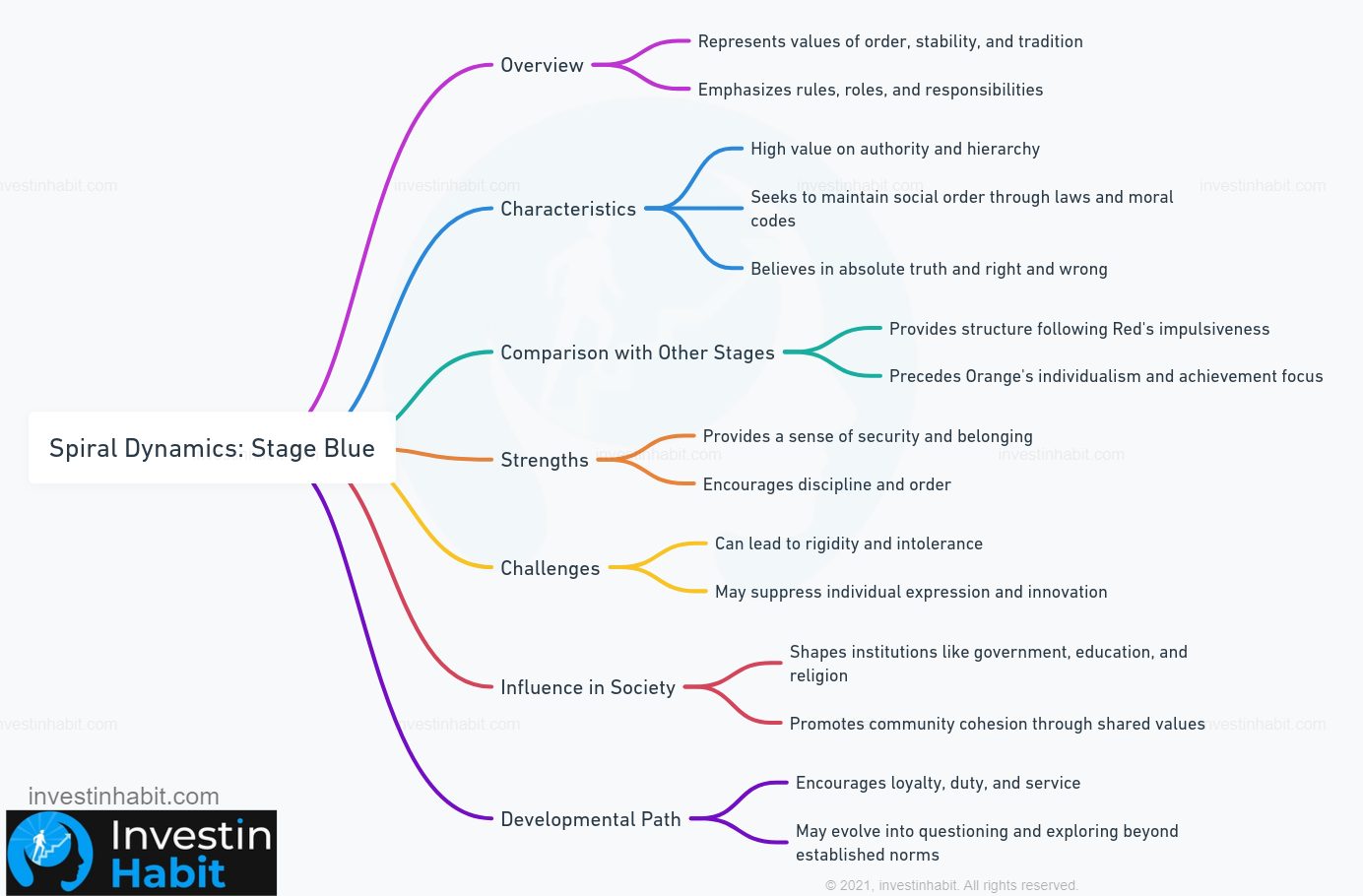
Overview of Stage Blue: The Pillars of Tradition and Order
Let me take you on a journey into the heart of Stage Blue in Spiral Dynamics. Think of Stage Blue as the backbone of a society that values order, tradition, and a sense of purpose. It’s like the glue that holds communities together through shared beliefs and norms.

Now, you might be wondering, what really defines Stage Blue? Imagine a world where rules are not just rules, but sacred guidelines. Here, life is structured around a clear code of conduct, often influenced by religious or ethical principles. There’s a strong emphasis on duty, discipline, and working for the greater good. People in this stage are like the guardians of societal order, ensuring that traditions are upheld and stability is maintained.
But why is Stage Blue so crucial, both for individuals and for societies? Think of it this way: In a world that can often feel chaotic, Stage Blue brings a sense of certainty and predictability. It’s like having a reliable compass in a storm. For individuals, this stage provides a clear sense of right and wrong, a roadmap for behavior that aligns with the greater community’s values.
In terms of societal development, Stage Blue lays the foundation for complex societies. It’s the stage where laws are formed, hierarchies are established, and roles are clearly defined. Without this stage, imagine a society like a building without a solid structure – it just wouldn’t stand up.
But here’s the catch – while Stage Blue brings many strengths, it’s not the end of the road. As I’ll explore in this post, every stage has its limitations and challenges, and understanding these is key to personal growth and societal evolution. So, as we delve deeper into Stage Blue, keep in mind that it’s one crucial piece of the larger puzzle of human development.
And remember, no matter where you find yourself on this spiral, every stage has something valuable to offer. Let’s embrace the journey together, shall we?


Transform Your Life with InvestInHabit

Ready for real change? Join us and get over:
- 200+ Personal Development Worksheets,
- 100+ Blog Post MindMaps
for FREE! 😍 + Our newsletter offers the latest in habit formation and self-improvement, straight to your inbox.
Subscribe now and Start redefining your mindset today! Join our community committed to success!
Key Values of Stage Blue: The Heart of Harmony and Duty
Let’s dive right into the heart of Stage Blue and explore what really makes it tick. I like to think of Stage Blue as the guardian of order in the ever-spinning spiral of life. It’s like having a trusted old friend who values tradition, structure, and a sense of purpose above all else.
First off, order and structure are huge in Stage Blue. Imagine a world where every piece fits perfectly, like a well-organized puzzle. This stage loves rules and routines because they bring a sense of security and predictability. You know, it’s like when you have a set schedule for your day – everything feels more manageable, right? That’s Stage Blue for you!
Then there’s the immense value placed on traditions and norms. For someone in Stage Blue, traditions are not just old rituals; they are the lifeblood of culture and community. It’s about honoring the past and preserving it for the future. Think of your family traditions or the cultural practices you hold dear – they give a sense of belonging and continuity, don’t they?
And let’s not forget the roles everyone plays. In Stage Blue, everyone has a specific role, like actors in a well-scripted play. It’s all about contributing to the greater good, where each person’s role is respected and valued. It’s like being part of a team where every player knows their position and plays it well.
But the real gem of Stage Blue? It’s the sense of duty and purpose. There’s this strong drive to live up to expectations and fulfill responsibilities. It’s not just about following rules for the sake of it. It’s about believing in a higher purpose, something greater than oneself. You know that feeling when you’re part of something bigger, and you’re making a difference? That’s the essence of Stage Blue.
So, as we chat about Stage Blue, remember that it’s not just about being strict or rigid. It’s about creating harmony, respecting traditions, and finding a deep sense of purpose in being part of a larger whole. It’s a stage that teaches us the value of structure and the beauty of belonging. Let’s keep that in mind as we continue our exploration.

Let’s delve deeper into the rich tapestry of values that define Stage Blue in Spiral Dynamics, focusing on some of the most pertinent and perhaps less discussed ones from your list. This stage, steeped in tradition and structure, offers a fascinating perspective on life and society.
- Absolute Truth and Belief in a Right Way of Living
- In Stage Blue, there’s a strong belief in absolute truths and a ‘right’ way to live life. This belief often stems from religious or ideological doctrines that are seen as unquestionable. It’s like having a compass that always points to ‘true north’ – there’s a clear sense of direction and purpose.
- Objective Morality and the Concept of Good vs. Evil
- The ideas of good and evil are not just abstract concepts in Stage Blue but are considered tangible realities. There’s a strong sense of an objective moral order, where some actions are inherently right, and others are inherently wrong.
- Respect for Authority and Hierarchy
- This stage places great emphasis on respecting authority figures and maintaining a well-defined social hierarchy. Whether it’s religious leaders, parents, or government officials, their authority is rarely questioned. Think of it as a well-ordered army, where everyone knows their place and follows the chain of command.
- Emphasis on Law, Order, and Security
- Law and order are paramount in Stage Blue. It’s all about maintaining stability and security, ensuring that society functions smoothly. This can manifest as a strong support for legal systems and law enforcement agencies.
- Cultural and National Identity
- Stage Blue often involves a deep sense of pride in one’s cultural and national identity. It’s about preserving the heritage and traditions that define a community or nation, often viewed as superior to others.
- Traditional Family Values and Patriarchy
- Traditional family structures, often with a patriarchal bent, are highly valued. The family is seen as a microcosm of society, where each member has a specific role and responsibility.
- Rituals and Ceremonies as Cultural Cornerstones
- Rituals and ceremonies are not just formalities but are imbued with deep meaning and significance. They serve as vital links to the past and are key in maintaining the continuity of tradition.
- Strict Adherence to Religious or Ideological Texts
- Canonical texts, be it religious or constitutional, are often interpreted literally and are considered the ultimate authority. These texts are the bedrock of moral and ethical decision-making.
- Loyalty and Duty as Moral Imperatives
- Loyalty, whether to family, country, or cause, is a cornerstone value. It’s about putting the needs of the group above personal desires, often seen as a moral duty.
- The Importance of Honor and Decency
- Ideas of honor, decency, and good manners play a significant role. These are not just social niceties but are considered essential to maintaining moral integrity and social order.
- Conservatism in Change and Innovation
- A preference for the status quo and skepticism towards rapid change or radical innovation. This conservatism is rooted in a belief that longstanding traditions and proven methods are inherently valuable and should be preserved.
- Patriotism and National Pride
- A deep sense of patriotism, often expressed through reverence for national symbols, history, and a belief in the country’s exceptionalism. This pride in one’s nation is seen as a key component of identity and moral duty.
- Respect for the Past and Ancestral Wisdom
- A reverence for historical legacies and ancestral wisdom, viewing the past not as outdated but as a source of timeless truths and guidance.

- A reverence for historical legacies and ancestral wisdom, viewing the past not as outdated but as a source of timeless truths and guidance.
- Community Service and Altruism
- A strong sense of community service and altruism, often guided by religious or moral principles, emphasizing the importance of giving back to and supporting one’s community.
- Belief in a Structured Afterlife
- A distinct belief in an organized afterlife, where moral and ethical actions in life have direct consequences in an eternal realm. This belief often guides moral decisions and life choices.
- Emphasis on Formal Education and Training
- A high regard for formal education and training, especially that which reinforces existing societal structures and roles. This includes a focus on discipline and respect for educators and institutions.
- Adherence to Dress and Behavior Codes
- Strict adherence to dress and behavior codes, reflecting a broader commitment to decorum and propriety. These codes are often seen as outward expressions of inner morality and order.
- Valuing Sobriety and Self-Restraint
- A strong emphasis on sobriety, self-restraint, and control over one’s desires and impulses. These virtues are often linked to moral strength and integrity.
- Emphasis on Collective Responsibility
- A focus on collective responsibility over individualism, where the needs and goals of the group are prioritized over personal ambitions or desires.
- Recognition of Sacrifice and Hardship as Virtuous
- Viewing sacrifice and enduring hardship as virtuous and character-building, often tied to the belief that suffering can lead to moral improvement and spiritual growth.
- Viewing Holy Books as the Literal Word of God
- In Stage Blue, religious texts such as the Bible, Quran, Torah, or other holy scriptures are often regarded as the literal and unerring word of God. This perspective sees these texts not as allegorical or symbolic, but as concrete guides to life, morality, and the structure of the universe. It’s like having an ultimate manual for life, where every word is considered sacred and profoundly true.
- Strict Literal Interpretation of Holy Books
- Following on from the previous point, there’s a strict adherence to a literal interpretation of these holy texts. This means that the stories, commandments, and teachings are taken at face value, often leading to a more conservative or traditionalist approach to religious and moral issues. It’s a way of engaging with these texts that leaves little room for metaphorical or contextual interpretation, emphasizing clear-cut answers and directives.
- Obedience to Religious and Spiritual Authority
- In this stage, there’s a profound respect and obedience to religious and spiritual authorities – be they figures like the Pope, imams, rabbis, gurus, or the teachings of prophets and deities like Muhammad, Allah, Christ, Buddha, and Confucius. This obedience is more than just respect; it’s a deep-seated belief in the wisdom and authority of these figures. It’s as if their words and directives come with a weight of divine or spiritual legitimacy that is not to be questioned.

Stage Blue in Individual Behavior: The Dance of Discipline and Devotion
Alright, let’s take a closer look at how Stage Blue shows up in our day-to-day lives. It’s one thing to talk about theories and stages, but it’s another to see them in action, right? When you’re at Stage Blue, your personal beliefs and actions are deeply intertwined with a sense of moral authority and a commitment to following rules.
Picture this: You know someone who always seems to have a clear sense of what’s right and what’s wrong, almost like they have an internal moral compass that’s been finely tuned by tradition and authority. That’s Stage Blue in action. It’s not just about sticking to the rules for the sake of it; it’s about believing that these rules are the foundation of a stable and meaningful life.
Let me give you some everyday examples of Stage Blue behavior. Think about your neighbor who meticulously follows community guidelines, never missing a beat. They’re not trying to win any popularity contests; they genuinely believe in the importance of upholding these standards for the good of everyone.
Or how about when you’re in a group project, and there’s that one person who insists on doing things by the book? They’re not being rigid just to make your life difficult. In their view, following the established process is the best way to ensure fairness and success for the whole team.
Stage Blue individuals often find comfort in routines and traditions. You’ll see them celebrating cultural festivals with a passion or adhering to family rituals with reverence. It’s these practices that give them a sense of continuity and connection to something bigger than themselves.
And let’s talk about moral authority. For someone in Stage Blue, figures of authority – be they religious leaders, teachers, or even historical figures – hold significant sway. Their teachings and directives aren’t just guidelines; they’re almost like sacred commands that offer a clear path in a world full of ambiguities.
So, if you’re wondering why your friend gets up every Sunday morning for church without fail, or why your colleague never bends the rules at work, remember that they’re operating from a Stage Blue perspective. It’s all about a deep-seated belief in the value of order, tradition, and doing what’s perceived as morally right.
In essence, Stage Blue isn’t just a set of beliefs; it’s a way of life. It’s about finding security in the familiar, taking pride in adhering to time-honored practices, and believing that there’s a greater purpose behind every rule and tradition. As we explore these behaviors, let’s appreciate the sense of certainty and commitment they bring to an ever-changing world. Who knows, we might just learn a thing or two about the power of discipline and devotion!
Stage Blue in Societal Context: The Pillars of Order and Tradition
Now, let’s zoom out a bit and see how Stage Blue plays out in the bigger picture of society. It’s fascinating to see how individual values can shape entire social structures and institutions, isn’t it?
Think of Stage Blue as the architect of many of the systems and norms we sometimes take for granted. It’s like the framework of a building – you don’t always see it, but it’s what keeps everything stable and upright. In societies influenced by Stage Blue, there’s a strong emphasis on maintaining order and preserving traditions. It’s not just about rules for the sake of rules; it’s about creating a sense of security and predictability for everyone.
Let’s dive into some historical examples. Picture the medieval societies where the church played a central role, or think about the ancient civilizations with their strict social hierarchies and codes of conduct. These weren’t just random ways of organizing society; they were deeply rooted in Stage Blue values, where structure and adherence to established norms were crucial for maintaining harmony and stability.
Fast forward to today, and you can still see Stage Blue’s influence in many aspects of modern life. For instance, the legal systems that govern our societies are steeped in Stage Blue principles. They’re all about upholding laws that have been agreed upon to ensure fairness and order. Or consider educational institutions, where curriculum and discipline are designed to mold responsible and dutiful citizens.
But here’s the thing – while Stage Blue brings a lot of positives, like stability and a sense of belonging, it’s a bit of a double-edged sword. There’s always the risk of tipping into rigidity, where the fear of change or challenge to the status quo can stifle growth and innovation. It’s like having a well-oiled machine that works perfectly, but is resistant to any modifications, even if they’re necessary.
So, how do societies find that sweet spot, balancing the order and stability of Stage Blue with the need for flexibility and progress? It’s a bit like walking a tightrope, isn’t it? On one hand, you’ve got the comfort and security of established ways. On the other, there’s the exciting, albeit uncertain, realm of change and innovation.
As we reflect on Stage Blue in societal context, think about how its values have shaped the world around you. From the laws that keep things in order to the traditions that bind communities together, it’s a stage that has left an indelible mark on human history. And as we continue to evolve, perhaps the biggest challenge is learning how to honor and integrate these values while staying open to new possibilities. Let’s keep exploring this delicate balance together, shall we?
These examples will highlight the various ways Stage Blue values manifest in different areas:
- Medieval Europe: Characterized by a strong influence of the Church, rigid social hierarchies, and feudal systems. It’s a prime example of Stage Blue’s emphasis on order, tradition, and religious authority.
- Indian Caste System: A social structure deeply rooted in tradition and hierarchy, reflecting Stage Blue’s emphasis on defined social roles and adherence to established norms.
- Confucian China: Emphasized social harmony, respect for authority, and adherence to traditional moral teachings, aligning with key aspects of Stage Blue.
- Puritanism: Known for its strict moral codes, emphasis on religious conformity, and adherence to traditional values, embodying many Stage Blue characteristics.
- Islamic Fundamentalism and Wahhabism: Represent a strict adherence to religious doctrines and practices, reflecting Stage Blue’s focus on religious authority and unyielding belief systems.
- Sharia Law: Represents a legal framework deeply rooted in religious doctrine and traditional values, illustrating Stage Blue’s emphasis on moral authority and structured social order.
- The Salvation Army: An organization built on strong moral principles, duty, and service, resonating with Stage Blue’s emphasis on altruism within structured belief systems.
- Patriotism and National Symbols: Such as standing for the National Anthem, reflecting a deep sense of national pride and respect for tradition, core elements of Stage Blue.
- Catholic Church: With its hierarchical structure, emphasis on tradition, and moral authority, it’s a quintessential example of Stage Blue’s influence.
- Military Service and Codes of Honor: Emphasize discipline, hierarchy, duty, and loyalty, core values of Stage Blue.
- Victorian England: Known for its strict social norms, moral codes, hierarchy and emphasis on propriety, reflecting the Stage Blue worldview.
- Crusades: A historical series of religious wars, representing the extreme manifestation of Stage Blue values in terms of religious conviction and moral duty to defend or spread a belief system.
- Neo-Nazis and KKK: Extreme examples of adherence to a rigid ideological worldview, characterized by a strong sense of in-group loyalty and opposition to perceived threats to traditional values and structures.
- Communist China: Particularly under Maoist rule, which emphasized collective identity, adherence to state ideology, and respect for authority.
- Spanish Inquisition: Notorious for its rigid enforcement of religious orthodoxy and moral authority, embodying the Stage Blue focus on doctrinal conformity and discipline.
- Japanese Tea Ceremony: Represents a deep respect for tradition, meticulous attention to ritual, and the value placed on cultural heritage, all key aspects of Stage Blue.
- Brexit Movement: In some aspects, reflects a desire to return to traditional national sovereignty and perceived historical values, resonating with Stage Blue’s emphasis on stability and preservation of the status quo.
- Segregation and Jim Crow Laws: Represented a rigidly structured societal order based on racial hierarchy, aligning with the more negative aspects of Stage Blue’s emphasis on maintaining the status quo and resistance to change.
- Romulans in Star Trek (as a fictional example): Portray a society deeply rooted in hierarchy, duty, and a strict moral code, reflecting many Stage Blue characteristics.
- The War on Drugs: A policy approach that reflects a strict adherence to legal and moral authority, characteristic of Stage Blue values.


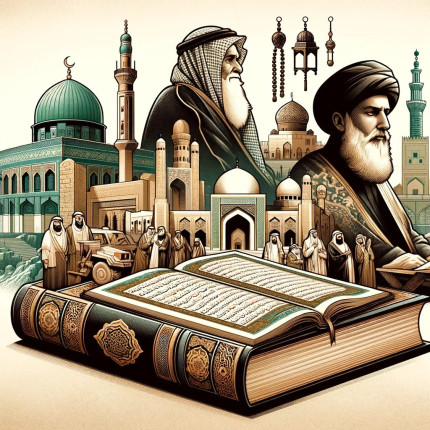


These examples from various cultures, historical periods, and social structures demonstrate the pervasive and enduring influence of Stage Blue values in shaping societies. They illustrate how a focus on tradition, order, and moral authority can manifest in diverse and impactful ways across the globe.
Transcending Stage Blue: Embracing Growth and New Perspectives
So, we’ve been chatting about Stage Blue and its significant role in our lives and society, right? But here’s something equally fascinating – the journey of transcending this stage. You see, every stage in Spiral Dynamics, including Stage Blue, has its limitations, and recognizing these is key to personal and societal growth.
Let’s start by understanding the limitations of Stage Blue. Imagine living in a house with very strict rules – it’s safe and orderly, but after a while, you might start feeling a bit restricted, right? Similarly, Stage Blue’s strong emphasis on tradition, rules, and authority can sometimes lead to inflexibility, resistance to change, and even intolerance of different viewpoints. It’s like being in a room with a very low ceiling – you’re secure, but you can’t really stand up and stretch.
Now, the process of evolving to higher stages isn’t about rejecting Stage Blue values. Not at all! It’s more like adding new tools to your toolbox. You start seeing that there are other ways of thinking and being, ways that complement the structure and order you’re used to. It’s like discovering new rooms in that house, each with a different view.
Self-awareness plays a huge role in this journey. It’s about stepping back and asking yourself, “Why do I think this way? Could there be another angle I’m not seeing?” This kind of introspection can be a real game-changer. It opens up new possibilities and ways of understanding the world around you.
And then there are societal changes – they’re like the wind that shakes the branches, forcing us to adjust our stance. Think about major social or technological shifts. They challenge established norms and push us to adapt. This can be uncomfortable, sure, but it’s also incredibly exciting. It’s an opportunity to grow, to blend the security and order of Stage Blue with new, more flexible ways of thinking.
So, what does transcending Stage Blue look like in daily life? It might be as simple as questioning a long-held belief or being open to someone else’s perspective. Or it could be a community evolving its traditions to be more inclusive. It’s about maintaining the stability and order that Stage Blue values so much, while also being open to change and growth.
Remember, transcending a stage isn’t about leaving it behind; it’s about building on its strengths and overcoming its limitations. It’s a journey we’re all on, in one way or another. So, let’s embrace this adventure with curiosity and an open heart.
Here’s a list that outlines various ways to evolve beyond the limitations of Stage Blue:
- Deepen Understanding of Stage Blue: Start by thoroughly understanding Stage Blue. This helps in recognizing its strengths and limitations from an informed perspective.
- Learn About Stage Orange: Explore the values and worldview of Stage Orange. Reading about subsequent stages offers insight into alternative ways of thinking and being.
- Minimize Judgment of Other Stages: Work on reducing judgment towards stages like Orange, Green, and Yellow. Understanding their perspectives can broaden your own worldview.
- Embrace Diversity in Thought: Be open to the ideas of groups often judged by Stage Blue, like hippies, liberals, progressives, and intellectuals. Recognizing the value in diverse viewpoints is key to growth.
- Question Materialism and Success Metrics: Reflect on your attitudes towards materialism, success, and sexuality. Understanding their roles and limitations fosters a more nuanced view of life.
- Explore Mysticism and New Age Spirituality: Delve into spiritual paths that differ from traditional religious structures, such as New Age spirituality or mysticism.
- Let Go of Strict Adherence to Tradition: Begin to question and loosen the grip on rigid traditions. Accept that change is a natural and constant aspect of life.
- Cultivate Skepticism and Independent Thinking: Start to think independently and question established norms and authorities.
- Recognize Limitations of Religious Institutions: Acknowledge the limitations and potential abuses within organized religion, and understand that belief does not equate to absolute truth.
- Embrace Iconoclasm and Rebellion: Allow yourself to be iconoclastic and challenge established norms and conventions.
- Understand the Relativity of Reality: Acknowledge that reality may be more relative and subjective than previously thought, and that concepts of good and evil are not absolute.
- Explore Different Cultures and Viewpoints: Travel or learn about other cultures and societies to understand different perspectives and the repressive aspects of societal hierarchies.
- Appreciate the Commonality of All People: Recognize and appreciate the fundamental similarities and shared experiences of all humans.
- Validate Other Religious Views: Acknowledge and respect the validity of beliefs and practices in religions other than your own.
- Study Different Political and Economic Systems: Learn about various systems like Nazism, Communism, and Marxism to understand the complexities of different societal models.
- Recognize the Impact of Slavery and Oppression: Understand the historical and ongoing impacts of slavery and other forms of oppression.
- Practice Radical Open-Mindedness: Embrace open-mindedness, especially towards ideas and beliefs that challenge your current worldview.
- Embrace All Aspects of Yourself: Including your feminine side, regardless of gender, to foster a more holistic self-understanding.
- Engage in Self-Reflection and Contemplation: Regularly practice self-reflection to better understand your beliefs, biases, and the influences shaping your perspective.
By integrating these practices and perspectives, you can start to transcend the limitations of Stage Blue, opening up to a richer, more diverse understanding of the world and yourself. Remember, it’s a journey, not a destination. Each step forward expands your horizon and brings new insights and growth. Let’s embark on this path with curiosity and an open heart!
Challenges and Pitfalls of Stage Blue: Navigating the Rocky Roads
Alright, let’s chat about some of the tricky parts of being in Stage Blue. You know, every stage in Spiral Dynamics has its own set of challenges, and understanding these can really help us navigate them better.
So, first up, let’s talk about the issue of rigidity and dogmatism. Imagine you’re following a map that’s been super helpful in the past. It’s great, right? But what if the landscape has changed and the map hasn’t? That’s kind of what happens in Stage Blue when there’s too much rigidity.
People can get so attached to their rules and traditions that they struggle to adapt when things change. It’s like trying to fit a square peg in a round hole – it just doesn’t work.
Then there’s the risk of intolerance and resistance to change. It’s natural to feel comfortable with what you know and believe in, but sometimes, this comfort can turn into a bit of a blind spot. You might start seeing anything different as ‘wrong’ or ‘threatening,’ and that’s where intolerance can creep in. It’s like living in a bubble where everything inside is familiar and safe, but anything outside is viewed with suspicion.
Let’s delve deeper into some of the specific pitfalls and unhealthy manifestations of Stage Blue, particularly focusing on how they relate to the risk of intolerance and resistance to change:
- Ideological Rigidity and Fundamentalism: A tendency to adhere strictly to ideologies, leading to radical fundamentalism. This rigidity can stifle open-mindedness and adaptability, making it challenging to embrace or even consider different perspectives.
- Inflexibility and Closed-Mindedness: Being excessively stubborn and inflexible, making it hard to evolve or adapt to new situations. This trait often leads to a rejection of ideas that don’t fit within the established framework of beliefs.
- Intolerance in Belief Systems: Developing belief systems that are intolerant of diversity, often leading to the exclusion or denigration of differing viewpoints. This intolerance can manifest in various aspects, from social interactions to policy making.
- Limited Thinking: A propensity to think ‘inside the box’, limiting creativity and innovation. This mindset often leads to an inability to appreciate or understand abstract concepts or metaphysical ideas.
- Challenges in Experiencing True Spirituality: A focus on external forms of worship and doctrine that can sometimes hinder the experience of deeper, more personal spiritual connections.
- Pressure of Guilt: Often feeling burdened by guilt, driven by strict moral codes and the fear of deviating from them. This can lead to an internal struggle and emotional distress.
- Judgmental Attitude: A tendency to judge others who don’t conform to the same set of beliefs or standards, which can foster division and conflict.
- Cultural and Civilizational Conflicts: Viewing the world as a battleground of civilizations, often leading to cultural conflicts and a failure to seek common ground.
- Restricted Views on Sexuality: Having a conservative or limited view of sex, often associating it with guilt or seeing it purely as a means of procreation.
- Lack of Global Curiosity: Exhibiting a limited interest in understanding the world beyond one’s immediate environment or belief system.
- Resistance to Enlightenment Concepts: Being closed to ideas of enlightenment and self-realization that challenge traditional beliefs.
- Prejudices and Discrimination: Tendencies towards homophobia, racism, and misogyny, stemming from rigid interpretations of moral codes and societal roles.
- Excessive Bureaucracy and Theocracy: Creating systems that are overly bureaucratic or theocratic, which can stifle individual freedoms and inhibit societal progress.
- Extreme Nationalism and Communism: Adopting extreme forms of nationalism or communism, which can lead to oppressive practices and the suppression of dissenting voices.
These pitfalls of Stage Blue highlight the importance of balancing traditional values with openness and flexibility. Recognizing and addressing these challenges is crucial for personal growth and the healthy development of societies. Remember, the goal isn’t to abandon the strengths of Stage Blue but to evolve from its limitations, creating a more inclusive and adaptable worldview. Let’s navigate this path with understanding and a willingness to learn from each other.
Now, you might be wondering, “How do we address these challenges?” Well, it’s not easy, but it’s definitely possible. Here are a few strategies:
- Embrace Flexibility: Try to be more like a willow tree that bends in the wind rather than an oak that might crack. This means being open to new ideas and ways of doing things, even if they’re different from what you’re used to.
- Foster Open Dialogue: Encourage conversations with people who have different viewpoints. It’s like opening the windows in that bubble – it lets fresh air in and broadens your perspective.
- Self-Reflection is Key: Regularly take a step back and reflect on your beliefs and attitudes. Ask yourself, “Why do I think this way? Is there another side to this story?” It’s like checking your map to make sure it still matches the landscape.
- Educate and Inform: Sometimes, all it takes to overcome intolerance is a bit more understanding. Learning about other cultures, beliefs, and ways of life can be eye-opening.
- Promote Empathy: Try to put yourself in others’ shoes. Understanding where they’re coming from can help bridge gaps and reduce intolerance.
- Encourage Critical Thinking: Instead of accepting things at face value, ask questions, and seek evidence. It’s like being a detective in your own life, always looking for the truth.
Remember, overcoming the challenges of Stage Blue isn’t about discarding its values. It’s about building on them, adding new layers of understanding and flexibility. Think of it as upgrading your map – you keep the parts that work and update the parts that don’t. Let’s navigate these challenges together, keeping an open mind and a willingness to learn and grow!
Stage Blue in the Modern World: Finding Harmony in a Fast-Changing Landscape
Let’s chat about how Stage Blue fits into our modern, fast-paced world. It might seem like a world dominated by technology and rapid change wouldn’t have much room for Stage Blue, but you’d be surprised! Stage Blue has a unique and important role in contemporary society, offering stability and a sense of continuity amid all the hustle and bustle.
First off, think about the relevance of Stage Blue today. It’s like the foundation of a house – you might not always see it, but it’s what keeps everything standing. Those core values of order, tradition, and duty still play a huge part in our lives. From legal systems that maintain law and order to educational institutions that uphold standards and discipline, Stage Blue values are all around us.
But here’s the tricky part – balancing these traditional values with the complexities of modern life. It’s a bit like trying to dance to a fast song while keeping your balance. The world is evolving, with new ideas and ways of living popping up all the time. So, the challenge for Stage Blue is to hold onto its core values while adapting to a world that’s constantly in motion.
Let me give you some examples of Stage Blue’s influence in current events. Take the resurgence of nationalism we’ve seen in various parts of the world. It’s a call back to traditional values and a sense of national identity – classic Stage Blue. Or think about the debates around law and order, where there’s a push to uphold traditional legal structures while also addressing modern-day challenges.
And it’s not just about politics and laws. In our personal lives, many of us lean on Stage Blue values more than we realize. Like sticking to family traditions, following religious practices, or even just believing in the importance of hard work and discipline – these are all echoes of Stage Blue in our daily routines.
The key here is to find a balance. We can’t just stick rigidly to the old ways; we need to be open to new ideas and ways of doing things. But at the same time, we can’t completely throw out the values that have stood the test of time. It’s about blending the best of both worlds – taking the stability and structure of Stage Blue and mixing it with the flexibility and innovation of the modern age.
So, as we navigate this complex world, let’s remember the value of Stage Blue. It gives us a base to stand on, a set of principles to guide us. And when we combine that with an openness to change and new ideas, we create a society that’s not just strong, but also vibrant and adaptable. Let’s keep exploring this dance between the old and the new, shall we?
Conclusion: Embracing the Essence of Stage Blue in Our Journey
As we wrap up our exploration of Stage Blue in Spiral Dynamics, it’s important to reflect on the journey we’ve taken and the insights we’ve gathered. Understanding Stage Blue is not just about recognizing a set of values or a stage in a model; it’s about appreciating a vital aspect of the human experience that shapes so much of our world.
Stage Blue, with its emphasis on order, tradition, and duty, offers a foundation of stability and structure in a world that can often feel chaotic and unpredictable. These values, when integrated constructively, can provide a sense of purpose, community, and continuity that is essential for personal and societal well-being. However, it’s also crucial to recognize the limitations of Stage Blue, such as the risks of rigidity and intolerance, and strive to balance these values with openness and adaptability.
As we move forward, let’s take the strengths of Stage Blue with us – the respect for tradition, the commitment to duty, and the desire for order – and blend them with the insights and flexibility offered by other stages. This integrative approach can enrich our personal lives, strengthen our communities, and enhance our understanding of the complex tapestry of human development.
I encourage you to continue exploring Spiral Dynamics. Each stage, including and beyond Stage Blue, offers unique perspectives and valuable lessons. This journey of discovery is not just an academic exercise; it’s a path to greater self-awareness, empathy, and effective engagement in our ever-evolving world.
Remember, every stage has something to teach us, and every step forward brings new opportunities for growth and understanding. So, let’s keep exploring, learning, and growing together, embracing the dynamic spiral of human experience in all its colors and complexities.
References and Further Reading on Spiral Dynamics
To deepen your understanding of Spiral Dynamics and explore more about Stage Blue as well as other stages, here are some suggested books, articles, and resources. These will provide you with a comprehensive view of this fascinating model of human consciousness and development:
- “Spiral Dynamics: Mastering Values, Leadership, and Change” by Don Beck and Christopher Cowan: This foundational book is essential for anyone interested in Spiral Dynamics. It offers a detailed introduction to the model, its stages, and its application in various fields.
- “The Never Ending Quest: Dr. Clare W. Graves Explores Human Nature” by Christopher Cowan and Natasha Todorovic: This book presents the original research and thoughts of Dr. Clare W. Graves, whose work forms the basis of Spiral Dynamics.
- “Reinventing Organizations: A Guide to Creating Organizations Inspired by the Next Stage of Human Consciousness” by Frederic Laloux: While not exclusively about Spiral Dynamics, this book delves into organizational models that align with higher stages of development and can provide insights into how Stage Blue interacts within these contexts.
- “Spiral Dynamics in Action: Humanity’s Master Code” by Don Beck, Teddy Hebo Larsen, Sergey Solonin, et al.: A more recent work that applies Spiral Dynamics to current global challenges, offering insights into how different stages, including Stage Blue, manifest in today’s world.
- “An Overview of Spiral Dynamics” – Articles and essays available online: Websites like spiraldynamics.org and integral-life.com often feature articles and essays that offer an introduction and analysis of Spiral Dynamics stages.
- Online Forums and Communities: Joining online communities or forums dedicated to Spiral Dynamics can be a great way to engage with others interested in the topic, share insights, and learn from different perspectives.
- “Integral Psychology: Consciousness, Spirit, Psychology, Therapy” by Ken Wilber: This book offers an integral approach to psychology that includes insights compatible with Spiral Dynamics and explores stages of human development.
- TED Talks and YouTube Videos: Look for talks and presentations on Spiral Dynamics and related topics. Speakers like Don Beck often give insightful talks that are available on platforms like YouTube and TED.
- Workshops and Seminars: Participating in workshops or seminars on Spiral Dynamics can provide a more interactive and in-depth understanding of the model. These are often offered by certified Spiral Dynamics practitioners.
Remember, the field of Spiral Dynamics is dynamic and evolving, so staying open to new publications, discussions, and research is key to deepening your understanding. Happy exploring!
Transform Your Habits, Transform Your Life
Are you ready to turn the page to a new chapter in your life?
Stop dreaming, start achieving. Our exclusive newsletter delivers:
- Science-backed hacks: Master the psychology of habit formation used by CEOs and Olympians.
- Actionable strategies: No fluff, just practical steps to crush procrastination and dominate your goals.
- + a FREE surprise bonus 🎁 to jumpstart your transformation!
Don’t settle for mediocre. Subscribe now!