

Do you ever feel like you’re constantly saying “yes” when you really want to say “no”? Maybe you struggle to express your needs in a way that feels clear and respectful. If any of this sounds familiar, then honing your assertiveness skills could be the key to unlocking a more fulfilling life.
Assertiveness is a powerful communication tool that goes way beyond simply being “outgoing.” It’s about expressing yourself clearly and confidently, while also respecting the needs of others.
Inside this Article
Understanding Assertiveness Skills

At the very core, assertiveness is about expressing your thoughts, feelings, and needs in a straightforward, honest, and respectful way. It’s where you stand up for yourself without stepping on anyone else’s toes. Now, you might wonder, “How does this differ from aggression?” Well, imagine assertiveness as a golden middle path. On one side, there’s aggression – invading others’ space with your words or actions. On the other, passivity – letting others overwrite your boundaries. Assertiveness? It’s the balance beam in the middle, where respect for oneself and others holds equal weight.
Let’s face it, sometimes saying what’s on your mind can feel tricky. Maybe you worry about hurting someone’s feelings, or you just don’t want to cause a scene. But here’s the thing: being able to express yourself clearly and confidently is essential for healthy relationships and achieving your goals. This is where assertiveness comes in!
Assertiveness is about expressing your thoughts, feelings, and needs in a straightforward, honest, and respectful way.
The Psychological Roots of Assertiveness
Digging a bit deeper, the roots of assertiveness lie within our understanding of ourselves and our respect for others. Psychologically, it’s tied to our self-esteem and confidence. Think of it this way: when you value yourself, you’re more likely to voice your needs and opinions. But here’s the kicker – doing so with an awareness of the dignity and rights of others. This balance is not just nice to have; it’s pivotal for effective communication. It’s what turns potential conflicts into constructive conversations and misunderstandings into opportunities for deeper connection.
It’s not about being aggressive or demanding, but rather about clear and direct communication. Think of assertiveness as that sweet spot between being a pushover and a bulldozer.
Not Bossy, But Confident: Why Assertiveness Matters
So, why is assertiveness such a big deal? Well, it all boils down to effective communication. When we can communicate assertively, we feel more confident and empowered. We’re also better able to build healthy relationships and achieve our goals.
Think about it: if you can’t express your needs clearly, how can you expect others to understand you? Assertiveness helps us avoid misunderstandings, build trust, and foster genuine connections.
It allows you to set boundaries, negotiate win-win solutions, and avoid resentment. Imagine being able to tell your friend you’d rather go for a walk than another night at the bar, or confidently asking your boss for a well-deserved raise. Assertiveness empowers you to take control of your life and your interactions with others.
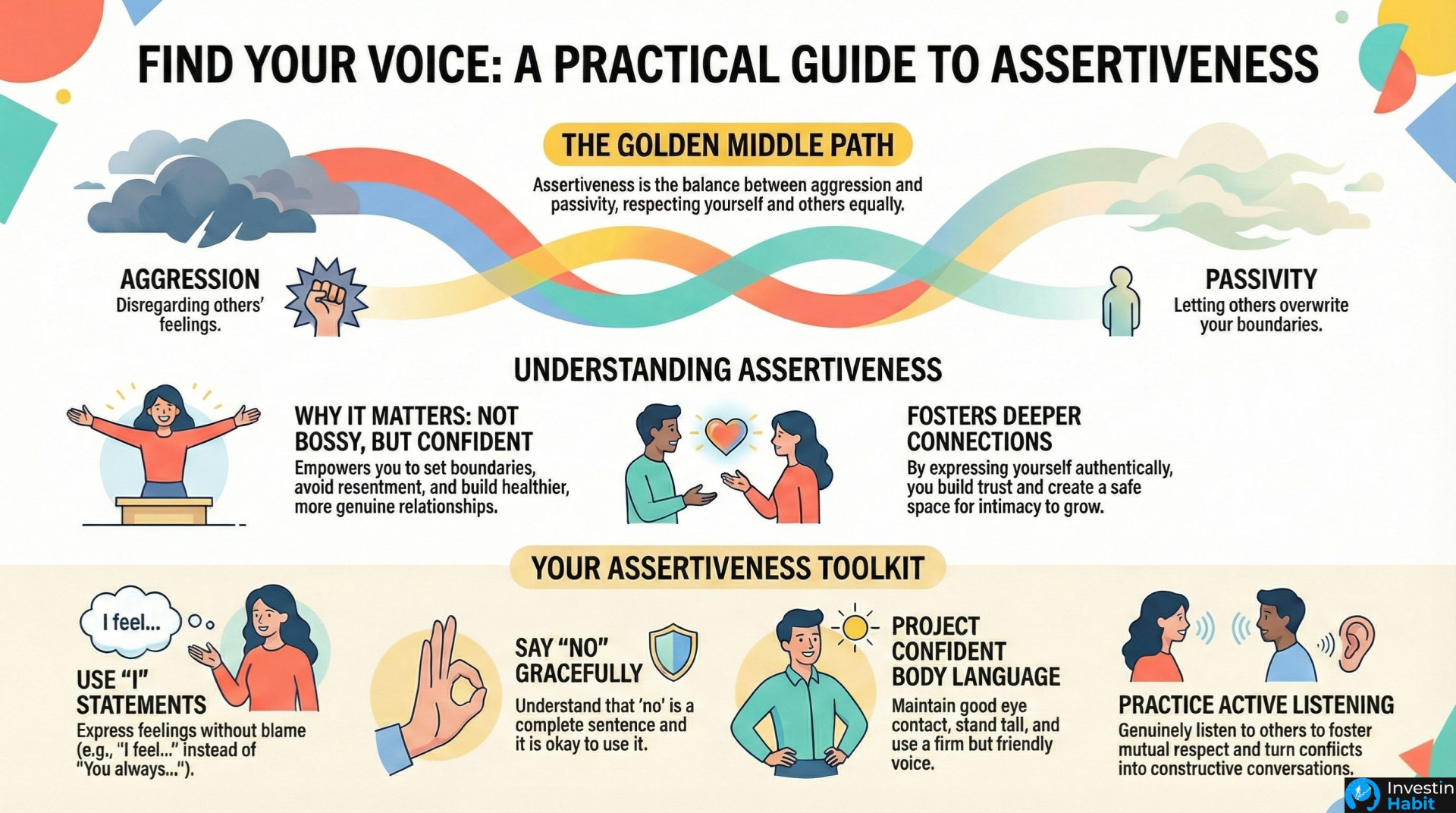
A Glimpse into Key Assertiveness Skills
So, what does this toolkit look like? Picture a few key skills sitting neatly in your communication toolbox:
- Expressing Needs Clearly: Being able to express your thoughts and feelings in a way that’s easy to understand.
- Saying No Gracefully: Understanding that ‘no’ is a complete sentence and it’s okay to use it.
- Active Listening: Giving others the space to express themselves while you listen genuinely.
- Setting Boundaries: Knowing where your limits are, communicating them effectively and letting others know what’s acceptable behavior.
- Body language: Maintaining good eye contact, using a firm but friendly voice, and standing tall all contribute to assertive communication.
- “I” Statements: These are a powerful way to express your feelings and needs without placing blame.
As we journey through this exploration of assertiveness together, keep in mind that like any skill, assertiveness can be learned and honed. It’s about practice, patience, and a bit of perseverance. The goal? To build a bridge of understanding, respect, and genuine communication with those around us.
Think of this as our foundation. From here, we’ll delve deeper into how to maintain this assertive stance without veering into aggression, especially in the tapestry of our relationships where the threads are as delicate as they are strong. Stick with me, and let’s navigate this path towards assertive communication together, transforming the way we interact with the world around us.
The Art of Being Assertive Without Being Aggressive

Navigating the fine line between assertiveness and aggression can sometimes feel like walking a tightrope, can’t it? Let’s imagine we’re sitting together, sharing insights on how to master this balancing act. It’s all about moving forward with confidence, yet keeping our hearts open and empathetic. Ready to dive in?
Understanding the Fine Line
Think of assertiveness as your personal power expressed kindly—your ability to communicate your needs and opinions clearly and respectfully. Now, aggression? It’s when that expression steps over the line, disregarding the feelings and boundaries of others. The key difference lies in the intent and impact: Assertiveness respects both parties, while aggression prioritizes one’s own needs at the expense of another’s.
Imagine assertiveness as a tightrope walk, with confidence on one side and respect on the other. The goal is to find that perfect balance. Aggression, on the other hand, is like falling off the tightrope and landing smack dab in the “disrespectful” zone. It’s about putting yourself first at the expense of others, often using intimidation or manipulation.
Staying on the Assertive Side
So, how do you stay assertive without veering into aggression? Here are a few pointers I’ve found incredibly helpful:
- Mind Your Tone and Body Language: It’s not just what you say; it’s how you say it. Keep your tone calm and your body language open. This signals respect and willingness to engage in constructive dialogue.
- Listen Actively: Assertiveness involves expressing yourself and genuinely listening to others. This balance fosters mutual respect and understanding.
- Focus on Solutions: When discussing issues, center the conversation around finding solutions rather than assigning blame. This approach is inherently more constructive and less likely to be perceived as aggressive.
- Validate: Assertiveness doesn’t mean steamrolling over others. It’s important to truly listen to the other person’s perspective and acknowledge their feelings. Even a simple “I understand what you’re saying” can go a long way in maintaining a respectful atmosphere.
- Focus on “I” Statements: Remember those powerful “I” statements we talked about earlier? They’re your best friend when it comes to assertive communication. By focusing on your feelings and needs, you avoid accusatory language that can trigger aggression. For example, instead of saying, “You’re always interrupting me,” try, “I feel frustrated when I’m not given a chance to finish speaking.”
Real-Life Scenarios
Let me share a couple of scenarios that highlight the difference between assertive and aggressive behavior:
- In the Workplace: Imagine you’re overlooked for a project you were excited about. An assertive response might be, “I was really looking forward to contributing to this project. Can we discuss how I can be involved in similar opportunities in the future?” Contrast this with an aggressive response, which might involve making demands or criticizing the decision openly in a way that disrespects others involved.
- In Personal Relationships: Say your partner consistently forgets plans you’ve made together. Assertively, you might express, “I feel disappointed when our plans are forgotten. Can we find a way to help us both remember?” An aggressive approach might involve accusations or expressing anger in a way that hurts the relationship.
Imagine you’re working on a group project, and your teammate consistently misses deadlines.
- Aggressive Approach: “You never do any work! This is all going to be my fault again!” (This approach is accusatory and puts the other person on the defensive.)
- Assertive Approach: “I’m feeling overwhelmed because the deadlines haven’t been met. Can we discuss how we can best complete this project together?” (This approach focuses on the issue and opens the door for a solution.)
See the difference? Assertiveness is about clear communication while maintaining respect for everyone involved.
By keeping these tips and examples in mind, you can navigate that tightrope with grace and confidence. Remember, assertiveness is about finding your voice and respecting the voices of others. It’s a powerful tool for building stronger, healthier relationships in every area of your life.
As we wrap up this section, I hope you feel more equipped and inspired to practice assertiveness in your daily interactions. It’s a journey, and like any skill, it gets easier with practice. So, let’s keep the conversation going, support each other, and celebrate our progress along the way. Here’s to striking that perfect balance!
Assertiveness in Relationships: A Delicate Balance
Let’s be honest, relationships are complex. They take work, but the rewards of healthy, fulfilling connections are truly amazing. This is where assertiveness becomes a superpower! Being assertive in your relationships allows you to express your needs and desires honestly, while still being considerate of your partner’s feelings.
The Heart of Healthy Relationships
At the core of every thriving relationship is clear, respectful communication. Assertiveness here plays a pivotal role. It’s about expressing your needs and feelings honestly while deeply respecting your partner’s perspective. This mutual respect fosters a deeper understanding and connection. Remember, it’s not about winning an argument; it’s about winning together, finding solutions that enrich your relationship.
The Essence of Assertiveness in Relationships
At the foundation of every strong relationship lies the bedrock of emotional intimacy and trust. Assertiveness, in its purest form, is about honestly and openly expressing our needs and feelings. But it’s more than just a way to communicate; it’s a bridge to deeper connection and mutual respect. When we’re assertive, we invite our partners into our inner worlds, not as tourists, but as cherished companions on a shared journey.
Imagine a relationship where you can’t truly be yourself. You hold back your needs and feelings for fear of upsetting your partner. This lack of assertiveness can create a barrier to intimacy. When you can’t express yourself authentically, it’s hard to build real trust and connection.
Navigating Emotional Landscapes with Assertiveness
Assertiveness is the bridge that allows you to share your true self with your partner. By communicating your needs, wants, and even vulnerabilities honestly, you create a safe space for intimacy to blossom. Think about it: when you can openly express your excitement about something, or share a fear or insecurity, your partner feels a deeper connection. They see the real you, and that fosters genuine respect and empathy.
Understanding and expressing our emotions assertively is akin to navigating a river’s currents. It’s about recognizing our feelings and sharing them in a way that’s both authentic and respectful. Vulnerability plays a crucial role here; it’s the courage to show up and be seen, to share our true selves. This openness is the glue that bonds, transforming assertiveness from a mere communication tool into a conduit for emotional intimacy.
Saying “I feel upset when we don’t spend quality time together” opens the door to understanding, rather than “You never spend time with me,” which may lead to defensiveness.
Assertiveness and Conflict Resolution
Sometimes emotions can feel like a stormy sea in a relationship. But assertiveness can be your life vest! It allows you to express your feelings – both positive and negative – in a healthy way. For example, instead of bottling up frustration that erupts in a fight later, you can assertively say, “I’m feeling a little hurt when you…” This opens the door for a calm conversation and a chance to work through the issue together.
Assertiveness offers us a way to navigate these waters constructively, turning conflicts into gateways for strengthening our bonds. By approaching disagreements with a mindset focused on finding solutions rather than assigning blame, we foster an environment where every challenge becomes a step forward together, rather than a wedge driving us apart.
Listen with Your Whole Heart – Assertiveness is a two-way street. It’s about speaking your truth and listening to theirs.
Fostering Mutual Growth Through Assertive Communication
The beauty of assertiveness in relationships is its capacity to nurture both personal and relational development. It encourages a culture of openness, where each person feels valued and heard. This isn’t just about talking; it’s about creating a dialogue where both voices contribute to the relationship’s ongoing narrative, shaping a shared future built on understanding and respect.
Cultivating a Supportive Environment
Creating an atmosphere that breathes assertiveness and understanding is like tending a garden; it requires care, attention, and the right conditions to flourish. Strategies such as actively listening, validating each other’s feelings, and encouraging honest expression lay the groundwork for a relationship where security and connection thrive. In such a nurturing environment, assertiveness becomes not just accepted, but celebrated as a cornerstone of healthy communication.
As we fold our map, having traversed the landscapes of assertiveness in relationships, remember that these pathways are ever-evolving. Each step taken with openness, respect, and empathy is a step toward deepening the bonds that tether our hearts to one another. Embrace assertiveness as your guide, and watch as the relationships in your life bloom with a richness and depth that only true understanding can cultivate. Let’s carry these insights forward, nurturing the connections that make our journey through life so profoundly beautiful.
In disagreements, look for solutions that meet both your needs. This isn’t about compromise as much as it is about co-creating solutions that strengthen your bond.
Real Conversations, Real Connections
Let’s bring this to life with a scenario:
Picture a weekend where you’ve made plans to relax at home, but your partner has invited friends over last minute. An assertive approach might be, “I understand wanting to see friends, and I was really looking forward to a quiet weekend together. Can we find a way to do both?” This opens up a dialogue that respects both your needs and your partner’s.
Navigating relationships with assertiveness is like dancing — it’s about moving together in sync, sometimes leading, sometimes following, but always together. It’s about creating a space where both of you can grow, express yourselves fully, and feel deeply connected.
As we wrap up this heart-to-heart, remember that practicing assertiveness in relationships is a journey of learning and growth. It’s about building a stronger, more connected partnership where both people feel valued and heard. So, take these strategies, infuse them with your unique presence, and watch your relationships flourish in beautiful, unexpected ways. Let’s keep this conversation going, growing together in understanding and love.
Building Assertiveness Skills: Practical Tips and Techniques
Stepping into our next chapter together, let’s roll up our sleeves and get hands-on with building our assertiveness toolkit. Imagine we’re in a workshop together, surrounded by tools and blueprints, ready to construct something meaningful. Here, we focus on turning the concept of assertiveness into practical skills you can wield confidently in your day-to-day life.
A Step-by-Step Guide to Developing Assertiveness
First things first, let’s break down the process of becoming more assertive into manageable steps. Think of it as building a house, where each skill is a brick contributing to the strength of your assertive self.
- Self-Reflection: Start by understanding your current communication style. Ask yourself, “Do I lean towards passivity, aggression, or do I find that middle ground of assertiveness?”
- Identify Your Needs: Clearly define what you need and why. Knowing this firmly makes it much easier to communicate assertively.
- Practice ‘I’ Statements: Use phrases like “I feel…” or “I need…” to express yourself without placing blame on others.
Instead of accusatory statements that put someone on the defensive, try framing your needs with “I” statements. For example, “I feel overwhelmed when I have too many deadlines at once,” is much more likely to get a positive response than simply saying, “You’re giving me too much work!”
Now, let’s put these steps into practice with some exercises designed to enhance your assertiveness in daily interactions.
Exercises to Sharpen Your Assertiveness
- Role-Playing: With a friend or mentor, practice scenarios where you need to assert yourself. This can be anything from asking for a raise to telling a friend you felt hurt by their actions.
- Assertiveness Journal: Keep a record of times you felt you weren’t assertive. Reflect on these instances and think about how you could handle them differently in the future.
- Set Small Goals: Start with low-stakes situations to practice assertiveness, like asking for a different table at a restaurant. Gradually, work your way up to more significant challenges.
Just like any skill, assertiveness takes practice. Start small! Maybe it’s simply saying “no” to an extra task at work, or asking a friend to lower the music if it’s bothering you. The more you practice, the more comfortable you’ll become.
Facing criticism and confrontation is a part of life, but how you handle it can truly set you apart.
Navigating Criticism and Confrontation
- Stay Calm: Take a deep breath and give yourself a moment to collect your thoughts before responding.
- Listen Fully: Try to understand the underlying message or feedback, even if it’s delivered poorly. When your partner speaks, listen to understand, not to reply. This builds a bridge of empathy and understanding.
- Respond, Don’t React: Use your ‘I’ statements to express how the criticism makes you feel and ask for specifics if you need clarity.
- Seek Solutions: If the criticism is valid, work together to find a way forward. If it’s unfounded, assertively but politely stand your ground.
Confidence starts from the inside out, but your body language can actually boost your confidence too. Maintain good eye contact, stand tall with open shoulders, and speak in a clear, firm voice. Even if you don’t feel 100% confident initially, projecting confidence through body language can work wonders.
Remember, the journey to mastering assertiveness is a marathon, not a sprint. It’s about making incremental changes and celebrating small victories along the way. Each step forward is a triumph, building towards a version of you that communicates with confidence, clarity, and respect.
As we wrap up this section, I want you to feel empowered and equipped with practical tools and exercises to enhance your assertiveness. With each practiced word and every mindful interaction, you’re not just building skills; you’re crafting a more authentic, assertive you. Let’s keep the conversation going, and remember, I’m here cheering you on every step of the way.
Assertiveness is the courage to be ourselves and show the world our likes and dislikes, our thoughts, feelings, and shortcomings. It’s about communicating honestly with family, friends, and colleagues. As we become more assertive, we drop the mask and show our true selves. We proclaim: This is who I am, this is what I feel, and these are my needs.
Learning Resources: Books and More
As we journey deeper into our exploration of assertiveness, I’m thrilled to share a treasure trove of resources that can further illuminate our path. Imagine us in a cozy library, surrounded by books and resources, each one a beacon guiding us toward greater understanding and mastery of assertiveness. Let’s dive into some of these gems together.
“How to be Assertive Without Being Aggressive” as Your Compass
First on our list is the invaluable guide, “How to be Assertive Without Being Aggressive.” This book is more than just reading material; it’s a journey into understanding the nuanced art of assertive communication. It peels back the layers, showing you how to hold your ground, with grace and strength, without tipping into aggression. If you take one resource from our chat today, let this be it. It’s a cornerstone for anyone serious about mastering assertiveness.
More Books to Broaden Your Horizon
But why stop there? The world of literature brims with insights waiting to be discovered:
- “The Assertiveness Workbook” by Randy J. Paterson: A practical guide filled with exercises to help you become more assertive.
- “Crucial Conversations” by Kerry Patterson and Joseph Grenny: Offers techniques for talking when stakes are high.
- “Boundaries” by Dr. Henry Cloud and Dr. John Townsend: Learn about setting and respecting personal boundaries.
Each of these books provides unique perspectives and practical advice to enrich your assertive communication journey.
Diving Into Digital – Online Courses and Workshops
In today’s digital age, learning has never been more accessible. Online platforms like Coursera, Udemy, and LinkedIn Learning offer a plethora of courses and workshops designed to sharpen your assertiveness skills. From beginner to advanced, there’s something for everyone:
- “Assertiveness Training: Assertive Communication & Negotiation” on Udemy: Perfect for those looking to build confidence in both personal and professional settings.
- “Improving Your Assertiveness Skills” on LinkedIn Learning: A fantastic resource for enhancing your presence in the workplace.
- “Communication Skills: Become More Clear, Concise, & Confident” on Coursera: Offers strategies to improve your overall communication skills, including assertiveness.
Workshops and Seminars
Keep an eye out for workshops and seminars hosted by experts in the field of psychology and communication. These live events not only provide valuable insights but also offer a chance to practice your skills in real-time, often with direct feedback from professionals.
As we close this section, I hope you feel inspired and eager to dive into these resources. Remember, the journey to becoming more assertive is personal and ongoing. Each book read, each course taken, is a step closer to the version of yourself that communicates with confidence and ease. I’m excited for you to explore these resources and discover the ones that resonate most deeply with you. Let’s continue to grow and learn together, one page, one click, one conversation at a time.
Real-World Applications of Assertiveness:
Alright, we’ve talked about the why and the how of assertiveness, but sometimes seeing it in action can be the biggest motivator. So, let’s dive into a couple of real-world scenarios where assertiveness made a real difference!
From Pushover to Powerhouse: Sarah’s Assertiveness Journey
Meet Sarah, a talented graphic designer who constantly felt undervalued at work. Her boss would pile on extra tasks without asking, and colleagues would walk all over her deadlines. Sarah felt frustrated and burnt out, but worried about rocking the boat.
Then, she discovered the power of assertiveness! She started with small steps, like using “I” statements to express her workload concerns to her boss. For example, she said, “I feel overwhelmed with my current projects. Would it be possible to prioritize deadlines or delegate some tasks?” To her surprise, her boss was receptive and even apologized for overloading her.
Feeling more confident, Sarah started politely but firmly setting boundaries with colleagues. She learned to say things like, “I appreciate the urgency, but unfortunately, I can’t meet this new deadline without pushing back on something else.” This assertiveness not only reduced her stress but also earned her colleagues’ respect.
From Shy to Shining: David’s Assertiveness Transformation
David was a brilliant introvert who struggled to express himself in social situations. He longed to connect with people but his shyness held him back. One day, he decided to try some assertiveness techniques. He started small, making eye contact and introducing himself at networking events. He practiced using “I” statements to express his interests and ask questions.
At first, it felt awkward, but with each interaction, David became more comfortable. He discovered that most people were happy to chat when given the opportunity. Over time, David built meaningful connections and even landed exciting job prospects through his newfound assertiveness.
The ripple effects of assertiveness reach the very core of your self-esteem. When you consistently assert yourself, you reinforce your sense of self-worth.
From People-Pleaser to Powerful Presenter: Maria’s Assertiveness Triumph
Maria was a whiz at public speaking, but her fear of disappointing others held her back. She’d downplay her expertise and accept lower presentation fees because she worried about asking for what she deserved. Assertiveness training changed everything! Maria learned to confidently articulate her value and present her rates with clear “I” statements. For example, she started saying, “I’m confident in the value I bring to your presentation, and my standard rate is X.” To her surprise, clients readily agreed, recognizing her expertise. Maria’s assertiveness not only boosted her income but also increased her confidence as a speaker.
Setting healthy boundaries is just the start. Assertiveness enables you to say no without guilt, choose engagements that align with your values, and invest your time and energy where it truly matters. It’s about honoring your needs and well-being, leading to a more balanced and fulfilling life.
From Doormat to Dating Dynamo: Ben’s Assertive Love Story
Ben was a kind soul who struggled setting boundaries in relationships. He’d put up with bad dates or inconsiderate partners, fearing confrontation. Embracing assertiveness, Ben learned to communicate his needs and expectations clearly. He wouldn’t hesitate to politely end dates that weren’t a good fit, saying things like, “I appreciate your time, but I don’t feel a connection.” This assertiveness empowered him to find a partner who shared his values and respected his boundaries. Ben’s assertive communication not only improved his dating life but also helped him build healthier relationships in general.
Conclusion
So, we’ve explored the wonderful world of assertiveness! Remember, it’s not about being pushy or aggressive, but about communicating your needs and wants confidently and respectfully.
Key Takeaways: Your Assertiveness Toolkit
By now, you’ve got a toolbox filled with assertiveness skills: using “I” statements, practicing active listening, and maintaining confident body language. You’ve also learned how to navigate tricky situations, like handling criticism or setting boundaries in relationships.
Embrace Your Assertive Self: Start Today!
Don’t wait for the “perfect” moment to unleash your inner assertive communicator. Start small! Practice those “I” statements with a friend, or politely decline an extra task at work. The more you practice, the more comfortable you’ll become.
The Power of Transformation: A Brighter Future with Assertiveness
Imagine a life where you confidently express yourself, set healthy boundaries, and build stronger relationships. That’s the power of assertiveness! By embracing assertive communication, you unlock your full potential and create a more fulfilling life.
Ready to Share? We Want to Hear From You!
Have you had a success story with assertiveness? Or maybe you’re struggling with a specific communication challenge? We’d love to hear from you! Share your experiences in the comments below.
Looking for More? Stay Tuned for Personal Growth!
If you enjoyed this post and are interested in further developing your personal growth toolbox, consider subscribing to our newsletter! We’ll provide regular tips, articles, and resources to help you navigate life’s challenges and reach your full potential.
Remember, being assertive is a journey, and we’re here to support you every step of the way. So go forth, communicate with confidence, and embrace the transformative power of assertiveness!