

Have you ever felt like you’re in a conversation, but no one is truly connecting? We’ve all been there. The culprit? Often, it’s a misunderstanding of the very foundation of communication: listening.
Listening is more than just waiting for your turn to speak. It’s an active process that requires focus and intention. But there’s a crucial distinction to be made within listening itself: are you listening to understand or are you listening to respond?
This blog post will delve into the two key approaches to listening, highlighting the importance of recognizing the difference for effective communication. By understanding these approaches, you’ll be well on your way to fostering deeper connections and building stronger relationships, both personally and professionally.
Inside this Article
Understanding Listening for Understanding

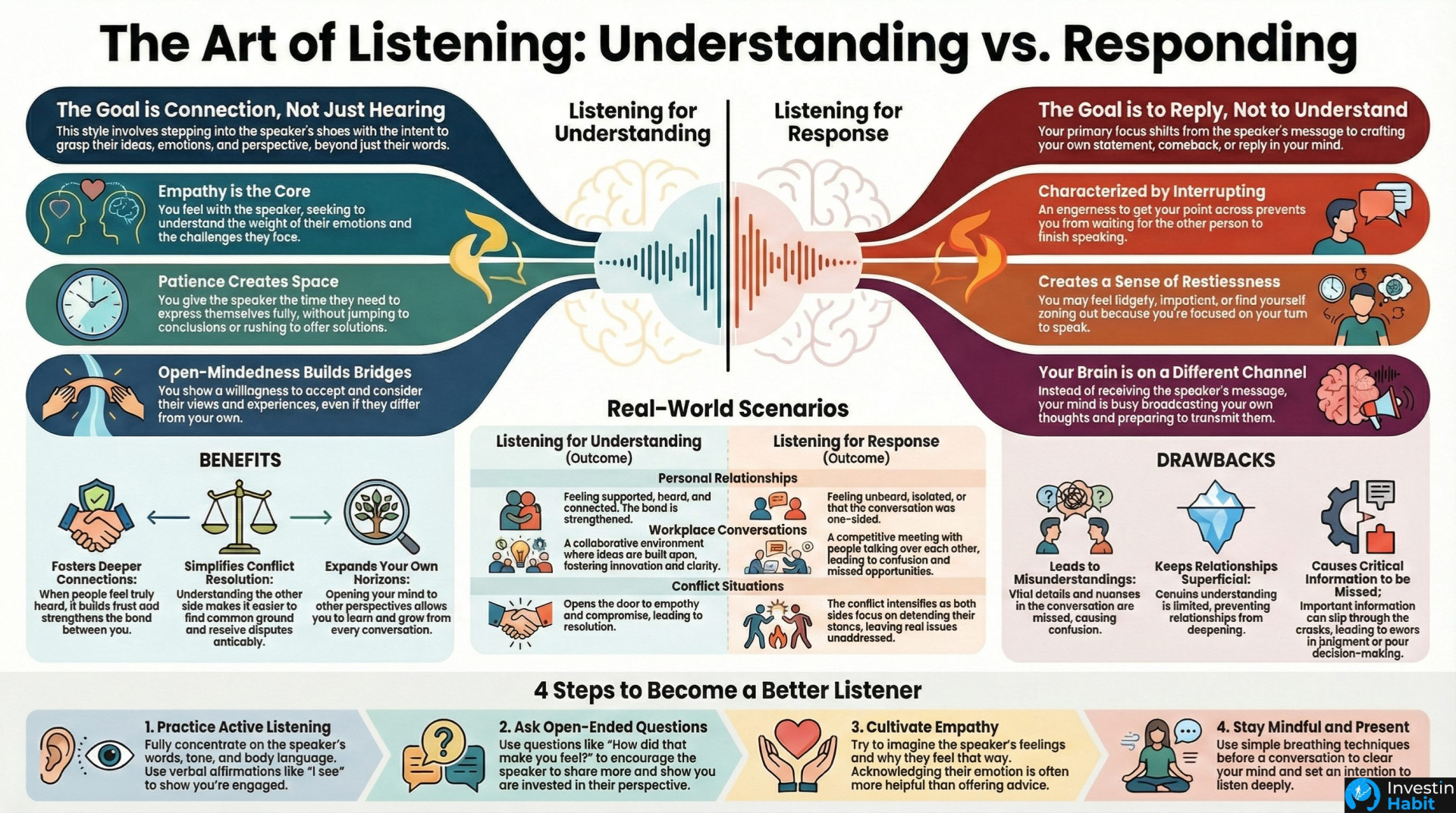
At the heart of every meaningful conversation lies the art of listening for understanding. But what does that really mean? Well, it’s like stepping into someone else’s shoes, not just to stand there, but to walk around in them. It’s listening with the intention to truly grasp what the other person is expressing, beyond just their words.
You see, when I listen for understanding, I’m doing more than just hearing you. I’m engaging with your ideas, your emotions, and your perspective. This kind of listening is draped in empathy, patience, and an open-mindedness that says, “I’m here with you, and I’m open to seeing the world through your eyes.” It’s a powerful tool that, believe it or not, isn’t as common as you might think.
Empathy is key. Try to see things from their perspective. What might they be feeling? What challenges are they facing? By putting yourself in their shoes, you can better grasp the heart of their message.
Now, let’s talk about the characteristics of this type of listening. Imagine a friend telling you about a problem they’re facing. Listening with empathy means you’re feeling with them, not just offering a shoulder to cry on but truly understanding the weight of their emotions. Patience plays its part by giving them all the time they need to express themselves, without jumping to conclusions or hurriedly offering solutions. And open-mindedness? That’s your willingness to accept and consider their views, even if they differ from your own.
We all have that friend who talks a mile a minute! But when you’re listening for understanding, slow down. Give them the space to express themselves fully without interrupting.
The benefits of mastering this listening style are profound. For starters, it paves the way for deeper connections. When someone feels truly heard, it builds trust and strengthens the bond between you and them. Conflict resolution becomes a breeze, relatively speaking, of course. Instead of arguing to win, you’re listening to understand, making it easier to find common ground and resolve disputes amicably. And let’s not forget about learning. By opening your mind to others’ perspectives, you’re not just learning about their views but also broadening your own horizon.
Sometimes, people share things that challenge our own beliefs or experiences. That’s okay! When you listen with an open mind, you’re not judging – you’re simply trying to understand where they’re coming from.
In essence, listening for understanding is more than a communication skill; it’s a pathway to richer, more meaningful interactions. By embracing empathy, patience, and open-mindedness, you’re not just hearing what’s being said; you’re connecting, learning, and growing. And in a world where everyone wants to be heard, being someone who listens to understand is truly special.

Transform Your Life with InvestInHabit

Ready for real change? Join us and get over:
- 200+ Personal Development Worksheets,
- 100+ Blog Post MindMaps
for FREE! 😍 + Our newsletter offers the latest in habit formation and self-improvement, straight to your inbox.
Subscribe now and Start redefining your mindset today! Join our community committed to success!
Exploring Listening for Response
When we talk about listening for response, we’re diving into a territory that’s quite familiar to many of us, perhaps more than we’d like to admit. Have you ever found yourself in a conversation where, instead of fully focusing on what the other person is saying, you’re already crafting your next statement in your mind? That’s listening for response in a nutshell. It’s when our primary focus shifts from understanding the speaker’s message to preparing our comeback or reply.
Let’s break down some of the common traits of this approach.
First off, there’s interrupting. It’s a classic sign that someone is listening to respond. They’re so eager to get their point across that they can’t wait for the other person to finish.
You might be brimming with ideas or eager to share your experience, but constantly cutting someone off shows you’re not fully invested in what they have to say.
Then, there’s restlessness. You know, that feeling of barely being able to sit still because you want to jump in with your thoughts?
When you’re focused on crafting your response, it’s easy to become fidgety or impatient. You might find yourself zoning out or checking your phone while the other person speaks.
Lastly, there’s this idea of preparing to speak instead of listening. It’s like your brain is on a different channel, one that’s broadcasting your thoughts instead of receiving someone else’s.
Have you ever left a conversation feeling like you weren’t even heard? That’s because the other person might have been so focused on formulating their response, they missed the key points of what you were saying.
Now, you might wonder, “What’s the big deal?” Well, the drawbacks of this approach are significant. Misunderstandings become all too common because vital details or nuances in the conversation are missed. Relationships can remain on the surface level without deepening because genuine understanding is limited. And perhaps most critically, important information slips through the cracks, leading to errors in judgment or decision-making.
I’m not saying that planning your response is inherently bad; it’s a natural part of conversation. But when it dominates our listening habits, we risk missing the essence of what’s being shared. By being aware of these tendencies, we can start to shift our focus back to where it often matters most: understanding the people we’re talking to. So, as we navigate our daily interactions, let’s challenge ourselves to tune in more closely, not just for cues to jump back into the conversation, but to truly grasp the heart of what’s being said.
Practical Differences and Examples
Let’s bring our discussion to life with some real-world scenarios, showing just how impactful our listening style can be. Imagine two friends catching up over coffee, a team meeting at work, or a family navigating a disagreement. The way we listen in these situations can lead to drastically different outcomes.
Personal Relationships: Listening for Understanding vs. Response
Imagine you’re sharing something deeply personal with a friend. If they’re listening to understand, they’ll likely lean in, ask thoughtful questions, and validate your feelings. This kind of interaction can leave you feeling supported and connected. Now, flip the script. If your friend is preoccupied with how they’ll respond, you might notice them interrupting or quickly changing the subject back to themselves. It feels different, right? You might walk away feeling a bit unheard or even isolated.
Workplace Conversations: Clarity vs. Confusion
Consider a team meeting where you’re brainstorming solutions. If everyone is listening for understanding, you’ll likely see a collaborative environment where ideas are built upon each other. This approach fosters innovation and clarity. However, if colleagues are listening to respond, the meeting can turn competitive, with people talking over each other, leading to confusion and missed opportunities.
Conflict Situations: Resolution vs. Escalation
In conflicts, listening for understanding can be the difference between resolution and escalation. When parties genuinely try to understand each other’s perspectives, it opens the door to empathy and compromise. But if both sides are focused on defending their stance, the conflict can intensify, often leaving the real issues unaddressed.
Dr. Julian Treasure, a renowned sound and communication expert, once said, “Listening is about being present, not just about being quiet.” This resonates deeply with our discussion. It’s not just about not talking; it’s about actively engaging with the other person’s world.
By reflecting on these scenarios, it’s clear that the way we listen can significantly impact our interactions across all areas of life. The next time you’re in a conversation, I challenge you (and myself!) to take a moment to consider your listening approach. Are you truly present, or are you just waiting for your turn to speak? The answer might just transform the quality of your conversations and relationships.
Strategies for Improving Listening for Understanding
So, how can we become champions of listening for understanding? It’s a skill that, like any other, can be honed with practice and patience. Let me share some strategies that have not only helped me but also countless others in improving our listening game.
Active Listening: The Heart of Understanding
Active listening is your go-to tool. It’s about fully concentrating on what’s being said, rather than passively hearing the message. Try this: next time you’re in a conversation, focus on the speaker’s words, tone, and body language. Nodding and offering verbal affirmations like “I see” or “Go on” can also show that you’re engaged. It’s amazing how this technique can deepen your conversations.
Asking Open-Ended Questions
To really dive into understanding, ask questions that can’t be answered with a simple yes or no. Questions like “How did that make you feel?” or “What happened next?” encourage the speaker to open up and share more. It’s a powerful way to show that you’re interested and invested in understanding their perspective.
Practicing Empathy
Empathy is about putting yourself in the other person’s shoes. Try to imagine how they’re feeling and why. Sometimes, you don’t even need to offer advice; just acknowledging their feelings can be incredibly supportive. Remember, it’s not about agreeing with them but understanding where they’re coming from.
Mindfulness and Presence Exercises
Our minds wander; it’s what they do. To combat this, mindfulness exercises can be a game-changer. Simple breathing techniques or focusing exercises can help you stay present in the conversation. Before entering a discussion, take a moment to clear your mind or even set an intention to listen deeply.
Resources for Further Learning
Want to dive deeper? There are fantastic books out there like “Just Listen” by Mark Goulston or “The Lost Art of Listening” by Michael P. Nichols that offer great insights into becoming a better listener. Workshops and online courses on communication skills can also be incredibly beneficial. Platforms like Coursera or LinkedIn Learning have a plethora of resources waiting for you.
Improving your listening skills is a journey, one that can lead to more meaningful and profound connections with those around you. It’s not always easy, but the effort is worth it. Remember, the goal isn’t to be perfect but to become a better listener today than you were yesterday. So, let’s embrace this challenge together, shall we?
The Role of Self-Awareness in Listening
Diving into the world of effective listening, there’s a superpower often overlooked yet crucial to our journey: self-awareness. It’s the first step toward transforming how we listen because, let’s face it, recognizing our own listening style can be a bit of an eye-opener. Ever caught yourself zoning out during a conversation, or perhaps rehearsing your response instead of paying attention? That’s where self-awareness winks at you and says, “Hey, maybe there’s a better way.”
Identifying Your Listening Style
Think about the last few conversations you had. Were you more focused on understanding the other person, or were you waiting for your turn to speak? Understanding your default listening mode is key. It’s not about judging yourself but about knowing where you’re starting from. This awareness is your foundation for growth.
Recognizing the Signs
So, how can you tell when you’re not listening for understanding? There are a few tell-tale signs. Maybe you find your mind wandering to your to-do list, or you’re itching to jump in with your own story. When you notice these tendencies, gently remind yourself to refocus on the speaker. It’s like catching yourself before you drift too far from the conversation shore.
Shifting Your Approach
Once you recognize you’ve slipped into response mode, it’s time to pivot back to understanding. Here’s a little trick: silently repeat the last few words the speaker said. It’s a simple way to pull your focus back to their message. Another technique is to visualize a stop sign whenever you’re tempted to interrupt or drift away. This mental image can help you pause and return your attention to the speaker.
The Path of Continuous Improvement
Improving your listening skills is a journey, not a destination. It’s about making small, incremental changes that add up over time. Celebrate your progress, no matter how small. Maybe today you managed to stay more present in a conversation than yesterday. That’s a win! Keep reflecting on your listening experiences, and don’t be shy about asking for feedback. Sometimes, an outside perspective can provide valuable insights into our growth.
Remember, the goal here is not to become the perfect listener overnight but to become more mindful and intentional in our listening practices. It’s about embracing the process, learning from each interaction, and continuously striving to understand others more deeply. So, let’s embark on this journey with an open heart and an eager mind, shall we? After all, the art of listening is one of the most beautiful gifts we can offer to those around us.
Conclusion
As we’ve journeyed together through the nuances of listening for understanding versus listening for response, it’s clear that the art of listening plays a pivotal role in the quality of our interactions and relationships. We’ve unpacked the essence of listening for understanding, delved into the habits of listening for response, and explored practical scenarios where these listening styles come to life. Strategies for improving our listening skills, along with the invaluable role of self-awareness, have been laid out to guide us toward more meaningful connections.
The value of listening for understanding cannot be overstated—it deepens our connections, enriches our conversations, and fosters an environment of empathy and comprehension. It’s about truly hearing what others are saying, engaging with empathy, and allowing ourselves to be transformed by the perspectives shared with us.
Now, I invite you to share your experiences and strategies for effective listening in the comments section below. Have you noticed a difference in your relationships by shifting how you listen? What challenges have you faced, and how have you overcome them?
Let’s take these insights and apply them to our daily interactions. Challenge yourself to practice active listening, ask open-ended questions, and embrace mindfulness to enhance your presence in conversations. Remember, the goal is continuous improvement, not perfection.
And if you’re keen to dive deeper into the art of effective communication, consider subscribing to our blog. We’re here to provide you with insights, tips, and strategies to navigate the complexities of communication, helping you build stronger, more meaningful connections with those around you.
Together, let’s transform our conversations, one listening moment at a time.
Transform Your Habits, Transform Your Life
Are you ready to turn the page to a new chapter in your life?
Stop dreaming, start achieving. Our exclusive newsletter delivers:
- Science-backed hacks: Master the psychology of habit formation used by CEOs and Olympians.
- Actionable strategies: No fluff, just practical steps to crush procrastination and dominate your goals.
- + a FREE surprise bonus 🎁 to jumpstart your transformation!
Don’t settle for mediocre. Subscribe now!