

Imagine a beautiful, intricate glass sculpture. Delicate yet strong, it stands tall, reflecting the light with quiet grace. Now, picture a single, misplaced touch, a gust of wind, and the sculpture shatters into a million pieces. Self-confidence, much like that sculpture, is a powerful force in our lives. It grants us the poise to navigate challenges, the courage to pursue our dreams, and the resilience to bounce back from setbacks. But just like the sculpture, self-confidence is surprisingly fragile. It can be chipped away by internal doubts, external pressures, and experiences beyond our control.
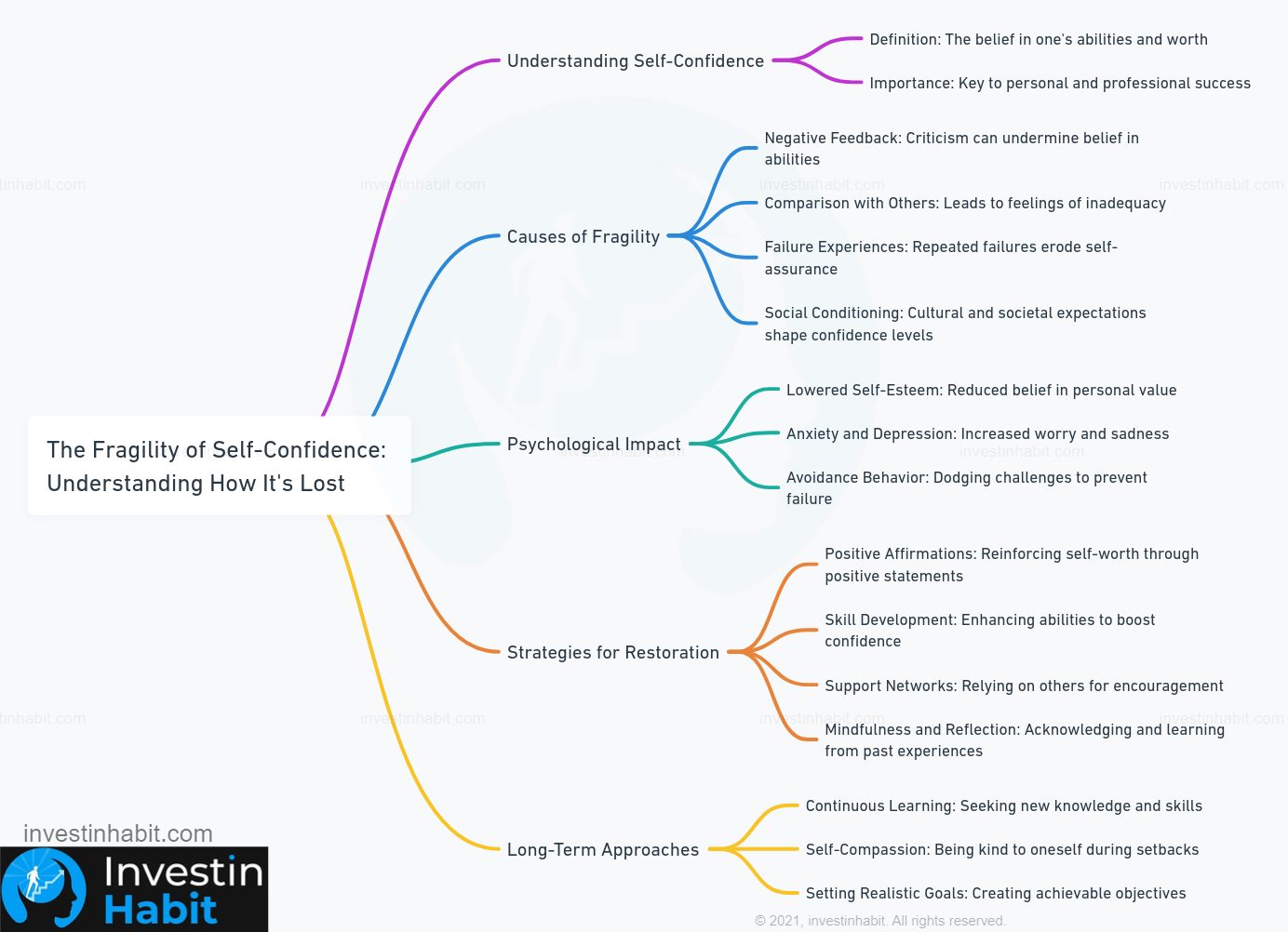
This blog post delves into the delicate nature of self-confidence, exploring the key reasons why it can falter. We’ll examine the internal narratives that erode our belief in ourselves, the external forces that can knock us off balance, and the hidden vulnerabilities that make us susceptible to self-doubt. By understanding these factors, we can learn to protect our inner glass sculpture, nurturing its strength and resilience.
Why is self-confidence so important? In short, it’s the foundation of a fulfilling life. It empowers us to:
- Embrace opportunities: With self-confidence, we dare to step outside our comfort zones, pursue our passions, and take calculated risks.
- Build healthy relationships: We communicate assertively, set boundaries, and attract individuals who value and respect us.
- Handle challenges: We face adversity with a “can-do” attitude, bouncing back from setbacks with determination and optimism.
- Live authentically: We express ourselves freely, embrace our unique strengths and quirks, and live life on our own terms.
But what happens when this precious inner strength starts to wane? Join us as we explore the cracks that can appear in the glass, and learn how to identify and address the factors that threaten to shatter our self-confidence.
Ready to embark on this journey of self-discovery? Buckle up, and let’s explore the fragility of self-confidence together.
Inside this Article
Internal Factors

Diving into the heart of our self-confidence journey, I want to talk about something we’re all familiar with, yet might not fully understand its impact: the inner voice that guides us – or sometimes misleads us. This is about our internal dialogue, how it shapes our self-perception, and the sneaky role perfectionism and unrealistic self-expectations play in this intricate dance.
Negative Self-Talk and Criticism
At the core of our self-confidence, there’s a continuous stream of thoughts and conversations we have with ourselves. You know what I’m talking about, right? Those moments when you’re about to step into something new, and a little voice inside your head starts listing all the reasons why it might not work out. This internal dialogue is incredibly powerful; it can either be your greatest ally or your most daunting adversary.
Let’s start with the basics: our self-talk. It’s fascinating how the words we whisper to ourselves can significantly influence how we feel and act. Positive self-talk can be incredibly empowering, giving us that extra push to take risks and embrace new challenges. On the flip side, when this dialogue turns negative, it can erode our self-confidence, making mountains out of molehills and convincing us we’re less capable than we truly are.
Now, onto perfectionism and unrealistic self-expectations – the twins of self-sabotage. I’ve been there, aiming for that elusive 100% in everything, only to end up feeling like I’ve fallen short. It’s a tricky situation. Striving to be our best is commendable, but when we set the bar impossibly high, we’re setting ourselves up for disappointment. The truth is, perfection is an illusion, and clinging to it can prevent us from appreciating our achievements and progress.
It’s essential to recognize that being gentle with ourselves doesn’t mean we’re settling for less. It means understanding and accepting our human limits. It’s about shifting from a mindset of “I must be perfect” to “I’m doing my best, and that’s enough.” This shift is crucial for rebuilding and maintaining our self-confidence.
I encourage you to start tuning into your internal dialogue. Notice when the conversation turns negative and gently guide it back to a place of kindness and encouragement. Remember, the goal isn’t to be perfect but to be authentically you, embracing both strengths and areas for growth. Let’s step away from harsh self-criticism and instead, walk towards nurturing a compassionate and supportive relationship with ourselves. This journey isn’t about reaching a destination of perfection but about growing, learning, and finding joy in our progress and resilience.

Transform Your Life with InvestInHabit

Ready for real change? Join us and get over:
- 200+ Personal Development Worksheets,
- 100+ Blog Post MindMaps
for FREE! 😍 + Our newsletter offers the latest in habit formation and self-improvement, straight to your inbox.
Subscribe now and Start redefining your mindset today! Join our community committed to success!
Past Failures and Rejections

Moving forward in our conversation, let’s gently touch on a topic that, I bet, has touched each of us at some point: our past failures and rejections. These experiences, as tough as they may be, are universal. Yet, the way we carry them can profoundly influence our willingness to embrace new opportunities and ventures.
Have you ever noticed how a single setback can sometimes feel like it’s setting the tone for everything that follows? It’s like our minds become these incredibly detailed libraries, where every failure and rejection is cataloged, ready to be referenced at the slightest hint of a new challenge. The fear of repeating past mistakes can become a formidable barrier, making us think twice before stepping out of our comfort zones.
The truth is, failure and rejection are not just stumbling blocks; they’re stepping stones. They are part of the very fabric of growth and learning. But when we dwell on them, giving them more power and space in our minds than they deserve, they morph into these scary monsters under the bed, holding us back from exploring the vast world of possibilities that lies beyond our current horizon.
I want to share something with you, something I’ve learned along my journey: the beauty of embracing vulnerability. Yes, putting ourselves out there means we might stumble again. But what if we see each stumble not as a fall, but as a chance to learn, to grow, and to navigate our path with more wisdom? It’s about shifting our focus from what went wrong to what we can do differently next time.
Let’s not allow our past to dictate our future. Instead of dwelling on what didn’t work out, let’s gather those experiences as valuable data points, lessons that guide us toward making more informed choices. Every ‘no’ we’ve encountered has been redirecting us towards our ‘yes.’ And remember, the most successful stories often begin with chapters of attempts that didn’t go as planned.
So, I encourage you, as you stand at the edge of new beginnings, not to let the shadows of past rejections dim the light of potential success ahead. Let’s step into the unknown with a spirit of curiosity and a heart full of courage, knowing that each step, regardless of its direction, is a part of our unique journey towards growth and self-discovery. Together, let’s redefine our relationship with failure and rejection, seeing them not as enemies, but as teachers who, albeit strict, have invaluable lessons to offer.
Comparison with Others

As we continue our journey through understanding the ebbs and flows of self-confidence, there’s a modern twist to an age-old challenge that we absolutely must talk about: the constant comparison with others, especially in the era of social media. Have you ever caught yourself scrolling through your feed, only to end up feeling like everyone else is having the time of their lives, achieving great things, while you’re just… well, you?
This phenomenon isn’t just about feeling a twinge of envy here and there; it’s about how these comparisons can significantly skew our perception of our own achievements and progress. It’s like looking into a distorted mirror that only reflects back how we supposedly don’t measure up, overshadowing the many milestones we’ve achieved on our own paths.
Let’s break it down. Social media, for all its benefits, often presents a curated highlight reel of someone’s life. Rarely does it capture the struggles, the setbacks, and the sheer grit it takes to reach those peaks. But knowing that doesn’t always prevent us from feeling like we’re falling behind or not doing enough. It’s a tricky web of perception versus reality.
Here’s the thing, though: the journey to self-confidence is deeply personal and uniquely yours. No two paths are the same. When we compare our behind-the-scenes with everyone else’s highlight reel, we’re not comparing apples to apples. It’s more like comparing apples to the idea of oranges – it just doesn’t make sense.
I want to invite you to try something. Next time you find yourself slipping into the comparison trap, pause and gently remind yourself of your own victories, no matter how small they may seem. Remember, every big achievement is made up of countless small steps. Your progress, your journey, deserves to be celebrated for what it is, not diminished by the perceived success of others.
Embracing our own narrative is empowering. It shifts the focus from external validation to internal appreciation. Let’s cultivate a practice of gratitude for where we are and excitement for where we’re going. Yes, it’s easier said than done, especially with the world constantly showcasing the best of the best. But your story, with all its ups and downs, is worth more than any comparison.
In this world where comparison is just a click away, let’s commit to being kinder to ourselves, to acknowledging our strides, and to remembering that our worth isn’t measured by someone else’s yardstick. Your achievements, your progress, your journey – they’re uniquely yours, and absolutely worth celebrating. Let’s keep our eyes on our own path, cheering each other on, every step of the way.
External Factors

Toxic Relationships
Now, let’s gently pivot our conversation to something that touches the outskirts of our inner world yet profoundly impacts our self-confidence: the external factor of toxic relationships. It’s a delicate subject, I know, but understanding the influence of negative relationships on our self-esteem is crucial in nurturing our self-confidence.
Have you ever been in a situation where the people closest to you, instead of being your cheerleaders, somehow became sources of constant criticism? It’s tough, isn’t it? When criticism comes from those we care about and respect, it carries a weight that can slowly chip away at our confidence. It’s like carrying a backpack that’s being filled with stones; each piece of unwarranted criticism adds weight until it’s so heavy that it starts to bend our posture, both literally and figuratively.
Toxic relationships can manifest in various forms – it might be a friend who always finds a way to belittle your achievements, a family member whose support is conditional and comes with a side of judgment, or even a professional relationship that leaves you feeling undervalued and questioned at every turn. These interactions can create an environment where doubt thrives and self-confidence withers.
The thing is, while we might not always have the power to immediately change our circumstances or the people around us, we do have the power to reframe our response to their negativity. It starts with recognizing the signs of toxic relationships and understanding their impact on our self-esteem. This recognition is not about casting blame but about gaining clarity on what influences our sense of self-worth.
One of the most empowering steps we can take is to set boundaries. Boundaries help protect our energy and maintain our self-esteem. They send a message, both to ourselves and to those around us, about what we value and how we expect to be treated. It’s not an easy step, especially when it involves close relationships, but it’s a vital one for our mental and emotional well-being.
Another important aspect is seeking out positive relationships – those that uplift, support, and encourage us. Surrounding ourselves with people who see our value and cheer us on can significantly bolster our confidence. It’s like replacing the stones in our backpack with balloons, making our journey lighter and filled with more joy.
If you find yourself in the shadow of toxic relationships, remember, you’re not alone, and you deserve to be treated with kindness and respect. Reaching out for support, whether it’s talking to a trusted friend or seeking professional help, can be a powerful step towards reclaiming your self-confidence.
In navigating these waters, let’s remind ourselves that our self-worth is not determined by the opinions or actions of others. It’s something intrinsic, something that, with care and nurturing, can flourish regardless of external circumstances. Let’s commit to fostering relationships that uplift us, setting boundaries that protect us, and, most importantly, being kind to ourselves through it all.
Societal and Cultural Pressures

Stepping into another external factor that shapes our self-confidence, let’s talk about the societal and cultural pressures we all navigate. It’s a bit like moving through a maze, isn’t it? Everywhere we turn, there seems to be a billboard, a social media post, or a magazine cover telling us how we should look, act, and live to be considered successful, attractive, or even just acceptable. These messages, though often subtle, have a profound impact on how we see ourselves and measure our worth.
The role of media and cultural norms in setting these unrealistic standards is immense. It’s like being in a constant state of comparison with an ideal that, for most of us, is unattainable. Whether it’s the pressure to have the perfect body, the perfect job, or the perfect lifestyle, these standards can leave us feeling perpetually inadequate. It’s as if we’re being told our value is conditional on meeting certain criteria, which shifts and changes just when we think we might be getting close.
But here’s the thing: these societal expectations are not only unrealistic but also incredibly narrow in their definition of success and happiness. They don’t account for the richness of human diversity, the beauty of different paths, and the personal victories that mean the world to us but might not make a headline. The pressure to conform to these expectations can stifle our authenticity, making it difficult to appreciate our unique journeys and the true essence of who we are.
I want to remind you, though, that it’s okay to step back and question these standards. It’s more than okay; it’s necessary for our mental health and self-esteem. By recognizing the influence of societal pressures, we can start to detach our sense of self-worth from these external validations. It’s about redefining success and happiness on our terms, celebrating our individuality, and embracing the beauty of being imperfectly perfect.
Creating a buffer between ourselves and societal expectations involves mindful consumption of media, seeking out diverse and positive representations, and engaging in conversations that challenge and broaden our perspectives. It’s also about surrounding ourselves with people who appreciate us for who we are, not just what we achieve or how we look.
Navigating societal and cultural pressures is not about rejecting all norms or living in opposition to the world around us. Instead, it’s about finding balance, discerning which voices we allow to influence us, and giving ourselves permission to live in a way that feels authentic and fulfilling.
So, as we continue on this journey, let’s commit to being gentle with ourselves, to questioning the narratives that don’t serve us, and to creating a life that reflects our values, aspirations, and the essence of who we truly are. Remember, your self-confidence is a reflection of your inner strength and belief in yourself, not a scorecard of how well you meet external expectations. Let’s cherish and nurture it, together.
Workplace Environment

As we venture further into our exploration of what impacts our self-confidence, let’s navigate the often complex terrain of the workplace environment. It’s a significant part of our lives, where we not only contribute our skills and talents but also where our sense of self-worth can be profoundly affected. A toxic workplace culture, marked by a lack of recognition and constant comparison, can be like navigating a minefield for our self-confidence.
Have you ever found yourself in a job where the effort you put in seems to vanish into thin air, unrecognized? Or perhaps you’ve felt the weight of constant comparison, where it seems like no matter how hard you work, it’s never quite as good as someone else’s effort? It’s draining, isn’t it? This environment can create a breeding ground for self-doubt, where our confidence in our abilities and our value as professionals is eroded bit by bit.
Then there’s the specter of job insecurity and the fear of failure, which loom large in many professional settings. In a world where job stability can sometimes feel like a relic of the past, the pressure to perform at all costs can be overwhelming. It’s as if we’re always one step away from disaster, and this precariousness can make it incredibly challenging to maintain confidence in our abilities and our place in the professional world.
But here’s a beacon of light in what can sometimes feel like a stormy sea: recognizing the situation for what it is, is the first step towards navigating through it. Understanding that a toxic workplace culture is not a reflection of your worth or capabilities is crucial. It’s about the environment, not about you.
So, how do we shield our self-confidence from these external pressures? It starts with grounding ourselves in our own worth and abilities, independent of external validation. Easier said than done, I know, but incredibly empowering. Creating a personal narrative that focuses on our strengths, accomplishments, and the value we bring can help counteract the negative messages we may receive in a toxic work environment.
Seeking support, whether through mentors, trusted colleagues, or professional networks, can also provide a buffer against the effects of a negative workplace. These relationships can offer perspective, validation, and advice on navigating challenging environments and decisions about our professional future.
And sometimes, the most empowering choice might be to consider whether a particular workplace is the right environment for us. It’s a big decision, but being in a place where you are valued and your contributions are recognized can make a world of difference to your self-confidence and overall well-being.
Navigating a toxic workplace culture is undoubtedly challenging, but it also offers an opportunity for growth and self-discovery. Remember, your professional value is not defined by a toxic environment or the insecurities it may foster. You have unique talents and strengths that you bring to the table, and finding the right environment where these can flourish is key to not just your professional success, but your personal happiness and self-confidence as well. Let’s keep striving for that, together.
Psychological and Emotional Well-being

As we delve deeper into our journey of understanding self-confidence, let’s turn our attention to an aspect that often simmers beneath the surface, affecting us in ways we might not fully realize: our psychological and emotional well-being, particularly through the lens of stress and anxiety. It’s like carrying an invisible weight that subtly, yet significantly, impacts how we see ourselves and our capabilities.
Stress and Anxiety
Have you ever felt the grip of stress or the shadow of anxiety looming over your decisions and abilities? It’s a common experience, yet each of us feels it differently. Chronic stress and anxiety can weave a complex web that entangles our thoughts, making it challenging to see our strengths clearly. They whisper doubts and magnify fears, often leading us to question our competence and decisions.
The relationship between chronic stress, anxiety, and self-confidence is intricate. When we’re constantly in a state of stress or anxiety, our body and mind are in a perpetual state of high alert, geared up to respond to threats. This heightened state can cloud our judgment, skew our perception of reality, and lead us to doubt our abilities. It’s as if stress and anxiety cast a shadow, dimming the light of our self-confidence.
But here’s a comforting thought: recognizing this relationship is a powerful step toward regaining control. By understanding how ongoing stress and anxiety influence our self-perception, we can start to untangle the web and shine a light on those shadows of doubt.
So, what can we do to mitigate the impact of stress and anxiety on our self-confidence? First and foremost, it’s about cultivating practices that support our mental and emotional health. This could mean setting aside time for activities that bring joy and relaxation, whether it’s reading, spending time in nature, or engaging in a hobby that makes us lose track of time.
Another key strategy is developing a mindfulness practice, which can help us become more aware of our thoughts and feelings without getting swept away by them. Mindfulness can teach us to observe our stress and anxiety from a distance, recognizing them for what they are—temporary states that don’t define our abilities or worth.
Seeking support, whether through talking to friends, family, or a mental health professional, can also provide a lifeline. Sometimes, just the act of sharing our experiences can lighten the load, helping us see our situation with fresh eyes and renewed perspective.
Remember, stress and anxiety are part of the human experience, but they don’t have to dictate the story of our self-confidence. By acknowledging their presence and taking steps to manage their impact, we can protect and nurture our sense of self-worth. Let’s commit to treating ourselves with kindness and compassion, recognizing that our well-being is the foundation upon which our self-confidence is built. Together, we can navigate through stress and anxiety, emerging stronger and more confident on the other side.
Depression and Mental Health Issues

Continuing our heartfelt conversation on self-confidence, let’s gently touch upon a topic that’s both delicate and deeply important: the impact of depression and other mental health issues on our sense of self-worth. It’s a subject close to many of our hearts, touching lives more common than we might realize. The interplay between mental health and self-confidence is complex, woven together in ways that can create a challenging cycle to break.
Depression, along with other mental health issues, can profoundly affect how we view ourselves and our abilities. It’s like looking through a lens that distorts our self-image, often painting a picture that’s far harsher than the reality. When we’re grappling with these feelings, it can feel as though our self-confidence is slipping through our fingers, leaving us doubting our worth and questioning our value.
This relationship between mental health and self-esteem often forms a vicious cycle: low self-esteem can contribute to the onset or deepening of mental health struggles, which in turn can lower our self-confidence even further. It’s a cycle that can feel endless, but I want to remind you, with all the empathy and understanding I can muster, that breaking free from this cycle is possible.
Acknowledging the impact of depression and other mental health issues on self-confidence is a critical first step. It’s about recognizing that these feelings and thoughts are not an accurate reflection of your worth or capabilities. They are symptoms of a larger issue, not a true measure of who you are.
So, what can we do to support ourselves or loved ones facing this challenge? Seeking support is paramount. This can come in various forms, whether it’s professional help through therapy or medication, support groups, or simply opening up to friends and family. Remember, reaching out for help is a sign of strength, not weakness.
Additionally, engaging in self-care practices that nourish both body and mind is crucial. This might mean establishing a routine that includes physical activity, ensuring adequate rest, and engaging in activities that bring a sense of achievement and joy. It’s also about setting realistic expectations for ourselves and practicing self-compassion, speaking to ourselves with the same kindness we would offer to a dear friend.
Breaking the cycle between mental health issues and low self-esteem requires patience, compassion, and support. It’s a journey, not a race, and every small step forward is a victory worth celebrating. Remember, you’re not alone on this path. There’s a whole community of us walking it together, ready to offer a hand to hold, an ear to listen, and a heart to understand.
As we move forward, let’s carry with us the message that our self-worth is not defined by our mental health struggles. You are so much more than this moment of difficulty. With the right support and resources, we can navigate these challenges, rebuild our self-confidence, and emerge resilient, with a deeper understanding and appreciation for the complexity of our human experience.
Overcoming and Rebuilding Confidence

As we embark on the final leg of our journey together, exploring the pathways to overcoming and rebuilding our self-confidence, let’s start with a crucial step that often goes overlooked: recognizing the sources of low self-confidence. It’s a bit like detective work, where understanding the ‘why’ behind our feelings can be both enlightening and empowering.
Recognizing the Sources of Low Self-Confidence
Identifying and acknowledging the factors that affect our self-confidence is essential. Think of it as laying out all the pieces of a puzzle on the table. Some pieces might be obvious, like experiences of failure or rejection, while others might be more subtle, like the internalized pressure from societal or cultural expectations. And then there are those pieces hidden under the table, like the impact of mental health issues or toxic relationships, which we might not even realize are part of the puzzle until we start looking.
Why is this step so important, you ask? Well, it’s hard to navigate a path forward if we don’t know where we’re starting from. By identifying the sources of our low self-confidence, we can begin to address them directly. It’s about understanding that these factors are not definitive of our worth but are challenges to be managed and overcome.
This process of recognition isn’t about assigning blame or dwelling on the past. Instead, it’s about gaining insight into what has shaped our self-perception and using that knowledge to foster growth and healing. It’s an act of self-compassion that allows us to say, “I see where these feelings are coming from, and I understand why they’re here. Now, what can I do about them?”
I encourage you to approach this step with kindness and patience. It might involve journaling, reflecting, or even seeking the support of a therapist or counselor to help uncover and understand these sources. Remember, this is not about rushing to fix things overnight but about setting the foundation for sustainable growth and confidence building.
As we move forward, let’s hold onto the idea that recognizing the sources of our low self-confidence is a powerful act of self-awareness. It marks the beginning of a journey towards reclaiming our power and rewriting the narrative of our lives. With each piece of the puzzle acknowledged and addressed, we’re one step closer to building a picture of ourselves that’s rooted in strength, resilience, and an unwavering belief in our own worth.
Together, let’s embrace this process of discovery and healing, knowing that on the other side lies a deeper, more authentic confidence that’s been shaped by our experiences, our struggles, and our triumphs. This is the path to finding and nurturing a self-confidence that is truly our own, resilient and shining brightly, even in the face of challenges.
Strategies for Rebuilding Confidence
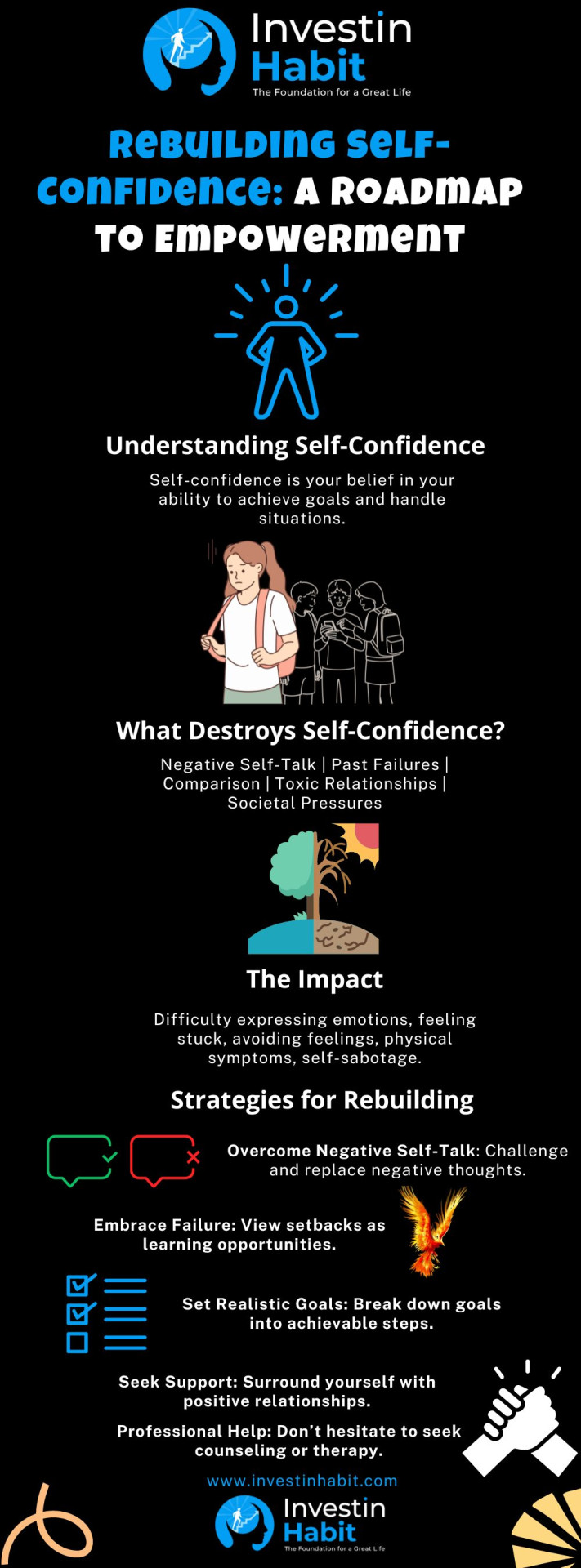
As we approach this part of our journey with open hearts and minds, let’s dive into the practical, tangible steps we can take towards rebuilding our self-confidence. It’s about transforming our struggles into stepping stones, turning each moment of doubt into an opportunity for growth. Here, we’ll explore strategies for overcoming negative self-talk, embracing failure, setting realistic goals, and the invaluable role of support and self-care.
Overcoming Negative Self-Talk
The conversation we have with ourselves shapes our reality. If you catch yourself being your own harshest critic, it’s time to shift that dialogue. Start by becoming a mindful observer of your thoughts. When you notice negative self-talk, pause and challenge these thoughts. Ask yourself, “Is this really true?” Often, you’ll find these are just old tapes playing out of habit, not truths. Replace them with affirmations that reflect your strengths and aspirations. Remember, the way we speak to ourselves matters deeply.
Embracing Failure as a Learning Opportunity
Failure is not the opposite of success; it’s part of the success journey. Each setback is ripe with lessons, offering invaluable insights that pave the way to future triumphs. Start by reframing how you view failure: instead of seeing it as a defeat, view it as a mentor. After a setback, ask yourself, “What can I learn from this?” This shift in perspective removes the sting of failure and replaces it with wisdom and resilience.
Setting Realistic Goals
Goals give us direction, but unrealistic goals can lead us down a path of frustration and self-doubt. The key is to set achievable, clearly defined goals that motivate rather than overwhelm. Break larger goals into smaller, manageable steps, celebrating each milestone along the way. This approach not only makes your dreams more attainable but also builds your confidence with each small victory.
The Role of Supportive Relationships
Never underestimate the power of a strong support network. Surround yourself with people who uplift you, believe in you, and encourage you to pursue your dreams. These relationships can be a source of strength and perspective, especially when self-doubt creeps in. Whether it’s friends, family, or a community that shares your interests, these connections remind us that we’re not alone on this journey.
Seeking Professional Help
Sometimes, the best way to tackle the roots of low self-confidence is with the help of a professional. Therapists and counselors can provide the tools and perspectives needed to navigate complex emotions and challenges. They can help you develop strategies tailored to your unique situation, fostering growth and healing in a safe, supportive environment.
Prioritizing Self-Care
Finally, nurturing your self-confidence means taking care of your whole self—body, mind, and spirit. Regular exercise, adequate rest, healthy eating, and mindfulness practices like meditation can significantly impact your mental and emotional well-being. When we feel good physically, it’s easier to maintain a positive outlook and feel confident in our abilities.
Rebuilding self-confidence is a journey of small steps, each one bringing you closer to the person you know you can be. It’s about embracing your imperfections, learning from your experiences, and celebrating your progress. Remember, you have the power to shape your self-confidence. With each act of self-compassion, each challenge faced with courage, and each goal met with determination, you’re not just rebuilding confidence; you’re redefining strength.
Let’s walk this path together, supporting each other with kindness, courage, and an unwavering belief in our potential. The journey towards rebuilt self-confidence is not just about reaching a destination; it’s about growing, learning, and finding joy in the process
FAQ Section
What causes low self-confidence?
Low self-confidence can result from a variety of factors, including negative self-talk, past failures and rejections, comparison with others, toxic relationships, societal and cultural pressures, workplace environment, stress, anxiety, depression, and other mental health issues. Understanding and addressing these factors are key steps in rebuilding confidence.
How can I overcome negative self-talk?
Overcoming negative self-talk involves becoming aware of your internal dialogue, challenging and replacing negative thoughts with positive affirmations, and practicing self-compassion. Mindfulness and cognitive-behavioral techniques can also be effective in changing habitual thought patterns.
What role do supportive relationships play in rebuilding self-confidence?
Supportive relationships provide encouragement, understanding, and validation, which are essential for rebuilding self-confidence. Surrounding yourself with positive influences helps counteract the effects of negativity and criticism, fostering a sense of belonging and acceptance.
Can professional help improve self-confidence?
Yes, seeking professional help from therapists or counselors can significantly improve self-confidence. They can offer personalized strategies, support, and guidance to address underlying issues contributing to low self-confidence, helping individuals develop healthier self-perception and coping mechanisms.
What are some practical strategies for rebuilding self-confidence?
Practical strategies for rebuilding self-confidence include setting realistic goals, embracing failure as a learning opportunity, practicing self-care, engaging in activities that reinforce your strengths and talents, and actively seeking positive feedback and support from others.
Conclusion
As we wrap up our journey through the intricacies of self-confidence, let’s take a moment to reflect on the ground we’ve covered. From understanding the roots of our self-doubt to embracing practical strategies for rebuilding our confidence, each step has brought us closer to recognizing our inherent worth and potential.
We’ve explored how internal dialogues, past failures, and comparisons can erode our self-confidence, and how external factors like toxic relationships, societal pressures, and workplace environments can further challenge our sense of self-worth. Yet, amidst these challenges, we’ve also discovered the power of recognizing these sources of doubt and the transformative impact of addressing them with intention and care.
Through practical strategies such as overcoming negative self-talk, embracing failure as a learning opportunity, setting realistic goals, and leaning on supportive relationships and professional help, we’ve seen that rebuilding self-confidence is not only possible but within reach. The journey requires patience, compassion, and persistence, but the destination—a place of stronger, more resilient self-belief—is worth every step.
As we conclude, I want to remind you that while self-confidence can indeed be shaken, it is never beyond repair. With time, effort, and the right approaches, the path to regaining your confidence is illuminated by your own strength and determination. Be patient and compassionate with yourself, recognizing that each day brings an opportunity for growth and self-discovery.
Call to Action:
Now, I’d love to hear from you. Have you faced moments of self-doubt? What strategies have helped you rebuild your confidence? Your stories are a testament to the resilience of the human spirit, and sharing them can inspire and uplift others who might be walking a similar path.
For those seeking further resources or professional support, remember that help is available, and reaching out is a brave first step toward healing and growth. Whether through counseling, support groups, or educational materials, the support you need is out there.
Let’s continue this conversation, sharing our experiences and resources, as we support one another on the journey toward renewed self-confidence. Together, we can navigate the challenges, celebrate the victories, and embrace the journey of becoming our most confident selves.
Transform Your Habits, Transform Your Life
Are you ready to turn the page to a new chapter in your life?
Stop dreaming, start achieving. Our exclusive newsletter delivers:
- Science-backed hacks: Master the psychology of habit formation used by CEOs and Olympians.
- Actionable strategies: No fluff, just practical steps to crush procrastination and dominate your goals.
- + a FREE surprise bonus 🎁 to jumpstart your transformation!
Don’t settle for mediocre. Subscribe now!