

Have you ever felt that knot in your stomach tighten as you approach a group of strangers? Maybe your palms get sweaty, your mind goes blank, and suddenly you’re scrambling for something, anything, to say. We’ve all been there – feeling nervous or unsure when meeting new people. It’s a common challenge, and often it can hold us back from forming new friendships, building valuable connections, and making a positive first impression.
But here’s the good news: confidence is a skill, not a magic trick. It can be learned, practiced, and refined over time. In this blog post, we’ll guide you through actionable steps and helpful tips to help you feel confident and comfortable in any social situation, allowing you to connect authentically with new people and unlock the potential these connections hold.
Inside this Article
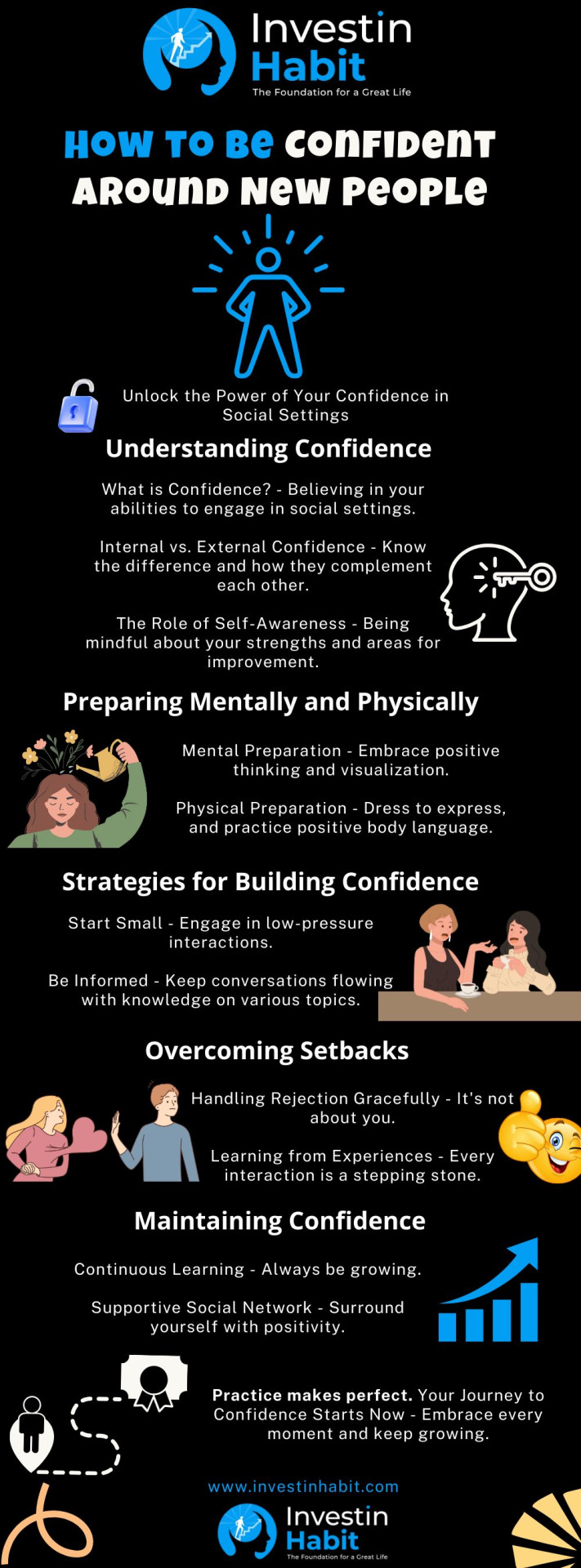
Understanding Confidence

Let’s dive right into the heart of what it means to carry yourself with confidence, especially when you’re stepping into a room full of new faces. I know, just the thought can send a flutter through your stomach, right? But here’s the thing—confidence in these moments isn’t just about putting on a brave face. It’s about feeling a genuine sense of ease within yourself, knowing you’ve got this, no matter the crowd.
So, what does confidence around new people really mean? At its core, it’s about harboring a quiet inner belief in your own abilities and worth. It’s not about being the loudest in the room or the one who has all the right things to say. Rather, it’s about stepping into a space and feeling secure enough in yourself that you can navigate conversations and connections without that inner critic taking the lead.
Confidence is believing in your abilities to engage in social settings.
Now, let’s talk about the two sides of the confidence coin—internal confidence and its external expression. Internal confidence is that steady hum of self-assurance inside you. It’s not always loud, but it’s there, whispering, “You’ve got this,” even when you’re a bit out of your comfort zone. External confidence, on the other hand, is how that inner sureness translates into your actions and demeanor. It’s the way you hold eye contact, the ease with which you engage in conversation, and even the openness of your body language.
But here’s a little secret: these two facets of confidence feed into each other. When you feel good on the inside, it shines through on the outside. And sometimes, just acting confident can start to kindle that inner spark of self-assurance.
Now, where does self-awareness fit into all of this? Well, think of self-awareness as the best friend of confidence. It’s about knowing your strengths, sure, but it’s also about understanding your weaknesses and embracing them. It’s recognizing when you’re feeling nervous and having strategies to cope with those jitters. Self-awareness allows you to navigate social interactions with a clear sense of who you are, what you stand for, and what you bring to the table. And guess what? People are drawn to that level of authenticity.
Being self-aware helps you tune into your feelings, adjust your approach as needed, and handle social situations with a grace that feels true to you. It’s not about never feeling awkward or unsure (we all do at times!), but about knowing how to manage those feelings so they don’t manage you.
So, as we venture further into the world of building confidence, remember: this journey is as much about understanding and nurturing your inner self as it is about how you present yourself to the world. And I’m here with you, every step of the way, cheering you on as you discover just how capable and deserving of connection you truly are. Let’s embrace this adventure together, shall we?

Transform Your Life with InvestInHabit

Ready for real change? Join us and get over:
- 200+ Personal Development Worksheets,
- 100+ Blog Post MindMaps
for FREE! 😍 + Our newsletter offers the latest in habit formation and self-improvement, straight to your inbox.
Subscribe now and Start redefining your mindset today! Join our community committed to success!
Preparing Mentally and Physically

Mental Preparation
Alright, let’s roll up our sleeves and get into the nitty-gritty of gearing up both your mind and body for those nerve-wracking first encounters. First up, mental preparation—because, believe it or not, the battle for confidence is often won or lost in the mind.
Have you ever noticed how your mood shifts when you think positively? It’s like the sun peeking through clouds on a dreary day. This is the essence of positive thinking and visualization techniques. Imagine walking into a room, a light aura of confidence surrounding you, engaging in delightful conversations, and leaving a spark of your personality with everyone you meet. Pretty uplifting, right? This isn’t just fanciful dreaming; it’s a powerful tool to prep your brain for success. Before stepping into a new social setting, take a moment to visualize this positive outcome. See it, feel it, believe in it. It’s about programming your mind to expect success rather than fear the worst.
Now, let’s chat about self-talk and affirmations, your secret weapons in the quest for confidence. I know, talking to yourself might sound a bit out there, but hear me out. The dialogue you have with yourself can either be your greatest ally or your biggest foe. Catch those sneaky negative thoughts that tell you you’re not enough or that you’ll somehow mess up. Replace them with powerful, positive affirmations. “I am capable. I am interesting. I belong here.” Say them out loud, whisper them to yourself, or write them down. Make them a mantra. It’s all about rewiring your brain to default to confidence instead of doubt.
This process might feel a bit awkward at first, but trust me, with practice, it becomes second nature. Think of it as building muscle. Each positive thought and each visualization is like a rep in your mental workout, making you stronger and more prepared for the social marathons ahead.
By focusing on mental preparation, you’re laying down the foundation of true, unshakeable confidence. It’s not about never feeling nervous; it’s about equipping yourself with the tools to handle those nerves and channel them into something positive. So, let’s keep these techniques in our back pocket, ready to pull out whenever we need that extra boost.
Physical Preparation
Now that we’ve got our minds in the right place, let’s talk about getting our outer selves prepped and primed. Believe it or not, the way we groom, dress, and carry ourselves plays a massive role in how confident we feel. It’s like putting on armor for the day—but instead of preparing for battle, we’re gearing up to make great first impressions.
First up, grooming. I’m not saying you need to look like a model straight out of a magazine, but taking a little extra time to ensure you’re clean, tidy, and smelling nice can do wonders for your self-esteem. It’s about respecting yourself and the people you’ll meet. Whether it’s a neat haircut, a clean shave, or just making sure your nails are tidy, these small acts of self-care send a powerful message to yourself: “I’m worth the effort.”
Dressing appropriately is another key aspect. You know that feeling when you’re wearing something that just feels ‘right’? It’s as if you’ve donned a superhero cape. Your outfit doesn’t need to be flashy or expensive, but it should make you feel good and be suitable for the occasion. If you’re unsure about the dress code, err on the side of slightly overdressed rather than underdressed. And remember, the best accessory you can wear is confidence—cheesy, but true.
Now, let’s talk body language, the unspoken hero of first impressions. Ever noticed how some people just have that aura of confidence? A lot of it comes down to how they carry themselves. Stand tall, shoulders back, head up—this posture not only makes you appear more confident but actually makes you feel more confident too. It’s like a feedback loop for your self-esteem. Eye contact is another biggie. It shows you’re engaged and interested in the conversation. And don’t forget to smile—it’s the universal signal of friendliness and approachability.
But here’s the kicker: all these physical preparations are not about changing who you are. They’re about presenting the best version of yourself to the world. It’s about enhancing your natural qualities and letting your true self shine through. So, as you get ready to step out and meet new people, remember, it’s not just about looking good on the outside—it’s about feeling good on the inside. That’s where true confidence begins.
Strategies for Building Confidence in Social Settings
 Alright, are you ready to dive into some real, actionable strategies to boost your confidence in social settings? Great! Let’s tackle this head-on, together. The secret sauce? Starting small. Yes, you heard me right. Just like you wouldn’t run a marathon without some shorter races under your belt, diving into big social gatherings without a warm-up can feel daunting.
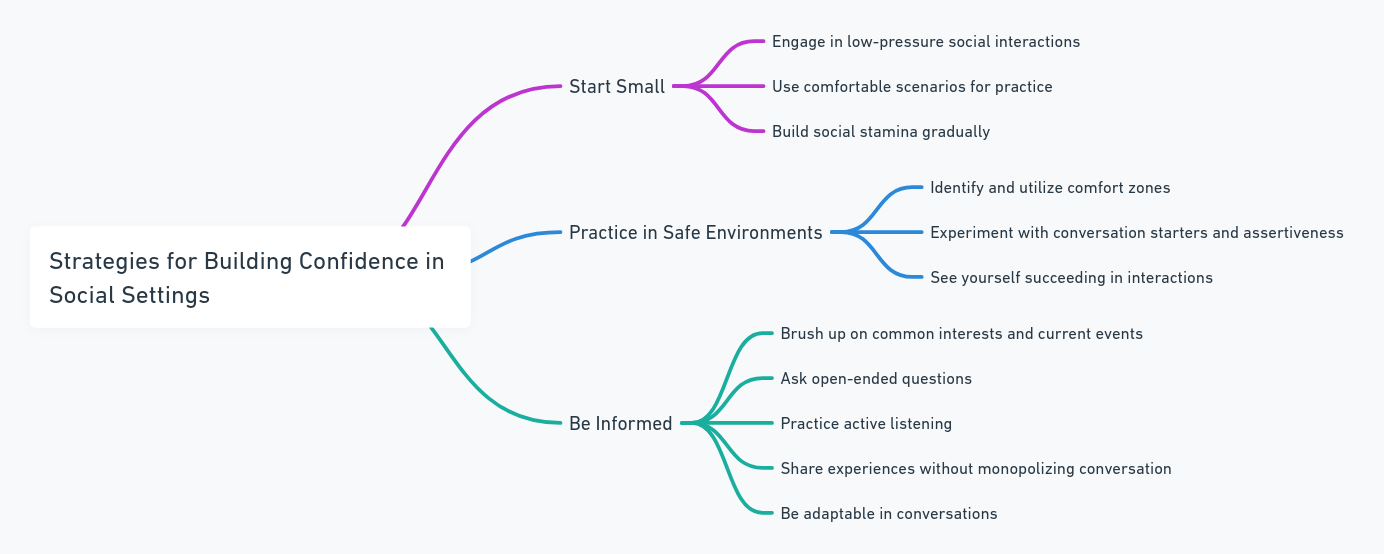
Start Small
Think about it: engaging in small, low-pressure social interactions is like dipping your toes in the water before plunging in. It’s about finding those comfortable scenarios where the stakes aren’t sky-high, and you can practice being your awesome self with less anxiety. Maybe it’s striking up a conversation with a barista, chatting with a neighbor, or even engaging more with your coworkers during breaks. These interactions are your training ground.
The beauty of starting small is that it allows you to build up your social stamina gradually. Each positive interaction, no matter how minor it seems, is a victory. It’s proof that you can do this, that you can connect with others and come out the other side not just okay, but actually feeling good. These moments add up, building your confidence muscle bit by bit.
Now, let’s talk about practicing in safe environments. Imagine a place or a group where you feel most at ease—maybe it’s with a close friend, a supportive family member, or a hobby group that shares your interests. These are your safe spaces, where the fear of judgment is low and the comfort level is high. Engaging more in these settings can be incredibly empowering. It’s like rehearsal for the main event. You get to try out new conversation starters, experiment with being more assertive, or even practice your storytelling skills, all without the intense pressure of needing to impress.
The value here is immense. Not only do you get to hone your social skills in a forgiving environment, but you also get to see yourself succeeding in interactions, which is a huge confidence booster. And guess what? The more you do it, the more your brain starts to associate social interactions with positive outcomes, gradually dialing down the anxiety and upping the confidence.
So, as we move forward, remember: small steps lead to big leaps. By starting small and practicing in safe environments, you’re laying the groundwork for more substantial social success. It’s about giving yourself the permission to take it one step at a time, celebrating the small wins, and recognizing your progress. You’ve got this! Let’s keep moving forward, together.
Be Informed
Now that we’ve talked about starting small and practicing in safe environments, let’s move on to another golden nugget of advice: being informed. Have you ever found yourself in a situation where the conversation seems to be fizzling out, leaving you scrambling for something—anything—to say? We’ve all been there, and it’s totally normal. But here’s a little trick that can turn those awkward silences into opportunities for connection: brushing up on common interests and current events.
Being knowledgeable about a wide range of topics doesn’t mean you need to be a walking encyclopedia. It’s about having just enough familiarity with various subjects so you can engage in conversations with confidence and curiosity. Whether it’s the latest book everyone’s talking about, a popular TV show, sports, tech trends, or even just the weather—having a few go-to topics up your sleeve can make all the difference.
So, how do you stay informed without feeling overwhelmed? Start by picking a few areas of interest that genuinely intrigue you. This could be anything from cooking and fashion to science and politics. Then, make it a habit to skim through news headlines, listen to podcasts, or read articles related to these interests. Not only does this keep you in the loop, but it also gives you a treasure trove of conversation starters.
Now, onto keeping those conversations flowing smoothly. Here are a few tips:
- Ask open-ended questions: Instead of questions that can be answered with a simple yes or no, opt for ones that encourage a more detailed response. For example, “What did you think about the latest episode of [show]?” or “How did you get into [hobby]?”
- Practice active listening: This means really focusing on what the other person is saying, showing interest, and responding in a way that moves the conversation forward. It makes the other person feel valued and opens up more avenues for discussion.
- Share your experiences, but don’t monopolize the conversation: It’s a two-way street. Sharing your thoughts and experiences can add depth to the conversation, but be sure to balance it with genuine interest in what the other person has to say.
- Be adaptable: Sometimes, despite your best efforts, a topic might not take off the way you hoped. That’s okay! Be ready to gently steer the conversation in a new direction if needed.
Remember, being informed and keeping conversations flowing isn’t about impressing people with your knowledge. It’s about creating a shared space where ideas and stories can be exchanged freely and enjoyably. So, let’s approach conversations with curiosity, openness, and a dash of preparation. You might be surprised at how easily connections can form when you do.
Overcoming Setbacks

Let’s face it, no matter how much we prepare, sometimes things just don’t go as planned. You might face rejection or find yourself in an awkward situation that makes you want to crawl into a shell. But here’s the thing—I want you to know that it’s perfectly okay. These moments? They’re not roadblocks; they’re stepping stones on your journey to becoming more confident in social settings.
Handling Rejection with Grace
First off, dealing with rejection. It stings, doesn’t it? Whether it’s not clicking with someone you hoped to befriend or feeling left out, it’s a tough pill to swallow. But here’s a perspective shift for you: every rejection is not a reflection of your worth. It’s simply a sign that something wasn’t the right fit, and that’s alright. The grace comes in accepting this, allowing yourself to feel the disappointment, but not letting it define you. Instead, use it as a learning opportunity—maybe there’s a takeaway about how you approach people or initiate conversations. Reflect, adjust, and approach your next interaction with openness and the wisdom gained from this experience.
Embracing Awkward Situations
Now, onto navigating those cringe-worthy awkward moments. Who hasn’t been there, right? Maybe you stumbled over your words or had a spinach-in-teeth scenario. Here’s a little secret: everyone has these moments. The key to overcoming them is to not take yourself too seriously. A bit of humor goes a long way in diffusing tension. Acknowledge the awkwardness, laugh it off if you can, and move on. It shows you’re human and relatable, which, believe it or not, can endear you more to others.
Learning from Experiences
And finally, the most empowering part of facing setbacks is what you take from them. Each interaction, good or bad, is packed with insights about what works for you and what doesn’t. Instead of labeling experiences as failures, view them as invaluable feedback. Did something make you particularly anxious? Did a certain type of conversation go really well? Analyze these moments with curiosity rather than judgment.
Remember, building confidence is a process, and every step forward counts, even the ones that feel like steps back. These experiences are not just stumbling blocks but opportunities to grow stronger, more resilient, and more adaptable in your social interactions.
So, the next time you face a setback, take a deep breath, give yourself a pat on the back for putting yourself out there, and know that with each experience, you’re getting better and building a more confident you. Let’s embrace the ups and downs together, shall we?
Maintaining Confidence

Alright, you’ve made it this far, and I’m so proud of the strides you’ve taken to build and boost your confidence in social settings. But how do we keep that momentum going? How do we ensure that this newfound confidence doesn’t just flicker out after a few weeks or months? Let’s explore some key strategies for sustaining confidence over time.
Continuous Learning and Stepping Out of Comfort Zones
One of the most effective ways to keep your confidence levels high is by committing to continuous learning and regularly stepping out of your comfort zones. Growth doesn’t happen in a place of safety and familiarity; it happens when you’re a little bit on edge, trying something new, and challenging yourself. Ever noticed how accomplishing something you were initially scared of can give you a massive confidence boost? That’s what we’re aiming for.
Make it a habit to learn new things, whether it’s picking up a new hobby, learning a new language, or simply reading books on topics that intrigue you. Each new skill or piece of knowledge you acquire not only makes you more interesting but also adds to your self-esteem. Similarly, pushing yourself to step into unfamiliar social situations can accelerate your confidence. Start small, but make it a point to do something that scares you a little, regularly. It could be attending a networking event, joining a club, or even speaking up more in meetings. The more you do it, the more natural it becomes.
The Role of a Supportive Social Network
Having a supportive social network is like having a safety net that catches you whenever you’re about to fall. These are the people who cheer for you, offer a shoulder to lean on, and remind you of your worth when you forget it. They’re crucial in maintaining your confidence because they provide encouragement, feedback, and, yes, sometimes a dose of tough love.
Invest in relationships with people who uplift you and believe in you. Surround yourself with positivity and constructive feedback. It’s also important to be that supportive figure for others; being able to boost someone else’s confidence can, in turn, increase your own. Remember, confidence doesn’t thrive in isolation. It’s nurtured through connections, shared experiences, and the sense that you’re not alone in your journey.
In maintaining your confidence, remember that it’s a dynamic process. Some days will be easier than others, and that’s okay. What matters is that you keep moving forward, keep learning, and keep surrounding yourself with people who help you grow. Confidence, much like a muscle, needs regular exercise to stay strong. So, let’s keep pushing, keep growing, and keep shining. You’ve got this, and I’m here rooting for you every step of the way.
Resources and Tools

You’ve been doing an amazing job at working on your confidence and social skills. To help you keep that momentum going, I’ve gathered some fantastic resources that can provide you with even more insights and techniques. Whether you love diving into a good book, listening to podcasts on the go, or engaging with interactive courses and apps, there’s something here for everyone.
Books to Boost Your Social Skills and Confidence:
- “How to Win Friends and Influence People” by Dale Carnegie – A classic that never ages, filled with timeless advice on understanding people and making meaningful connections.
- “Quiet: The Power of Introverts in a World That Can’t Stop Talking” by Susan Cain – This book is a must-read if you’ve ever felt like your introversion was something to overcome. It teaches you how to harness your strengths.
- “Daring Greatly” by Brené Brown – Brené Brown dives deep into the importance of vulnerability and how it can lead to greater confidence and stronger connections.
Podcasts for Daily Doses of Confidence:
- The Art of Charm – Offers expert advice on improving social skills, networking, and relationships.
- TED Talks Daily – Brings you the latest talks in audio. Covering a range of topics, it’s a great way to get inspired and learn something new every day.
- The Confidence Podcast by Trish Blackwell – Focuses on boosting confidence, combating self-doubt, and strategies to live your best life.
Courses to Elevate Your Social Savvy:
- “Improving Your Social Skills” on Coursera – Offers practical strategies to enhance your communication and interpersonal skills.
- “The Science of Well-Being” on Coursera – Taught by Yale University, this course helps you increase your happiness and build more productive habits, including confidence.
- Udemy has a variety of courses on public speaking, body language, and confidence-building – Just search for what you’re interested in, and you’ll find a course that suits your needs.
Apps and Exercises for a Positive Mindset:
- Headspace or Calm – These meditation apps can help reduce anxiety and increase mindfulness, contributing to a more confident mindset.
- Happify – Offers science-based activities and games to reduce stress and improve your outlook on life.
- Daily journaling – Spend a few minutes each day writing down what you’re grateful for, your successes, or positive affirmations. It’s a powerful way to shift your focus towards the positive.
Remember, the journey to building confidence and improving social skills is a personal one, and there’s no one-size-fits-all solution. Explore these resources, find what resonates with you, and don’t be afraid to try new things. Every step you take, no matter how small, is a step towards a more confident and connected you. Keep going, and know that I’m cheering you on every step of the way!