

Inside this Article
Introduction
A former Facebook executive has spoken out about the harm that the social network is doing to society.
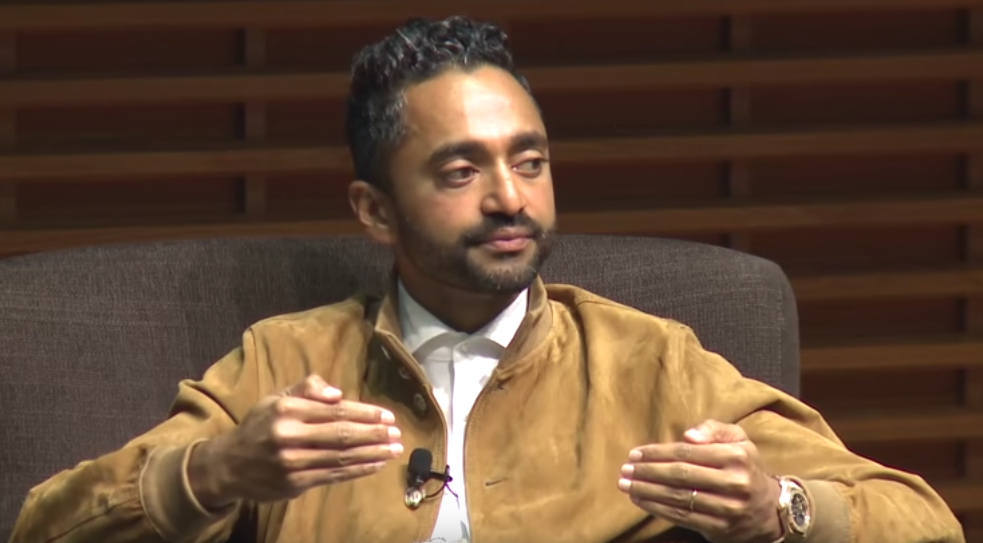
Chamath Palihapitiya joined Facebook in 2007 and eventually became its vice president for user growth.
He said that he feels “tremendous guilt” about the company he helped to create.
“I think we have created tools that are ripping apart the social fabric of how society works,” he told an audience at Stanford Graduate School of Business before he recommended that people take a “hard break” from social media.
He also said that he didn’t want to be programmed, emphasizing he “doesn’t use this shit.”
Palihapitiya said that his children are not allowed to use “this shit.”
He fears that bad actors can manipulate large groups of people and that users compound the problem in their quest to create an idealized version of themselves:
“An early investor Sean Parker said he has become a ‘conscientious objector’ to social media, and that Facebook and others had succeeded by ‘exploiting a vulnerability in human psychology.’
“A former product manager at the company, Antonio Garcia-Martinez, has said Facebook lies about its ability to influence individuals based on the data it collects on them, and wrote a book, Chaos Monkeys, about his work at the firm.” ~ Source: theverge.com
Social media sites have algorithms that analyze what pages you like, things you search, your interests, and the activities you engage in. Then those sites show you exactly the things that you want to see.
This triggers the confirmation bias which reinforces your worldview.
Not only are social media sites giving you exactly what you want, but these sites are recommending what you should like based on your previous choices. This creates an addictive experience.
That can present a challenge if you want to change for the better because, when you login into these sites, you’ll see the stuff that appealed to a past version of you and not the current version of you.
So, you must be very careful about the content you are subscribing to.
We must become more responsible about the stuff we post on our social media. We must stop spreading the fear-based information of the mass media.
We must recognize that we are the ones who enable this fear-based paradigm to continue.
Social media has been shown to spread misinformation and fake news stories faster than news on TV.
Social proof can be a powerful brainwashing mechanism of social media. Just because an influencer/page has a lot of likes doesn’t mean that it’s right and all-knowing.
Celebrities leverage social proof to promote products. People fall into this trap and waste money on products that they don’t really need.
New research suggests that heavy social media use might be correlated with lower self-control, which marketing experts believe could lead to higher spending.
Social proof can be used for good but most people abuse this power, so keep that in mind.
Don’t assume that the opinion of an influencer is somehow superior and that you need to listen to it.
Do your own research on the issues that have been brought to your attention and decide for yourself whom you’re going to support.
Realize that what you see on social media is not real. People on social media carefully select the best of their lives. They promote themselves as being successful, living the ideal lifestyle, and all that good stuff.
They intentionally don’t show the bad stuff. A lot of people realize this but still fall into the trap of comparing themselves to some carefully selected ideal.
Not only is social media brainwashing you, but it is also addictive and was designed to be addictive.
Children and teenagers are growing up without realizing that social media is an addiction.
Every time someone likes your post, every time you get a notification and your phone buzzes, every time someone watches your Instagram story, you get a little dopamine boost.
Dopamine is addictive, so you naturally do what is necessary to get more of it into your brain.
Chamath Palihapitiya said that this creates a dopamine-driven feedback loop that is destroying how society works.
Social media is slowly rewiring your brain. Your conditioned brain then becomes happy when you gain followers. Every time you lose followers, you become depressed.
When you feel depressed, you post something on social media in the hopes of gaining a few likes so that you get a dopamine boost.
Recognize that this is a cycle that never ends. It keeps you trapped.
Social media was designed to be addictive so that you spend as much time on it as possible.
Let’s look at some other negative health effects.
Social media’s effects on relationships:
The connection between humans is deteriorating. Social media is changing how people behave with each other.

People feel more alone than ever despite having hundreds of online connections. Social media gives us a false sense of connection.
What we don’t see are the nonverbals—the eye contact, tone of voice, posture, gestures, and facial expressions. All of that is necessary to form a deep human connection.
As a result, teenagers are growing up forming surface-level connections.
People are growing up without recognizing that that’s NOT how forming human connection works.
That’s brainwashing because social media is tricking us into changing beliefs and thoughts about how forming human connection works.
These beliefs completely change our attitudes and behaviors. All of this is happening without our consent and often against our will.
Social media is tapping into our basic need to form human bonds and exploits it for its own money-making business.
Its goal is to suck as much of our attention as possible, so it keeps making money from the advertisers who advertise on social media platforms.
As humans, we need in-person connections to feel satisfied. Social media is tricking our brains into believing we’re developing relationships when, in fact, we are not—which is making people lonely and depressed.
Loneliness even leads some people to commit suicide.
Source: Teens and Technology: The Impact of Social Media on Relationships, Friendships and Families (pewresearch.org)
Brainwashing works best when in isolation and when the subject is dependent. These are the perfect conditions that social media creates.
Another negative effect is that children are growing up with antisocial behavior. They are afraid to talk to people.
https://www.facebook.com/diply/
videos/1885208844890802/
How to solve this:
- Unfollow mainstream media pages. Mainstream media (we talked about why in this post -> mainstream media brainwashing) has moved to social sites like Facebook, Twitter, YouTube, and Instagram.
“According to a study conducted by the American Press Institute, 88 percent of the millennials surveyed get their news from Facebook, 83 percent from YouTube, and 50 percent from Instagram.” ~Source: affinitymagazine.us
– Unfollow people on social media who don’t have your best interest at heart and who don’t contribute any REAL value to your life.
You don’t need to know everything about everyone. If something is important, you will talk about it in person.
Unfollow people who are brainwashed by the mass media and who spread the news of mass media.
Unfollow pages that are not aligned with peace, love, compassion, self-improvement, and open-mindedness.
Ask yourself: Is this page really helping me realize my highest potential?
- Turn off 90% of the notifications and unfollow 90% of the people.
- Use social media as a tool for growth and learning. Stop using it for mindless entertainment. Don’t let technology use you. Ask yourself if you’re using it productively and intentionally.
- Be more responsible with social media usage. Realize that social media sites have algorithms that adapt to your likes and then show you related content.
- Don’t be an echo for negative news and hate speech. Be a voice!
Realize that you are also a thing that is being consumed and that you are responsible for the influence you are having on society.
- Don’t check social media first thing in the morning.
You need to reserve your first hours in the morning for working on yourself, for an empowering morning routine.
Also, if you want better sleep, it’s a good idea to stop looking at electronic screens one hour prior to sleeping.
- Use social media in the right frame of mind.
Don’t assume that this man or woman is perfect just because he or she is posting all the good stuff.
Realize that people have flaws and bad days. They intentionally show only the good stuff.
- Stop caring about what other people will think of you.
Stop:
*caring about when you want to post something—stop posting only content that makes you look good to others.
*caring about getting likes on your posts,
*caring about how many likes other people get and who likes who and who goes to a certain party or place,
*caring about other people’s judgments of your idealized self,
*doing things solely for the external validation of others,
*expecting other people to show you your self-worth. Realize that you are worthy. If you think you’re not, improve your self-esteem by reading the classic The Six Pillars of Self-Esteem by Nathaniel Brandon.
- Stop comparing yourself to others. Stop comparing your life, looks, relationships, and wealth to those of other people.
Excessive comparing to ideals causes negative feelings of being not good enough, which can lead to issues with mental health and psychological well-being.
Realize that you are perfect in your spiritual essence, so comparing yourself to others is futile. You can realize this with spiritual practices like meditation and mindfulness.
- Stop seeing the displayed portrayal of people as a valid representation of who they are.
Social media platforms are sites of carefully calibrated displays.
85% of teen social media users agree that people get to show different sides of themselves on social media that they cannot show offline.
77% of social media-using teens agree that people are less authentic and real on social media than they are offline.
40% of teen social media users report feeling pressure to post only content that makes them look good to others.
39% of teens on social media say they feel pressure to post content that will be popular and get lots of comments or likes.
Source: Teens and Technology: The Impact of Social Media on Relationships, Friendships and Families(pewresearch.org)
- Stop assuming that influencers don’t have struggles and that their lives are perfect.
- Be careful about whose advice you accept. The more mainstream something is, the more likely it’s wrong.
- Realize that having a perfect social media profile will not make you happy, content, and at peace with yourself.
This is not how human psychology works. Hint: Fulfillment comes from the inside, not from the outside.
- Realize that you don’t need to be popular on social media to be happy.
Often, those who portray how good their life is on social media are hollow and unfulfilled.
When you understand the psychology of happiness, you also understand that fame cannot fulfill you.
- Learn to use social media in moderation. Become aware of when you’re scrolling through social media like a zombie, and redirect your energy into what you need to do to create a good life.
- Learn to enjoy the moment without having to post about it on social media. Fully savor and enjoy the moment; take a picture only after that.
Life is too short to prioritize taking pictures without allowing ourselves to first fully appreciate our experiences. 🙂
- Do a social media detox if you or your kids are using social media too much.
Use programs like Cold Turkey, Qustodio, Covenant Eyes, or other apps to block access to these sites for a period of time or set a schedule in these programs for when you can access these sites.
Ask yourself: Why am I using it? What positives does it offer me? What negatives does it bring me?
- Consider deleting your social media profiles if you are using them excessively and if you are noticing mental health effects and other negative consequences.
- Don’t fear missing out. Don’t be a sheep and try to fit in. Be happy to stand out.
- Commit to working in focused blocks (30 or 60 minutes, then take a pause and stretch). Don’t leave room for social media notifications to distract you from doing important work.
- Cultivate real, in-person relationships with people instead of only online relationships. Some people who are your friends online might not be your real friends.
- When you have in-person interactions, stop checking your phone. Give the other person your full attention.
Stop engaging with other people online when a real person is in front of you. Be respectful of the time people give to you, as they will never get it back.
https://www.facebook.com/InnerlightMedia/
videos/505790973240599/
– If you are a parent, consider setting parental control software on the devices and PC that your kids are using (example: Teentor).
Educate your children on the dangers of social media that were presented in this article.
Decide when your kids are ready to start using social media. Usually, by the time they reach high school, they are more likely to be independent thinkers and form their own judgments on what they have seen and experienced.
They are more likely to make concrete judgments on the world and how it really is vs. how social media makes it out to be.
Conclusion
What changes are you going to make as a result of reading this article? Post them in the comments section below.
Make sure to share this article so that more people become aware of the toxic influences of social media and can change for the better.