

Have you ever paused to take a deep dive into your inner world?
Introspection is an incredibly powerful tool that can unlock your potential for personal growth and self-discovery.
By asking yourself thought-provoking questions and reflecting on your experiences, you can gain invaluable insights and perspectives that can ultimately lead to positive change in your life.
In this article, I will introduce you to powerful questions for introspection.
Regular self-reflection allows you to reassess your beliefs, values, goals, and emotional well-being. It fosters self-awareness, helps you recognize patterns in your life, and empowers you to make more informed decisions.
The benefits of introspection extend beyond just personal development, as it can also contribute to healthier relationships, improved mental health, physical health and even professional success.
In this blog post, we’ll explore the power of introspection by providing you with a collection of thought-provoking questions for introspection that will guide your self-reflection journey. We’ll cover different areas of your life such as personal values, goals, relationships, career, mental and emotional well-being, and habits.
You will discover more than 100 self-reflection questions. Asking yourself the right questions does wonders.
So, grab a notebook or find a quiet space, and let’s embark on this exciting journey of self-discovery together!

Transform Your Life with InvestInHabit

Ready for real change? Join us and get over:
- 200+ Personal Development Worksheets,
- 100+ Blog Post MindMaps
for FREE! 😍 + Our newsletter offers the latest in habit formation and self-improvement, straight to your inbox.
Subscribe now and Start redefining your mindset today! Join our community committed to success!
Inside this Article
Questions for Personal Values and Beliefs
One essential aspect of introspection, which helps you to know yourself better, involves examining your personal values and beliefs. Your core values are the guiding principles that influence your decisions and actions. By understanding them, you can ensure that your choices are aligned with what truly matters to you.
Similarly, challenging your beliefs, negative thoughts and assumptions can help you break free from limiting thought patterns and gain a broader perspective.
So, how can you get started with exploring your values and beliefs? I’ve got you covered with some examples of introspective questions that you can use as a starting point. Remember, there’s no right or wrong answer here; the goal is to gain insight into your inner world and foster self-awareness.
Ask yourself self-reflection questions like:
- What is important to me?
- What would I do if there were no limitations?
- What are my top three values in life, and why are they important to me?
- In what ways do my actions reflect these values?
- Are there any beliefs I hold that might be limiting my personal growth?
Reflecting on moral dilemmas you’ve faced can also yield important insights. Ask yourself:
- What was the moral dilemma I faced?
- What options did I have?
- How did I decide what to do?
- Did my core values influence my decision?
- If I were in the same situation now, would I make the same decision? Why or why not?
Reflecting on these questions can provide valuable insight into your ethical framework and decision-making processes.
Look inward and use these questions to help you get to the root of your thoughts and emotions. These are deep questions to ask, that yield incredibly valuable insights. At one point I have spent 3 weeks contemplating my values.
When one does not take the time to reflect on their own values, they may walk the path set by others. Many individuals find themselves chasing after materialistic ambitions, like sculpting a perfect physique or possessing a fancy iron horse, guided by the social trends rather than their own spirits.
As you ponder these questions, you might discover some surprising insights about yourself and develop a deeper understanding of your values and beliefs. This self-awareness can empower you to live a more authentic, purposeful, and fulfilling life.
Take a step back, dive deep into the self-reflection process and become the person you want to be.
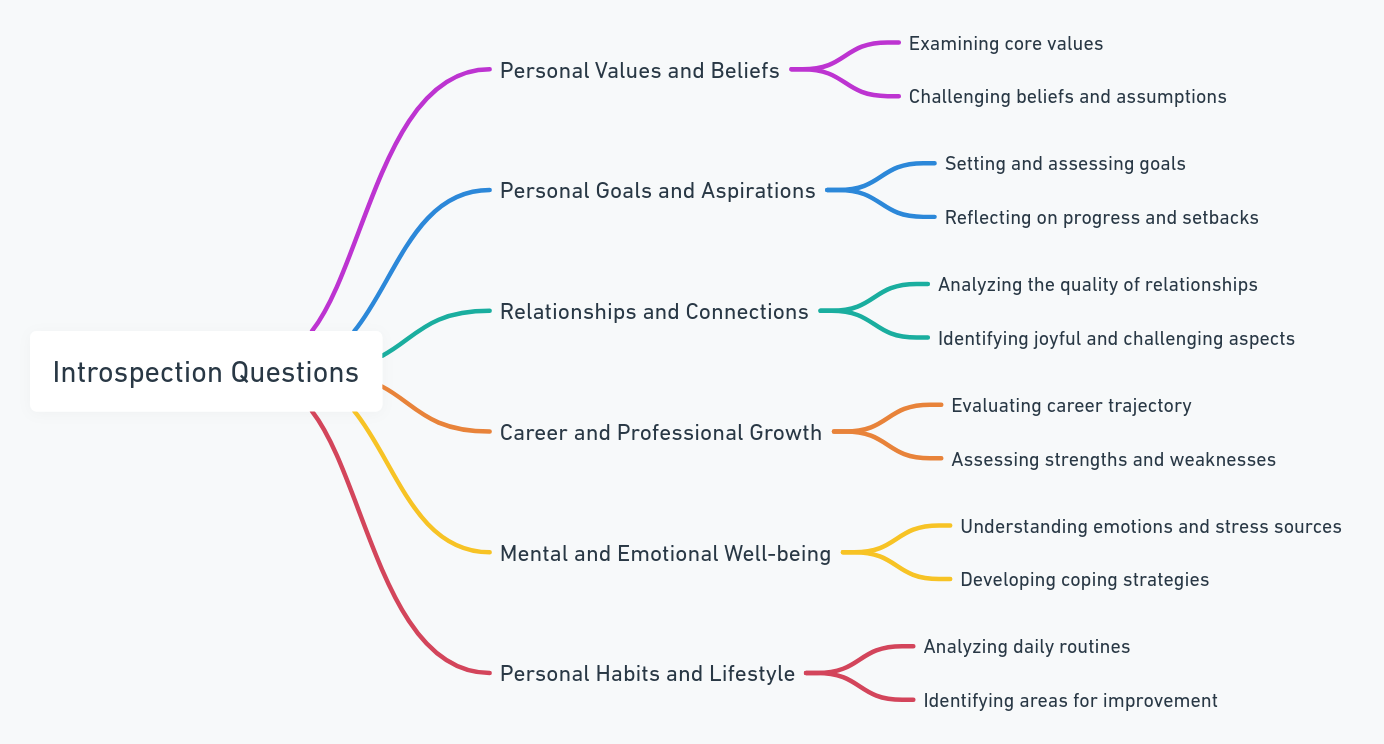
Self-reflection Questions for Personal Goals and Aspirations
Now, let’s talk about another crucial aspect of introspection: examining your personal goals and aspirations. Setting both long-term and short-term goals is essential for personal growth, as it helps you create a roadmap for your life and stay focused on what truly matters.
Furthermore, regularly assessing your progress and reflecting on setbacks can provide valuable insights that guide you towards success.
So, how can you effectively reflect on your goals and aspirations?
I’m here to help you with that.
Begin by asking yourself some thought-provoking questions and using introspective prompts that encourage self-exploration and evaluation. For example, consider questions and prompts like:
- What are my most important long-term goals, and how do they align with my values?
- Reflect on a time when you made significant progress towards a long-term goal. What strategies or actions contributed to this success?
- What short-term goals can I set to help me achieve my long-term aspirations?
- Think about a goal that seems challenging to reach. What resources or support could help you overcome these challenges?
- What challenges have I encountered along the way, and how can I learn from them?
- Imagine your ideal life five years from now. What steps do you need to take to make this vision a reality?
- Are there any adjustments I need to make to my current goals or action plans?
- Consider a setback or obstacle you’ve encountered in pursuing a goal. What did you learn from this experience, and how can you apply these lessons in the future?
- How do I maintain motivation and stay committed to my goals?
- Visualize achieving a significant long-term goal. How does this make you feel, and how can you use this feeling to maintain motivation?
- What resources or support do I need to achieve my aspirations?
- Reflect on a short-term goal you recently achieved. How did this accomplishment contribute to your long-term aspirations?
Reflecting on these questions and prompts can help you gain clarity on your objectives, recognize your accomplishments, and identify areas where you might need to adapt or refocus your efforts.
Remember, the key is to approach this introspective process with honesty and curiosity. By engaging in regular self-reflection, you’ll be better equipped to make informed decisions, overcome obstacles, and ultimately, achieve your dreams. So go ahead, and let the power of introspection guide you towards your goals and aspirations!
Self-reflection Questions for Relationships and Connections
Let’s dive into another essential area of introspection: your relationships and connections. After all, our interpersonal relationships play a huge role in our overall happiness and well-being. By reflecting on your relationships, you can gain insights into what brings you joy and fulfillment, as well as what challenges you might need to address or overcome.
So, how can you effectively examine your relationships and connections? Start by asking yourself some thought-provoking questions that encourage you to delve deeper into your interpersonal experiences. For instance, you might ask yourself:
- What qualities do I value most in my friendships and partnerships?
- How do I show up for others in my relationships?
- What can I learn from past or current relationships that didn’t work out as expected?
- How do I feel after spending time with my partner/friend? Energized? Drained? Loved? Frustrated?
- Do I feel comfortable expressing my feelings and thoughts honestly with my partner/friend?
- How do our personal goals and values align?
- Do I often compromise my own needs or boundaries in this relationship?
- How has this relationship evolved or changed over time?
- What is my role in this relationship? How do I contribute positively? Negatively?
- How does this relationship fit into my overall life goals and aspirations?
- Am I able to be my authentic self in this relationship?
- What are the things I appreciate most about my partner/friend?
- How does this relationship challenge me or encourage my personal growth?
- How do we express love or appreciation for each other?
- What are the things I wish were different in this relationship?
- Are there any unresolved issues or feelings I have been avoiding addressing in this relationship?
- Do I feel respected and understood in this relationship?
- Is there a balance of power, or does one person tend to dominate the relationship?
- What are the ways I can improve as a partner/friend?
Additionally, take some time to identify patterns in your relationships. Are there certain behaviors or dynamics that consistently appear? By asking questions like:
- What common themes can I recognize in my relationships?
- How do my beliefs and values impact the way I interact with others?
- What boundaries do I need to set to maintain healthy connections?
- How do we support each other during tough times?
- What are the common issues or disagreements we encounter? How do we typically resolve them?
- How do we handle conflict? Do we resolve issues in a healthy way?
By answering these reflection questions, you can gain valuable insights and work towards creating more fulfilling relationships.
Remember to approach these questions with an open mind and a willingness to learn. Reflecting on your relationships can help you deepen your connections, foster empathy and understanding, and ultimately, enhance your overall well-being.
These self-reflection questions will help you identify patterns, understand your emotional responses, and guide you towards making informed decisions that can strengthen your bonds with the people you care about.
So, don’t be afraid to dive in and let the power of introspection strengthen your relationships and connections!
Self-reflection Questions for Career and Professional Growth
Now that we’ve covered personal values, goals, and relationships, let’s focus on another critical aspect of your life: your career and professional growth.
Taking the time to evaluate your career trajectory and assess your strengths and weaknesses can help you make more informed decisions, set realistic expectations, and ultimately achieve greater satisfaction in your professional life.
Self-reflection questions to ask about your career:
- Do I feel a passion for my current job or field?
- What are my long-term career aspirations, and am I on the right track towards them?
- If there’s something I could change about my current job, what would that be?
- How does my current job align with my personal values and interests?
- Do I feel motivated and inspired in my current role? Why or why not?
- How well am I balancing my work and personal life?
- What achievements in my career am I most proud of?
- Do I see a clear path for progression in my current role or company?
- How do I handle feedback or criticism at work?
- What kind of work environment helps me thrive?
- What habits or routines have positively impacted my personal or professional life?
- How well do I handle stress or pressure, and what coping mechanisms do I use?
These questions help you evaluate if you’re satisfied with your current position or if you should seek new opportunities.
Next, consider these questions to help understand your strengths and areas for improvement:
- What skills or attributes have I successfully utilized in my career so far?
- What obstacles have I encountered in my professional journey, and what strategies can I use to overcome them?
- What new skills or knowledge do I need to acquire to meet my career objectives?
By asking these self-reflective questions, you can leverage your unique talents more effectively and create a focused plan for professional growth.
Don’t forget that introspection is a journey, not a destination. As you continue to grow and evolve professionally, regularly check in with yourself using these introspective questions. This self-awareness will empower you to make more informed decisions and ultimately, find greater satisfaction and success in your career.
So, take a moment to reflect on your professional life, and let the power of introspection guide your journey towards career fulfillment.
Self-reflection Questions for Mental and Emotional Well-being
A healthy mind is essential for a fulfilling life, and self-reflection plays a critical role in maintaining our mental and emotional well-being. By regularly checking in with ourselves, we can better understand our emotions, identify sources of stress, and develop effective strategies for managing them.
So, let’s embark on the journey of introspection to explore your thoughts and feelings, contributing to your mental and emotional health.
First and foremost, it’s important to assess your overall emotional and mental well-being. Are you generally happy and content, or are you struggling with feelings of sadness, anger, or anxiety?
- What emotions am I experiencing most frequently?
- What areas of my life bring me the most joy and satisfaction?
- Do I feel emotionally balanced, or am I frequently overwhelmed by my feelings?
- What situations or people tend to trigger negative emotions in me?
- How do I typically react to stress, and are these reactions helpful or harmful?
- What coping mechanisms do I currently use to deal with stress, and are they effective?
- How do I typically express my feelings? Is it a healthy and constructive way?
- What activities or practices help me feel more relaxed and at peace?
- How do my relationships affect my emotional well-being?
- What beliefs or thought patterns do I hold that may negatively impact my mental health?
- How do I take care of my mental health on a daily basis?
- What are some positive experiences or achievements that have boosted my emotional well-being recently?
- How do I handle rejection or failure, and what emotions do they typically bring up?
- How often do I practice mindfulness or meditation to manage my emotions?
- What aspects of my life would I like to improve to enhance my mental health?
- Do I have a support system (like friends, family, or a therapist) that I can turn to when I’m struggling emotionally?
- What self-care practices do I engage in regularly to nurture my mental health?
- How comfortable am I with saying ‘no’ to preserve my emotional well-being?
- Do I regularly make time for activities that I enjoy and that make me feel good?
- How would I rate my overall mental and emotional well-being on a scale of 1-10?
Answering these questions will help you to uncover important insights about where your mental health is, and what kind of actions you can take to improve it.
Self-reflection Questions for Personal Habits and Lifestyle
Our daily habits and routines have a significant impact on our overall well-being, and self-reflection can help us fine-tune our lifestyle choices to better align with our values and goals. By taking a closer look at our habits, we can identify areas for improvement and make lasting changes that lead to a more fulfilling life. So, let’s explore some introspective questions related to personal habits and lifestyle.
First, let’s analyze your daily habits and routines. Take a moment to think about how you spend your time, from the moment you wake up until you go to bed. Ask yourself questions like:
- What activities do I engage in regularly?
- Do these habits support my overall well-being and goals?
- Are there any habits I’d like to change or replace with more positive ones?
Next, it’s time to identify areas for improvement in your lifestyle. This might involve changing your diet, exercising more, or getting better sleep. Answer self-reflection questions such as:
- Am I getting enough physical activity each day, or should I incorporate more exercise into my routine?
- How does my diet affect my energy levels and mood?
- Do I get enough quality sleep, and if not, what steps could I take to improve this?
- How do I balance work, personal time, and relaxation in my daily routine?
- Are there any harmful habits (like smoking or excessive screen time) that I need to address?
- How often do I take time for self-care and relaxation?
- What specific changes can I make to improve my well-being?
- How can I create a realistic plan for implementing these changes?
- Do I drink enough water and eat enough fruits and vegetables every day?
- How does my physical environment (like cleanliness and organization) affect my mood and productivity?
- How do I usually start and end my day? Are there any changes I could make to these routines to improve my overall well-being?
- What bad habits would you like to get rid of?
Answers to these questions can help illuminate your path towards a healthier lifestyle, guiding you to make impactful changes that enhance your overall well-being.
Conclusion on the questions for introspection
To conclude, introspection and self-reflection are key elements of personal growth. Through self-reflection exercises and questions, you can foster a deep understanding of your inner self and break free from any limiting thoughts, ultimately leading to a better version of yourself.
Those who pause and self-reflect effectively switch off their brain’s autopilot mode, allowing them to evaluate and consider each situation they face independently, with a keen self-awareness.
Whether you are a seasoned introspector or a stranger to self-reflection, it’s never too late to start your journey. The process is straightforward; ask yourself questions for introspection, make a list of your answers, and reflect on them.
The goal is not just to answer self-reflection questions but to dig deep, challenge your beliefs, and gain a deeper insight into your life. Journaling is great for that.
Introspection can help you identify the areas of life you wish to improve, both personal and professional, and the relationships that matter most to you. It’s a tool to help you grow as a person, make informed decisions, and align your actions with your authentic self.
Remember, self-improvement is a continuous journey. Stay focused on your thoughts, try to identify your strengths and areas you need to overcome, and keep refining your process of introspection. By doing so, you’ll undoubtedly get to know yourself better, become the person you aspire to be, and achieve the things you want in life
Transform Your Habits, Transform Your Life
Are you ready to turn the page to a new chapter in your life?
Stop dreaming, start achieving. Our exclusive newsletter delivers:
- Science-backed hacks: Master the psychology of habit formation used by CEOs and Olympians.
- Actionable strategies: No fluff, just practical steps to crush procrastination and dominate your goals.
- + a FREE surprise bonus 🎁 to jumpstart your transformation!
Don’t settle for mediocre. Subscribe now!