

In the intricate dance of human relationships, emotional regulation acts as a pivotal rhythm, orchestrating our interactions with grace, understanding, and resilience. At its core, emotional regulation is the art of managing and responding to our emotions in a way that is both healthy and adaptive. This skill, often underestimated, plays a crucial role in the quality and longevity of our relationships, be they romantic, familial, or professional.
The power of emotional regulation lies in its ability to foster better communication, enhance empathy, and create a foundation for mutual respect and understanding. It’s not just about controlling our emotions but understanding them, empathizing with the feelings of others, and responding in a manner that contributes to positive and constructive relationship dynamics.
In this exploration, we will delve into the essence of emotional regulation and unravel its profound impact on our relationships. We will journey through the psychological underpinnings of this skill, understand its significance in individual contexts, and appreciate its transformative role in relationship dynamics. Our aim is to provide insights and strategies to harness the power of emotional regulation, enhancing both personal well-being and the health of your relationships.
Join us as we uncover the subtle art of emotional balance and its profound effect on the tapestry of human connections.

Inside this Article
Understanding Emotional Regulation

Let’s dive into what emotional regulation really is. Imagine you’re in a heated argument, and instead of lashing out, you take a deep breath and choose your words carefully. That’s emotional regulation in action. It’s the ability to manage and respond to our emotional experiences effectively. It’s not just about stifling feelings; it’s about understanding them and reacting in a way that serves both you and the situation well.
Emotional regulation in relationships refers to the ability to manage your own emotions and respond to your partner’s emotions in a healthy way. It’s like having a toolbox for your feelings, allowing you to navigate situations calmly and communicate effectively, fostering a strong and supportive connection.
There are several strategies we all use, often without realizing it, to regulate our emotions. One of the most effective is cognitive reappraisal. This is where you reframe a situation in your mind to change its emotional impact. Think of it like this: You’re stuck in traffic and getting frustrated. But if you view this as a chance to listen to your favorite podcast or some extra time for yourself, you’re using cognitive reappraisal to shift your emotional state.
Another common strategy is suppression, where you consciously push away undesired emotions. While this can be effective in the short term, it’s like putting a band-aid on a wound that needs stitches—it doesn’t really address the underlying issue and can lead to more significant problems down the line.
Understanding the psychology behind emotional regulation is fascinating. It’s deeply rooted in how our brains process emotions. When you regulate your emotions, you’re actually engaging different parts of your brain, like the prefrontal cortex, which is responsible for decision-making and moderating social behavior. By working on your emotional regulation skills, you’re essentially training your brain to handle emotional challenges more efficiently and empathetically.
Emotional regulation isn’t just a neat psychological concept; it’s a crucial life skill. By mastering it, you can significantly improve your personal and professional relationships. It helps in reducing stress, resolving conflicts, and enhancing your overall well-being. So, as we continue, I’ll share more on how you can develop and refine these skills to benefit your everyday life and relationships. Stay tuned, as this journey is not just enlightening but can be a game-changer in how you connect and thrive in your relationships.

Transform Your Life with InvestInHabit

Ready for real change? Join us and get over:
- 200+ Personal Development Worksheets,
- 100+ Blog Post MindMaps
for FREE! 😍 + Our newsletter offers the latest in habit formation and self-improvement, straight to your inbox.
Subscribe now and Start redefining your mindset today! Join our community committed to success!
Emotional Regulation in Individual Context

Have you ever wondered how you typically handle your emotions? We all have our unique ways of dealing with feelings, and understanding this personal emotional landscape is key to our well-being.
Most of us employ a mix of strategies to regulate our emotions. Some people might take a walk or listen to music to cool down after a stressful event, while others might journal or talk to a friend to process their feelings. It’s like having a personal toolbox where each tool serves a specific emotional need.
The impact of how you regulate your emotions on your personal well-being is profound. Effective emotional regulation can lead to better mental health, lower levels of stress, and an overall sense of happiness. Think of it as emotional hygiene; just like brushing your teeth is essential for dental health, regularly managing your emotions is crucial for your mental health.
Now, let’s talk about self-awareness, the cornerstone of emotional regulation. Self-awareness is like having an internal mirror. It allows you to recognize your emotional triggers, understand why you feel a certain way, and decide how to respond. For instance, if you know that traffic jams always spike your stress levels, you can prepare by having some calming music or an audiobook ready.
Developing self-awareness is a journey that involves introspection and mindfulness. It’s about taking a step back and observing your emotions without judgment. As you become more self-aware, you’ll notice a significant shift in how you handle your emotions. You’ll be more in control, responsive rather than reactive, and, importantly, more empathetic towards others’ emotions.
So, how do you enhance your emotional regulation in this individual context? It starts with self-reflection. Identify your emotional patterns, acknowledge your feelings, and explore different strategies to manage them. Remember, there’s no one-size-fits-all approach. It’s about finding what works best for you and being consistent with it. In the next section, we’ll delve into how these individual strategies play a vital role in the dynamics of relationships. Stay tuned to discover how you can not only improve your emotional well-being but also enrich your connections with others.

The Role of Emotional Regulation in Relationships

Now, let’s turn our focus to relationships. Have you ever thought about how your ability to regulate emotions affects your interactions with others? Whether it’s with a partner, family member, or colleague, the way you handle your feelings can significantly influence these relationships.
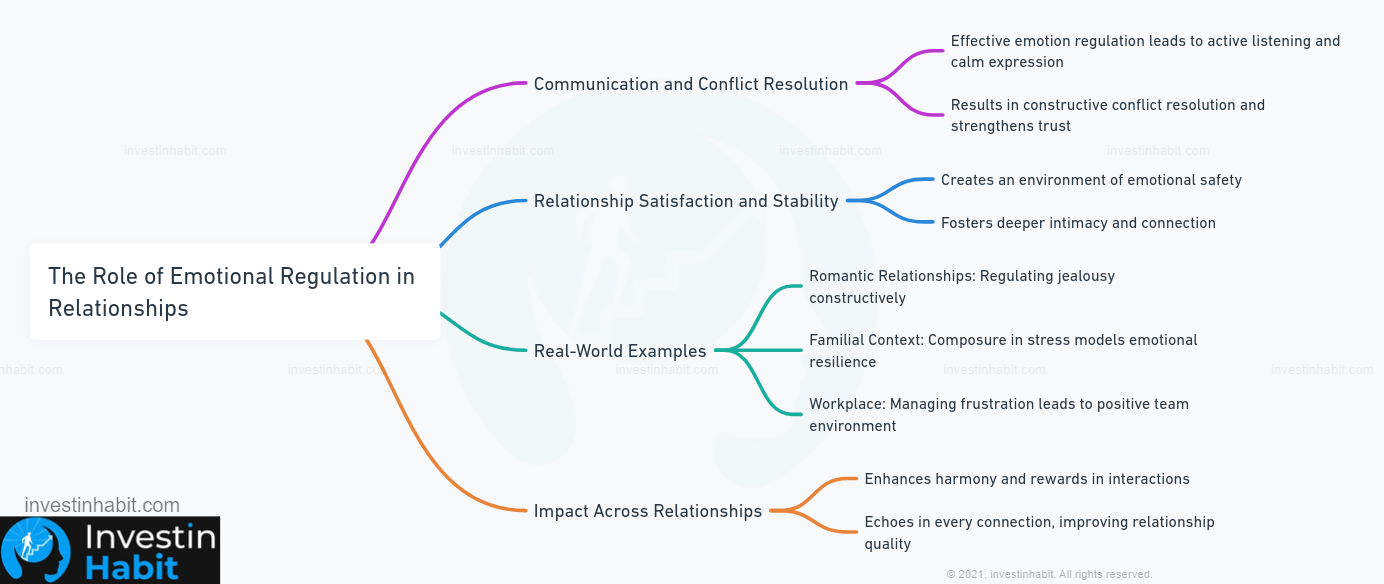
First up, let’s talk about communication and conflict resolution. Imagine you’re in a disagreement. If you can regulate your emotions effectively, you’re more likely to listen actively, express your feelings calmly, and seek a solution rather than just winning the argument. It’s like being in the eye of a storm but remaining calm enough to navigate through it. This approach not only resolves conflicts more constructively but also strengthens trust and understanding in the relationship.
Emotion regulation is important for optimal relationship functioning because it can help avoid conflict and create smoother, more enjoyable interactions.
Now, consider the impact of emotional regulation on relationship satisfaction and stability. When you manage your emotions well, you create an environment of emotional safety for both you and your partner. This fosters deeper intimacy and connection because you both feel understood and valued. It’s like building a bridge over turbulent waters – the stronger your emotional regulation, the sturdier the bridge.
Let me give you some real-world examples. In a romantic relationship, a partner who can regulate their jealousy constructively might express their feelings without accusations, leading to a healthy discussion rather than an argument. In a familial context, a parent who maintains composure in the face of stress provides a model of emotional resilience for their children. And in the workplace, a manager who can regulate their frustration during high-pressure situations can maintain a positive team environment and lead more effectively.
These scenarios show that emotional regulation is not just about self-management; it’s about creating healthier, more fulfilling relationships. It’s a skill that echoes across every interaction, every connection, making the journey of relationships more harmonious and rewarding.
In the next section, we’ll dive into the challenges of emotional regulation within relationships. It’s an eye-opener to the hurdles we often face and how to overcome them. So, stay with me as we explore this crucial aspect, equipping you with insights to navigate the complex yet beautiful world of relationships.
Challenges in Emotional Regulation within Relationships

Navigating the waters of emotional regulation in relationships isn’t always smooth sailing. There are several common obstacles that can make it challenging. Let’s explore these together and consider how we might overcome them.
One major hurdle is the complexity of emotions in a relationship setting. It’s one thing to manage your own emotions, but quite another when your emotions are intertwined with someone else’s. Imagine you’re upset about something your partner did, but at the same time, you’re aware that they’re going through a tough time. Balancing these emotions requires a lot of empathy and patience.
Another significant influence is external factors like stress or environment. These can act like emotional amplifiers. For example, after a stressful day at work, you might find yourself more irritable at home, making it harder to regulate your emotions in interactions with your family. It’s like trying to keep a calm sea when there’s a storm brewing on the horizon.
And then, there’s the impact of mental health on emotional regulation in relationships. Issues like anxiety or depression can color the way you interpret and respond to emotional situations. If you’re struggling with anxiety, for instance, you might perceive a partner’s harmless comment as criticism, leading to unnecessary tension.
But here’s the thing: being aware of these challenges is the first step in overcoming them. By recognizing the obstacles, you can start to work on strategies to navigate them more effectively. It’s about building a toolkit of emotional skills that you can draw upon in different situations.
As we move forward, I’ll share some strategies and tips to help improve emotional regulation in your relationships. These are practical, actionable steps that you can start applying in your daily life. So, stick with me, and let’s learn how to turn these challenges into opportunities for growth and deeper connection in our relationships.
Strategies for Improving Emotional Regulation in Relationships

Improving emotional regulation in relationships is like planting a garden – it requires patience, care, and the right tools. So, let’s roll up our sleeves and dig into some strategies that can help both you and your relationships flourish.
For individuals, developing emotional regulation skills starts with self-awareness. Begin by tracking your emotional responses. Notice what triggers you and how you react. Are you quick to anger or do you shut down? Understanding these patterns is the first step in changing them. Also, practice mindfulness. It’s like giving your mind a gym workout, strengthening your ability to stay present and not get overwhelmed by emotions. Try simple exercises like deep breathing or meditation to help center yourself.
Now, for couples, working on emotional regulation together can be a powerful bonding experience. Start with open communication. Share your feelings and listen to each other without judgment. It’s like building a bridge of understanding. Establish a ‘time-out’ signal for when emotions run high. This isn’t about avoiding the issue but giving each other space to cool down and come back with a clearer head.
The role of therapy or counseling cannot be overstated in enhancing emotional regulation. Think of a therapist as a guide who helps you navigate through your emotional landscape. They can offer tools and strategies tailored to your specific needs. Couples therapy, in particular, can be a safe space to explore emotional challenges in your relationship and learn how to address them constructively.
Remember, improving emotional regulation is a journey, not a destination. It’s about making small, consistent changes that gradually lead to big improvements in how you manage your emotions and interact in your relationships. So, take these strategies, try them out, and see what works for you. In the next section, we’ll explore some real-life case studies that illustrate the transformative power of emotional regulation in relationships. Stay tuned to see how these strategies come to life in different scenarios!
Case Studies and Real-World Examples

Let’s bring emotional regulation in relationships to life with some real-world examples. I’ve got some stories that are both eye-opening and inspiring, showcasing the highs and lows of emotional regulation.
First up, let’s talk about Anna and Mark, a couple who learned to navigate their communication challenges. Initially, their conversations often escalated into arguments. Mark would get defensive quickly, while Anna tended to shut down. With the help of a counselor, they learned to recognize their emotional triggers and developed a ‘pause and reflect’ technique. Now, when discussions get heated, they take a moment to breathe and think before responding. This small change made a big difference, transforming their communication style and deepening their connection.
On the flip side, consider the case of Emily and Leo. Emily struggled with anxiety and often read too much into Leo’s actions, leading to misunderstandings. Unfortunately, they didn’t address these emotional regulation issues, and over time, it eroded their trust and intimacy. This example highlights the importance of not only recognizing but actively working on emotional regulation in relationships.
What can we learn from these stories? In Anna and Mark’s case, we see the power of self-awareness and taking proactive steps to manage emotional responses. Their story shows us that with the right strategies and a willingness to change, it’s possible to turn things around.
From Emily and Leo, we learn that ignoring emotional regulation issues can have a lasting impact on a relationship. It’s a reminder that emotional health is as crucial as physical health in a relationship.
These narratives offer valuable insights into the complex dynamics of emotional regulation in relationships. They show us that while challenges are inevitable, with the right approach and tools, we can navigate these waters and foster healthier, more fulfilling connections.
Up next, we’ll wrap up our discussion with a conclusion that brings together all the key points we’ve explored. So, stay with me as we summarize and reflect on the essential role of emotional regulation in enriching our relationships.
Conclusion

As we conclude our exploration of emotional regulation in relationships, let’s reflect on the key insights we’ve gathered.
We began by understanding emotional regulation itself – the essential skill of managing and responding to our emotions in a healthy way. We discovered how individual emotional regulation affects personal well-being and the critical role of self-awareness.
We then delved into how emotional regulation impacts relationships, affecting communication, conflict resolution, and the overall satisfaction and stability of our connections with others. We also tackled the challenges in emotional regulation within relationships, understanding the influences of external factors and mental health issues.
We explored practical strategies for improving emotional regulation, both as individuals and in partnership with others, and emphasized the beneficial role of therapy or counseling. Real-world examples brought to life the powerful impact of these strategies in both enhancing and challenging relationships.
Emotional regulation is not just a personal journey; it’s a relational one. It’s about navigating our emotional world with grace and understanding, and in doing so, nurturing the bonds we share with others. The skills and insights gained in this journey are invaluable, not just for the health of our relationships but for our overall well-being.
For those keen on diving deeper, I recommend reading works by Dr. John Gottman on emotional intelligence in relationships and exploring mindfulness techniques as discussed by Jon Kabat-Zinn. Engaging with these resources can provide further guidance and enrichment on this vital topic.
References
– Gottman, J. M. (1999). *The Seven Principles for Making Marriage Work*. Crown Publishing Group.
– Kabat-Zinn, J. (1994). *Wherever You Go, There You Are: Mindfulness Meditation in Everyday Life*. Hyperion.
– Gross, J. J. (Ed.). (2007). *Handbook of emotion regulation*. Guilford Press.
– Bradbury, T. N., & Karney, B. R. (2010). *Intimate Relationships*. W. W. Norton & Company.
This article is not just a collection of concepts; it’s an invitation to embark on a journey of emotional discovery and growth. As we navigate the complexities of our relationships, let’s remember the power of emotional regulation in creating harmony, understanding, and deeper connections with those around us.
Transform Your Habits, Transform Your Life
Are you ready to turn the page to a new chapter in your life?
Stop dreaming, start achieving. Our exclusive newsletter delivers:
- Science-backed hacks: Master the psychology of habit formation used by CEOs and Olympians.
- Actionable strategies: No fluff, just practical steps to crush procrastination and dominate your goals.
- + a FREE surprise bonus 🎁 to jumpstart your transformation!
Don’t settle for mediocre. Subscribe now!