

Imagine a scenario where two events unfold: one, a compliment from a colleague, and the other, a critical comment. Which lingers in your mind longer? This common experience, where our minds tend to hold onto the negative more stubbornly than the positive, is rooted in what psychologists call the “negativity bias.”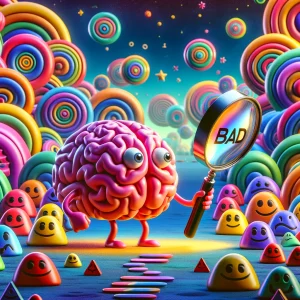
This psychological phenomenon explains our tendency to give more weight to negative experiences or information compared to positive ones. It’s not just a fleeting reaction; negativity bias can significantly influence our decision-making, relationships, and emotional well-being.
In this exploration, we delve into the intricate workings of negativity bias, unveiling its profound impact on our daily lives and the subtle ways it shapes our perceptions, actions, and overall mental health.
By understanding this inherent aspect of human psychology, we can start to see not just the world around us, but also ourselves, in a more balanced and informed light.

Inside this Article
Historical Perspective
Have you ever wondered how scientists first stumbled upon the concept of negativity bias? It’s a fascinating journey, one that has deep roots in psychological research. Let’s take a trip back in time to understand the origins of this intriguing concept.
The story begins in the late 20th century, a period ripe with groundbreaking psychological studies. One of the earliest mentions of negativity bias emerged from the work of Paul Rozin and Edward Royzman in 2001. They proposed that negative experiences have a greater impact on individuals than equally intense positive experiences. This idea sparked a wave of interest and research.
But it was John Cacioppo, a pioneer in the field of social neuroscience, who really brought negativity bias into the spotlight. In the early 2000s, he conducted seminal research that revealed something remarkable. Using electrophysiology, Cacioppo showed that our brains react more strongly to negative stimuli than to positive ones. This was a game-changer! It meant that negativity bias wasn’t just a fleeting feeling but a fundamental part of how our brains are wired.
Another key contributor was Roy Baumeister, whose famous paper “Bad Is Stronger Than Good,” co-authored with Ellen Bratslavsky, Catrin Finkenauer, and Kathleen Vohs, further cemented the idea. Published in 2001, this paper reviewed a wide array of research and concluded that negative experiences, emotions, and information have a more substantial effect on us than positive ones. It’s like they were telling us, “Hey, it’s not just you – we’re all wired this way.”
So, why is this important for you and me? Understanding the roots of negativity bias helps us appreciate its profound impact on various aspects of our lives, from our reactions to news stories to the way we interact with our loved ones. It’s not just a quirk of our personalities; it’s a fundamental aspect of human psychology. As we explore further, keep in mind that this bias is a part of us all – it’s not a flaw, but a feature of how our brains have evolved. And by acknowledging it, we’re taking the first step in managing its influence on our lives. Isn’t it incredible how a few key studies can shed so much light on the inner workings of our minds?

Transform Your Life with InvestInHabit

Ready for real change? Join us and get over:
- 200+ Personal Development Worksheets,
- 100+ Blog Post MindMaps
for FREE! 😍 + Our newsletter offers the latest in habit formation and self-improvement, straight to your inbox.
Subscribe now and Start redefining your mindset today! Join our community committed to success!
Mechanisms of Negativity Bias
Now that we’ve delved into the history of negativity bias, let’s uncover how it actually works in our brains. It’s like peeking under the hood of a car – understanding the engine helps us appreciate how the whole vehicle moves. Similarly, grasping the neurological basis of negativity bias reveals why we often react the way we do to the world around us.
First off, let’s talk about your brain – a remarkable organ, isn’t it? It processes a whirlwind of information every day, but not all of it gets equal treatment. Research shows that our brains tend to prioritize negative information over positive. This is due to a few key areas in the brain, like the amygdala, which plays a crucial role in processing emotional reactions, especially fear and threat. When you encounter something negative, your amygdala lights up, signaling other parts of your brain to pay attention and remember this. It’s like your brain’s own alarm system, making sure you’re aware of potential dangers.
But why is your brain so vigilant about the negative? This is where our evolutionary history comes into play. Imagine our ancestors on the savannah, where every day was a struggle for survival. In such a world, paying attention to threats – like a predator lurking in the bushes – was far more crucial than enjoying the positive aspects, like a beautiful sunset. Negativity bias, therefore, became an evolutionary advantage, keeping our ancestors safe and alert to dangers.
Fast forward to today, and our environment has changed dramatically, but our brains still hold onto this ancient bias. This means that even in relatively safe environments, we’re predisposed to focus on the negative. It’s not just you; it’s how we, as humans, have evolved.
So, the next time you find yourself dwelling on a negative comment or a bad experience, remember, it’s not just a personal tendency; it’s a deeply ingrained part of how your brain is wired. Understanding this can be incredibly empowering. It allows us to be more compassionate with ourselves and others, knowing that this bias is a part of our shared human experience. Plus, it’s a great reminder to actively seek out and savor the positive moments in our lives. Who knew our brains had such an intriguing story to tell?
Manifestations in Daily Life

Have you ever noticed how a single negative comment can overshadow a flurry of compliments? Or how the evening news often feels like a barrage of crises? This isn’t just happenstance; it’s negativity bias at work, subtly influencing various facets of our daily lives. Let’s break down how this psychological phenomenon plays out in areas like personal relationships, media consumption, and decision-making.
Personal Relationships
In our interactions with friends, family, or partners, negativity bias can be a bit of a troublemaker. When misunderstandings or conflicts arise, this bias often magnifies negative words or actions, making them stick in our minds longer than positive gestures. Ever had a disagreement where you found it hard to let go of something hurtful said, despite numerous apologies or kind acts that followed? That’s negativity bias in action.
But here’s the silver lining: understanding this bias can transform how we communicate and resolve conflicts. By recognizing our tendency to dwell on the negative, we can consciously strive to focus on the positive aspects of our relationships. It’s about creating a balance and giving positive interactions the weight they deserve in our emotional ledger.
Media Consumption
Now, let’s talk about the news and social media. Ever wonder why negative stories seem to dominate? It’s because media outlets know that negative headlines grab our attention more effectively than positive ones. This isn’t to say that the world is only full of doom and gloom, but rather, it’s a reflection of our innate psychological draw to potential threats or bad news, a remnant of our evolutionary past.
In the realm of social media, negativity bias can also influence how we perceive our own lives in comparison to others. Those picture-perfect posts can sometimes make us focus on what we feel is lacking in our own lives, rather than appreciating what we have. Remember, it’s often a curated highlight reel, not the full story.
Decision Making
When it comes to making decisions, whether it’s in our personal lives or at work, negativity bias can lead us to weigh potential losses more heavily than potential gains. This can be useful in certain high-stakes situations, where caution is warranted. However, it can also make us overly risk-averse, potentially holding us back from taking positive steps forward. Ever passed up an opportunity because you were too focused on what could go wrong, only to regret it later? That’s a classic example.
But here’s a thought: what if we could recalibrate our risk assessment by consciously acknowledging our negativity bias? By factoring in this bias, we can strive for a more balanced approach to problem-solving and decision-making, one that appropriately assesses both the risks and rewards.
In wrapping up this section, it’s clear that negativity bias weaves its way through many aspects of our daily lives. But by understanding and acknowledging it, we equip ourselves with the power to counteract its effects, paving the way for more positive interactions, informed media consumption, and balanced decision-making. Isn’t it fascinating how much impact this hidden bias has on our everyday experiences?
Negativity Bias in Mental Health

When we delve into the realm of mental health, the role of negativity bias becomes even more pronounced. It’s like a thread that, when pulled, can unravel complex patterns of anxiety, depression, and other mental health disorders. Let’s explore this connection and consider real-life examples to see how deeply negativity bias can affect our well-being.
The Connection to Mental Health Disorders
Negativity bias doesn’t just influence how we perceive the world; it can also shape our internal landscapes. For individuals dealing with anxiety, for instance, this bias can amplify fears and worries, making potential threats seem more imminent and severe than they might actually be. It’s like wearing a pair of glasses that magnify only the negative aspects of life, skewing one’s perspective and exacerbating feelings of anxiety.
Depression, too, has a complex relationship with negativity bias. Those experiencing depression often report a heightened sensitivity to negative feedback or events, which can spiral into a cycle of negative thinking, further deepening the depressive state. This bias can make it challenging to recognize or remember positive experiences, creating a skewed perception that amplifies feelings of sadness and hopelessness.
Real-Life Examples
Consider Sarah, a college student who struggles with anxiety. She often fixates on negative comments or outcomes, interpreting them as signs of failure. This focus on the negative makes it difficult for her to see her achievements and contributes to overwhelming feelings of anxiety about her future.
Then there’s Michael, who has been battling depression for years. He finds it hard to recall positive memories or experiences, focusing instead on regrets and setbacks. This negativity bias reinforces his depressive symptoms, making it harder for him to engage in activities that could bring him joy.
Breaking the Cycle
Understanding the link between negativity bias and mental health is crucial. It helps us see that these patterns of thinking aren’t just personal flaws but are influenced by deeper psychological processes. Recognizing this can be the first step toward healing. Cognitive-behavioral therapy (CBT), for example, is a treatment approach that aims to identify and challenge negative thought patterns, offering strategies to counteract negativity bias.
In sharing stories like Sarah’s and Michael’s, we not only shed light on the struggles many face but also highlight the importance of seeking help and finding ways to rebalance our mental landscapes. It’s a reminder that, though negativity bias may be a part of our psychological makeup, it doesn’t have to define our mental health journey.
As we navigate through these discussions, remember, if you or someone you know is experiencing similar challenges, reaching out for support can be a powerful step towards understanding and overcoming the impact of negativity bias on mental health. Isn’t it remarkable how understanding a single psychological concept can open the door to such profound insights into our well-being?
Coping Strategies and Overcoming Negativity Bias

Now, let’s turn our attention to the brighter side of things: overcoming negativity bias. Yes, while this bias is wired into our brains, we’re not powerless against it. Through a combination of psychological interventions, lifestyle changes, and the power of social support, we can mitigate its effects and lead more balanced lives. Let me share with you some strategies that have proven effective.
Psychological Interventions
First up, let’s talk about cognitive-behavioral therapy (CBT). It’s a powerful tool in the psychological toolbox for combating negativity bias. CBT works by helping you identify and challenge negative thought patterns, essentially teaching you to reframe your thoughts in a more positive or realistic light. For instance, if you tend to assume the worst outcome in every situation, CBT can help you explore other, more likely outcomes. It’s like training your brain to find the silver lining, even when it’s hidden behind clouds of doubt.
Other therapeutic techniques, such as mindfulness-based stress reduction (MBSR) and acceptance and commitment therapy (ACT), also offer pathways to reduce the sway of negativity bias. These approaches encourage you to stay present and engage with your thoughts and feelings without judgment, reducing the impact of negative biases.
Lifestyle Changes
Now, let’s consider how lifestyle changes can also play a crucial role. Practices like mindfulness meditation and positive thinking exercises aren’t just buzzwords; they’re practical tools that can shift your focus from the negative to the positive. Regular meditation, for example, can help you develop a more mindful awareness of your thoughts, making it easier to catch and adjust negative patterns.
Incorporating positive thinking exercises into your daily routine can also be transformative. This might involve starting your day by listing things you’re grateful for or challenging yourself to find a positive aspect in a difficult situation. It’s like building a mental muscle that lifts your spirits and keeps negativity at bay.
The Role of Social Support and Community
Last but definitely not least, never underestimate the power of social support and community. Connecting with friends, family, or support groups can provide a buffer against the effects of negativity bias. These connections offer validation, perspective, and positive feedback, helping you recalibrate when negativity bias skews your outlook.
Engaging in community activities or volunteering can also uplift your spirits, fostering a sense of belonging and purpose. It’s a reminder that you’re not alone in your experiences, and that together, we can overcome the challenges posed by negativity bias.
In wrapping up, remember that overcoming negativity bias is a journey, not a destination. It’s about making small, consistent changes in how we think, act, and connect with others. By exploring these strategies, you’re taking important steps toward a more balanced and positive outlook on life. So, what’s one small step you can take today to counteract negativity bias? Remember, every little bit helps, and I’m right here cheering you on.
Current Research and Future Directions

As we continue our exploration of negativity bias, it’s thrilling to see where current research is taking us and the potential it holds for the future. The field is buzzing with studies and emerging theories that promise to deepen our understanding and offer new ways to navigate the challenges posed by this bias. Let’s dive into some of the exciting developments and consider how they might shape our approach to therapy, education, and the workplace.
Summary of Recent Studies and Emerging Theories
In the realm of neuroscience, researchers are making fascinating discoveries about how negativity bias operates in the brain. Advanced imaging techniques are revealing more about the neural pathways involved in processing negative and positive information. For example, studies are showing differences in how certain brain regions are activated in response to negative stimuli, providing clues about why negative memories often stick with us longer.
Psychologists and behavioral scientists are also exploring the nuances of negativity bias across different cultures and age groups. This research is uncovering valuable insights into how societal norms and developmental stages influence our susceptibility to negativity bias. It’s as if we’re piecing together a global map of negativity bias, highlighting both universal patterns and unique cultural variations.
Potential Applications in Therapy, Education, and Workplace Environments
These findings are not just academic; they have practical applications that can transform how we approach mental health, education, and organizational culture. In therapy, for instance, understanding the neural underpinnings of negativity bias can lead to more targeted interventions. Therapists might incorporate techniques that specifically address the brain’s tendency to hold onto negative experiences, such as neurofeedback or mindfulness practices designed to alter neural activity.
In educational settings, this knowledge can revolutionize how we teach resilience and emotional intelligence. Imagine a curriculum that includes exercises to help students recognize and counteract their own negativity biases. By equipping young people with these tools early on, we can foster a generation more adept at handling the psychological challenges of life.
And let’s not overlook the workplace. Here, insights into negativity bias can inform strategies to enhance well-being, productivity, and teamwork. For example, leaders can create environments that actively promote positive feedback and recognition, counterbalancing the natural human tendency to dwell on the negative. Such initiatives can lead to more motivated, engaged, and satisfied employees.
Looking Ahead
As we look to the future, the potential for applying our growing understanding of negativity bias seems boundless. Ongoing research will continue to uncover ways to mitigate its impact, enhancing our mental health, enriching our educational experiences, and transforming our workplaces. The journey of understanding negativity bias is far from over, and I’m excited about the possibilities that lie ahead.
So, as we wrap up this exploration, I invite you to stay curious and open to the ways this knowledge can influence your life and the world around you. The more we understand about the workings of our minds, the better equipped we are to navigate the complexities of the human experience. And remember, you’re not alone in this journey; we’re all learning and growing together.
Conclusion
As we reach the end of our journey through the landscape of negativity bias, it’s clear that this psychological phenomenon plays a significant role in shaping our perceptions, behaviors, and emotional responses. From its evolutionary roots to its manifestations in our daily lives, understanding negativity bias offers us valuable insights into the human condition. It’s a reminder of our shared vulnerabilities but also of our incredible capacity for growth and adaptation.
The significance of understanding negativity bias cannot be overstated. It illuminates why we might linger on negative experiences or perceive the world through a pessimistic lens. However, with this knowledge comes the power to change. By becoming aware of our natural inclinations towards negativity, we can actively work towards counterbalancing this bias. This doesn’t mean ignoring the realities of life’s challenges but rather, cultivating a more balanced perspective that values positive experiences just as much as negative ones.
The balance between acknowledging negativity bias and fostering positive perspectives is delicate but achievable. It involves conscious effort to engage with positive aspects of our lives, practice gratitude, and develop resilience against the inevitable adversities we face. This balance is not a destination but a continuous process of self-discovery and improvement.
References
While this article has woven together insights and findings from various fields, here are some foundational resources that can deepen your understanding of negativity bias:
- Baumeister, Roy F., et al. “Bad Is Stronger Than Good.” Review of General Psychology, vol. 5, no. 4, 2001, pp. 323–370.
- Cacioppo, John T., et al. “The Anatomy of Emotions: An Electrophysiological Approach.” Journal of Personality and Social Psychology, vol. 64, no. 5, 1992, pp. 583–593.
- Rozin, Paul, and Edward B. Royzman. “Negativity Bias, Negativity Dominance, and Contagion.” Personality and Social Psychology Review, vol. 5, no. 4, 2001, pp. 296–320.
These works, among others, have paved the way for our current understanding of negativity bias and continue to inspire research and discussion in psychology, neuroscience, and beyond.
In closing, let this exploration of negativity bias be a starting point for your own journey towards a more balanced and positive outlook on life. Remember, awareness is the first step towards change. By acknowledging the sway of negativity bias and embracing strategies to mitigate its effects, we can open ourselves to a fuller, more enriched experience of the world. Let’s carry forward the lessons learned with optimism and a commitment to fostering positive perspectives in ourselves and those around us.
Transform Your Habits, Transform Your Life
Are you ready to turn the page to a new chapter in your life?
Stop dreaming, start achieving. Our exclusive newsletter delivers:
- Science-backed hacks: Master the psychology of habit formation used by CEOs and Olympians.
- Actionable strategies: No fluff, just practical steps to crush procrastination and dominate your goals.
- + a FREE surprise bonus 🎁 to jumpstart your transformation!
Don’t settle for mediocre. Subscribe now!