

Welcome to our journey into the heart of self-validation, a concept that might seem simple yet holds profound implications for our personal growth, happiness, and the way we interact with the world.
At its core, self-validation is about recognizing and accepting your own feelings, thoughts, and experiences as valid and worthy, without the need for external approval or endorsement. It’s about learning to trust and value your own judgment and feelings as much as, if not more than, the opinions of others. This might sound straightforward, but in a world where social media likes and external accolades often dictate our sense of worth, turning inwards for validation can be a revolutionary act.
I remember a time when I was constantly seeking approval from others. Whether it was at work, in my personal relationships, or even in the small, everyday decisions, the question that always lingered in my mind was, “What will they think?” This incessant need for external validation was exhausting, leaving me feeling drained and disconnected from my true self. It wasn’t until I began the journey of self-validation that I realized the power of being my own advocate and supporter.
In this post, we will explore the nuances of self-validation, its immense benefits, and practical ways to cultivate it in our daily lives. Whether you’re well acquainted with the concept or hearing about it for the first time, this journey promises to be enlightening, empowering, and perhaps even transformative. So, let’s dive in and discover how embracing self-validation can lead us to greater inner strength and confidence.
Inside this Article
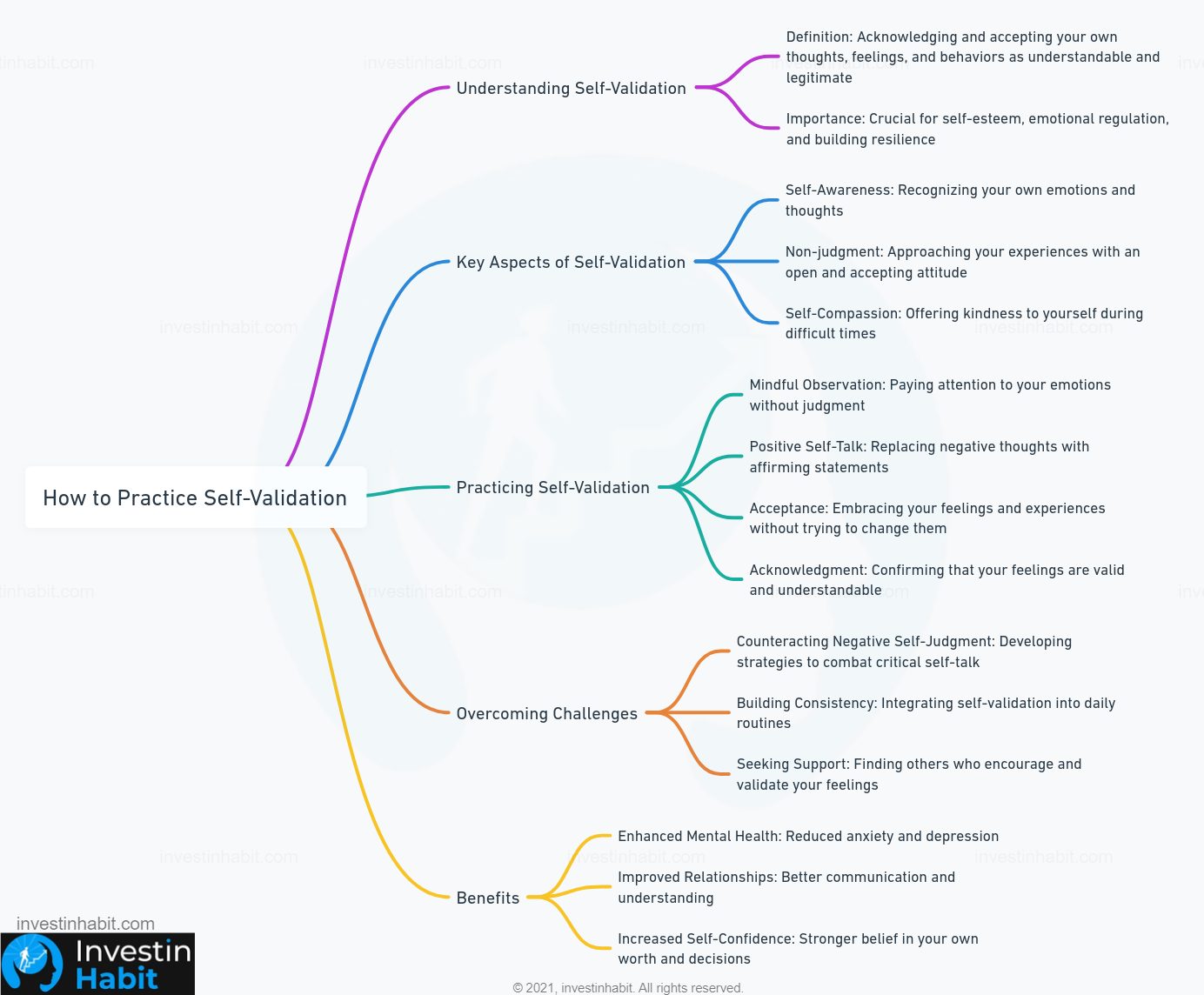
Understanding Self-Validation

Let’s start by peeling back the layers of self-validation to truly grasp what it’s all about. Imagine you’re standing in front of a mirror. Instead of focusing on your appearance, you’re looking deeper, acknowledging your feelings, beliefs, and thoughts as they are, without judgment. That’s the essence of self-validation.
Self-Validation: What Is It Really? Self-validation is akin to giving yourself a big, understanding hug. It’s about saying, “I hear you, I see you, and I accept you,” to your innermost thoughts and feelings. It’s the internal nod of approval we give ourselves, confirming that our feelings and thoughts are legitimate and deserving of respect, regardless of outside opinions.
As mentioned by The Psych Collective.com in a Facebook post:
This is a cognitive technique because it is about the way that you talk to yourself about your emotions. Self-validation involves acknowledging and accepting your inner experiences as real for you. It is not asking you to like them, or even to want them. To self-validate you need to Acknowledge the feeling, Accept that the feeling is happening and Allow it to be there without trying to push it away. (AAA)
The Contrast with External Validation Now, let’s contrast this with external validation. This is when we look for that nod of approval from others. It’s like constantly checking your phone for likes on a social media post. While it’s natural to seek external validation, it’s like building your house on sand – unstable and shifting. I’ve been there, constantly adjusting my sails to the changing winds of others’ opinions, and trust me, it’s a tiring way to live.
The Deep Impact on Our Psyche But why does self-validation matter so much? Well, it’s because its roots lie deep within our psychological makeup. When you practice self-validation, you’re essentially telling your brain, “Your feelings are real, and they matter.” This acknowledgment is incredibly powerful. It can transform the way you see yourself and the world around you, fostering a sense of authenticity and inner peace.
Think about a time when you felt misunderstood or dismissed. Frustrating, right? Now, imagine being able to give yourself the understanding and acceptance you craved. That’s the beauty of self-validation. It’s a skill that, once honed, can significantly boost your emotional well-being, resilience, and overall happiness.
As we delve deeper into self-validation, remember that it’s a journey. You don’t have to get it perfect right away. Like any skill, it grows stronger with practice. So, let’s embark on this journey together, exploring how to cultivate this invaluable trait in our daily lives. Stay tuned, as next, we’ll discover why self-validation is not just nice to have, but essential for our mental health and personal growth.

Transform Your Life with InvestInHabit

Ready for real change? Join us and get over:
- 200+ Personal Development Worksheets,
- 100+ Blog Post MindMaps
for FREE! 😍 + Our newsletter offers the latest in habit formation and self-improvement, straight to your inbox.
Subscribe now and Start redefining your mindset today! Join our community committed to success!
The Importance of Self-Validation

Now, let’s dive into why self-validation isn’t just a feel-good concept but a crucial element in our personal and interpersonal worlds. Think of it as the secret ingredient in the recipe for a healthier, happier you.
A Cornerstone for Personal Growth and Mental Health First off, self-validation is a game-changer for personal growth and mental health. Ever noticed how you flourish when you accept and understand yourself? That’s self-validation at work. By acknowledging and accepting your emotions and thoughts, you’re not only recognizing your worth, but you’re also opening the door to self-improvement. It’s like giving yourself permission to grow.
For instance, when you validate your fear instead of dismissing it, you’re better positioned to address and overcome it. I’ve found that acknowledging my feelings, even the uncomfortable ones, has been a stepping stone to personal development. It’s about turning inward and saying, “I see you’re scared, and that’s okay.” This approach has helped me, and it can significantly aid in your mental health journey.
Strengthening Relationships and Communication Moving on, let’s talk about relationships and communication. Self-validation doesn’t just stop with you; it ripples out to those around you. When you understand and accept your feelings, you’re more likely to approach interactions with empathy and clarity. It’s like having a clear, calm lake instead of a turbulent sea inside you, making it easier to navigate conversations and relationships.
This self-understanding also means you’re less likely to project your issues onto others or seek constant approval, leading to healthier, more authentic relationships. I’ve noticed that the more I validate myself, the more genuine my interactions with others become. It’s a win-win for everyone involved.
Building Resilience and Self-Esteem Lastly, let’s touch on resilience and self-esteem. Self-validation is like an invisible armor that guards against life’s slings and arrows. By recognizing and accepting your own experiences, you build a strong foundation of self-worth and confidence. This doesn’t mean you become invincible, but you do become more resilient. When tough times hit, instead of crumbling under self-doubt, you’re better equipped to say, “This is hard, but I can handle it.”
In my journey, embracing self-validation has been a key factor in boosting my self-esteem. It’s about reinforcing the idea that I am enough, just as I am. This mindset shift is powerful and can significantly impact how you face life’s challenges.
In summary, self-validation is essential for personal growth, healthier relationships, and building resilience. It’s a skill worth cultivating, and as we continue, we’ll explore practical steps to help you integrate self-validation into your daily life. Stay tuned, because up next, we’ll tackle the common challenges in practicing self-validation and how to overcome them.
Common Challenges in Practicing Self-Validation

Now, let’s get real for a moment. Embracing self-validation sounds great, but it’s not always a walk in the park. There are hurdles along the way, both within us and in the world around us. But don’t worry, I’ve been there, and I can guide you through these common challenges.
Navigating Social and Cultural Barriers First up, the external challenges – social and cultural barriers. We live in a world where external achievements often overshadow inner peace. From social media showcasing highlight reels to cultural norms dictating what success looks like, it’s easy to feel like our self-worth is tied to what others see in us.
Remember, it’s not about going against these norms, but about finding your balance. It’s okay to celebrate external achievements, but it’s equally important to value your inner journey. I’ve learned to appreciate my own progress, regardless of whether it’s visible to others or not.
It’s about shifting focus from ‘What will they think?’ to ‘How do I feel about this?’
Overcoming Internal Barriers: Self-Doubt, Negative Self-Talk, and Impostor Syndrome Now, let’s turn inwards. Self-doubt, negative self-talk, and impostor syndrome are like the troublesome trio of internal barriers. They whisper doubts and fears, making self-validation seem like a distant dream. But here’s the thing – they’re not the boss of you.
Combatting these negative voices starts with awareness. When you catch yourself doubting your worth or abilities, pause and question those thoughts. Ask yourself, “Is this really true?” or “Would I say this to a friend?” Often, you’ll find these thoughts are based on fear, not reality. I’ve had my battles with these inner critics, and let me tell you, challenging them can be incredibly liberating.
Letting Go of the Need for External Validation Lastly, the big one – overcoming the reliance on external validation. It’s like breaking a habit. We’re wired to seek approval, but it’s about finding confidence in our own approval. This doesn’t happen overnight, and that’s okay. Start small. Celebrate your personal victories, even if they’re invisible to others. Find joy in things you do for yourself, not for likes or applause.
One practical tip? Keep a self-validation journal. Write down moments when you felt proud of yourself, regardless of external recognition. Over time, you’ll see a pattern of growing self-assurance.
In this section, we’ve uncovered the common challenges in practicing self-validation and how to navigate them. Remember, it’s a journey, and it’s perfectly fine to take it one step at a time. Up next, we’ll explore practical steps to cultivate self-validation in our everyday lives. So, stay tuned and get ready to embark on this transformative journey!
Practical Steps to Cultivate Self-Validation

Alright, let’s roll up our sleeves and dive into the ‘how-to’ part. Cultivating self-validation is like nurturing a garden. It takes time, patience, and a bit of know-how. But don’t worry, I’m here to share some practical, tried-and-tested strategies that have worked for me and many others. Ready to start planting?
Mindfulness and Self-Awareness: The Foundations
Mindfulness is your starting point. It’s about being present in the moment and observing your thoughts and feelings without judgment. Think of it as being a friendly observer of your inner world. A simple way to practice this is through daily mindfulness exercises. Maybe it’s a five-minute meditation in the morning or taking a moment to breathe deeply and check in with yourself throughout the day.
For me, mindfulness was a game-changer. It helped me become more aware of my internal dialogue, making it easier to recognize when I was being too harsh on myself. And trust me, that awareness is the first big step towards self-validation.
Challenging Negative Thoughts: The Art of Reframing
Next up, let’s tackle those negative thought patterns. It’s about changing the narrative in your head. When you catch yourself in a spiral of self-criticism, pause and ask, “Is this really true?” Often, you’ll find these thoughts are based on old fears, not current realities.
A technique I love is reframing. For example, if you think, “I always mess up,” try reframing it to, “I sometimes make mistakes, but I also learn and grow from them.” It’s about finding a more balanced, compassionate way to talk to yourself.
Self-Compassion and Self-Care: Nurturing Your Inner Self
Self-compassion is your nurturing water and sunlight. It means treating yourself with the same kindness and understanding you’d offer a good friend. And self-care? That’s about taking actions that reflect this compassion. Whether it’s setting aside time for hobbies, getting enough rest, or saying no to overcommitments, these acts of self-care reinforce your sense of self-worth.
Remember, self-compassion isn’t about indulgence; it’s about respecting and taking care of your needs. For me, it meant learning to be kinder to myself, especially during tough times, and recognizing that self-care isn’t selfish.
Setting Personal Goals: Your Growth Milestones
Finally, setting personal goals is like planting seeds for future growth. These goals should be realistic, meaningful to you, and aligned with your values. They’re not about impressing others; they’re about personal progress. Celebrate each achievement, no matter how small. This reinforces the practice of self-validation, as you acknowledge your efforts and successes.
Setting goals helped me focus on what truly mattered to me, not what I thought should matter. It’s about personal milestones, not societal benchmarks.
There you have it, your toolkit for cultivating self-validation. Mindfulness, challenging negative thoughts, self-compassion, and setting personal goals – each of these steps is a stepping stone towards a more self-validated you. Remember, this journey is uniquely yours, so take it at your own pace.
Up next, we’ll wrap up with some real-life success stories and final thoughts. Stay tuned for some inspiring examples of self-validation in action!
Real-Life Examples and Success Stories

Now, let’s bring all this self-validation talk into the real world. It’s story time! I’ve got some incredible tales of individuals who’ve made self-validation a way of life, and trust me, their journeys are as inspiring as they are enlightening.
Meet Emily: The Artist Who Embraced Her Unique Vision
First up is Emily, an artist who struggled with self-doubt. Constantly comparing her work to others, she felt like she never measured up. But then, something clicked. Emily started to validate her unique style and creative vision. She told herself, “My art is different, and that’s its power.” This shift in mindset led to a breakthrough in her career. She found her niche and, guess what, people loved her work for its uniqueness. The lesson here? Embracing your individuality is a superpower in self-validation.
David’s Story: Turning Failures into Stepping Stones
Then there’s David, an entrepreneur who faced several business failures. Each setback chipped away at his confidence. But instead of letting failure define him, David used self-validation to change his perspective. He started acknowledging his efforts and learning from each experience. “I am not my failures; I’m a sum of my efforts and growth,” he affirmed. This mindset helped David eventually find success. His story teaches us that self-validation can turn failures into lessons, not verdicts on our worth.
Jessica’s Journey: Overcoming Impostor Syndrome
And there’s Jessica, a talented software engineer plagued by impostor syndrome. Despite her achievements, she felt like a fraud. But through self-validation, Jessica began to recognize and accept her skills and accomplishments. “I earned my place with my hard work and knowledge,” she reminded herself. This shift helped Jessica overcome her impostor syndrome and even mentor others facing similar challenges. Her experience shows us that self-validation can be a powerful tool against internalized self-doubt.
Overcoming Self-Criticism at Work
Picture this: Sarah, always her harshest critic, felt she could never do enough at her job. One day, she decided to change her inner narrative. Instead of thinking, “I’m not doing enough,” she started telling herself, “I’m doing my best, and that’s enough.” This simple shift helped Sarah feel more confident and less stressed at work. It’s a classic example of how changing your self-talk can change your life.
Saying No to Peer Pressure
Then there’s Mike, who always felt compelled to say yes to his friends, even when he didn’t want to. One day, he decided to validate his own desires and said no to a night out. Guess what? The world didn’t end! Mike felt empowered, realizing that validating his own choices was key to his happiness. This example shows that self-validation can mean honoring your own needs and boundaries.
Embracing Personal Success
Consider Lucy, who never felt her achievements were enough because they weren’t acknowledged by others. She decided to start celebrating her small victories, like finishing a challenging project or sticking to her workout routine. By acknowledging her own successes, Lucy began to feel more fulfilled and less dependent on external validation. This story is a perfect example of how self-validation can boost your sense of accomplishment and self-worth.
These real-life examples show that self-validation isn’t just a concept; it’s a practical, powerful tool for leading a more confident and authentic life. Remember, the journey to self-validation starts with you. Embrace it, and watch how it transforms your world!
These stories are more than just feel-good moments. They’re proof that self-validation works. Each of these individuals learned to trust and validate themselves, leading to personal and professional growth. So, what can we take away from their experiences? That the journey of self-validation is deeply personal but universally rewarding. Whether it’s embracing your uniqueness, learning from failure, or overcoming self-doubt, self-validation is the key.
Here are some self-validation examples:
- Affirming your own feelings after a tough day.
- Recognizing your progress, no matter how small.
- Saying no when you mean it, without feeling guilty.
- Celebrating your personal achievements, not just those recognized by others.
- Forgiving yourself for a mistake and recognizing it as a learning opportunity.
Next up, we’ll conclude our exploration of self-validation. Stick around for some final thoughts and a special call-to-action. You won’t want to miss it!
Conclusion
Transform Your Habits, Transform Your Life
Are you ready to turn the page to a new chapter in your life?
Stop dreaming, start achieving. Our exclusive newsletter delivers:
- Science-backed hacks: Master the psychology of habit formation used by CEOs and Olympians.
- Actionable strategies: No fluff, just practical steps to crush procrastination and dominate your goals.
- + a FREE surprise bonus 🎁 to jumpstart your transformation!
Don’t settle for mediocre. Subscribe now!