

In today’s fast-paced world, where the pressure to succeed and achieve is at an all-time high, it’s easy to get caught up in a whirlwind of self-criticism and self-doubt.
However, the power of self-compassion as a tool for mental health and well-being cannot be overstated. Research has shown that embracing self-compassion can lead to increased happiness, resilience, and an overall improved quality of life.
With this in mind, I want to introduce you to the three essential components of self-compassion that can help you navigate life’s challenges with greater ease and confidence.
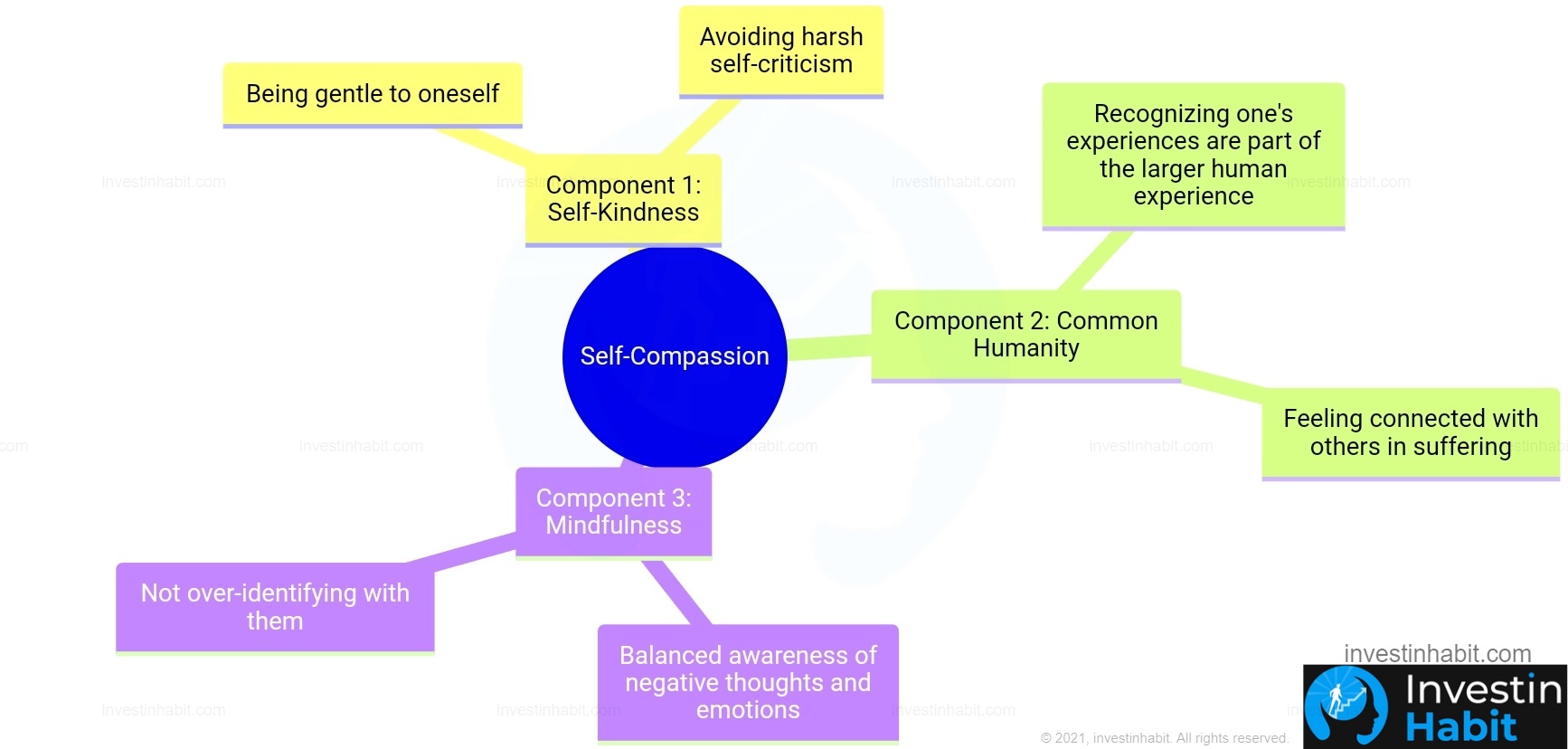
In this blog post, we’ll delve into the foundations of self-compassion and explore how each of these components – self-kindness, common humanity, and mindfulness – work together to create a transformative and nurturing practice.
By understanding and embracing these elements, you’ll be well on your way to cultivating a more compassionate relationship with yourself, ultimately leading to greater personal growth and emotional well-being.
So, let’s embark on this journey together and unlock the power of self-compassion in our lives.
Inside this Article
Component 1: Self-kindness

As we dive into the first component of self-compassion, let’s take a moment to reflect on the concept of self-kindness.
Definition and explanation of self-kindness
I’m sure you’ve heard the age-old saying, “Treat others as you would like to be treated,” but how often do you apply that same principle to yourself? Self-kindness is all about extending the same warmth, understanding, and care that you would offer to a loved one, towards yourself.
Now, you might be thinking, “But I’m not good at being kind to myself.” Don’t worry, that’s why we’re here! In this section, we’ll explore the meaning of self-kindness and how it can profoundly impact your overall self-compassion practice.
Self-kindness involves being gentle, supportive, and understanding with ourselves, especially during times of struggle or when we feel like we’ve fallen short of our own expectations. It’s about recognizing that we, too, deserve the same love and care that we so readily give to others.
So, let’s delve into the world of self-kindness and learn how to truly be our own best friend. By developing this essential component of self-compassion, you’ll be better equipped to face life’s challenges with a more loving and supportive inner voice, ultimately helping you to cultivate a stronger sense of self-worth and emotional well-being.

Transform Your Life with InvestInHabit

Ready for real change? Join us and get over:
- 200+ Personal Development Worksheets,
- 100+ Blog Post MindMaps
for FREE! 😍 + Our newsletter offers the latest in habit formation and self-improvement, straight to your inbox.
Subscribe now and Start redefining your mindset today! Join our community committed to success!
The benefits of self-kindness for emotional resilience
Have you ever considered the power of self-kindness when it comes to emotional resilience?
It might seem like a small change in the way we think and treat ourselves, but trust me, it can make a world of difference in how we navigate life’s ups and downs. So, let’s take a closer look at how practicing self-kindness can help you become more emotionally resilient.
First and foremost, when we treat ourselves with kindness, we’re better able to manage stress and bounce back from difficult situations. Instead of beating ourselves up over setbacks, we can approach our failures and mistakes with understanding and encouragement.
By doing so, we create a safe space for personal growth and learning, making it easier to recover and move forward.
Another great benefit of self-kindness is that it helps us to maintain a balanced perspective.
When we’re kind to ourselves, we’re more likely to see our struggles as a normal part of the human experience, rather than a sign of personal inadequacy. This allows us to maintain a healthy sense of self-esteem, even in the face of adversity.
Lastly, self-kindness can also promote a greater sense of inner peace and emotional well-being.
When we practice self-kindness, we’re essentially telling ourselves, “Hey, it’s okay to be human, and it’s okay to make mistakes.” This compassionate approach fosters a sense of self-acceptance, ultimately helping us to feel more at ease with ourselves and our circumstances. In a nutshell, self-kindness is a powerful tool for boosting our emotional resilience.
Self-kindness, a component of self-compassion, has been shown to provide numerous benefits for emotional resilience. People with high self-compassion tend to experience 26% less stress and 24% less burnout, as well as 33% more resilience in comparison to others [1]. Scientific research also suggests that self-compassion is inversely related to anxiety and depression, and positively associated with social connectedness [2].
Furthermore, self-criticism, which opposes self-kindness, has been found to make individuals weaker in the face of failure, more emotional, and less likely to learn from their mistakes [3]. It’s clear that practicing self-kindness and self-compassion can lead to improved mental well-being and emotional resilience [4].
In summary, self-kindness has been linked to increased emotional resilience, reduced stress and burnout, and improved mental well-being. Embracing self-kindness can help individuals better cope with challenges and recover from hardships, ultimately promoting a healthier state of mind [5].
By cultivating a kind and understanding relationship with ourselves, we’re better equipped to navigate life’s challenges with grace and strength. So, why not give yourself the gift of self-kindness and see the positive impact it can have on your emotional resilience and overall well-being?
Strategies and exercises to cultivate self-kindness

Now that we’ve established the importance of self-kindness, you might be wondering how you can start incorporating it into your own life.
I’ve got you covered with some practical strategies and exercises to help you cultivate self-kindness. Let’s dive right in!
One easy technique to start with is the “self-kindness mantra.” Whenever you catch yourself being harsh or critical towards yourself, try to replace those negative thoughts with a simple, compassionate phrase like, “I’m doing my best,” or “It’s okay to make mistakes.” By repeating these positive affirmations, you can gradually rewire your brain to be more kind and understanding towards yourself.
Another helpful exercise is to practice self-compassionate journaling.
Set aside some time each day or week to write about a recent challenge or difficult situation. As you write, focus on expressing kindness, understanding, and empathy towards yourself.
This practice can help you develop a more compassionate inner voice and reinforce the habit of self-kindness. A powerful way to enhance self-kindness is by engaging in loving-kindness meditation.
This type of meditation involves silently repeating phrases like “May I be happy, may I be healthy, may I be safe, may I live with ease” while focusing on the feelings of warmth and care towards yourself.
Over time, this practice can help you develop a more nurturing and gentle relationship with yourself.
Finally, try treating yourself as you would a dear friend or loved one.
When you’re going through a tough time, imagine what you would say to someone you care about in the same situation. Chances are, you’d offer them support, understanding, and encouragement.
Make an effort to extend the same compassion to yourself and watch your self-kindness grow.
So, there you have it!
A few simple strategies and exercises to help you cultivate self-kindness. Remember, the key is consistency, so keep practicing, and you’ll soon notice the positive effects of self-kindness in your life.
And don’t forget, you deserve all the love and kindness you can give yourself!
Real-life examples and case studies
To further illustrate the transformative power of self-kindness, let’s take a look at some real-life examples and case studies that demonstrate how embracing self-kindness can lead to remarkable improvements in well-being and personal growth.
Consider the story of Emma, a young professional who struggled with perfectionism and harsh self-criticism. Despite her accomplishments, she constantly berated herself for any perceived shortcomings, leaving her feeling stressed and unhappy.
When she began working with a therapist, Emma was introduced to the concept of self-kindness.
By practicing self-compassionate journaling and loving-kindness meditation, she slowly shifted her perspective and learned to treat herself with the same warmth and understanding she extended to her friends.
Over time, her stress levels decreased, her self-esteem improved, and she found more joy and fulfillment in her life.
Another inspiring example is Michael, a middle-aged man who experienced a difficult divorce that left him feeling like a failure.
He was consumed with self-blame and guilt until he attended a self-compassion workshop. Through the exercises and group discussions, Michael realized the importance of self-kindness in the healing process.
He started implementing the strategies he learned in the workshop, focusing on offering himself the same support and encouragement he would give to a loved one in a similar situation. As he embraced self-kindness, he gained a newfound sense of resilience and was better able to navigate the challenges of his new life chapter.
Lastly, let’s look at the case of Priya, a single mother who struggled with chronic illness.
The physical pain and limitations often left her feeling frustrated and disappointed in herself. After reading about self-compassion, she decided to give self-kindness a try.
She began incorporating loving-kindness meditation and self-compassionate language into her daily routine. By focusing on self-kindness, she found that her emotional well-being improved, her relationships with her children deepened, and she was able to approach her health challenges with a more positive and accepting mindset.
These examples serve as powerful reminders of the incredible impact self-kindness can have on our lives.
No matter what challenges or struggles you may face, embracing self-kindness can help you cultivate resilience, foster personal growth, and enhance your overall well-being. So, go ahead and give yourself the love and care you deserve – you might just be amazed at the results!
Component 2: Common humanity

Now that we’ve explored the first component of self-compassion, let’s dive into the second essential element: common humanity.
While self-kindness focuses on how we treat ourselves, common humanity reminds us that we’re all connected in our shared experiences of life’s ups and downs.
In this section, we’ll delve into the concept of common humanity, its role in self-compassion, and how recognizing our shared experiences can foster a sense of belonging and interconnectedness.
Definition and explanation of common humanity
So, what exactly is common humanity?
Simply put, it’s the understanding that everyone, including you, experiences difficulties, setbacks, and challenges in life. No one is exempt from the inevitable trials and tribulations that life brings.
This awareness can be profoundly comforting, as it helps us to see that our struggles are not unique or isolating, but rather, a natural part of the human experience.
Common humanity invites us to shift our perspective from “Why me?” to “Why not me?” It encourages us to recognize that, just like everyone else, we are bound to make mistakes, face adversity, and encounter emotional pain.
By acknowledging that we are not alone in our struggles, we can cultivate a sense of belonging and connectedness, which in turn fosters self-compassion.
In the next few paragraphs, we’ll explore the benefits of embracing common humanity, along with practical strategies for incorporating this essential component into our daily lives.
Keep in mind that, like self-kindness, common humanity is a skill that can be nurtured and developed over time, so be patient with yourself as you learn to shift your perspective and embrace this vital aspect of self-compassion.
The role of common humanity in reducing feelings of isolation and loneliness

One of the most powerful aspects of common humanity is its ability to reduce feelings of isolation and loneliness.
It’s all too easy to fall into the trap of thinking that we’re the only ones facing challenges or dealing with emotional pain. This mindset can lead to a sense of isolation and make it difficult for us to reach out for help or connect with others.
However, when we embrace common humanity, we recognize that everyone goes through difficult times – it’s simply a part of life.
This understanding allows us to see our struggles as shared experiences rather than unique burdens that we must carry alone. By doing so, we can foster a sense of connection and belonging, even in the most challenging moments.
For example, think about a time when you felt overwhelmed or struggled with a difficult situation.
Did you feel like you were the only one facing such challenges? Now, imagine if you were able to shift your perspective and acknowledge that others, too, have faced similar difficulties.
How would that change your experience of the situation? By recognizing our common humanity, we can create a sense of connection and reduce the loneliness that often accompanies our struggles.
Moreover, embracing common humanity can make it easier for us to reach out to others for support.
When we understand that everyone faces challenges, we are less likely to feel embarrassed or ashamed about our own difficulties. This can encourage us to be more open and vulnerable with others, which in turn can lead to deeper, more meaningful connections.
So, as you continue your journey toward self-compassion, remember the importance of common humanity.
By acknowledging that we all face challenges, you can foster a sense of connection and reduce feelings of isolation and loneliness, ultimately making it easier to navigate life’s ups and downs with grace and resilience.
Strategies and exercises to connect with our common humanity

Connecting with our common humanity is essential for cultivating self-compassion, and luckily, there are several strategies and exercises that can help you nurture this understanding.
Let’s explore a few of them together so you can start incorporating them into your self-compassion practice.
First, consider practicing loving-kindness meditation.
This form of meditation involves silently repeating phrases of goodwill towards oneself and others, fostering a sense of connection and compassion. To begin, find a quiet space and sit comfortably.
Close your eyes and take a few deep breaths. Then, silently repeat phrases like, “May I be happy, may I be healthy, may I be safe, and may I live with ease.” Afterward, expand your focus to include others, such as loved ones, acquaintances, and even those you may have difficulty with.
This practice can help you cultivate a sense of connection to others, reinforcing the idea of common humanity.
Another exercise you can try is journaling about shared experiences.
Take a moment to think about a situation where you faced adversity or struggled with a difficult emotion. Write down the details of your experience, and then consider how others might have experienced similar challenges.
Reflect on how this awareness of common humanity changes your perspective on the situation. Journaling in this way can help you develop a greater appreciation for the universality of human experiences.
Lastly, engaging in social activities or joining support groups can help you connect with others on a deeper level.
By participating in these types of gatherings, you’ll have the opportunity to share your experiences and hear the stories of others. This shared vulnerability can create a strong sense of common humanity and remind you that you’re not alone in your struggles.
Remember, connecting with our common humanity is an essential part of self-compassion.
By practicing loving-kindness meditation, journaling about shared experiences, and engaging in social activities, you can strengthen your understanding of this crucial component and enhance your overall self-compassion practice .
Real-life examples and case studies

As we explore the concept of common humanity, it’s helpful to look at real-life examples and case studies to better understand how this component of self-compassion can make a difference in people’s lives.
Let me share a couple of stories with you to illustrate the power of recognizing our shared human experience.
Meet Sarah, a single mother who was struggling with feelings of isolation and failure after losing her job.
She often compared herself to others, feeling like she was the only one who couldn’t keep it all together. Then, Sarah decided to join a support group for single parents.
Through sharing her experiences and listening to others, she realized that she wasn’t alone in her struggles. This sense of common humanity helped her see that everyone faces challenges, and it’s okay not to be perfect.
With this newfound perspective, Sarah became more compassionate towards herself and was better equipped to navigate her difficult circumstances.
Another example is Tom, a young man who experienced severe social anxiety.
He believed that he was the only one who felt awkward and anxious in social situations, which made him feel even more isolated. One day, Tom came across an online forum where people shared their experiences with social anxiety.
Reading their stories, he realized that many people faced similar struggles, and this helped him feel less alone. Embracing the concept of common humanity allowed Tom to become more self-compassionate and motivated him to seek professional help to manage his anxiety.
These real-life examples highlight how recognizing our common humanity can help us overcome feelings of isolation and self-judgment.
By understanding that we’re all connected through our shared human experiences, we can become more compassionate towards ourselves and others, ultimately fostering a sense of belonging and support that’s essential for mental health and well-being.
So, the next time you find yourself feeling isolated or thinking that you’re the only one struggling, remember Sarah and Tom’s stories and remind yourself that you’re part of a vast, interconnected human family.
Component 3: Mindfulness

Now that we’ve explored self-kindness and common humanity, let’s dive into the third component of self-compassion: mindfulness.
You may have heard of mindfulness before, but let me give you a little refresher, so we’re all on the same page.
Definition and explanation of mindfulness
Mindfulness is the practice of being present and fully aware of our thoughts, feelings, and bodily sensations without judgment.
It’s about observing our inner experiences without getting caught up in them, simply allowing them to come and go. Sounds simple, right?
Well, it can be a bit challenging at first, but with practice, mindfulness can become a powerful tool for cultivating self-compassion.
By being mindful, you can notice when you’re being too hard on yourself or when you’re feeling isolated from others, and then take a step back to observe those thoughts and feelings without getting swept away by them.
This non-judgmental awareness allows you to respond to your experiences with kindness, understanding, and compassion.
So, as we dive deeper into the concept of mindfulness and its role in self-compassion, I’ll be sharing some tips and strategies to help you develop this important skill.
Together, we’ll discover how mindfulness can support your journey toward greater self-compassion and overall well-being.
The importance of mindfulness in self-compassion practice
You might be wondering, “Why is mindfulness so crucial in the practice of self-compassion?” Well, I’m glad you asked!
Mindfulness is crucial in the practice of self-compassion because it helps prevent automatic reactions to negative thoughts and emotions, allowing individuals to approach them with acceptance, curiosity, and compassion [6].
In essence, mindfulness creates the necessary space for self-compassion to grow and flourish, ultimately promoting greater empathy and resilience [7].
Let’s take a closer look at how mindfulness contributes to cultivating a more compassionate relationship with ourselves. First, mindfulness helps us to become aware of our self-critical thoughts and emotional patterns.
You know, those pesky little inner voices that tell us we’re not good enough, or that we should be ashamed of our mistakes. By practicing mindfulness, we can observe these thoughts and feelings without getting caught up in them or believing they define us.
This awareness creates space for self-compassion to grow.
Second, mindfulness enables us to respond to our pain and suffering with kindness and understanding, rather than judgment and criticism.
When we’re aware of our emotions and allow ourselves to feel them without judgment, we can recognize our common humanity and extend the same kindness to ourselves that we would to a loved one who’s struggling.
Finally, mindfulness helps us to develop emotional resilience.
When we’re more aware of our thoughts and feelings, we’re better equipped to navigate difficult situations and bounce back from setbacks. By fostering self-compassion through mindfulness, we can develop the strength and resilience needed to face life’s challenges with grace and courage.
So, as you can see, mindfulness plays a vital role in our self-compassion practice. By cultivating this skill, we’re better prepared to treat ourselves with the kindness, understanding, and compassion that we truly deserve.
Strategies and exercises to develop mindfulness skills
Now that we’ve explored the importance of mindfulness in self-compassion, you might be eager to learn some strategies and exercises to develop your mindfulness skills.
Don’t worry; I’ve got you covered! Here are a few simple yet effective ways to incorporate mindfulness into your daily life.
- Start with basic meditation: Find a comfortable place to sit or lie down, close your eyes, and focus on your breath.As you inhale and exhale, notice the sensation of the air entering and leaving your nostrils, the rise and fall of your chest, and any other sensations associated with your breath. When your mind wanders, gently bring your focus back to your breathing.Try to do this for at least five minutes a day to build your mindfulness muscle.
- Practice body scan meditation: This technique involves paying attention to each part of your body, starting from your toes and working your way up to the top of your head.As you focus on each area, notice any sensations or tension, and try to release any discomfort with each exhale. This exercise not only cultivates mindfulness but also helps you to become more in tune with your body’s needs.
- Engage in mindful eating: Instead of eating your meals in front of the TV or while scrolling through your phone, try to be fully present during mealtime.Focus on the taste, texture, and aroma of your food, and take your time to savor each bite. This practice can help you develop mindfulness while also enhancing your enjoyment of food and promoting healthier eating habits.
- Set aside time for mindful walks: Go for a leisurely walk outside, and make an effort to notice the sights, sounds, and smells around you.Feel the ground beneath your feet, the breeze on your skin, and the warmth of the sun. By fully immersing yourself in your surroundings, you can sharpen your mindfulness skills and enjoy the beauty of the present moment.
Remember, developing mindfulness takes practice, so be patient with yourself as you explore these exercises. As you continue to incorporate mindfulness into your daily life, you’ll likely notice a greater sense of self-compassion and well-being. So, give it a try and see what works best for you!
Real-life examples and case studies
 I know it’s always helpful to see how these concepts play out in real-life situations, so let me share a couple of examples and case studies that illustrate the power of mindfulness in self-compassion practice.
First, let’s talk about Sarah.
Sarah was a young professional who struggled with perfectionism and a constant fear of failure. She found herself overwhelmed by self-critical thoughts and was unable to fully enjoy her accomplishments.
After learning about the three components of self-compassion, Sarah decided to give mindfulness a try. She started attending weekly meditation classes and began practicing mindfulness exercises at home.
Over time, Sarah noticed a significant shift in her mindset. She became more aware of her self-critical thoughts and learned to respond with kindness and understanding, rather than getting caught up in her own negative spiral.
By developing her mindfulness skills, Sarah was able to cultivate a more compassionate relationship with herself, which ultimately led to a greater sense of well-being and life satisfaction.
Now, let’s look at the case of Mark, a middle-aged man who had experienced a traumatic event in his past.
Mark found himself constantly reliving the event and struggling with feelings of guilt and shame. His therapist suggested incorporating mindfulness techniques into his therapy sessions to help him develop a sense of self-compassion.
Through practicing body scan meditation and mindful breathing exercises, Mark gradually learned to recognize and accept his emotions without judgment. This enabled him to confront his trauma with a newfound sense of compassion and understanding, ultimately aiding in his recovery process.
These examples show that practicing mindfulness can have a profound impact on one’s ability to cultivate self-compassion.
By learning to be present with our thoughts and emotions, we can develop a kinder, more understanding relationship with ourselves, fostering resilience and well-being. So, don’t be afraid to give mindfulness a try – you might be surprised by the positive changes it can bring to your life!
Integrating the three components into daily life

So, you’ve learned about the three components of self-compassion: self-kindness, common humanity, and mindfulness.
Now you might be wondering, “How can I integrate these components into my daily life and maintain a balanced self-compassion practice?” Well, you’re in the right place, my friend! In this section, we’ll explore some practical tips for incorporating self-kindness, common humanity, and mindfulness into your everyday routine.
By doing so, you’ll be well on your way to nurturing a more compassionate relationship with yourself.
First, let’s acknowledge that it can be challenging to maintain a consistent self-compassion practice, especially when life gets busy or throws curveballs our way.
But don’t worry, I’ve got your back! I’ll be sharing some helpful tips and strategies to make it easier for you to stay committed to your self-compassion journey.
Remember, the key is to approach this process with patience and understanding, just as you would with a good friend. So, take a deep breath, and let’s dive into some practical ways to bring more self-compassion into your life!
Tips for maintaining a balanced self-compassion practice
Maintaining a balanced self-compassion practice can be quite a journey, but with a few tips and some persistence, you’ll find it can be both rewarding and enjoyable.
Let me share with you some of my favorite tips to help you stay on track and keep your self-compassion practice thriving. First, consistency is key.
Just like exercise or learning a new skill, practicing self-compassion regularly is crucial for long-term success. Make it a priority in your daily routine by setting aside some dedicated time for self-reflection and mindfulness.
It doesn’t have to be a huge chunk of time, even just a few minutes every day can make a significant difference. Remember, it’s better to have short, consistent practice sessions than sporadic, longer ones.
Second, be patient with yourself.
Developing self-compassion is a journey, and it’s natural to have ups and downs along the way. If you find that you’re struggling with self-kindness, common humanity, or mindfulness, don’t be too hard on yourself.
Acknowledge the challenge, and remember that growth and change take time. Be gentle with yourself, and trust that with consistent practice, you’ll make progress.
Third, find support from others.
Connecting with like-minded individuals who are also working on cultivating self-compassion can be incredibly helpful. Consider joining a local or online group, attending workshops, or even discussing your journey with friends or family members.
Sharing your experiences and learning from others can provide valuable insights and encouragement.
Lastly, be open to making adjustments in your self-compassion practice.
As you grow and change, so too might your needs and preferences. Don’t be afraid to try new exercises, techniques, or resources to keep things fresh and engaging.
The key is to stay curious and open to discovering what works best for you. Incorporating these tips into your self-compassion practice will help you stay balanced and committed to your journey.
Remember, cultivating self-compassion is an ongoing process, and with patience, persistence, and a little bit of self-kindness, you’ll continue to grow and flourish.
Overcoming challenges and obstacles in cultivating self-compassion

As you embark on your self-compassion journey, it’s natural to encounter some challenges and obstacles along the way.
Trust me, you’re not alone in this! Just like any new habit or skill, cultivating self-compassion takes time, effort, and patience.
So, let’s talk about some common hurdles you might face and how to overcome them. One common challenge is the tendency to be self-critical or judgmental, especially when we make mistakes or feel vulnerable.
When this happens, remember to pause, take a step back, and remind yourself of the importance of self-kindness. Treat yourself with the same care and understanding you would offer a dear friend going through a tough time.
Be gentle with yourself and recognize that nobody is perfect – we all have our ups and downs.
Another obstacle you might encounter is the belief that self-compassion is selfish or self-indulgent.
This couldn’t be further from the truth! In fact, practicing self-compassion helps us to be more empathetic and supportive towards others.
By nurturing ourselves, we’re better equipped to show up for the people we care about. So, whenever you feel guilty for prioritizing self-compassion, remind yourself that it’s an essential part of being a more loving, caring person overall.
Finally, maintaining mindfulness can be challenging, particularly in our fast-paced, distraction-filled world.
To overcome this, try incorporating short mindfulness exercises into your daily routine. It could be as simple as taking a few deep breaths, paying attention to the sensations in your body, or savoring the taste of a delicious meal.
The more you practice mindfulness, the easier it’ll become to stay present and aware, even amidst life’s chaos.
Explore the journey of cultivating self-compassion by navigating through these common challenges and obstacles:
- Recognizing Self-Criticism: Identifying and acknowledging your own critical inner voice.
- Embracing Imperfections: Accepting and appreciating your flaws as part of being human.
- Breaking the Comparison Trap: Avoiding unhealthy comparisons with others.
- Dealing with Emotional Resistance: Overcoming reluctance to address difficult feelings.
- Overcoming Societal Expectations: Resisting societal pressures that conflict with self-kindness.
- Managing Fear of Self-Indulgence: Understanding that self-care is not selfish.
- Addressing Feelings of Unworthiness: Challenging deep-seated beliefs of not being enough.
- Navigating Past Traumas: Healing from past wounds that hinder self-compassion.
- Balancing Self-Compassion with Responsibility: Maintaining personal accountability while being kind to oneself.
- Practicing Consistency in Self-Care: Developing regular habits of self-compassion.
- Confronting Discomfort in Vulnerability: Being open to emotional exposure and sensitivity.
- Developing a Mindfulness Routine: Incorporating mindfulness to stay present and self-aware.
- Cultivating a Supportive Environment: Surrounding yourself with people who encourage self-compassion.
- Learning to Forgive Oneself: Letting go of past mistakes and self-judgment.
- Challenging Negative Beliefs about Self-Compassion: Overcoming misconceptions that self-compassion is a weakness.
Remember, cultivating self-compassion is a journey, and it’s normal to face some obstacles along the way. But with perseverance, patience, and a bit of self-kindness, you’ll be well on your way to a more compassionate and fulfilling life.
Creating a supportive environment for self-compassionate growth
Creating a supportive environment for self-compassionate growth is essential if you want to see progress and enjoy the full benefits of your practice.
I’m going to share with you some ideas on how to build a nurturing space where you can feel at ease working on self-compassion.
First and foremost, consider the physical space where you practice mindfulness and self-compassion.
Make it comfortable, calming, and free from distractions. This might mean setting up a cozy corner in your bedroom, creating a dedicated meditation space, or simply finding a quiet spot outdoors where you can connect with nature.
It’s all about finding a place where you feel safe and relaxed.
Next, surround yourself with positive influences.
This includes being mindful of the people you spend time with, as well as the media you consume. Seek out friends, family members, and mentors who encourage and support your journey towards self-compassion.
Be discerning with the books, articles, podcasts, and videos you engage with, and choose content that uplifts and inspires you.
In addition to the physical environment and positive influences, it’s essential to establish healthy boundaries.
This means learning to say no when necessary and protecting your time and energy for self-care and self-compassion practices. It might be challenging at first, but setting boundaries is crucial for your well-being and personal growth.
Finally, celebrate your victories, no matter how small they may seem.
Acknowledging and honoring your progress is a powerful way to reinforce your self-compassion practice. When you notice improvements or milestones, take a moment to pause and appreciate your efforts.
Remember, every step forward is worth celebrating.
Creating a supportive environment for self-compassionate growth takes time and intention, but the results are well worth the effort.
By nurturing a space where you feel comfortable and inspired to practice self-compassion, you’ll be well on your way to experiencing the profound benefits it can bring to your life.
Conclusion
In conclusion, the transformative power of self-compassion cannot be overstated.
By embracing the three components—self-kindness, common humanity, and mindfulness—you’ll discover a whole new way of relating to yourself and the world around you. The benefits of this practice are immense, including improved mental health, emotional resilience, and a deep sense of connection with others.
As you continue to practice and develop self-compassion, remember that it’s an ongoing journey of growth and self-discovery. There will be challenges along the way, but with persistence, patience, and commitment, you’ll find that self-compassion becomes a natural and integral part of your daily life.
So, I encourage you to take the insights and strategies discussed in this blog post to heart and make a conscious effort to cultivate self-compassion in your life. Don’t be discouraged by setbacks or obstacles; instead, use them as opportunities for growth and learning.
Remember, you are deserving of love, kindness, and understanding, just like everyone else.
Let this be a call to action for continued growth and self-discovery.
Embrace the journey, and watch as self-compassion transforms your life in the most remarkable ways. Good luck on your journey, and may you find peace, happiness, and fulfillment through the practice of self-compassion.
Sources:
[1] https://www.betterup.com/blog/hidden-benefits-of-self-compassion
[2] https://www.ncbi.nlm.nih.gov/pmc/articles/PMC4351754/
[3] http://ccare.stanford.edu/uncategorized/the-scientific-benefits-of-self-compassion-infographic/
[4] https://self-compassion.org/
[5] https://www.mindful.org/the-transformative-effects-of-mindful-self-compassion/
[6] https://www.ncbi.nlm.nih.gov/pmc/articles/PMC7139462/
[7] https://www.mindful.org/the-transformative-effects-of-mindful-self-compassion/
Transform Your Habits, Transform Your Life
Are you ready to turn the page to a new chapter in your life?
Stop dreaming, start achieving. Our exclusive newsletter delivers:
- Science-backed hacks: Master the psychology of habit formation used by CEOs and Olympians.
- Actionable strategies: No fluff, just practical steps to crush procrastination and dominate your goals.
- + a FREE surprise bonus 🎁 to jumpstart your transformation!
Don’t settle for mediocre. Subscribe now!