

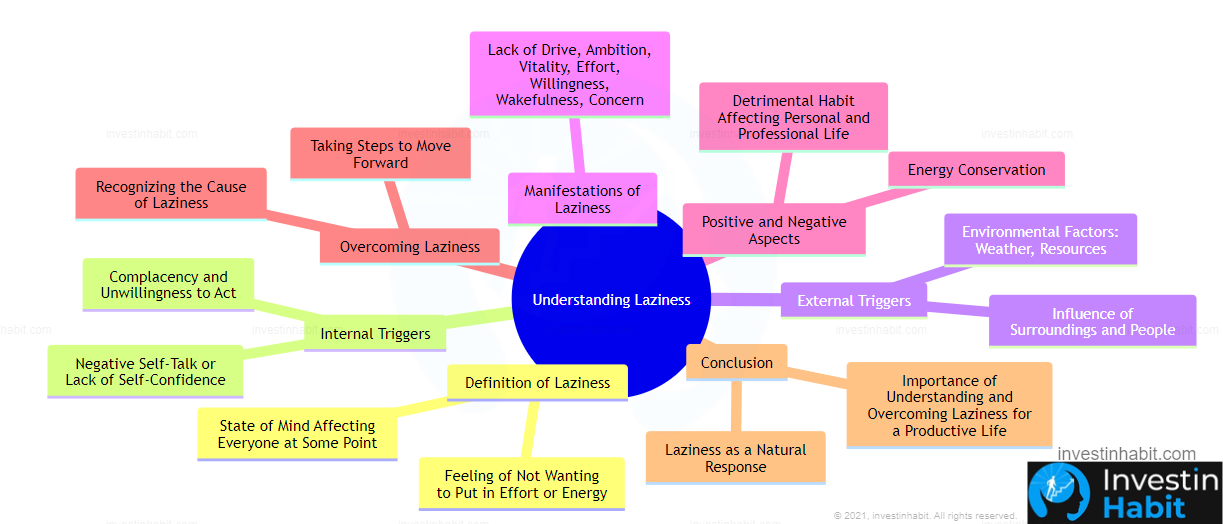
Laziness is a state of mind that affects almost everyone at some point in their lives. It’s a feeling of not wanting to put in the effort or energy required to do something. Laziness is a natural response to certain situations, and it can be triggered by both internal and external factors.
Internally, negative self-talk or a lack of self-confidence can lead to laziness. It’s easy to feel like we’re not capable of doing something, so we don’t even try. Sometimes, we also get too comfortable in our current situation, which makes us complacent and unmotivated to take any action.
Externally, laziness can be triggered by factors such as weather, lack of resources, or even the people we surround ourselves with. For example, when it’s raining outside, it’s easy to feel unmotivated to go outside and do something. Similarly, when we’re surrounded by people who are negative and lack motivation, it can be challenging to find the energy and drive to accomplish anything.
When we submit to our self-created emotions and thoughts, we experience laziness, which manifests as a lack of drive, ambition, vitality, effort, willingness, wakefulness, and concern.
Laziness is not necessarily a bad thing, as it can help us conserve our energy for when we need it the most. However, if it becomes a habit, it can be detrimental to our personal and professional lives. It’s important to recognize when we’re feeling lazy and why, so we can take the necessary steps to overcome it and move forward.
In summary, laziness is a natural response to certain situations that can be triggered by both internal and external factors. It’s important to understand why we’re feeling lazy and take steps to overcome it when it becomes a habit. By doing so, we can become more productive, achieve our goals, and lead a fulfilling life.
If you enjoyed this content on what is laziness, feel free to share on Twitter or Facebook.
This article is part of a larger, comprehensive post that explores 115 causes of laziness in-depth. Be sure to check out our main article, to gain a better understanding of the various factors that contribute to this phenomenon.

Transform Your Life with InvestInHabit

Ready for real change? Join us and get over:
- 200+ Personal Development Worksheets,
- 100+ Blog Post MindMaps
for FREE! 😍 + Our newsletter offers the latest in habit formation and self-improvement, straight to your inbox.
Subscribe now and Start redefining your mindset today! Join our community committed to success!