

Are you finding yourself struggling to get out of bed in the morning, feeling unmotivated and sluggish all day?
It’s easy to fall into the trap of lazy days, but have you considered that lack of exercise might be the reason behind your constant tiredness? 
Many people don’t realize the impact that exercise has on their physical and mental health.
So let’s dive in and explore how skipping workouts can lead to laziness and what you can do to break out of that cycle!
Laziness, defined as the lack of motivation or unwillingness to exert oneself, can be a vicious cycle that feeds on itself. The less we move, the less energy we have, and the less likely we are to engage in physical activity.
This can lead to a sedentary lifestyle that not only affects our physical health but also impacts our mental well-being. However, breaking out of this cycle is possible with some simple changes in our daily routine.
Let’s explore how exercise can help us overcome laziness and improve our overall quality of life.
Inside this Article
Importance of exercise for physical and mental health
When we skip workouts, our bodies miss out on the numerous benefits that exercise provides.
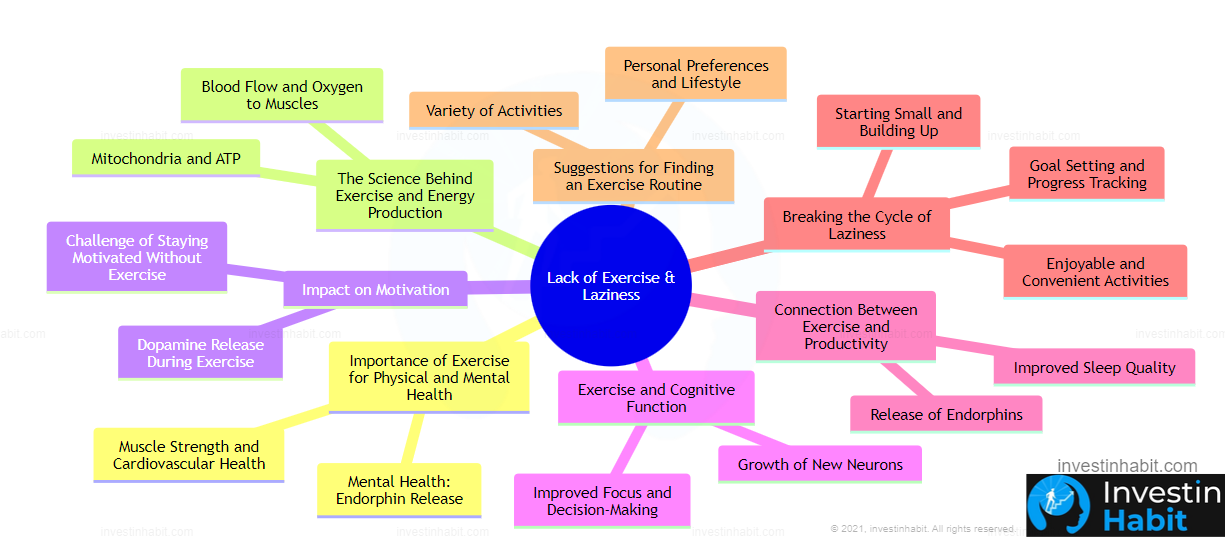
Our muscles become weaker, and our cardiovascular health declines. This leads to a decrease in energy levels and an increase in fatigue, making it more difficult to get through the day.
Additionally, exercise has been shown to release endorphins, which are natural mood boosters that can help combat feelings of depression and anxiety. Without this release, we may find ourselves feeling more down and less motivated to engage in physical activity.
By skipping workouts, we not only harm our physical health but also our mental well-being. So let’s make a commitment to prioritize exercise and break out of the cycle of laziness!

Transform Your Life with InvestInHabit

Ready for real change? Join us and get over:
- 200+ Personal Development Worksheets,
- 100+ Blog Post MindMaps
for FREE! 😍 + Our newsletter offers the latest in habit formation and self-improvement, straight to your inbox.
Subscribe now and Start redefining your mindset today! Join our community committed to success!
The Science Behind Exercise and Energy Production
Have you ever wondered how exercise produces energy?
The answer lies in the mitochondria, the powerhouses of our cells. During exercise, our bodies increase their demand for energy, and the mitochondria respond by producing more ATP, the molecule that fuels our cells. 
This process not only provides us with the energy we need to power through our workouts but also boosts our overall energy levels throughout the day. It’s not just a coincidence that exercise can help combat feelings of fatigue and laziness.
Additionally, exercise increases blood flow and oxygen to the muscles, providing them with the necessary nutrients to function properly. This process leads to an increase in energy levels and a decrease in feelings of fatigue.
So if you’re feeling sluggish and unmotivated, consider incorporating some physical activity into your routine to kickstart your energy production and break out of the cycle of laziness.
How lack of exercise can make it challenging to stay motivated
In addition to providing us with energy, exercise can also have a powerful impact on our motivation levels.
 When we engage in physical activity, our brains release dopamine, a neurotransmitter that plays a key role in motivation and reward. This surge of dopamine not only makes us feel good in the moment but also reinforces the behavior of exercising, making us more likely to continue doing it in the future.
On the other hand, when we skip workouts, we miss out on this burst of dopamine and may find it more challenging to stay motivated and committed to our fitness goals. By prioritizing exercise and making it a consistent part of our routine, we can harness the motivational power of dopamine and break out of the cycle of laziness for good.
Exercise and Focus: How Physical Activity Boosts Cognitive Function
Exercise not only benefits our physical and mental health but also has a positive impact on our cognitive function.
Studies have shown that regular physical activity can improve our ability to focus, make decisions, and process information. This is due in part to the increased blood flow and oxygen to the brain that occurs during exercise, which helps to nourish and protect brain cells.
Additionally, exercise has been shown to stimulate the growth of new neurons in the brain, leading to improved cognitive function over time.
So if you’re struggling with focus or productivity, consider incorporating some physical activity into your routine to give your brain a boost and break out of the cycle of laziness.
The Connection Between Exercise and Productivity
In addition to combating feelings of laziness and fatigue, exercise can also have a positive impact on our productivity levels.
When we engage in physical activity, our brains release endorphins, which are natural mood boosters that can help us feel more alert and focused. This burst of energy can carry over into other areas of our lives, including work and school, allowing us to be more productive and efficient.
Additionally, regular exercise has been shown to improve sleep quality, which is essential for optimal cognitive function and productivity. By incorporating physical activity into our daily routine, we can break out of the cycle of laziness and unlock a world of benefits that will improve our overall well-being and productivity.
Breaking the Cycle of Laziness
Now that we understand the negative impact of skipping workouts, let’s explore how we can break out of this cycle of laziness.
First, start small by incorporating physical activity into your daily routine. This could be as simple as taking a walk during your lunch break or doing some light stretching before bed.
As you build up your strength and stamina, gradually increase the intensity and duration of your workouts.

It’s important to find activities that you enjoy and that fit into your schedule, so you’re more likely to stick with them in the long run. Additionally, accountability can be a powerful motivator, so consider finding a workout buddy or joining a fitness class to keep yourself on track.
To enhance your physical well-being, it is crucial to make exercise a priority and incorporate it into your routine. Additionally, you can engage in cardio or dynamic stretching exercises.
Finally, conclude your workout with static stretching to minimize muscle soreness and prevent injury.
Setting Realistic Goals and Tracking Progress
Setting realistic goals is key to staying motivated. Start with small goals such as walking for 10 minutes per day and gradually increase as you progress.
To track your fitness progress, use a pedometer or fitness tracker. This will help you see how far you’ve come in terms of steps, calories burned, and distance traveled.
Keeping a fitness journal is also a great way to stay motivated. Write down your goals, progress, and any challenges you face.
This will help you stay accountable and motivated to reach your goals.
Concrete Examples of Exercises or Workouts
If you’re unsure where to start, here are some examples of exercises or workouts that you can try:
1. Walking: Walking is a low-impact exercise that can be done anywhere at any time. Start by walking for 10-15 minutes a day and gradually increase the duration as you feel more comfortable.
2. Yoga: Yoga is a great way to improve flexibility, balance, and strength. There are many online resources available for beginners, or you can join a class at your local gym or community center.
3. Strength Training: Strength training can help build muscle mass and increase metabolism. You can use free weights or resistance bands at home or join a gym for access to equipment.
Recommended Frequency and Duration of Workouts
To stay healthy, it’s important to exercise regularly. Here’s what you need to do:
1. Aim for 30 minutes of moderate exercise (like brisk walking) every day for 5 days a week.
2. You can also do 20 minutes of more intense exercise (like running) on 3 days each week.
3. Alternatively, you can do 10 minutes of intense exercise (like jumping jacks or burpees) every day for 5 days a week.
4. Try to include aerobic exercises (also known as cardio) in your routine at least 3 times a week. This could include activities like running, cycling, swimming, or dancing.
Remember, any amount of physical activity is better than none, so start small and gradually increase your activity levels over time.
Overcoming the Mental Barrier of Laziness
While the physical benefits of exercise are clear, it can be challenging to overcome the mental barrier of laziness and actually get started.
One way to combat this is by reframing our mindset around exercise. Rather than viewing it as a chore or something we “have” to do, we can shift our perspective to see it as a form of self-care and an opportunity to improve our overall well-being.
Additionally, setting specific goals and tracking our progress can help us stay motivated and hold ourselves accountable. It’s important to remember that even small steps towards incorporating more physical activity into our daily lives can have a significant impact on our energy levels, mood, and overall health.
By breaking out of the cycle of laziness and prioritizing exercise, we can unlock a world of physical and mental benefits that will improve our quality of life in countless ways.
Suggestions for finding an exercise routine that works for you
When it comes to finding an exercise routine that works for you, it’s important to consider your individual preferences and lifestyle.
Some people prefer the structure and accountability of a gym or fitness class, while others enjoy the flexibility and freedom of exercising at home or outdoors. Additionally, it’s important to choose activities that you enjoy and find motivating, whether that’s dancing, hiking, swimming, or weightlifting.
By experimenting with different types of exercise and finding what works best for you, you can create a sustainable routine that will help you break out of the cycle of laziness and achieve your health and fitness goals.
Conclusion on how lack of exercise causes laziness
In conclusion, incorporating physical activity into our daily routine can have a profound impact on our overall well-being and productivity levels.
By breaking out of the cycle of laziness and prioritizing exercise, we can unlock a world of benefits that will improve our mood, energy levels, and cognitive function. Whether you prefer the structure of a gym or the flexibility of exercising at home, there are many resources available to help you find an exercise routine that works for you.
Remember to start small and gradually increase your activity levels over time, and to view exercise as a form of self-care rather than a chore. By making physical activity a consistent part of our routine, we can harness the motivational power of dopamine and achieve our health and fitness goals.
By prioritizing exercise, we can break out of the cycle of laziness and unlock a world of benefits that will improve our overall quality of life. So, let’s lace up our sneakers or grab our yoga mats and start moving towards a healthier, happier version of ourselves.
This article is part of a larger, comprehensive post that explores 115 causes of laziness in-depth. Be sure to check out our main article, to gain a better understanding of the various factors that contribute to this phenomenon.
Transform Your Habits, Transform Your Life
Are you ready to turn the page to a new chapter in your life?
Stop dreaming, start achieving. Our exclusive newsletter delivers:
- Science-backed hacks: Master the psychology of habit formation used by CEOs and Olympians.
- Actionable strategies: No fluff, just practical steps to crush procrastination and dominate your goals.
- + a FREE surprise bonus 🎁 to jumpstart your transformation!
Don’t settle for mediocre. Subscribe now!