

We all experience negative emotions – frustration, anger, sadness, the list goes on. While these feelings can be uncomfortable, ignoring or bottling them up can actually be detrimental to our well-being and relationships.
Learning healthy ways to express these emotions can be challenging, but it’s a crucial skill for navigating life’s ups and downs. In this post, we’ll explore not only the importance of expressing negative emotions constructively but also offer practical tips and strategies to help you do just that, fostering healthier communication and emotional well-being in the process.
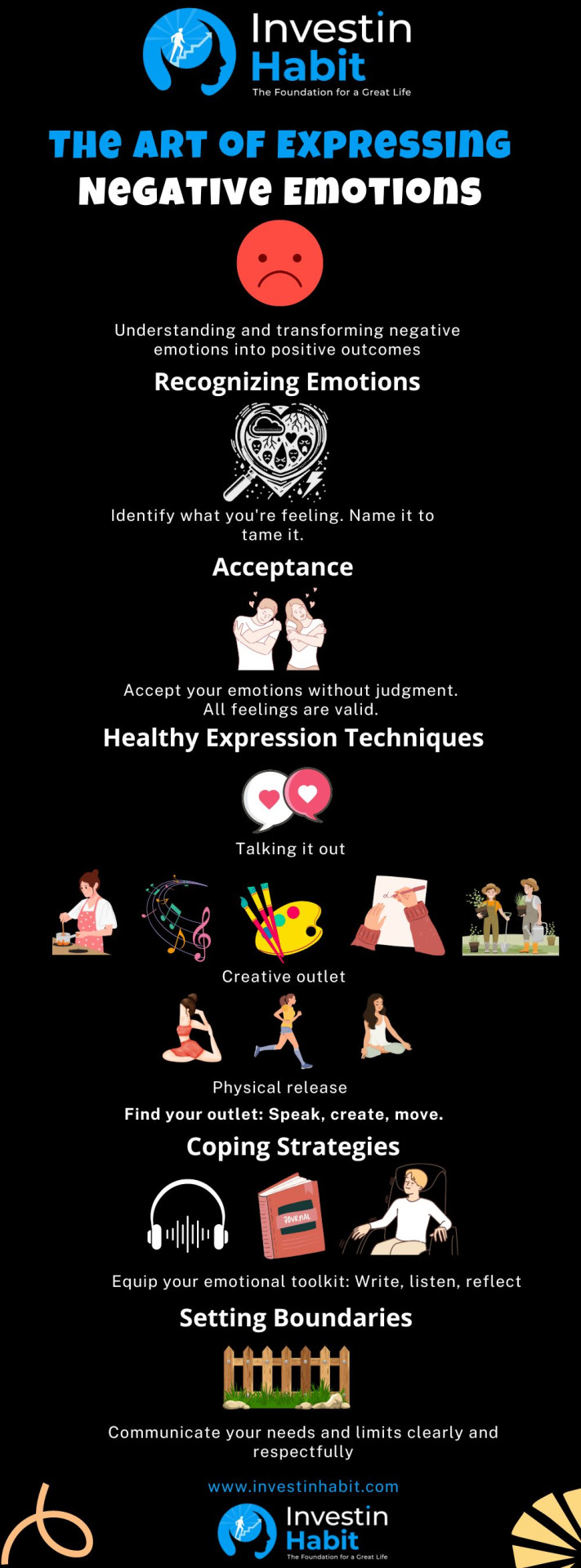
Inside this Article
Understanding Negative Emotions

Let’s dive into the world of negative emotions together. You know, those feelings that sometimes catch us off guard—like sadness, anger, or frustration? It’s completely normal to experience them, and I’m here to walk you through understanding what they are, why they pop up, and how they affect us.
What Are Negative Emotions Anyway?
First off, negative emotions aren’t necessarily “bad.” They’re natural responses to challenges or threats in our environment. Think of them as signals, alerting you that something needs your attention. Whether it’s disappointment from a setback, fear in response to danger, or anger from feeling wronged, these emotions play a crucial role in our lives.
Common Triggers—What Sets These Emotions Off?
I bet you’ve noticed that certain things trigger these feelings more than others. It could be stress from work, conflicts in personal relationships, or even just reading the news. Triggers are highly personal, so what affects you deeply might not bother someone else as much. Recognizing your triggers is the first step in managing your emotional responses more effectively.
The Toll of Bottling Up
Have you ever tried to push away these feelings, hoping they’d just disappear? I know I have. But suppressing our emotions can have serious repercussions, both psychologically and physically. Psychologically, it can lead to increased anxiety, depression, and even affect our memory and cognitive function. Physically, holding onto stress and negative emotions can manifest as headaches, sleep disturbances, and even chronic conditions like heart disease. It’s like pressing down on a spring—eventually, it’s going to spring back, sometimes with even greater force.
Helpful vs. Harmful Ways to Express Emotions
Now, not all ways of expressing these emotions are created equal. Some can lead us down a path of more pain and regret—think lashing out in anger or isolating ourselves in sadness. These reactions often push us away from the support we need and can escalate the situation. On the flip side, there are healthy, constructive ways to deal with these feelings—like talking to a friend, engaging in physical activity, or practicing mindfulness. These strategies not only help us process our emotions but also build resilience over time.
So, as we navigate through this together, remember: it’s not about avoiding negative emotions but learning to understand and express them in ways that serve us better. Stay tuned as we explore how to become more aware of our emotions and manage them in the healthiest ways possible.
There’s a fine line between expressions that can heal and those that can hurt, both ourselves and others. So, how do we tell the difference?
The Healing Power of Constructive Expression
First up, let’s talk about the good stuff—constructive expression. This is when you express your emotions in a way that helps you process and move through them. It’s like giving a voice to what’s inside, but in a way that leads to understanding and resolution. For instance, talking about your feelings with a trusted friend or writing them down in a journal can be incredibly therapeutic. These actions allow you to examine your emotions, understand them, and even gain new insights into what triggered them.
Constructive expression also involves activities that help release the energy associated with negative emotions. Ever felt better after a long walk, hitting the gym, or dancing around your room? That’s because physical activity can be a powerful outlet for emotional release. It’s not about ignoring your feelings but channeling them into actions that bring relief and clarity.
The Downside of Destructive Expression
On the flip side, we have harmful ways of expressing emotions. These are the reactions that might feel good in the moment but tend to leave a trail of regret in their wake. Yelling in anger, snapping at loved ones, or engaging in self-destructive behaviors might momentarily release tension but ultimately damage relationships and self-esteem.
Destructive expression often comes from a place of not having the right tools to deal with our emotions. It’s like using a sledgehammer when what you need is a scalpel—too much and too indiscriminate. The key here is to recognize these patterns in ourselves and understand that while the immediate release might feel satisfying, the long-term consequences can be anything but.
Finding Your Balance
So, how do you find that balance? It starts with mindfulness—being aware of what you’re feeling and considering your options for expression before reacting. Ask yourself, “Will this action help me feel better in the long run? Is there a healthier way I can deal with this?” Sometimes, just taking a few deep breaths can give you the space you need to choose a more constructive path.
Remember, the goal isn’t to suppress your negative emotions; it’s to express them in ways that are healing rather than hurtful. It’s about finding your voice and your outlets in a way that builds you up and moves you forward. And trust me, with a little practice and a lot of self-compassion, you’ll get there.

Transform Your Life with InvestInHabit

Ready for real change? Join us and get over:
- 200+ Personal Development Worksheets,
- 100+ Blog Post MindMaps
for FREE! 😍 + Our newsletter offers the latest in habit formation and self-improvement, straight to your inbox.
Subscribe now and Start redefining your mindset today! Join our community committed to success!
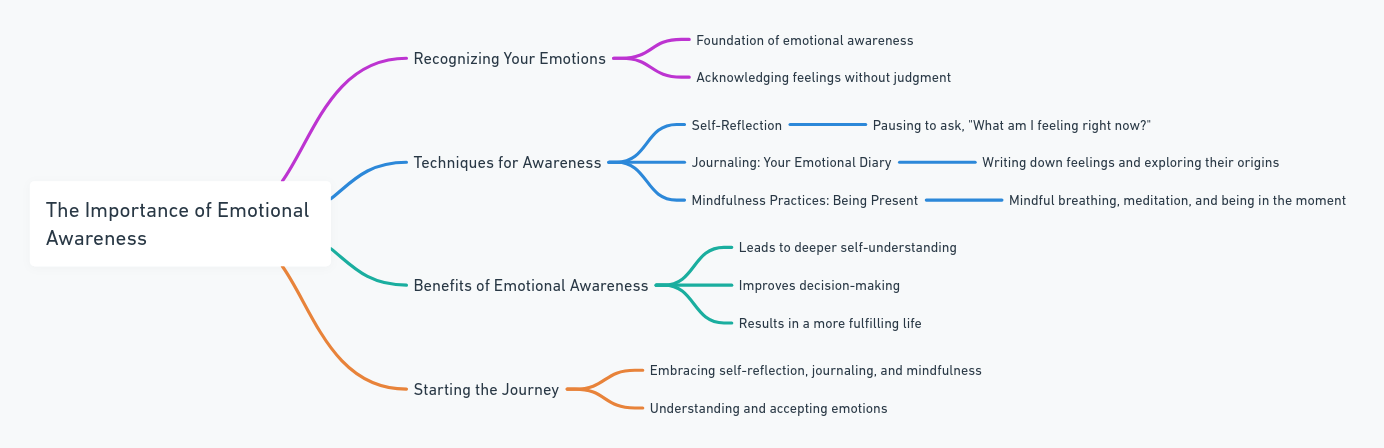
The Importance of Emotional Awareness

Let’s dive into something really crucial yet often overlooked—emotional awareness. It’s all about tuning into your feelings, understanding them, and recognizing their impact on your life. Think of it as becoming best friends with your emotions. It might sound a bit daunting, but I promise, it’s a journey worth taking. So, how do we start this journey? Let’s explore together.
Techniques for recognizing and acknowledging your emotions
First things first, recognizing your emotions is like the foundation of a house—it’s essential. Sometimes, we feel something stirring inside us but can’t quite put a finger on what it is. That’s where recognition comes in. It’s about saying, “Hey, I’m feeling something, and it’s okay.” But, how do you get better at this? Well, I’ve got a few tricks up my sleeve.
The Power of Self-Reflection
Self-reflection is your first tool. It’s about taking a moment to pause and ask yourself, “What am I feeling right now?” It sounds simple, but in our busy lives, these moments of pause are golden. You can do this anytime, anywhere. Maybe you’re feeling irritated at work, or perhaps you’re sad but can’t figure out why. By asking yourself how you feel, you give space to your emotions, allowing them to come to the forefront.
Journaling: Your Emotional Diary
Next up, we have journaling. Think of it as having a conversation with yourself on paper (or screen). It’s a fantastic way to process your feelings. You start by writing down what you’re feeling and then dive deeper into why you might be feeling that way. There’s something about seeing your emotions in words that makes them more tangible, more real. Plus, looking back on your entries can offer incredible insights into your emotional patterns and triggers.
Mindfulness Practices: Being Present
Last but definitely not least, let’s talk about mindfulness practices. Mindfulness is all about being present in the moment, fully experiencing your thoughts, feelings, and sensations without judgment. Techniques like mindful breathing or meditation can help you become more aware of your emotional state. Even a few minutes a day can make a big difference. It’s like turning down the volume of the world to hear your own inner voice more clearly.
By embracing self-reflection, journaling, and mindfulness, you’re not just recognizing and acknowledging your emotions; you’re giving them the respect and attention they deserve. This isn’t about controlling or changing how you feel but understanding and accepting your emotions. And believe me, this level of emotional awareness is a game-changer. It leads to deeper self-understanding, better decision-making, and, ultimately, a more fulfilling life.
So, are you ready to embark on this journey of emotional awareness with me? Trust me, it’s one of the most rewarding journeys you’ll ever take. Let’s do this together, one step, one breath, one journal entry at a time.
The Role of Emotional Intelligence in Managing Emotions
Alright, now that we’re becoming more in tune with our emotions through awareness, let’s chat about the next piece of the puzzle—emotional intelligence (EI). This concept is a real game-changer when it comes to managing our emotions, not just recognizing them. Imagine being able to navigate your feelings and those of others with ease and grace. That’s the power of emotional intelligence. Sounds pretty great, right? Let’s dive into what this really means for you and me.
What Is Emotional Intelligence?
At its core, emotional intelligence is the ability to understand, use, and manage your own emotions in positive ways. It’s also about recognizing the emotions of others, empathizing with them, and navigating social complexities with understanding. Think of EI as a set of skills that helps you deal with the emotional landscape of life more effectively.
Why It Matters
You might be wondering, “Why is this important?” Well, emotional intelligence is key to maintaining balance in your emotional world. It influences how we react to stress, how we communicate, and how we build relationships. High EI can lead to better mental health, job performance, and leadership skills. It’s like having an inner compass that helps guide you through emotional storms, ensuring you come out the other side stronger and more resilient.
Developing Your Emotional Intelligence
So, how do we get better at this? Here are a few strategies:
- Self-awareness: This is all about knowing your emotions as they happen. It’s the foundation of EI. By being mindful of your feelings, you start to understand your emotional triggers and can begin to manage them more effectively.
- Self-regulation: Once you’re aware of your emotions, the next step is learning to control them. This doesn’t mean suppressing your feelings but rather expressing them appropriately. Think before you act, and don’t let your emotions take the wheel.
- Empathy: Understanding the feelings of others is a crucial part of emotional intelligence. It’s about putting yourself in someone else’s shoes and responding with compassion. Empathy strengthens your ability to connect with others on a deeper level.
- Social Skills: Effective communication and building strong relationships are essential aspects of EI. It’s about being able to clearly express how you feel and understanding how to resolve conflicts in a constructive way.

Putting It All Together
Emotional intelligence is like a muscle—the more you use it, the stronger it gets. By practicing self-awareness, self-regulation, empathy, and improving your social skills, you’re not just managing your emotions better; you’re enhancing your overall quality of life.
Remember, this journey is a personal one, and there’s no one-size-fits-all approach. Take it one step at a time, be patient with yourself, and celebrate your progress. The world of emotional intelligence is rich and rewarding, and I’m so excited for you to explore it.
So, what do you say? Are you ready to embrace the power of emotional intelligence and transform the way you understand and manage your emotions? Let’s embark on this journey together, fostering a deeper connection with ourselves and those around us. Here’s to becoming the best version of ourselves, one emotional insight at a time.
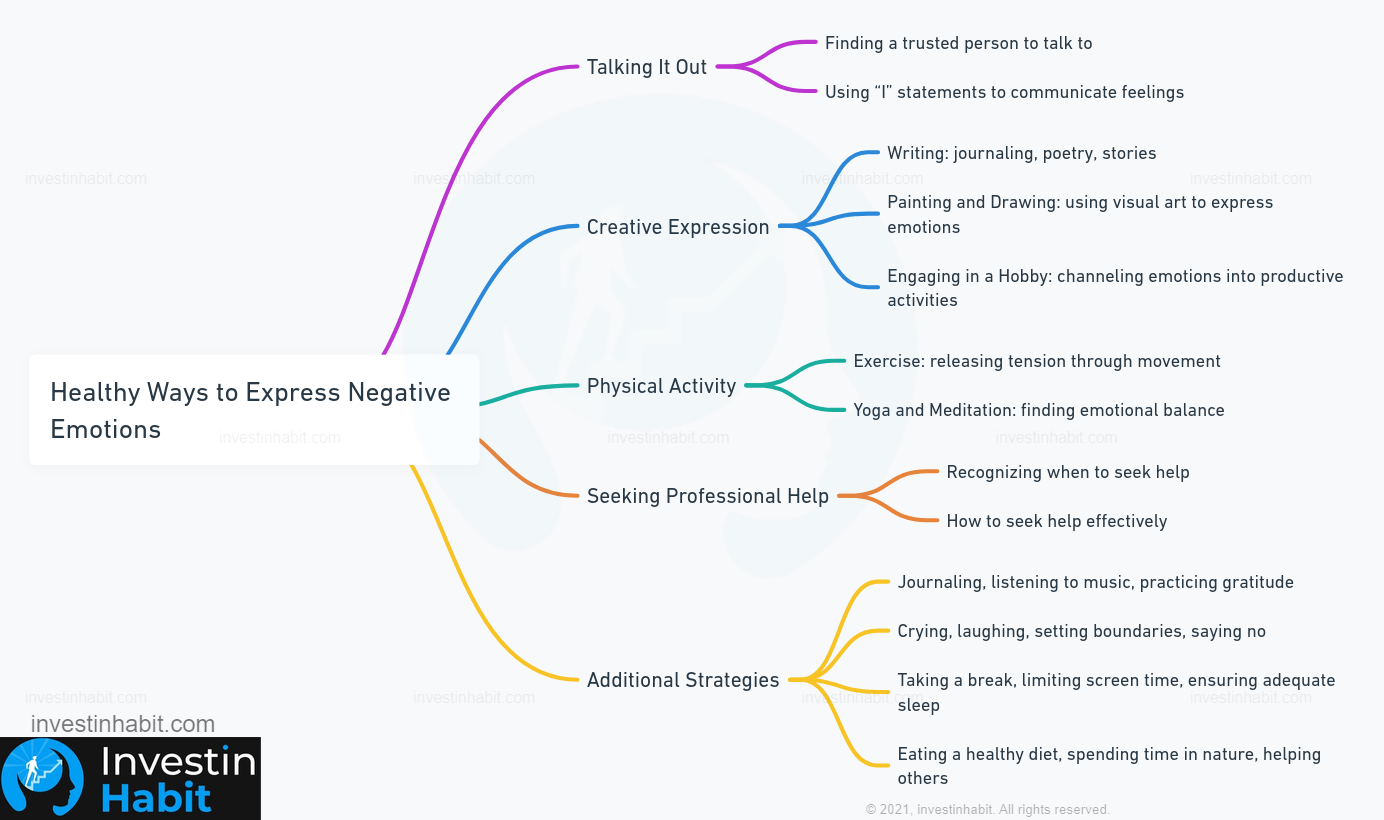
Healthy Ways to Express Negative Emotions

Navigating through our emotions, especially the tough ones, can feel like walking through a maze sometimes, right? But hey, guess what? There are some pretty amazing and healthy ways to express these emotions, turning what feels like a maze into a more straightforward path. Let’s explore a few strategies together, focusing on talking it out and tapping into our creative sides.
Talking It Out: The Power of Sharing
First on our list is the classic yet ever-so-effective method: talking it out. But it’s not just about talking; it’s about sharing your feelings with someone who gets you. Someone you trust.
- Finding a Trusted Person to Talk to: This could be a friend, family member, therapist, or anyone who offers a listening ear without judgment. It’s about creating a safe space where you can be open and honest about what you’re feeling. The magic of sharing your thoughts and emotions with someone else is not just in being heard, but in the connection and understanding that comes from it.
- Using “I” Statements to Communicate Feelings Without Blame: Ever heard about “I” statements? They’re a game-changer. Instead of saying, “You make me feel angry,” you say, “I feel angry when this happens.” It’s a way of owning your emotions without putting the other person on the defensive. This approach fosters open communication and helps in getting your message across more effectively.
Creative Expression: Let Your Emotions Flow
Now, let’s turn the spotlight on another powerful outlet—creative expression. You don’t have to be a Picasso or a Shakespeare for this; it’s all about using creativity as a channel for your emotions.
- Writing: Grab a journal, a notepad, or even your phone, and start writing. It could be poems, stories, or just jotting down what you feel. Writing gives your emotions a voice without the fear of judgment. It’s a conversation between you and the page, and there’s something incredibly liberating about pouring your heart out through words.
- Painting and Drawing: Let colors and shapes express what words cannot. You don’t need a fancy canvas or paints; doodling on a piece of scrap paper works just as well. The act of painting or drawing can be incredibly soothing and a powerful way to visually represent your feelings.
- Engaging in a Hobby: Ever lost yourself in a hobby? That’s the kind of immersion and distraction that can help manage negative emotions. Whether it’s gardening, knitting, playing an instrument, or cooking, hobbies offer a productive escape, allowing you to channel your energy into something positive.
Physical Activity: Moving Your Way to Emotional Wellness
Now, let’s lace up those sneakers and talk about another powerful ally in our quest to express negative emotions healthily: physical activity. You’ve probably heard that exercise is good for your body, but did you know it’s also incredibly beneficial for your emotional health? Let’s dive into how getting moving can help us manage those tricky emotions.
Exercise as a Means to Release Tension and Stress
Imagine carrying a backpack that’s getting heavier by the minute. That’s what stress and tension can feel like on your shoulders. Now, picture yourself taking that backpack off and feeling lighter. That’s what exercise can do for your emotional baggage. Whether it’s a brisk walk, a run, or dancing to your favorite tunes, physical activity helps release endorphins, our body’s natural mood lifters. It’s not about the intensity; it’s about moving in a way that makes you feel good, clears your mind, and releases the tension that’s been building up.
Yoga and Meditation for Emotional Balance
If you’re looking for a gentler approach, yoga and meditation might just be your best friends. Yoga combines physical poses with breathing techniques, offering a holistic way to find balance and peace. It’s like sending a love letter to your body and mind, saying, “Hey, it’s okay. We’ve got this.” Meditation, on the other hand, invites you to sit with your emotions, observe them without judgment, and let them pass like clouds in the sky. These practices can be incredibly grounding and provide a sense of stability when emotions feel overwhelming.
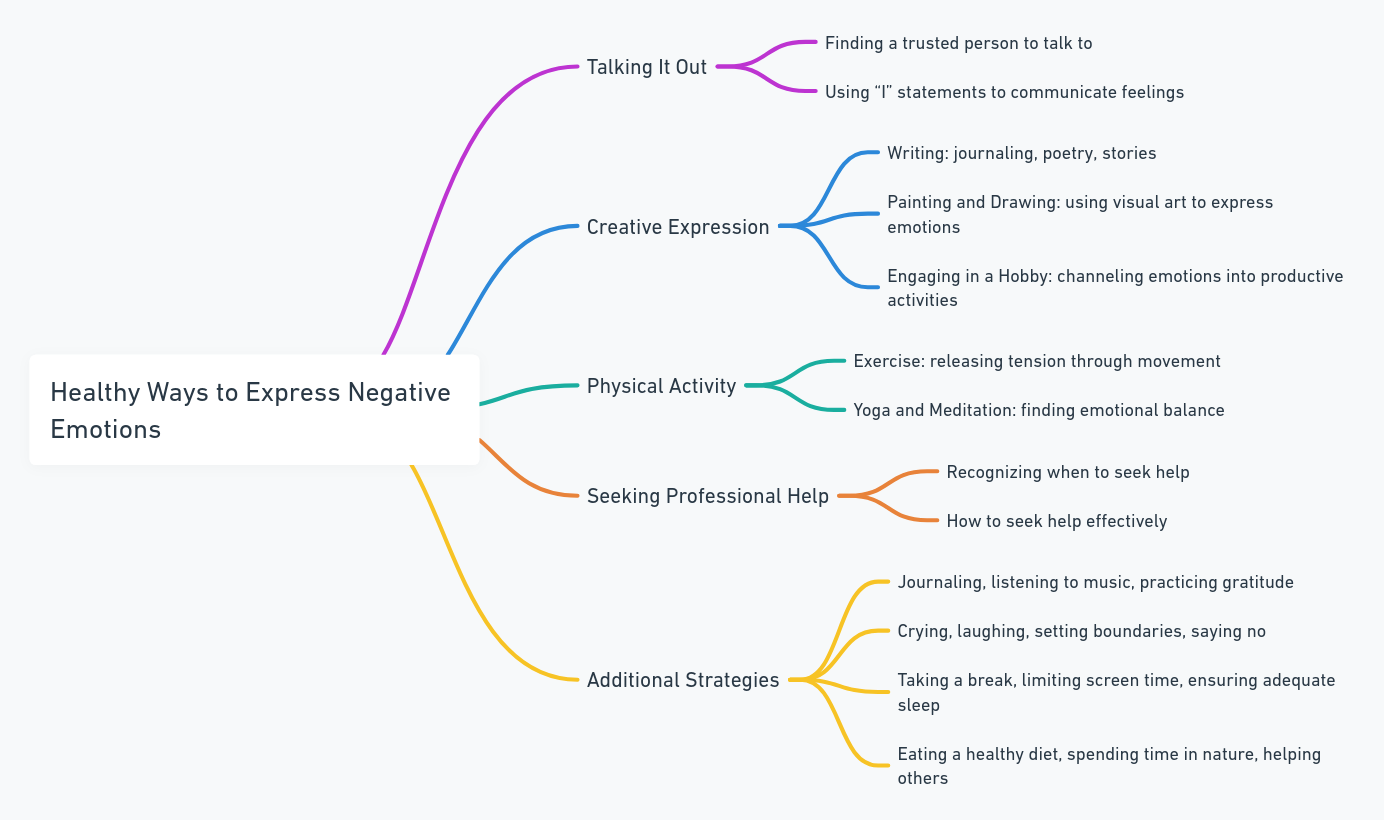
Seeking Professional Help: A Brave Step Forward
There comes a time when talking to friends or journaling might not feel enough, and that’s perfectly okay. Seeking help from a therapist or counselor is a brave and positive step towards understanding and managing your emotions.
When to Seek Help
So, when is it time to reach out to a professional? If you’re feeling overwhelmed by your emotions to the point where they’re affecting your daily life, relationships, or physical health, it might be time to seek extra support. Other signs include persistent sadness, anxiety, or if you’re turning to unhealthy coping mechanisms.
How to Seek Help
Taking that first step can feel daunting, but remember, it’s a step towards your well-being. You can start by talking to your primary care provider, who can give you a referral. Or, look for therapists or counselors in your area who specialize in what you’re experiencing. Many therapists offer teletherapy sessions now, making it more accessible than ever to find the support you need.
Remember, reaching out for help is not a sign of weakness; it’s a sign of strength. It’s about taking control of your emotional health and making a commitment to yourself.
Here’s a list of healthy ways to express negative emotions:
- Journaling
- Talking to a trusted friend or family member
- Exercise
- Creative expression, such as painting, drawing, writing, or playing music
- Relaxation techniques, such as deep breathing, meditation, and yoga
- Spending time in nature
- Engaging in hobbies you enjoy
- Listening to music
- Helping others
- Practicing gratitude
- Crying
- Laughing (even if you don’t feel like it)
- Setting boundaries
- Saying no
- Taking a break
- Limiting screen time
- Getting enough sleep
- Eating a healthy diet
Coping Strategies for Negative Emotions
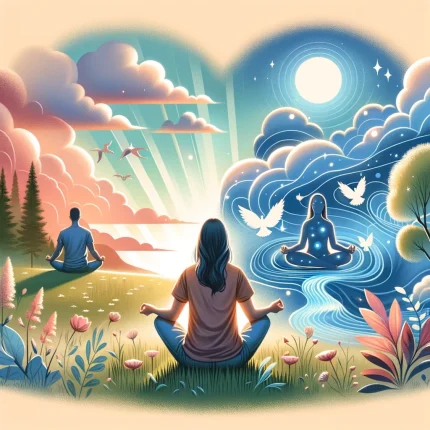
Let’s keep this journey of understanding and managing our emotions going. Now, we’re going to explore some coping strategies that can be absolute lifesavers when negative emotions try to take the wheel. It’s like having a personal toolkit; when things get tough, you reach in and find exactly what you need to help you through. Ready to add some tools to your emotional toolkit? Let’s dive in.
Techniques for Calming and Soothing Oneself During Emotional Distress
We’ve all been there—those moments when our emotions feel too big to handle. But guess what? There are ways to help calm the storm inside. These techniques are like anchors, helping to keep you grounded when the emotional seas get rough.
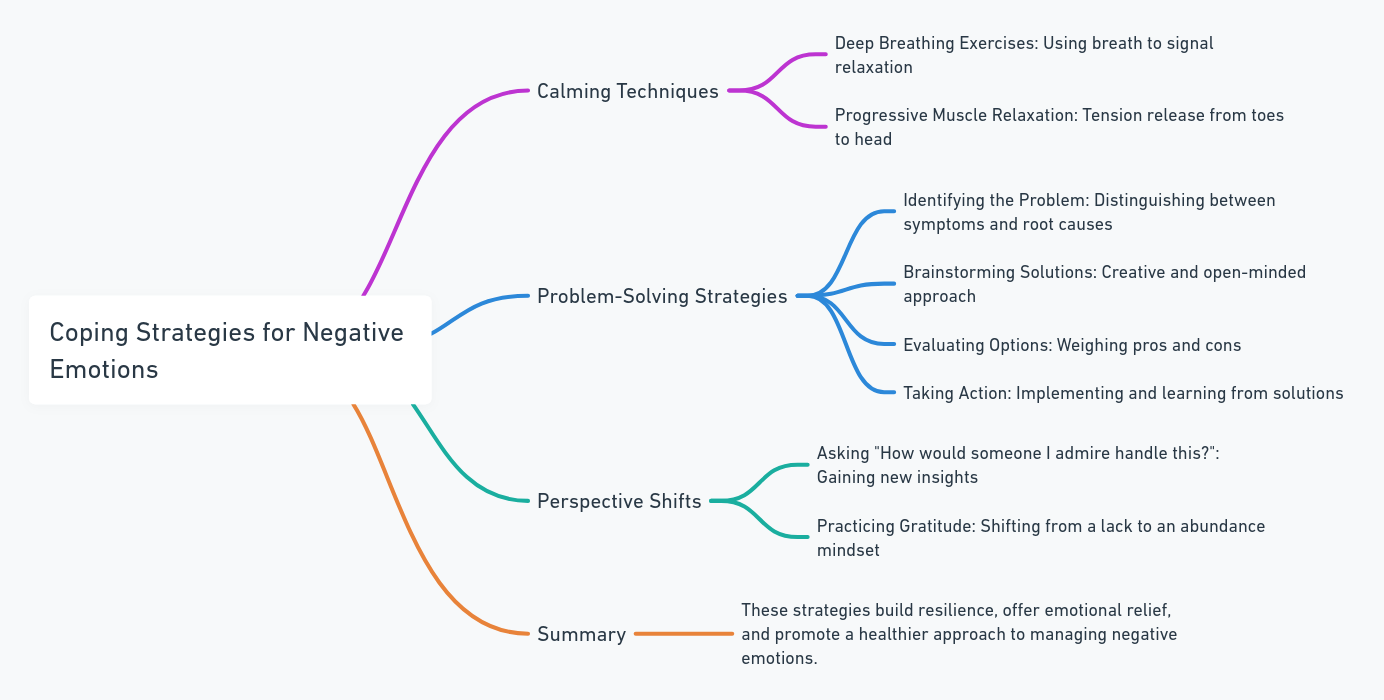
Deep Breathing Exercises: Your Invisible Superpower
First up, we have deep breathing exercises, and let me tell you, they’re like an invisible superpower. When you’re feeling overwhelmed, taking a few deep, controlled breaths can work wonders. It’s all about breathing in slowly through your nose, letting your chest and belly fill with air, and then exhaling slowly through your mouth. This simple act sends a signal to your brain to chill out and relax, lowering your heart rate and blood pressure. It’s a quick and effective way to dial down the intensity of your emotions, and the best part? You can do it anywhere, anytime.
Progressive Muscle Relaxation: Let That Tension Go
Now, let’s talk about progressive muscle relaxation. This technique is like taking your body on a journey of tension release, one muscle group at a time. You start by tensing a group of muscles as you breathe in, hold for a few seconds, and then release the tension as you breathe out. Working your way from your toes to your head, you’ll likely find pockets of tension you didn’t even know were there. By the time you reach the top, it’s not uncommon to feel a significant decrease in emotional and physical tension. It’s like giving your body permission to let go of the stress it’s been holding onto.
Incorporating deep breathing exercises and progressive muscle relaxation into your life can make a big difference in how you cope with negative emotions. Think of these techniques as your go-to comfort measures, ready to help you find your calm amidst the storm. And remember, practice makes perfect. The more you use these strategies, the more effective they’ll become. So, next time you feel those waves of emotion rolling in, reach for these tools and remind yourself, “I’ve got this.” You’re building resilience, one breath, one muscle relaxation at a time. Keep going, my friend. You’re doing great.
Strategies for Problem-Solving and Looking at Situations from a New Perspective
Alright, let’s shift gears a bit. We’ve talked about how to calm the storm of emotions, but what about navigating through the challenges that stir up these emotions in the first place? Sometimes, the way out of emotional turmoil is through tackling the problem head-on, but with a fresh set of eyes. It’s like being a detective in your own life, looking for clues to solve the mystery. Exciting, isn’t it? Let’s explore some strategies that can help us do just that.
Problem-solving is an art, and like any art, it requires creativity, patience, and practice. The first step? Identifying the problem. It sounds simple, but you’d be surprised how often we react to the symptoms of a problem rather than the problem itself. So, take a step back and ask yourself, “What’s really going on here?”
Once you’ve pinpointed the problem, it’s time to brainstorm solutions. Don’t hold back—let your creativity flow. Think outside the box and write down every idea that comes to mind, no matter how outlandish it may seem. Sometimes, the most unconventional solutions are the most effective.
Next, evaluate your options. Consider the pros and cons of each solution. What are the potential outcomes? Which solution feels most doable and effective? Remember, you don’t have to go at it alone. Bouncing ideas off a friend or mentor can provide valuable insights and perspectives.
Finally, it’s time to take action. Choose a solution and implement it. Keep in mind, it’s okay if the first solution doesn’t work out as planned. Problem-solving is often a process of trial and error. What’s important is that you’re taking steps forward and learning along the way.
Now, about looking at situations from a new perspective. It’s like turning the kaleidoscope of your life just a notch and seeing a whole new pattern emerge. This shift in perspective can be incredibly powerful in transforming how we feel about and react to situations.
One way to gain a new perspective is to ask yourself, “How would someone I admire handle this situation?” Imagining how a role model, whether it’s a loved one, a historical figure, or even a fictional character, might deal with the problem can inspire new approaches and solutions.
Another technique is to practice gratitude. It might seem unrelated at first, but focusing on what’s going right in your life can shift your mindset from one of lack to one of abundance. This shift can open your mind to possibilities and solutions you might not have considered before.
Problem-solving and shifting your perspective aren’t just about fixing what’s wrong; they’re about growing and expanding your understanding of yourself and the world around you. By embracing these strategies, you’re not just navigating through challenges; you’re transforming them into opportunities for growth and learning.
So, next time you’re faced with a tough situation, remember these strategies. Be the detective in your own life story, look for the clues, and be open to seeing things in a new light. You have the creativity, the resources, and the resilience to find your way through. And remember, every problem solved and every new perspective gained is a step towards a more empowered and emotionally resilient you. Keep going, you’ve got this!
Navigating Emotional Expression in Relationships

Navigating the waters of emotional expression in relationships can sometimes feel like sailing on a sunny day, and other times, like trying to steer through a storm. It’s all part of the journey of connecting deeply with others. But, how do we express our emotions in ways that strengthen our bonds rather than causing waves? And how important are boundaries in this process? Let’s unpack this together, shall we?
Expressing Emotions Without Causing Harm or Misunderstanding
When it comes to sharing our feelings with those we care about, it’s all about the how. You’ve probably heard the phrase, “It’s not what you say, but how you say it.” Well, it couldn’t be more true here.
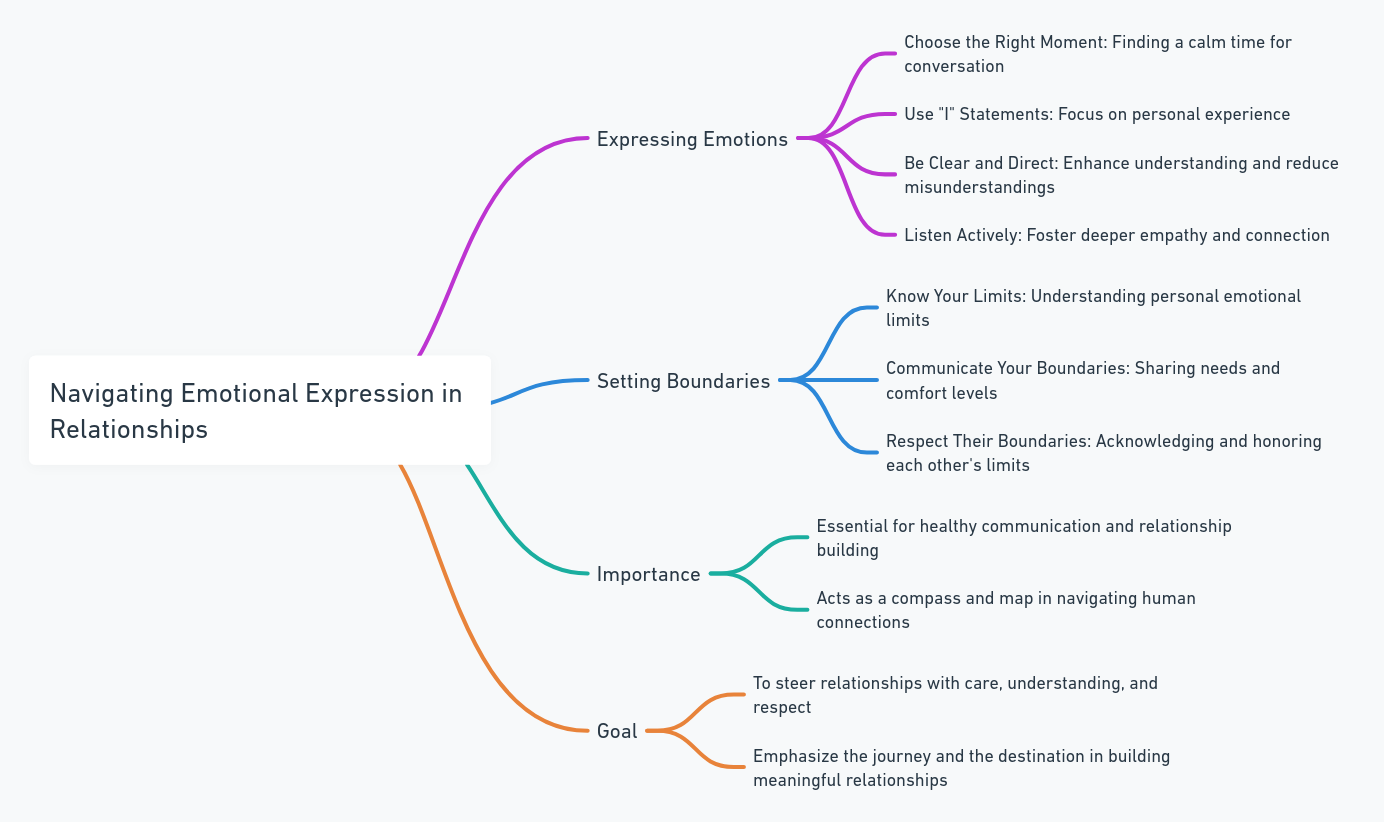
- Choose the Right Moment: Timing is key. Try to find a calm moment to express your feelings, rather than in the heat of emotion. It’s like waiting for the sea to calm before setting sail.
- Use “I” Statements: Remember how we talked about “I” statements? They’re incredibly useful in relationships, too. Starting your sentences with “I feel…” rather than “You make me feel…” places the focus on your experience rather than placing blame.
- Be Clear and Direct: Clarity is your best friend. Be as clear as possible about what you’re feeling and why. This helps prevent misunderstandings and provides a clear path for the conversation.
- Listen Actively: Emotional expression is a two-way street. Listening to the other person’s perspective with an open heart and mind can deepen understanding and empathy in the relationship.
The Importance of Setting Boundaries
Now, let’s talk boundaries. They might sound like barriers, but in reality, they’re the guidelines that help relationships thrive.
- Know Your Limits: It starts with understanding your own emotional limits. What are you comfortable with? What’s too much? Knowing this helps you communicate your needs more effectively.
- Communicate Your Boundaries: Once you know your boundaries, share them with your partner or friend. It’s not about keeping someone at arm’s length, but about creating a safe space for both of you.
- Respect Their Boundaries: Just as you have your own limits, so do they. Respecting each other’s emotional boundaries is crucial for mutual respect and understanding in the relationship.
Expressing emotions and setting boundaries are essential skills in the art of relationship building. They’re like the compass and map that guide us through the complex world of human connections. By approaching emotional expression with mindfulness, clarity, and respect for boundaries, we pave the way for deeper, more meaningful relationships.
So, as we continue on this journey of emotional expression, let’s remember the power of our words and actions. Let’s strive to be navigators who steer our relationships with care, understanding, and respect. And remember, it’s about the journey as much as the destination. Here’s to smooth sailing ahead, my friend.
Preventive Measures and Building Resilience

The ability to express negative emotions healthily is a fundamental part of emotional well-being. However, focusing solely on reactive methods can be like treating the symptoms of an illness without addressing the underlying cause. This section explores preventive measures and resilience-building strategies that act as the bedrock upon which healthy emotional expression flourishes.
Imagine yourself navigating a complex terrain. While knowing how to navigate challenging sections (expressing emotions constructively) is crucial, your overall journey benefits greatly from two additional factors: a resilient physical state (resilience) and a reliable support team (support system).
This section delves into how cultivating these two pillars – building resilience through self-care and developing a strong support system – empowers you to not only weather immediate emotional storms but to emerge stronger and more prepared for future challenges. By proactively nurturing your well-being and fostering supportive connections, you equip yourself with the tools to manage and express negative emotions effectively, leading to a greater sense of control, emotional intelligence, and overall well-being.
Building a Support System
Imagine you’re on a voyage across the ocean. Would you rather go at it alone or with a crew of supportive people? I thought so. Building a support system is like assembling your crew, each member bringing their own strength, perspective, and support to the journey.
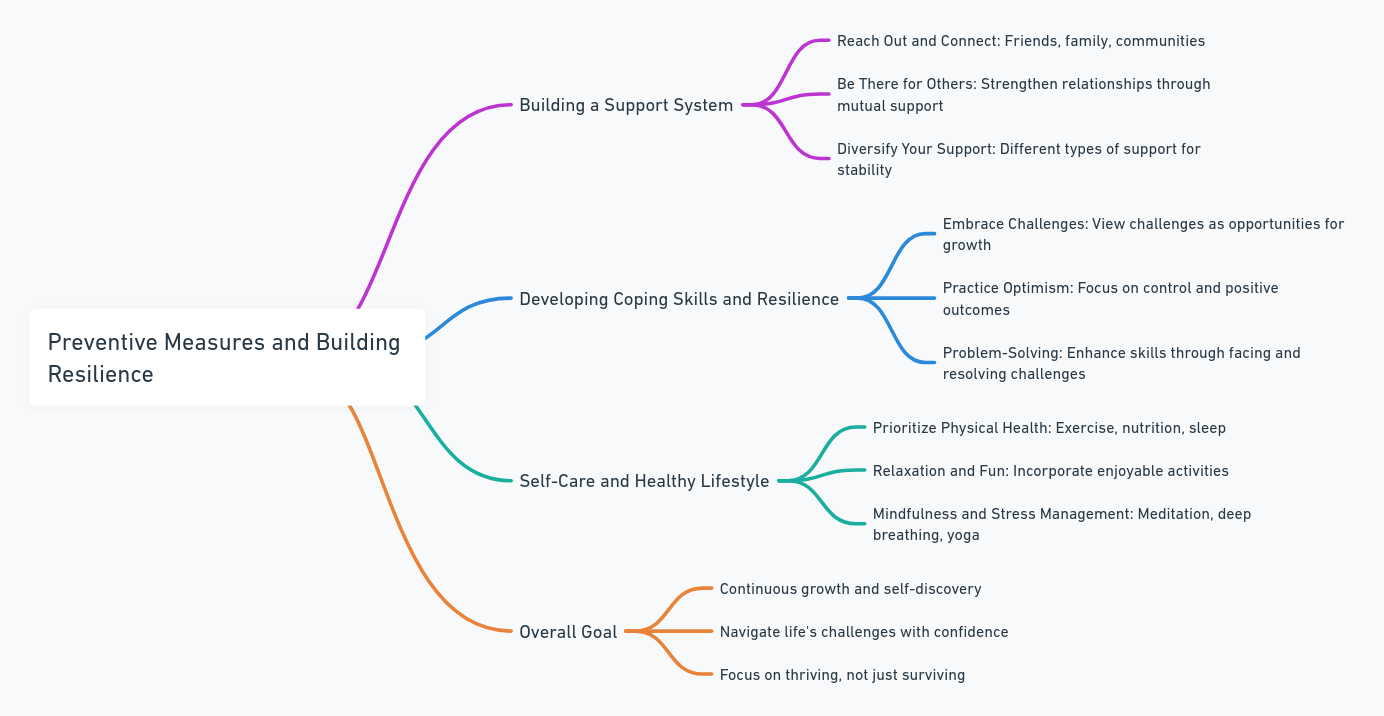
- Reach Out and Connect: This can be friends, family, colleagues, or communities with similar interests or experiences. It’s about surrounding yourself with people who uplift and support you.
- Be There for Others: Support is a two-way street. Being there for others not only strengthens your relationships but also reinforces your sense of purpose and connection.
- Diversify Your Support: Just like a portfolio, diversifying your support system can provide stability. Different people can offer different kinds of support—emotional, practical, or even just a listening ear.
Developing Coping Skills and Resilience Over Time
Resilience isn’t something we’re born with; it’s built over time through experiences and, importantly, through developing coping skills.
- Embrace Challenges as Opportunities: Each challenge is an opportunity to learn and grow. It’s about shifting your perspective from “Why is this happening to me?” to “What can I learn from this?”
- Practice Optimism: Maintaining a hopeful outlook can fuel resilience. It’s not about ignoring reality but choosing to focus on what you can control and finding the silver linings where you can.
- Flex Your Problem-Solving Muscles: Like any skill, problem-solving gets better with practice. Facing small challenges and working through them builds confidence and resilience for when bigger issues arise.
The Importance of Self-Care and Maintaining a Healthy Lifestyle
Last but certainly not least, let’s talk self-care and lifestyle. It’s the food, rest, and movement you give your body and mind to keep them running smoothly.
- Prioritize Physical Health: Regular exercise, a nutritious diet, and enough sleep are the pillars of physical health. They’re your body’s maintenance routine, keeping it in shipshape.
- Make Time for Relaxation and Fun: All work and no play make for a dull journey. Incorporate activities you enjoy into your routine. It’s the wind in your sails that keeps you moving forward.
- Mindfulness and Stress Management: Techniques like meditation, deep breathing, and yoga aren’t just trends; they’re tools to keep your mind at ease and in the moment.
Building resilience and taking preventive measures isn’t a one-time deal; it’s a continuous process of growth and self-discovery. It’s about assembling your crew, honing your navigation skills, and keeping your ship in good condition. Remember, the goal isn’t to avoid all storms but to learn to sail so well that you can navigate any storm that comes your way.
So, as we chart our course through the uncharted waters of life, let’s take these lessons to heart. Build your support system, develop your resilience, and don’t forget to take care of yourself along the way. Here’s to a journey that’s not just about surviving but thriving. Let’s sail forth with confidence, knowing we’re prepared for whatever lies ahead. You’ve got this!
Conclusion

What an incredible journey we’ve been on together! From navigating the choppy waters of negative emotions to building the resilience and support systems we need to sail smoothly, we’ve covered a vast ocean of strategies and insights. Before we lower the sails, let’s take a moment to glance back at the horizons we’ve crossed:
- Understanding Negative Emotions: Recognizing and acknowledging our emotions is the first step towards managing them effectively.
- The Power of Emotional Awareness and Intelligence: Developing these skills helps us navigate our feelings and interactions with greater ease and understanding.
- Expressing Emotions Healthily: Through conversation, creative outlets, and physical activity, we’ve explored ways to express ourselves that heal rather than hurt.
- Building Resilience and Coping Strategies: We’ve equipped ourselves with techniques like deep breathing, progressive muscle relaxation, and problem-solving to face emotional challenges head-on.
- Navigating Emotional Expression in Relationships: We learned the importance of clear communication, empathy, and setting healthy boundaries with our loved ones.
- Preventive Measures: Establishing a supportive network, engaging in self-care, and embracing a healthy lifestyle are crucial for emotional well-being.
As we anchor at the end of our expedition, I encourage you to see emotional expression not just as navigating through storms but as an integral part of your personal growth journey. Remember, it’s okay to feel deeply, and it’s more than okay to express those feelings.
And never forget, reaching out for help is a sign of immense strength. It’s an acknowledgment that sometimes, the sea is too vast to navigate alone, and that’s perfectly fine. Seeking guidance is a brave step towards calmer waters.
Additional Resources
For those who wish to dive deeper into the ocean of emotional well-being, here are some resources to explore:
- Books:
- “Emotional Intelligence” by Daniel Goleman
- “The Language of Emotions” by Karla McLaren
- “Daring Greatly” by Brené Brown
- Websites:
- The American Psychological Association (APA) offers resources on managing stress and anxiety.
- Mindful.org for insights and practices in mindfulness and meditation.
- The Mighty, a supportive community and a wealth of articles on mental health and emotional well-being.
- Contact Information for Emotional Support Services:
- National Suicide Prevention Lifeline (USA): 1-800-273-TALK (1-800-273-8255)
- Crisis Text Line: Text HOME to 741741 (USA)
- For those outside the USA, Befrienders Worldwide offers a directory of emotional support helplines worldwide.
As we bid farewell to this journey, take with you the knowledge that you have the tools and the strength to navigate through life’s emotional seas. Remember, every wave you ride, every storm you weather, adds to your strength and wisdom. Here’s to sailing towards a horizon of emotional resilience and well-being. Safe travels, my friend. You’re not alone on this voyage.
Transform Your Habits, Transform Your Life
Are you ready to turn the page to a new chapter in your life?
Stop dreaming, start achieving. Our exclusive newsletter delivers:
- Science-backed hacks: Master the psychology of habit formation used by CEOs and Olympians.
- Actionable strategies: No fluff, just practical steps to crush procrastination and dominate your goals.
- + a FREE surprise bonus 🎁 to jumpstart your transformation!
Don’t settle for mediocre. Subscribe now!