

We all face crossroads in life, moments where a single choice can set us on a dramatically different path. These life-changing decisions, whether personal or professional, can be daunting, filled with a mix of excitement and apprehension. But what exactly defines a life-changing decision, and how can we approach these pivotal moments with clarity and confidence?
Making well-considered choices when it matters most is crucial for navigating life’s journey with purpose and fulfillment.
This article aims to be your trusted guide, offering valuable insights and practical strategies to help you navigate the complexities of life-changing decisions.
By understanding the factors at play and equipping yourself with the right tools, you can approach these crossroads feeling empowered and prepared to chart your course towards a future you’re truly excited about.

Inside this Article
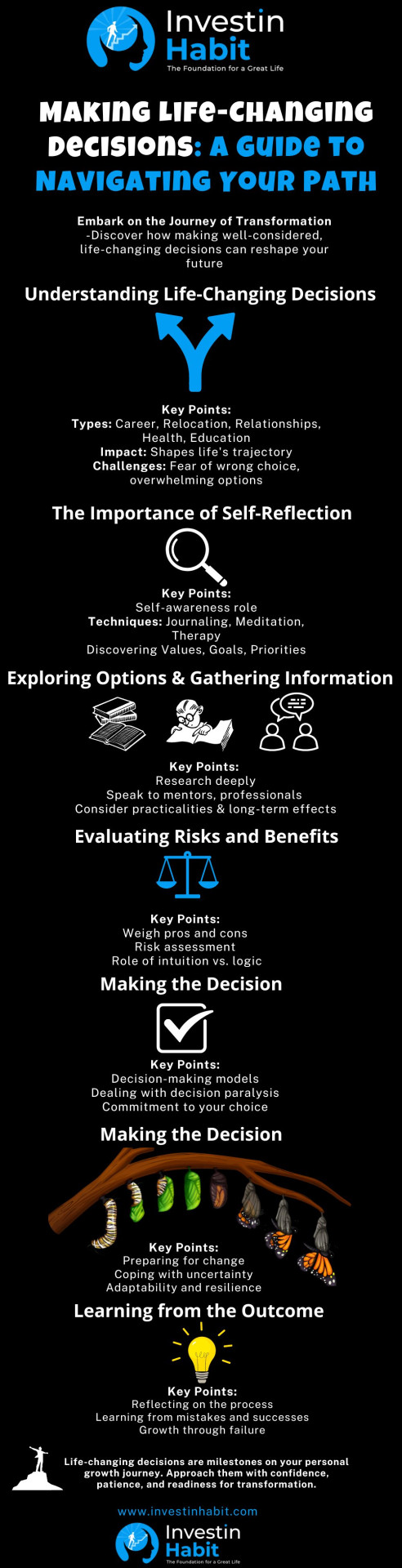
Understanding Life-Changing Decisions
Embarking on the journey of life-changing decisions is like standing at the crossroads of your own story, pondering which path to take. These moments are pivotal, often requiring a deep breath before stepping into the unknown. I want to share with you the kinds of decisions that might just redirect the course of your life—think of them as the big ones: career moves, relocation, relationships, health choices, and educational pursuits.
Types of life-changing decisions
First off, let’s talk careers. Whether you’re considering a job change, starting a new business, or even stepping into a completely new industry, these decisions can reshape your daily life and identity. It’s not just about what you do from 9 to 5; it’s about finding purpose and fulfillment in your work. I understand it’s daunting, but remember, it’s also an exciting opportunity to align your career with your passions and goals.
Imagine, for a moment, choosing a career that aligns perfectly with your passions and values. This isn’t just about job satisfaction; it’s about waking up each day feeling invigorated, knowing you’re contributing to something you deeply care about.
It can lead to a domino effect, influencing your financial security, sense of purpose, and even your relationships. The fulfillment you gain from meaningful work can spill over into other areas, fostering stronger connections with loved ones who support your aspirations.
Relocation is another major decision that can significantly impact your life. Moving to a new city, state, or country isn’t just about a change of scenery. It’s about embracing new cultures, forming new friendships, and sometimes, starting afresh. Whether it’s for a job, love, or just the need for a change, relocating challenges you to adapt and grow in ways you might never have anticipated.
Embracing new cultures broadens your perspective, teaches you resilience, and exposes you to diverse experiences that enrich your life in unexpected ways.
Now, let’s touch on relationships. Deciding to start or end a significant relationship, be it romantic, friendship, or familial, influences your emotional landscape profoundly. These decisions require you to weigh the balances of love, compatibility, and personal growth. It’s tough, I know, but navigating these waters is crucial for your happiness and well-being.
Choosing a supportive partner can create a ripple effect of emotional well-being, fostering a sense of security and love that strengthens your ability to cope with life’s challenges. Conversely, leaving an unhealthy relationship can trigger a ripple effect of self-discovery and personal growth, empowering you to pursue new experiences and build healthier connections.
Health choices are equally critical. Deciding to undergo a major surgery, change your lifestyle for better health, or even choosing how to treat a chronic illness—these decisions not only affect your physical well-being but also your mental peace and quality of life. It’s a reminder of how precious our health is and the importance of making informed, thoughtful choices.
Deciding to prioritize your well-being can influence your energy levels, productivity, and overall outlook on life.
Lastly, educational pursuits can dramatically alter your life’s direction. Whether it’s deciding to go back to school, choosing a major, or pursuing higher education, these decisions shape your future opportunities and the way you see the world. It’s about investing in yourself, your skills, and your dreams.
It’s not just about the knowledge you gain; it’s about the doors that knowledge can open for you, from career prospects to personal growth and everything in between.
As we navigate through each of these life-changing decisions, it’s normal to feel a mix of excitement and apprehension. I’m here to remind you that it’s okay. These decisions are not just challenges; they are opportunities for growth and transformation. Remember, it’s about taking that step, even when the destination isn’t fully in sight. Let’s embrace these moments with an open heart and a prepared mind, ready to move forward with confidence and courage.
Here are some additional examples of life-changing decisions, categorized by area:
Personal:
- Starting a family (adoption, fostering, biological)
- Volunteering for a cause you care about
- Taking a solo trip or embarking on a long-term adventure of travelling the world
- Embracing a new spiritual or religious path
- Changing your name
- Overcoming addiction
- Challenging yourself to master a new language
- Choosing to simplify your life by decluttering your possessions and focusing on experiences rather than material things
- Taking a break from your work or studies to pursue personal interests
- Pursuing a creative passion – Whether it’s painting, writing, music, or any other form of creative expression
- Negotiating a raise or promotion
- Learning to say no
Financial:
- Investing in a significant asset (house, car, etc.)
- Taking on significant debt (mortgage, student loans)
- Early retirement
- Making large charitable donations
Other:
- Joining the military
- Becoming an organ donor
- Choosing to go public with a personal story
- Starting a creative project (writing a book, making a film, etc.)
- Taking a significant risk (e.g., starting a business in a new industry)
- Choosing to forgive someone
- Choosing to pursue legal action against someone
- Becoming an advocate for a social cause

Transform Your Life with InvestInHabit

Ready for real change? Join us and get over:
- 200+ Personal Development Worksheets,
- 100+ Blog Post MindMaps
for FREE! 😍 + Our newsletter offers the latest in habit formation and self-improvement, straight to your inbox.
Subscribe now and Start redefining your mindset today! Join our community committed to success!
Common challenges and fears associated with making big decisions
Facing big decisions head-on is akin to standing at the edge of a cliff, preparing to dive into the unknown. It’s thrilling yet terrifying, and I completely understand the whirlwind of emotions you might be feeling. Let’s talk about some of the common challenges and fears that accompany these monumental choices, because knowing you’re not alone in this can be incredibly comforting.
Firstly, there’s the fear of making the wrong choice. It’s probably the most universal fear of all. “What if I regret this?” is a question that might haunt your thoughts. I’m here to tell you that it’s perfectly normal to feel this way. Decision-making is rarely black and white, and every choice comes with its own set of what-ifs. But remember, every decision, whether right or wrong, is a stepping stone towards learning and growth.
Another challenge is the overwhelming amount of options available. Sometimes, having too many choices can feel like being a kid in a candy store, paralyzed by which sweet treat to pick. This analysis paralysis can be daunting, making it hard to take any step forward. If you’re feeling stuck, know that it’s okay to take your time. Break down your options, and remember, there’s beauty in the journey of exploration.
Then there’s the fear of change and the unknown. Humans are creatures of habit, and stepping out of our comfort zone is inherently scary. But think about this – every significant growth in your life has likely come from stepping into the unknown. Embracing change, while intimidating, is the doorway to new experiences and opportunities. It’s okay to feel scared; it means you’re about to do something truly brave.
The pressure from external expectations is another hurdle. Family, friends, society – their opinions can weigh heavily on our decisions, making it hard to listen to our own voice. I want to remind you that your life is yours to live. While it’s important to consider advice and perspectives, ultimately, the decision should resonate with your values and aspirations. It’s your path to pave.
Lastly, there’s the fear of failure. The thought of “What if I fail?” can be paralyzing. But here’s a little secret: failure is not the opposite of success; it’s a part of it. Every misstep is a lesson in disguise, a chance to grow and do better next time. So, embrace your fears, for they show you’re pushing beyond your boundaries.
In navigating these challenges, remember that it’s okay to seek support. Talk to loved ones, seek advice from mentors, or even consider professional guidance. You don’t have to face these decisions alone. And most importantly, trust yourself. You have the strength, wisdom, and intuition to make choices that lead to a fulfilling life.
Making big decisions is undoubtedly daunting, but it’s also an incredibly powerful moment in your life. It’s a chance to shape your destiny, learn invaluable lessons, and grow in ways you never imagined. So, take a deep breath, gather your courage, and step forward with confidence. Your future self will thank you for it.
The Importance of Self-Reflection

Diving into the heart of making life-changing decisions, there’s a superpower often overlooked, yet it’s right at our fingertips—self-awareness. Imagine it as your internal compass, guiding you through the fog of uncertainty towards decisions that truly resonate with who you are and what you desire from life. Let’s unfold the layers of how self-awareness plays a pivotal role in navigating these big moments.
The role of self-awareness in making life-changing decisions
At its core, self-awareness is about understanding your true self—your values, desires, strengths, and limitations. It’s like having a heart-to-heart conversation with yourself, asking, “What matters most to me?” You see, when you’re armed with this knowledge, making decisions becomes less about external pressures and more about aligning with your authentic self. It’s the difference between choosing a path because it’s expected of you and walking a path that feels right in the depths of your soul.
But how does one cultivate such self-awareness? It begins with introspection. Take time to reflect on your past decisions—both the triumphs and the setbacks. What motivated those choices? How did they align with your personal values and life goals? This isn’t about dwelling on the past but learning from it, recognizing patterns that can guide your future decisions.
Imagine self-awareness as your anchor amidst the stormy seas of decision-making. It grounds you, ensuring that even when waves of doubt and fear crash over, you remain steadfast in your journey towards choices that truly reflect who you are. It’s about acknowledging your unique journey, embracing your individuality, and understanding that the best decisions are those that honor your personal truth.
And here’s something wonderfully encouraging: the journey to self-awareness is one of continuous discovery. As you grow and evolve, so too will your understanding of yourself. This means your decision-making process will also evolve, becoming more nuanced and aligned with your changing self. It’s a beautiful cycle of growth, reflection, and choice.
So, as you stand at the crossroads of a significant decision, I urge you to pause and look inward. Ask yourself the hard questions, listen to the quiet voice within, and let your inner knowledge light the way. Remember, the most profound decisions are those that resonate with the essence of who you are.
Cultivating self-awareness isn’t just about making better decisions; it’s about creating a life that’s deeply fulfilling and authentically yours. It’s a journey well worth embarking on, filled with insights and revelations that enrich not just the decisions you make but the very fabric of your being. So, take that step towards self-discovery, and watch as it transforms not only how you make decisions but how you live your life.
Techniques for self-reflection
Navigating through life’s big decisions can sometimes feel like trying to solve a complex puzzle without all the pieces. That’s where self-reflection comes in, offering a way to find those missing pieces and understand the bigger picture. Let me share some incredibly effective techniques to kickstart your journey of self-discovery: journaling, meditation, and therapy. These are tools not just for decision-making but for life enrichment.
Journaling is like having a conversation with your inner self. It’s a space where you can express thoughts and feelings without judgment, allowing you to clarify your desires, fears, and dreams. Picture this: every evening, you sit down with a notebook, and you start writing about your day, your thoughts on a big decision you’re facing, or even listing what you’re grateful for. Over time, patterns emerge, revealing your true priorities and values. It’s a powerful way to see your thoughts and emotions laid out before you, helping to clear the fog when making tough decisions.
Meditation, on the other hand, invites you to quiet the mind and listen. In the silence, you find clarity. It’s about being present with yourself, observing your thoughts and feelings without getting caught up in them. You can start with just five minutes a day, finding a quiet spot to sit comfortably and focus on your breath. This practice can be a sanctuary, a moment of peace amidst the chaos, where the answers you seek often come to light in the stillness.
Therapy is another invaluable tool. It offers a safe space to explore your thoughts and feelings with a professional who can guide you through the maze of your psyche. Therapists can help you uncover blind spots in your self-awareness, challenge limiting beliefs, and offer new perspectives on your decision-making process. Think of it as having a knowledgeable companion on your journey of self-discovery, someone who can help you navigate through the complex terrain of your emotions and thoughts.
Each of these techniques—journaling, meditation, therapy—offers a unique path to understanding yourself better. They’re not just practices for decision-making but for life itself, helping you to live more consciously, more fully, and more aligned with your true self.
So, why not give them a try? Pick one that resonates with you and start there. Remember, the goal isn’t to find quick answers but to cultivate a deeper understanding of yourself. As you become more attuned to your inner world, you’ll find that making life-changing decisions becomes a more intuitive and empowering process.
Embracing these practices of self-reflection can be the beginning of a fascinating journey to the heart of who you are. It’s a path filled with discoveries, insights, and, ultimately, a deeper connection with yourself. And it’s this connection that will illuminate your way as you navigate the big decisions of your life, ensuring that the choices you make are truly reflective of who you are and who you aspire to be. So, grab that journal, find that quiet space, or seek out a therapist, and embark on this journey of self-discovery. Your future self will thank you for it.
Understanding one’s values, goals, and priorities

Peeling back the layers of our decisions, we often find they’re deeply rooted in our values, goals, and priorities. Understanding these core aspects of ourselves is like finding the compass that guides us through life’s many crossroads. So, let’s dive into the heart of what makes you, well, you. It’s a journey that’s as enlightening as it is essential.
Think of your values as the bedrock of your decision-making process. These are the principles that you hold dear, the non-negotiables that define your character and guide your actions. Whether it’s honesty, compassion, ambition, or independence, each value is a star in the constellation of your unique moral universe. Reflecting on these values isn’t just about identifying them; it’s about understanding how they interact with each other, which ones take precedence, and how they shape your view of the world.
Now, let’s talk goals. Goals are the dreams with deadlines, the visions of what we hope to achieve in our lifetimes. They can be as varied as the individuals who set them, from career aspirations to personal development, from building a family to making a difference in the world. The key here is to align these goals with your values. It’s like ensuring the ladder you’re climbing is leaning against the right wall. By clarifying your goals, you paint a picture of the future you’re working towards, a beacon that guides your decisions along the way.
Priorities bring the focus closer to the present, asking, “What matters most right now?” In the juggling act of life, priorities help you decide which balls to keep in the air and which can be safely set aside for another day. Understanding your priorities means recognizing that not everything can be a top priority and that sometimes, hard choices must be made. It’s about discerning the urgent from the important, ensuring that your energy is directed towards activities and decisions that align with your values and move you closer to your goals.
Embarking on this introspective journey to understand your values, goals, and priorities is like setting the coordinates for your life’s GPS. It won’t make the road ahead obstacle-free, but it will ensure that you’re traveling in the right direction, one that leads to fulfillment and authenticity.
So, how do you start this process? Begin by asking yourself some probing questions: What values do I refuse to compromise on? What goals light a fire in my belly? What priorities need my attention to achieve these goals? Reflecting on these questions, writing down your thoughts, discussing them with trusted friends or mentors, or even seeking professional guidance are all steps in the right direction.
Remember, this isn’t a one-time exercise. As you grow and evolve, so too will your values, goals, and priorities. Revisiting them periodically ensures that your decisions remain aligned with who you are and who you aspire to be. It’s a practice that not only enriches your decision-making process but also enriches your life, making each choice a stepping stone towards a more authentic, fulfilling existence.
So, take a moment to look within. Discover the values that guide you, the goals that inspire you, and the priorities that ground you. It’s an investment in yourself that pays dividends in clarity, confidence, and purpose. And remember, in the journey of self-discovery, there are no wrong turns, only paths to deeper understanding.

Gathering Information and Exploring Options

Diving into the process of making life-changing decisions, the step where you gather information and explore your options is absolutely crucial. It’s like preparing for a big adventure—you’ll need a map, some guides, and a good idea of what you’re getting into. Let’s talk about how you can gather all the necessary information and thoroughly explore your options, ensuring you’re well-equipped to make the best decision possible.
How to research and gather necessary information
First off, start with research. And I mean, really dive deep. The internet is your oyster here, offering a wealth of information on just about any topic you can think of. Whether you’re considering a career change, moving to a new city, or making a significant health decision, there’s likely a forum, blog post, or research paper out there covering the subject. Use search engines, visit reputable websites, and don’t forget to check out videos and podcasts for different perspectives.
Next, don’t underestimate the power of talking to people. This can be anyone from professionals in the field you’re interested in, to friends who’ve made similar decisions, or even mentors. Networking events, online communities, and social media groups can be goldmines of information and support. These conversations can provide insights no article or study can—real-life experiences, advice, and sometimes, even the encouragement you need to take the next step.
Another key strategy is to get hands-on experience. If possible, try out your options on a small scale before committing fully. This could mean volunteering in a field you’re considering switching to, taking a short course related to your interest, or visiting a city you’re thinking of moving to. These experiences can give you a taste of what to expect and help solidify your decision.
Remember to also look into the practicalities. This includes understanding the financial implications, considering any legal requirements, and evaluating how your decision fits with your long-term goals and values. Create a list or spreadsheet to keep track of your findings and help compare different options.
Finally, give yourself time to process all the information. It can be overwhelming, but allowing yourself space to reflect is key. Sometimes, stepping back for a bit can provide new insights and help you see your options more clearly.
By following these steps—researching deeply, talking to others, getting hands-on experience, considering the practicalities, and giving yourself time to reflect—you’ll be in a strong position to make an informed, well-considered decision. Remember, this process is about gathering the pieces of the puzzle so you can see the bigger picture and choose the path that’s right for you.
The importance of exploring all possible options and outcomes

When it comes to making life-changing decisions, understanding the full spectrum of your options and their potential outcomes is not just beneficial—it’s essential. This exploration is akin to laying all the cards on the table before making a strategic move in a game. It ensures that you’re not just reacting to the present but actively shaping your future. Let’s delve into why exploring all possible options and outcomes is a cornerstone of effective decision-making.
Firstly, it’s about clarity. By examining the breadth of your options, you illuminate paths you might not have initially considered. This could be a career path less traveled, a unique approach to education, or an unconventional living situation. Each option comes with its own set of potential outcomes, risks, and rewards. Understanding these can help you make a choice that aligns not only with your goals and values but also with your appetite for risk and desire for certain rewards.
Secondly, this thorough exploration helps mitigate the impact of biases and assumptions. It’s easy to lean towards familiar options or be swayed by popular opinion. However, when you commit to exploring all possibilities, you challenge these biases, opening up to choices that might be more fitting for your unique situation. It’s a process of questioning not just the options but your understanding of what each choice entails.
Moreover, considering all outcomes—both positive and negative—prepares you mentally and emotionally for the road ahead. It’s not about pessimism but preparedness. Knowing the potential hurdles and the ways to overcome them can bolster your confidence in your decision, making you more resilient in the face of challenges.
This comprehensive exploration also encourages strategic thinking. When you weigh different scenarios against one another, you’re not just thinking about immediate benefits or challenges. You’re looking at your life as a chessboard, considering how one move might affect another, five steps down the line. This long-term perspective is invaluable, as life-changing decisions often have far-reaching implications.
Finally, exploring all options and outcomes fosters a sense of ownership and empowerment in your decision-making process. When you’ve done the legwork, considered the alternatives, and anticipated the potential futures each choice could lead to, the decision you make is truly yours. It’s a choice informed by a deep understanding of the possibilities, made with eyes wide open.
In sum, exploring all possible options and outcomes isn’t just about making a good decision—it’s about making the best decision for you. It’s a rigorous, thoughtful process that demands time and effort but pays dividends in the form of informed, confident choices that pave the way for a future you’ve consciously shaped. So, take the time, do the exploration, and move forward with confidence, knowing you’ve considered the full breadth of what’s possible.
Seeking advice from mentors, professionals, and peers

Embarking on the journey of making significant life changes is a bit like setting sail into uncharted waters. It can be exhilarating, yes, but also a bit daunting. That’s where the wisdom and guidance of mentors, professionals, and peers come into play, serving as your navigational stars. Let’s chat about why reaching out to them can be one of the smartest moves you make.
First up, mentors. Imagine having a personal guide who’s already navigated the path you’re considering. Mentors provide invaluable insights born from experience, offering advice, encouragement, and sometimes even cautionary tales. Whether it’s a professional mentor in your desired career field or someone who embodies the personal achievements you aspire to, their perspective can help illuminate your way, avoiding potential pitfalls and identifying shortcuts you might not have seen.
Then there are professionals. These are the experts in their fields, armed with the specialized knowledge that can help you make informed decisions. Whether you’re contemplating a career shift, a big move, or a financial investment, consulting with a professional can provide clarity and confidence. Their objective advice can help you weigh your options with a clear mind and a focused goal, ensuring that your decision is not just emotionally satisfying but also logically sound.
Don’t forget about your peers. Your friends, family, and even acquaintances who have faced similar crossroads can offer a wealth of support and insight. They can share their personal experiences, the challenges they faced, and how they overcame them. Sometimes, just knowing someone else has walked a similar path and succeeded can be incredibly motivating. Plus, your peers can offer a fresh perspective or suggest solutions you might not have considered.
Reaching out for advice doesn’t mean you’re unsure or incapable of making decisions on your own. On the contrary, it’s a sign of strength, openness, and wisdom. It shows you’re committed to making the best possible decision by gathering as much knowledge and as many perspectives as you can. So, be proactive. Send that email, make that call, join that group—start the conversations that could lead you to invaluable insights and guidance.
Remember, the journey you’re on is uniquely yours, but you don’t have to navigate it alone. By seeking advice from mentors, professionals, and peers, you’re enriching your decision-making process with a diversity of thought, experience, and wisdom. So, embrace the journey with an open mind and heart, and let the guidance of others illuminate your path. Together, you’ll find the way forward.
Evaluating Risks and Benefits
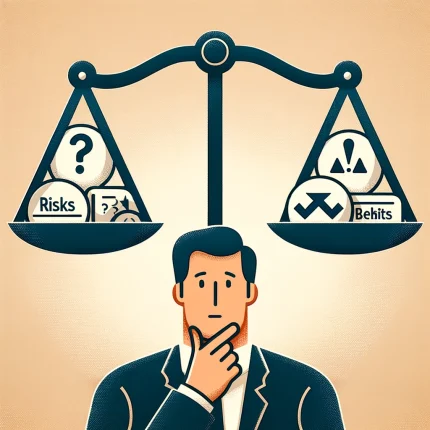
When it comes to making those big, life-altering decisions, weighing the pros and cons isn’t just a step—it’s an art. Let’s dive into how you can master this art with some practical techniques that will help you analyze your options with clarity and confidence.
Techniques for weighing the pros and cons
First up, the classic list-making. Grab a piece of paper, draw a line down the middle, and start jotting down the advantages and disadvantages of each option. This might sound simple, but the act of writing it out can bring a new perspective. It forces you to articulate and visualize the potential outcomes of your decision, making it easier to compare and contrast. But don’t just stop there; try to delve deeper by considering the long-term implications of each pro and con. How will this decision affect you a year from now? Five years? Ten?
Another technique is the weighted list, which takes your pros and cons to the next level. Assign a value from 1-10 to each point based on its importance to you. This method acknowledges that not all pros and cons are created equal; some will inevitably carry more weight in your decision-making process. By quantifying the significance of each factor, you can create a more nuanced evaluation of your options.
Then there’s the decision matrix, a tool that helps you compare multiple options across various criteria that are important to you. You list your options on one axis and the criteria on the other, then score each option against each criterion. In other words, after listing the options and criteria, you assign scores based on how well each option meets each criterion, often incorporating weighting for criteria to reflect their relative importance.
Finally, tally the scores to see which option comes out on top. This technique is especially useful when your decision involves complex factors or multiple viable paths.
This objective approach not only simplifies the decision-making process when faced with multiple, potentially viable choices but also provides a visual representation of how each option compares, making it easier to identify the most balanced or advantageous choice. It’s particularly beneficial in scenarios where decisions must be justified or explained to others, as it offers a transparent rationale for the chosen path.
But here’s the thing—while these techniques are incredibly useful, they’re not foolproof. It’s crucial to remember that no decision-making process can eliminate all uncertainty. There’s always an element of risk involved, and sometimes, the unexpected happens. That’s why, in addition to analyzing the pros and cons, you should also consider your gut feeling. Sometimes, our intuition can pick up on subtleties that our rational minds might overlook.
So, as you embark on evaluating your options, embrace these techniques as tools to guide you, but also trust yourself. Use your analytical skills to dissect the situation, but also listen to your instincts. It’s the balance between the rational and the emotional, the objective and the subjective, that will lead you to the best decision for you.
Remember, the goal here isn’t to make the perfect decision but to make the best possible decision with the information and resources you have at the moment. And whatever decision you make, know that it’s a step forward in your journey, an opportunity for growth and learning. So, take a deep breath, analyze your options, and step confidently in the direction of your choice.
Understanding and accepting the risks involved

As we navigate the waters of making big decisions, understanding and accepting the risks involved is akin to fastening our life jackets. It’s not about preparing for disaster, but about ensuring we’re equipped to sail through whatever waves might come our way. Let’s have a heart-to-heart about the realities of risk and how embracing them can actually be a source of strength.
Every choice we make, especially the big, life-changing ones, carries its own set of risks. It’s a natural part of the decision-making process, and I want you to know it’s completely okay to feel a bit uneasy about this. But here’s the thing—acknowledging these risks is the first step towards mitigating them. It’s about looking those potential challenges in the eye and saying, “I see you, and I’m prepared to deal with you.”
One of the most empowering things you can do is to conduct a risk assessment. Ask yourself, “What’s the worst that could happen?” and then, “How likely is that to occur?” and “What would I do if it did happen?” This isn’t about dwelling on the negatives; it’s about being proactive and preparing yourself for different outcomes. By doing this, you demystify the risks, making them less daunting and more manageable.
It’s also important to remember that risk often comes hand-in-hand with opportunity. Taking a risk could lead to a breakthrough or a chance to grow in ways you hadn’t imagined. Sometimes, the biggest risk is not taking one at all, staying in the comfort zone where things are safe but stagnant. It’s about finding the balance between caution and courage, between what’s at stake and what could be gained.
Now, I’m not saying to throw caution to the wind. Far from it. It’s about making informed choices, where the potential benefits outweigh the risks. And sometimes, the very act of accepting the possibility of failure can be liberating. It frees you from the paralyzing grip of ‘what ifs’ and empowers you to move forward with your decision, come what may.
So, as you weigh up your options, allow yourself the space to consider the risks, but also to see beyond them. Understand that risks are not roadblocks but stepping stones, guiding you towards more informed and resilient choices. Embrace them with a spirit of adventure and a mindset of growth. Remember, every great journey involves a bit of risk—it’s what makes the destination all the more rewarding.
In the end, the goal isn’t to avoid risks but to navigate them with eyes wide open, armed with knowledge, preparation, and a dash of bravery. So, take that step, knowing that you’re well-equipped to handle whatever comes your way. After all, the most beautiful views are often found just beyond the mountain pass of risk.
The role of intuition vs. logical analysis

When it comes to making those big, life-changing decisions, you’ll often hear advice that seems to pit two old friends against each other: intuition and logical analysis. But here’s a perspective I’d love to share with you—why not invite them both to the party? Let’s explore how these two elements can work together harmoniously in guiding your decision-making process.
Intuition, or that gut feeling, is your subconscious mind speaking to you. It’s the sum of all your experiences, knowledge, and perceptions, even those you might not be actively aware of. It’s like a friend who knows you inside out and whispers advice that feels right in your bones. Listening to your intuition means tuning into your inner voice, that instinctual pull towards what feels right for you. It’s incredibly personal and can often lead you to choices that deeply resonate with your values and desires.
On the flip side, logical analysis is your conscious mind at work. It’s all about breaking down the facts, weighing the pros and cons, and considering the potential outcomes. Think of it as a map that lays out different routes and their respective terrains, helping you navigate your decision with clarity and foresight. Logical analysis brings structure to the decision-making process, ensuring that your choices are grounded in reason and reality.
Now, imagine combining the strengths of both intuition and logical analysis. You start with gathering data, exploring options, and logically assessing the situation. This is your foundation, ensuring that your decision is informed and well-considered. Then, you check in with your intuition—how do you feel about the options before you? Does one choice resonate more deeply than the others, despite what the logical analysis might suggest?
This synergistic approach doesn’t just add depth to your decision-making process; it enriches it. By honoring both your rational mind and your intuitive sense, you create a more holistic and balanced way of making decisions. It’s like navigating a river using both a compass and the stars—each tool enhances the other, guiding you more effectively towards your destination.
So, as you stand at the crossroads of a significant decision, remember that you don’t have to choose between intuition and logic. Invite them both into your decision-making process. Let them dialogue, challenge, and complement each other. This balanced approach allows you to make decisions that are not only smart and well-considered but also deeply aligned with who you are and what you truly want.
Embrace the beauty of using both your heart and your head. It’s in this harmony that you’ll find the confidence to make decisions that are not just good, but right for you. And that, my friend, is a powerful way to navigate the complexities of life’s big decisions.
Making the Decision

Alright, after journeying through self-reflection, weighing pros and cons, and harmonizing intuition with logic, you’re now standing at a pivotal moment—making the decision. It might feel a bit daunting, but I’m here to walk you through some strategies that can make this process smoother and more structured. Let’s dive into decision-making models and the concept of setting timelines to help guide your way to a confident choice.
Strategies for coming to a decision
First up, decision-making models. One classic approach is the Ben Franklin method, also known as a T-chart, where you list pros and cons. It’s straightforward and can provide clarity on where the weight of your decision lies. But if we want to get a bit more sophisticated, there’s the Decision Matrix. This involves evaluating your options based on several criteria that matter to you, assigning scores to each, and then calculating the totals to see which option stands out. It’s a bit like grading your choices on what’s truly important to you.
Another powerful model is the Cost-Benefit Analysis, which goes beyond just listing pros and cons by assigning estimated values to them. This can help you see not just what advantages or disadvantages are on each side but how significant each one is in the grand scheme of things. It’s like putting your options under a microscope to examine their impact more closely.
Now, let’s talk about timelines. Setting a timeline for your decision can be incredibly empowering. It’s easy to get caught in a loop of endless deliberation, but giving yourself a deadline creates a sense of urgency and focus. Decide on a reasonable date by which you’ll make your decision. This doesn’t mean rushing; it means committing to moving forward by a specific time. It’s like telling yourself, “I’ve got this. I’ll gather the information, reflect, consult my intuition and logic, and then, I’ll decide.”
Incorporating these strategies into your decision-making process doesn’t just help you make a choice; it empowers you to do so with confidence and clarity. Remember, no decision is set in stone, and every choice is a step forward in your journey. But having a structured approach can make all the difference in navigating this path with assurance and conviction.
So, take a deep breath, utilize these models, set your timeline, and when the time comes, make your decision with confidence. Know that you’ve done the work, you’ve considered all angles, and now it’s time to trust in your ability to choose wisely. You’ve got this!
Dealing with decision paralysis

Have you ever found yourself frozen in the spotlight of a big decision, feeling like no matter which way you turn, you just can’t make that leap? You’re not alone. This is what we call decision paralysis, and it’s like being stuck at a crossroads with too many signs pointing in different directions. But don’t worry, I’m here to help you break free from those chains of indecision and stride confidently towards your choice. Let’s navigate this together.
First things first, recognize that feeling overwhelmed is a natural part of the decision-making process, especially when the stakes are high. It’s okay to feel uncertain; it means you understand the importance of the decision you’re facing. Acknowledging this can be incredibly freeing. It’s the first step in moving forward.
One effective way to combat decision paralysis is to break the decision down into smaller, more manageable parts. If you’re staring up at a mountain, it’s easy to feel daunted. But if you focus on the first few steps, suddenly, the journey seems more achievable. Tackle one aspect of the decision at a time, and gradually, you’ll find yourself making progress without the weight of having to figure out everything all at once.
Another strategy is to set a soft deadline for making a preliminary decision. Give yourself permission to make a “good enough” choice by this deadline, knowing that you can adjust and refine your decision as you gather more information and insights. This approach helps lift the pressure of needing to make the perfect decision right out of the gate. Remember, perfection is the enemy of progress. Sometimes, taking a step, any step, is what you need to break the paralysis.
It’s also incredibly helpful to talk it out with someone you trust. Sometimes, just verbalizing your thoughts and fears can illuminate the path ahead. A fresh perspective might reveal angles you hadn’t considered or reassure you that you’re on the right track. You’re not alone in this, and sharing the burden can make it feel lighter.
Lastly, remember to trust yourself. You’ve made it this far, not by chance, but through your own strength, wisdom, and resilience. You have the tools and the ability to make this decision. Believe in yourself and your capacity to navigate the complexities of life. The decision you’re about to make? It’s just another step in your journey, a journey only you can navigate.
So, take a deep breath, embrace the uncertainty, and know that you’re capable of moving forward, one decision at a time. You’ve got this, and I’m cheering you on every step of the way. Let’s turn that paralysis into action.
The importance of commitment to your decision

After the whirlwind of researching, reflecting, and consulting with your trusted circle, you’ve finally landed on a decision. Kudos to you! But as you probably know, deciding is just the first step. What really brings your decision to life is your commitment to it. Let’s dive into why committing to your decision is not just important, but absolutely crucial for your journey ahead.
Commitment to your decision is the foundation upon which your dreams and goals start to materialize. It’s the fuel that propels you forward, turning plans into actions and visions into realities. When you commit, you send a powerful message to yourself and the universe that you are serious, ready, and unwavering in your pursuit of your aspirations. This isn’t just about sticking to a choice; it’s about believing in your ability to shape your destiny.
Imagine your decision as a seed. Commitment is the soil, water, and sunlight that nurture it into growth. Without this nurturing, the seed remains dormant. But with it, you can watch as your decision blossoms into outcomes and experiences that enrich your life. Yes, there might be storms and droughts along the way, challenges that test your resolve. Yet, it’s your commitment that will be your anchor, keeping you grounded and focused on your path.
Moreover, commitment breeds resilience. It equips you with the fortitude to face setbacks and obstacles, not as insurmountable barriers, but as stepping stones on your journey. This resilience is born from the knowledge that your commitment is a testament to your strength, a strength that grows with every challenge you overcome.
Commitment acts as your anchor when the seas get rough. It’s easy to second-guess yourself or be swayed by others’ opinions when things get tough. But remember why you made this decision in the first place. Your commitment reminds you of your reasons, goals, and the vision you have for your future. It keeps you steady and focused, pushing you to persevere even when the going gets tough.
Now, being committed doesn’t mean you can’t be flexible. Life is unpredictable, and sometimes, you’ll need to adapt your plans. But there’s a big difference between making informed adjustments and flitting from one idea to the next without giving any of them a real chance to succeed. Stay committed to your overarching goal, even if the path there requires some unexpected detours.
So, how do you solidify your commitment? Start by setting clear, actionable steps for yourself. Break down your decision into smaller tasks and start ticking them off. Celebrate your progress, no matter how small, and use it as motivation to keep moving forward. And if you ever find yourself flagging, reconnect with your initial reasons for making this decision. Remind yourself of the excitement and hope you felt, and let that re-energize your commitment.
And let’s not forget, commitment opens the door to personal growth. It challenges you to evolve, to step out of your comfort zone, and to embrace the unknown with courage and optimism. Each step taken in commitment to your decision is a step towards becoming a more determined, adaptable, and confident individual.
So, as you stand at the threshold of your decision, ready to step into the future it promises, embrace it with a heart full of commitment. Know that this commitment is your beacon, guiding you through the uncertainties of tomorrow with a steadfast resolve. Remember, the most beautiful destinations on life’s journey are reached not just by making decisions but by committing to them deeply, sincerely, and with all the courage you possess.
Your commitment is your declaration to the world and to yourself that you are the architect of your life’s story. So, go ahead, commit to your decisions with passion and see how they unfold into chapters of your life that you look back on with pride and a sense of accomplishment. This is your journey, and your commitment is the key to navigating it with purpose and joy.
Preparing for and Embracing Change

After making a big decision, the next big step is to prepare for and embrace the changes it brings. Think of it as setting the stage for the next act of your life’s play—exciting, right? Let’s walk through some practical steps to ensure you’re not just ready for this change but also poised to make the most of it.
Steps to take after making the decision
First up, create an action plan. Now that you’ve decided, what are the immediate next steps? Break them down into manageable tasks. Whether it’s updating your resume for a new career path, researching locations for a move, or planning your budget for a big purchase, having a clear plan gives you direction and a sense of control over the situation. It’s like drawing a map of where you want to go and marking out the path to get there.
Next, educate yourself. Change often comes with a learning curve, so it’s time to hit the books (or the internet). Gather as much information as you can about the new situation you’re stepping into. The more you know, the less intimidating the change will feel. Knowledge is power, and in this case, it’s the power to navigate your new circumstances with confidence.
Then, communicate with your support network. Share your decision and your plans with those close to you. Not only can they offer support and advice, but they might also provide perspectives or resources you hadn’t considered. Plus, saying it out loud makes it real, and sharing your journey can make it feel more doable and less daunting.
It’s also essential to prepare mentally and emotionally. Change can be a rollercoaster, with ups and downs that can test your resilience. Engage in positive self-talk, remind yourself why you made this decision, and visualize the successful outcome you’re working towards. This mental and emotional groundwork lays the foundation for a smooth transition.
Lastly, be flexible. Even the best-laid plans might need adjusting as you go. Be open to tweaking your approach based on new information or circumstances. Flexibility is your friend during times of change, allowing you to pivot as needed without losing sight of your overall goals.
Remember, preparing for and embracing change isn’t about ensuring everything goes perfectly. It’s about equipping yourself to handle whatever comes your way, staying focused on your goals, and remaining open to the growth and opportunities that change brings. So, take a deep breath, roll up your sleeves, and let’s dive into this new chapter with enthusiasm and readiness. The future is bright, and you’re well-prepared to meet it head-on.
Coping strategies for dealing with uncertainty and change

As we step into the new chapters that our big decisions unlock, it’s natural to feel a mix of excitement and uncertainty. Facing change is akin to venturing into unknown territory, but remember, it’s also where growth and new opportunities bloom. Let’s explore some coping strategies that can help you navigate this period with grace and resilience, ensuring you’re not just getting through it but thriving.
First and foremost, give yourself permission to feel. Change, even when positive, can stir up a whirlwind of emotions. It’s okay to feel excited one moment and anxious the next. Acknowledge these feelings without judgment; they’re all part of the rich tapestry of human experience. Embracing your emotions as valid and normal is the first step towards managing them effectively.
Stay connected with your support network. Lean on friends, family, or colleagues who understand what you’re going through. Sharing your thoughts and feelings can lighten your emotional load and provide you with different perspectives. Remember, it’s okay to seek help and support; it’s a sign of strength, not weakness.
Maintain a routine where possible. Amidst change, having some form of structure in your day can be incredibly grounding. Whether it’s your morning coffee, a daily walk, or a bedtime ritual, these familiar routines can provide comfort and a sense of normalcy when everything else seems in flux.
Set small, achievable goals for yourself. This strategy helps break down the overwhelming concept of change into manageable tasks. Celebrating small wins can boost your morale and remind you that you’re making progress, even if it’s just one step at a time.
Lastly, practice self-compassion and patience. Be kind to yourself during this transition. Understand that adapting to change is a process, one that may have its ups and downs. Remind yourself of your resilience and ability to handle past challenges. You’ve got this, and this experience is just another opportunity to learn, grow, and emerge stronger.
Navigating through change is not about avoiding the uncertainties but about finding ways to adapt and thrive amidst them. By embracing these coping strategies, you’re equipping yourself with the tools to face the unknown with confidence and optimism. Remember, every change brings with it the promise of new beginnings, and with the right approach, you can turn this period of transition into a journey of self-discovery and growth. Let’s embrace the adventure that lies ahead, together.
The importance of adaptability and resilience
In the unfolding story of our lives, adaptability and resilience are the heroes that often go unsung. Yet, as you stand on the precipice of change, having made a pivotal decision, these qualities become your most trusted allies. Let’s reflect on why embracing adaptability and nurturing resilience are not just important but essential as you navigate the path ahead.
Adaptability is your ability to dance in the rain, to pivot when the path turns unexpectedly, and to embrace the new and unknown with open arms. It’s about seeing change not as a threat but as an opportunity to grow, to learn, and to evolve. When you’re adaptable, you’re saying to the world, “I can thrive, no matter what comes my way.” This mindset is liberating. It frees you from the fear of the unknown and empowers you to take life’s changes in stride.
Resilience, on the other hand, is the inner strength that allows you to rebound from setbacks or challenges. It’s about having the grit to keep going, even when the going gets tough. Resilience is your comeback story waiting to be written, the assurance that no matter how many times you might stumble or fall, you have what it takes to rise again, stronger and wiser than before.
Together, adaptability and resilience are your safeguards against the uncertainties of life. They enable you to face change with confidence, to adjust your sails when the winds shift direction, and to keep moving forward, even against the current. These qualities don’t just help you survive; they help you thrive, transforming challenges into stepping stones towards your goals.
Now, you might be wondering, “How do I cultivate these qualities?” The answer lies in embracing change, stepping out of your comfort zone, and facing challenges head-on. It’s in these moments that adaptability and resilience are forged. Each challenge you overcome, every new situation you adapt to, adds to your strength and flexibility.
So, as you embark on this new chapter of your life, remember the power of adaptability and resilience. Let them be your guiding stars as you navigate the twists and turns of your journey. Embrace the changes that come, learn from the challenges you face, and always remember that within you lies an incredible capacity to adapt and overcome.
Your journey is unique, filled with opportunities to grow and evolve. With adaptability and resilience by your side, there’s no limit to what you can achieve. So go ahead, step confidently into the future, ready to embrace whatever comes your way with strength, grace, and a smile. The road ahead is bright, and you are equipped to shine.
Learning from the Outcome

After you’ve taken the leap, made that big decision, and seen it through, there’s a crucial step that often goes overlooked: reflecting on the decision-making process itself. Let’s sit down together, like old friends over a cup of coffee, and chat about why this reflection is not just helpful but essential for your growth and future decision-making adventures.
Reflecting on the decision-making process
Reflecting on the decision-making process is like looking back at the map after a journey. It helps you see not only the path you chose but also the ones you didn’t take. You get to ask yourself, “What went well?” and equally important, “What could have gone better?” This isn’t about being hard on yourself or second-guessing your choices. It’s about learning, growing, and becoming more attuned to your decision-making instincts.
Think of it as gathering data on yourself. You’re learning about your strengths and areas for improvement. Did you rush into a decision when a bit more time could have provided clearer insight? Or perhaps you were too hesitant, missing out on opportunities that aligned perfectly with your goals? It’s these insights that hone your decision-making skills for the future, making you more adept at navigating life’s crossroads.
Moreover, this reflection encourages honesty with yourself. It’s a chance to confront your fears, biases, and motivations head-on. Were there external pressures that influenced your decision? How much did your own desires and values drive your choice? Understanding these influences is key to making decisions that truly reflect who you are and what you want from life.
And let’s not forget the power of documenting this reflection. Whether it’s journaling, blogging, or simply making notes on your phone, writing down your thoughts can clarify your insights and serve as a valuable resource for future decisions. It’s like leaving breadcrumbs for yourself, a trail of wisdom to follow when you next find yourself at a crossroads.
So, as you move forward from your decision, take a moment to look back. Reflect on the journey, the decision-making process, and all the little moments that led you to where you are now. This reflection is a gift you give to yourself, a tool for personal growth and a guide for future adventures in decision-making. It’s in this introspection that you’ll find your true north, helping you navigate not just the big decisions but all the ones in between.
Learning from mistakes and successes
After reflecting on your decision-making journey, the next valuable step is to zero in on what you’ve learned from both your mistakes and your successes. Think of this as sifting through a treasure chest where every experience, be it a sparkling success or a disguised misstep, holds valuable gems of wisdom. Let’s dive into this together, with an open heart and a curious mind, to uncover the lessons that will illuminate your path forward.
First off, embracing your mistakes is not about dwelling on the ‘what ifs’ or the ‘should haves.’ Instead, it’s about recognizing that each mistake is a stepping stone towards greater wisdom. Did a decision not turn out as planned? Ask yourself, “What can I learn from this?” Maybe it’s a new understanding of your limits, a different perspective on risk, or a clearer insight into what truly matters to you. Each lesson is a beacon of light guiding you to make more informed choices in the future.
Now, let’s not forget the successes. They’re just as important to learn from. It’s easy to celebrate a win and move on, but taking a moment to reflect on why something worked can be incredibly enlightening. Was it your timing, your preparation, or perhaps the way you listened to your intuition? Understanding the ingredients of your successes helps you replicate them in future endeavors.
An optimistic perspective here is key. Every decision—no matter the outcome—carries with it the potential for growth and learning. It’s about cultivating a mindset that welcomes all experiences, good or bad, as opportunities to learn, grow, and become a more adept navigator of life’s journey.
Sharing these learnings can also amplify their value. Discussing your experiences with friends, mentors, or even in a reflective blog post can not only solidify your own lessons but also help others on their paths. It’s through this sharing of stories that we all grow together, learning from each other’s journeys.
So, as you look back on your decisions, both the triumphs and the trials, remember to seek out the lessons they offer. Approach each with curiosity, openness, and an optimistic belief in your ability to grow. This reflective practice isn’t just about better decision-making; it’s about building a richer, more meaningful life filled with learning and growth. And remember, every step you take, whether it lands you in a puddle or on a pedestal, is moving you forward. Keep stepping, keep learning, and keep growing.
The role of failure in personal growth
Picture this: every failure, every misstep, and every ‘not quite right’ you’ve experienced is not just a stumble in your journey; it’s a stepping stone. A stepping stone towards growth, learning, and ultimately, a more profound success. Let’s chat about how these moments, which might initially feel like setbacks, are actually hidden gems in your personal growth story.
Think of failure as a teacher, one that’s a bit tough around the edges but has invaluable lessons to share. It’s in the moments when things don’t go as planned that you’re gifted with insights about resilience, adaptability, and courage. It’s when you’re down that you truly learn how to pick yourself up, dust yourself off, and try again with a new perspective.
And here’s a comforting thought: you’re not alone in this. Every person you admire, every hero you’ve looked up to, has faced their share of failures. The difference between those who succeed and those who remain stuck is the willingness to embrace failure, to see it not as a dead-end but as a detour towards a destination they’re meant to reach.
Failure also has this uncanny ability to strip away what’s not essential, honing your focus on what truly matters. It’s like a forge for your goals and dreams, testing their mettle and proving their worth. When you emerge on the other side of failure, you’re not just surviving; you’re thriving, armed with knowledge, resilience, and a fiery determination that can’t be extinguished.
So, the next time you’re faced with a setback, take a moment to sit with it. Reflect on what it’s teaching you, how it’s reshaping your path, and the ways in which it’s preparing you for bigger and better things. Embrace the lessons failure offers with an open heart and a mindset geared towards growth.
Remember, the role of failure in personal growth cannot be overstated. It’s a catalyst for change, a teacher of valuable life lessons, and a builder of character. Your journey is unique, and every failure is a part of your story, contributing to the incredible person you’re becoming. So, embrace it, learn from it, and let it propel you towards the greatness you’re destined for. Failure isn’t the end of the road; it’s just a signpost, pointing you towards success.
Conclusion

As we come to the end of our journey together through the intricacies of making life-changing decisions, let’s take a moment to reflect on the ground we’ve covered. Making decisions that have the power to alter the course of your life is no small feat. It requires courage, introspection, and a willingness to step into the unknown. These decisions, whether they pertain to your career, where you live, who you choose to share your life with, or how you decide to care for your health, are pivotal moments that shape your destiny.
Remember, the essence of making these significant decisions lies not just in the outcome but in the process itself—engaging in deep self-reflection, gathering information, exploring all possible outcomes, and seeking advice from those who have walked the path before you. Each step is a building block, laying the foundation for a decision made not out of haste but from a place of informed confidence and clarity.
I encourage you to approach these monumental decisions with a heart full of courage and the patience to allow your path to unfold as it’s meant to. Trust in the process, in your ability to navigate the complexities of life, and in the wisdom you possess. Embrace the transformative power of these decisions, for they have the potential to lead you to new horizons, enriching your life with experiences and growth you never imagined possible.
Now, I invite you to share your own stories. Have you made a life-changing decision that led you down an unexpected path? How did you navigate the crossroads you faced? Your story could be the beacon of hope or the guiding light someone else needs as they stand at their own crossroads.
For those seeking further inspiration or guidance, consider delving into resources such as self-help books, podcasts dedicated to personal growth, or even consulting with a professional coach or counselor. These tools can offer additional perspectives and support as you chart your course through life’s big decisions.
In closing, let your life-changing decisions be a reflection of your deepest desires, values, and dreams. Let them be a testament to your strength, resilience, and ability to create a life that resonates with the essence of who you are. Step forward with confidence, embrace the journey, and let the magic of transformation unfold. Your story is just beginning, and the world is waiting to see where your decisions will take you.
Transform Your Habits, Transform Your Life
Are you ready to turn the page to a new chapter in your life?
Stop dreaming, start achieving. Our exclusive newsletter delivers:
- Science-backed hacks: Master the psychology of habit formation used by CEOs and Olympians.
- Actionable strategies: No fluff, just practical steps to crush procrastination and dominate your goals.
- + a FREE surprise bonus 🎁 to jumpstart your transformation!
Don’t settle for mediocre. Subscribe now!