

Have you ever felt someone wasn’t fully invested in a conversation, even though their words said otherwise? The key might lie in what their body was saying.
Body language is the unspoken dialogue that runs alongside our spoken words, often revealing our true thoughts and feelings. Understanding this nonverbal communication is crucial for fostering stronger connections, navigating social situations effectively, and becoming a more confident communicator.
In this guide, we’ll delve into the fascinating world of body language, exploring how it shapes our interactions and what it can tell us about the people around us. We’ll also shed light on how to leverage this powerful tool to enhance your communication skills and build stronger relationships.

Inside this Article
The Basics of Body Language
Understanding the basics of body language opens up a new dimension in how we interpret the world around us and communicate within it. Let’s dive into this fascinating realm together, starting with what body language is and why it’s so crucial in our everyday interactions.
At its core, body language refers to the non-verbal signals that we use to communicate. These signals can range from facial expressions and gestures to posture and eye movements. Unlike verbal communication, which uses words, body language conveys messages through physical behavior. This form of communication can express everything from confidence and happiness to anxiety and disagreement, often without a single word being spoken.
Body language refers to the non-verbal signals that we use to communicate.
You might be surprised to learn just how much of our communication relies on these silent messages. Studies suggest that a significant portion of our communication is non-verbal. This realization underscores the importance of understanding body language, not just for interpreting the emotions and intentions of others but also for being aware of the signals we’re sending ourselves.
Now, let’s delve into the science behind body language. Our brains are wired to pick up on and interpret these non-verbal cues instinctively. When we interact with someone, our brain is busy analyzing their gestures, facial expressions, and posture to gauge their feelings and intentions. This process is largely subconscious, but with a bit of practice, we can become more aware of these signals and what they signify, enhancing our ability to communicate and connect with others.
But why does this matter? Well, being attuned to the nuances of body language can dramatically improve our interpersonal relationships. It allows us to respond more empathetically to those around us, understand when someone is uncomfortable or needs support, and adjust our behavior accordingly. Furthermore, by becoming more aware of our own body language, we can ensure that we’re conveying the messages we intend to, whether in personal relationships, professional settings, or social encounters.
In summary, the basics of body language form the foundation of how we connect and communicate without words. By understanding and harnessing the power of these non-verbal cues, we can enrich our interactions and foster deeper connections with those around us. Now that we’ve covered the basics, let’s explore the key components of body language in more detail.

Transform Your Life with InvestInHabit

Ready for real change? Join us and get over:
- 200+ Personal Development Worksheets,
- 100+ Blog Post MindMaps
for FREE! 😍 + Our newsletter offers the latest in habit formation and self-improvement, straight to your inbox.
Subscribe now and Start redefining your mindset today! Join our community committed to success!
Key Components of Body Language
Diving into the world of body language is like exploring a map of the human experience, where each gesture, expression, and posture reveals hidden territories of emotion and intention. Let’s navigate this landscape together, unraveling the key components that shape our silent conversations. As we journey through, remember that each element of body language offers insights into the unspoken dialogues that dance around us.
Imagine yourself having a conversation. You’re engaged, listening intently, but have you ever stopped to consider the silent conversation happening alongside your words? Our body language, a complex interplay of facial expressions, gestures, posture, and even the space we occupy, speaks volumes about what’s going on beneath the surface.
Facial Expressions: The Windows to Our Emotions
Have you ever considered how a simple smile can light up a room or a frown can cast a shadow over a conversation? Our faces are the billboards of our emotions, displaying a range of feelings from joy to sorrow, surprise to disgust. These expressions are universal, transcending language and culture, making them one of the most powerful tools in our non-verbal arsenal. The next time you’re chatting with someone, notice how their facial cues align with the words they’re sharing; you might be surprised at what you discover.
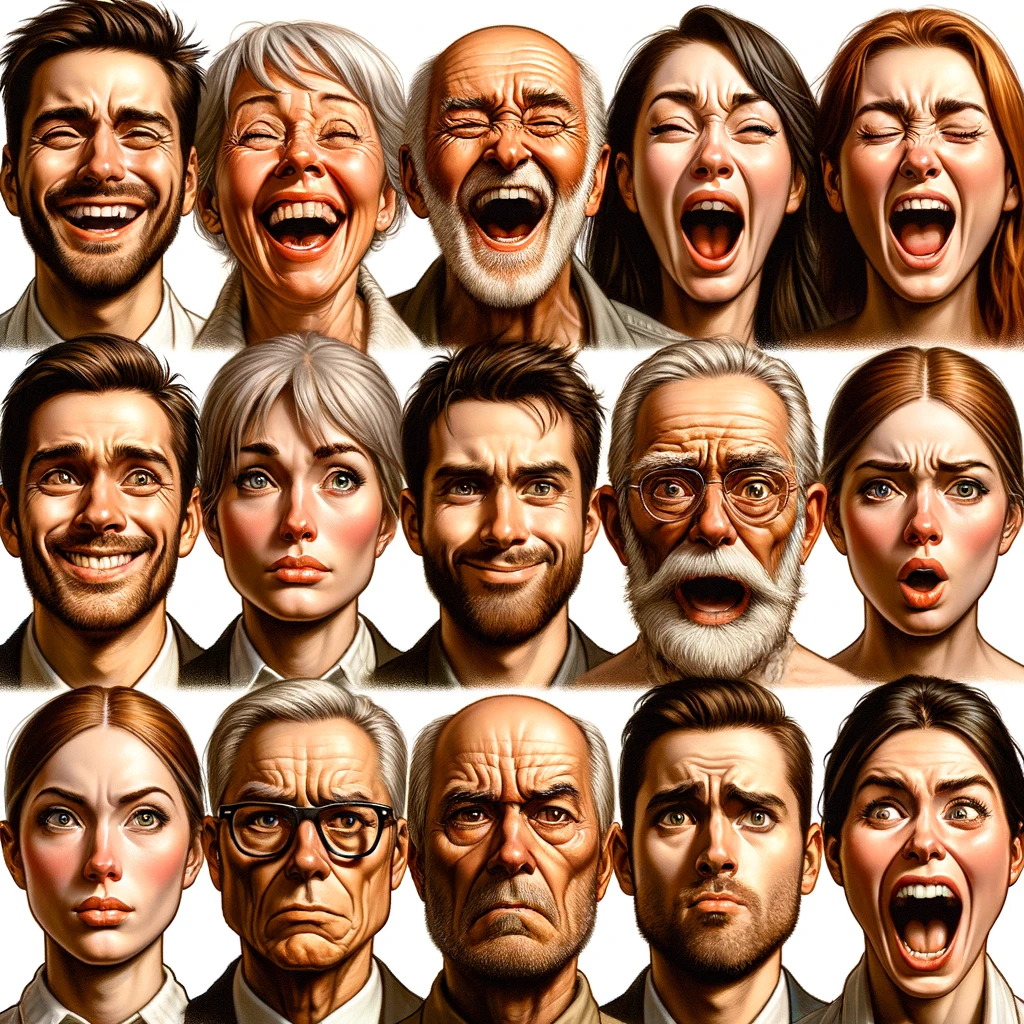
Paying attention to these subtle shifts can offer valuable insights into the other person’s emotional state.
Gestures: Painting Emotion with Our Limbs
Now, think about the last time you gestured to make a point. Maybe you pointed to something of interest, or your hands flew up in excitement during a story. These movements, from the subtle to the grand, add depth and color to our words, helping to convey our message with clarity and passion. Yet, the meaning of these gestures can vary significantly across cultures—a thumbs-up in one country might not be so positive in another. It’s a vivid reminder of the rich diversity in our ways of communicating.
Our hands and arms are rarely idle during communication. Open palms can signal honesty and receptiveness, while clenched fists might hint at tension or anger. Notice how gestures are used: are they smooth and controlled, or fidgety and nervous? These nuances can provide clues about a person’s level of comfort and confidence.
Posture and Stance: The Foundation of Perception
How we hold ourselves speaks volumes before we even utter a word. A slouch may signal disinterest or insecurity, while standing tall might radiate confidence and openness. Our posture is the frame on which our words hang, and adjusting this frame can dramatically alter the reception of our message. Next time you’re in a meeting or at a social gathering, observe how posture influences your perception of others and how shifting your stance can change the dynamics of an interaction.
The way we hold ourselves can significantly impact how we’re perceived by others.

Standing Tall or Hunched Over? Our posture speaks louder than words. A tall, relaxed stance often conveys confidence and self-assuredness, while slouching can indicate disinterest or low self-esteem.
Eye Contact: The Bridge Between Souls
Eye contact is a vital aspect of communication. There’s something profoundly human about locking eyes with another person. Eye contact can convey trust, honesty, and a deep connection, serving as a powerful tool for empathy and understanding. Yet, the norms surrounding eye contact vary widely; it’s important to remember that cultural norms can influence eye contact. In some cultures, prolonged eye contact might be seen as a sign of disrespect.
Making good eye contact demonstrates attentiveness and engagement, while someone looking away frequently might suggest shyness, discomfort, or even dishonesty.
Proximity and Personal Space: The Invisible Dance
Finally, consider how the distance between you and others can shape the flow of communication. Imagine yourself talking to a close friend versus a stranger. With a friend, you might stand closer, indicating comfort and familiarity. However, maintaining a larger distance with a stranger shows respect for their personal space.
As we conclude this exploration of body language’s key components, I invite you to continue observing and engaging with the non-verbal cues that surround you. Remember, understanding body language is a journey, not a destination, and each interaction is an opportunity to learn and grow in our ability to communicate without words.
Interpreting Body Language
Ever wondered what that crossed-arm stance truly means, or if that lingering gaze indicates genuine interest? While body language isn’t a foolproof science, understanding common gestures and postures can equip you to better navigate conversations and interactions.
Let’s break it down:
-
Open vs. Closed: Imagine yourself having a conversation. An open stance involves uncrossed arms, relaxed hands, and a torso facing directly towards the other person. This generally signals attentiveness and openness to the conversation. Conversely, crossed arms, tightly clenched hands, or a turned away torso can indicate disinterest, defensiveness, or even closed-mindedness.
-
Decoding Gestures: A single gesture can hold different meanings depending on the context. For instance, a steeplechase (fingertips touching to form a tent) might convey confidence in a professional setting, but nervousness during a blind date.
Remember: Context is king. A furrowed brow could signal confusion during a lecture, but frustration during an argument.
Here are some tips for becoming a more astute reader of body language:
- Observe Baseline Behavior: Pay attention to how someone behaves when they’re relaxed and comfortable. This becomes your reference point for interpreting any shifts in their body language.
- Look for Congruence: Do their words match their non-verbal cues? Someone saying “I’m fine” while fidgeting and avoiding eye contact might be telling a different story.
- Consider Cultural Cues: Be mindful that certain gestures can have different meanings in various cultures. A thumbs-up might be a sign of approval in North America, but an insult in some other parts of the world.
By becoming a keen observer and understanding the interplay between verbal and non-verbal communication, you’ll be well on your way to deciphering the unspoken language of body language. Remember, it’s not about mind-reading, but rather gaining valuable insights to enhance your communication and build stronger connections.
Body Language Across Cultures
Navigating the waters of body language becomes even more fascinating when we consider the vast ocean of cultures around the world. Isn’t it intriguing how a simple gesture can mean something entirely different depending on where you are on the globe? Let’s dive into the impact of cultural background on body language interpretations and explore how we can become more adept at cross-cultural communication.
At the heart of understanding body language across cultures is recognizing that cultural background deeply influences how non-verbal cues are both given and received. What might be considered a sign of respect in one culture could be seen as rude in another. For instance, maintaining direct eye contact is viewed positively in many Western cultures, associated with honesty and confidence. However, in some Asian cultures, prolonged eye contact can be seen as confrontational or disrespectful.
Let’s look at a few examples that highlight these differences. In the United States, a firm handshake is often seen as a sign of confidence and trustworthiness. Yet, in Japan, a soft handshake accompanied by a bow is the norm, reflecting respect and humility. Similarly, the thumbs-up gesture, which is generally positive in Western contexts, can be offensive in countries like Iran and Greece.
So, how can you navigate these cultural nuances in body language without accidentally stepping on cultural toes? Here are a few tips:
- Do Your Homework: Before entering a new cultural setting, take some time to research common body language practices. A little bit of preparation can go a long way in avoiding misunderstandings.
- Observe and Adapt: Pay close attention to the body language of those around you. Observation can provide valuable insights into what is considered appropriate or inappropriate in that context.
- Ask When in Doubt: If you’re unsure about the meaning of a gesture or practice, don’t hesitate to ask someone from that culture for clarification. Most people appreciate the effort to understand their customs.
- Err on the Side of Caution: When unsure, opt for more neutral body language. A smile and a nod can often bridge gaps where words and specific gestures might falter.
- Be Forgiving: Remember, everyone makes mistakes. If you or someone else commits a faux pas, a sincere apology and an open-minded attitude can usually mend fences.
By approaching cross-cultural communication with respect, curiosity, and a willingness to learn, you’ll not only avoid potential misunderstandings but also enrich your interactions with people from diverse backgrounds. Isn’t it remarkable how our efforts to understand and respect each other’s non-verbal “languages” can bring us closer, even across the vastness of cultural divides? Let’s continue to learn from one another, embracing the diversity that makes our world so rich and fascinating.
Improving Your Body Language
So, you’ve unlocked the fascinating world of body language, but how can you leverage this knowledge to your advantage? The good news is, anyone can improve their body language and harness its power to create a more positive and impactful presence.
Here are some practical tips to get you started:
-
Be Posture Perfect: Stand tall with your shoulders back and head held high. This projects confidence and self-assuredness. Remember, good posture doesn’t mean stiffness – strive for a balance between relaxed and engaged.
-
Make Eye Contact: Look at the person you’re communicating with, and try to maintain eye contact for a reasonable amount of time (avoid staring though!). This shows you’re engaged in the conversation and genuinely interested in what they have to say.
-
Open Up Your Body Language: Uncross your arms and legs, and keep your hands open. This conveys openness and receptiveness to the conversation.
-
Smile More Often: A genuine smile is a universal sign of warmth and approachability. It instantly puts others at ease and fosters a more positive connection.
-
Practice Power Posing: Feeling nervous before a presentation or an important meeting? Take a few minutes beforehand to stand in a power pose – think tall posture, wide stance, and arms raised in a victory position. Studies suggest this can actually boost your confidence levels.
Remember, congruence is key. When your verbal and nonverbal communication are aligned, your message becomes clear and impactful. If you’re saying one thing but your body language suggests something else, it can create confusion and mixed signals.
The good news? You can practice!
Pay attention to your body language in everyday interactions. Are you fidgeting? Avoiding eye contact? Consciously try to implement the tips mentioned above, and with a little effort, you’ll find yourself becoming more confident and effective in your communication.
Body language is a powerful tool that can significantly enhance your personal and professional interactions. By understanding its nuances and actively incorporating these tips, you’ll be well on your way to projecting a positive and impactful presence in the world. So, go forth, conquer your body language, and watch your communication skills soar!
The Limitations of Body Language
Remember that while body language is a fascinating tool for communication, it’s important to approach it with a healthy dose of caution. Here’s why:
-
Mind Reader Alert: Body language isn’t a magic decoder ring that grants us complete access to someone’s thoughts and feelings. A single crossed arm doesn’t necessarily mean someone is completely closed off to the conversation.
-
Lost in Translation: Cultural differences can significantly impact how gestures and body language are interpreted. A thumbs-up might be a sign of approval in North America, but an insult in other parts of the world.
-
Context is King: The same body language cue can hold different meanings depending on the situation. For instance, someone rubbing their eyes might be tired, but it could also indicate disbelief or frustration.
So, how do we navigate these potential pitfalls?
-
Consider the Bigger Picture: Don’t base your entire interpretation solely on one gesture or facial expression. Look for a cluster of cues and consider the context of the situation.
-
Focus on Verbal Communication: Remember, your words remain the foundation of clear communication. Pay close attention to what is being said, and don’t solely rely on body language to understand the entire message.
-
When in Doubt, Ask!: Sometimes, the simplest solution is to directly ask someone for clarification. Phrasing your question in a respectful and open-minded manner can help avoid misunderstandings.
Body language is a valuable tool, but it’s just one piece of the communication puzzle. By acknowledging its limitations and focusing on a holistic approach that considers verbal communication, cultural context, and the interplay of various cues, you’ll be well-equipped to have more meaningful and effective interactions.
Conclusion
As we wrap up our journey through the intricate world of body language, it’s clear that mastering this form of non-verbal communication can significantly enhance our interpersonal connections. Understanding and using body language effectively allows us to express ourselves more clearly and interpret others’ intentions and emotions with greater empathy and accuracy.
I encourage you to become more mindful of your own body language and the signals those around you are sending. This heightened awareness can transform your interactions, making them richer and more meaningful. Remember, your body says as much, if not more, than your words. By aligning your verbal messages with your non-verbal cues, you convey authenticity and build trust more effortlessly.
Interpreting body language is a continuous learning process. Like any language, it becomes more fluent with practice and exposure. There’s always more to learn, more nuances to understand, and more depth to explore. Stay curious, keep observing, and always be willing to adjust your interpretations based on context and cultural nuances.
For those eager to dive deeper into the subject, here’s a list of resources that offer valuable insights into body language:
- “The Definitive Book of Body Language” by Allan and Barbara Pease – A comprehensive guide that deciphers the hidden meaning behind various body cues.
- “What Every BODY is Saying” by Joe Navarro – An ex-FBI agent’s guide to speed-reading people.
- “Emotions Revealed” by Paul Ekman – Explores how facial expressions reveal our true feelings.
- “Body Language for Dummies” by Elizabeth Kuhnke – Offers practical advice to improve your non-verbal communication.
- Academic Studies: Research articles and studies in psychology and communication journals provide scientific insights into the mechanisms and effects of body language.
By exploring these resources and applying what you learn in your daily interactions, you’ll continue to grow your non-verbal communication skills. Body language is a powerful tool, and like any tool, its effectiveness lies in how skillfully we use it. Let’s commit to becoming more attentive and responsive communicators, enriching our connections with every gesture and glance. Here’s to our continued journey in the fascinating world of body language!
Transform Your Habits, Transform Your Life
Are you ready to turn the page to a new chapter in your life?
Stop dreaming, start achieving. Our exclusive newsletter delivers:
- Science-backed hacks: Master the psychology of habit formation used by CEOs and Olympians.
- Actionable strategies: No fluff, just practical steps to crush procrastination and dominate your goals.
- + a FREE surprise bonus 🎁 to jumpstart your transformation!
Don’t settle for mediocre. Subscribe now!