

Active listening and reflective listening are both essential communication skills that facilitate understanding and empathy in conversations, but they differ in their approaches and specific techniques.
Active Listening
Definition: Active listening involves giving your full attention to the speaker, showing that you are engaged, and providing feedback to ensure you’ve understood their message correctly. It’s about being present and fully participating in the conversation.
Key Components:
- Non-Verbal Cues: Nodding, maintaining eye contact, and adopting an open body posture to show attentiveness.
- Verbal Affirmations: Using words like “I see,” “I understand,” or “Go on” to encourage the speaker.
- Feedback: Summarizing or paraphrasing what the speaker has said to ensure accurate understanding and asking clarifying questions if necessary.
- Avoiding Interruptions: Letting the speaker talk without interjecting, and resisting the urge to formulate your response while they are speaking.
Reflective Listening
Definition: Reflective listening goes a step further by not only understanding the speaker’s message but also mirroring back their feelings and thoughts. This helps the speaker feel truly heard and understood on a deeper emotional level.
Key Components:
- Empathy: Tuning into the speaker’s emotions and showing understanding of their feelings.
- Reflection: Paraphrasing not just the content of the message, but also expressing the implied feelings and emotions.
- Validation: Acknowledging the speaker’s feelings, even if you don’t agree with their perspective, to validate their experience.
- Silence: Allowing pauses for the speaker to process their thoughts and emotions, and for you to formulate a thoughtful response.
Key Differences
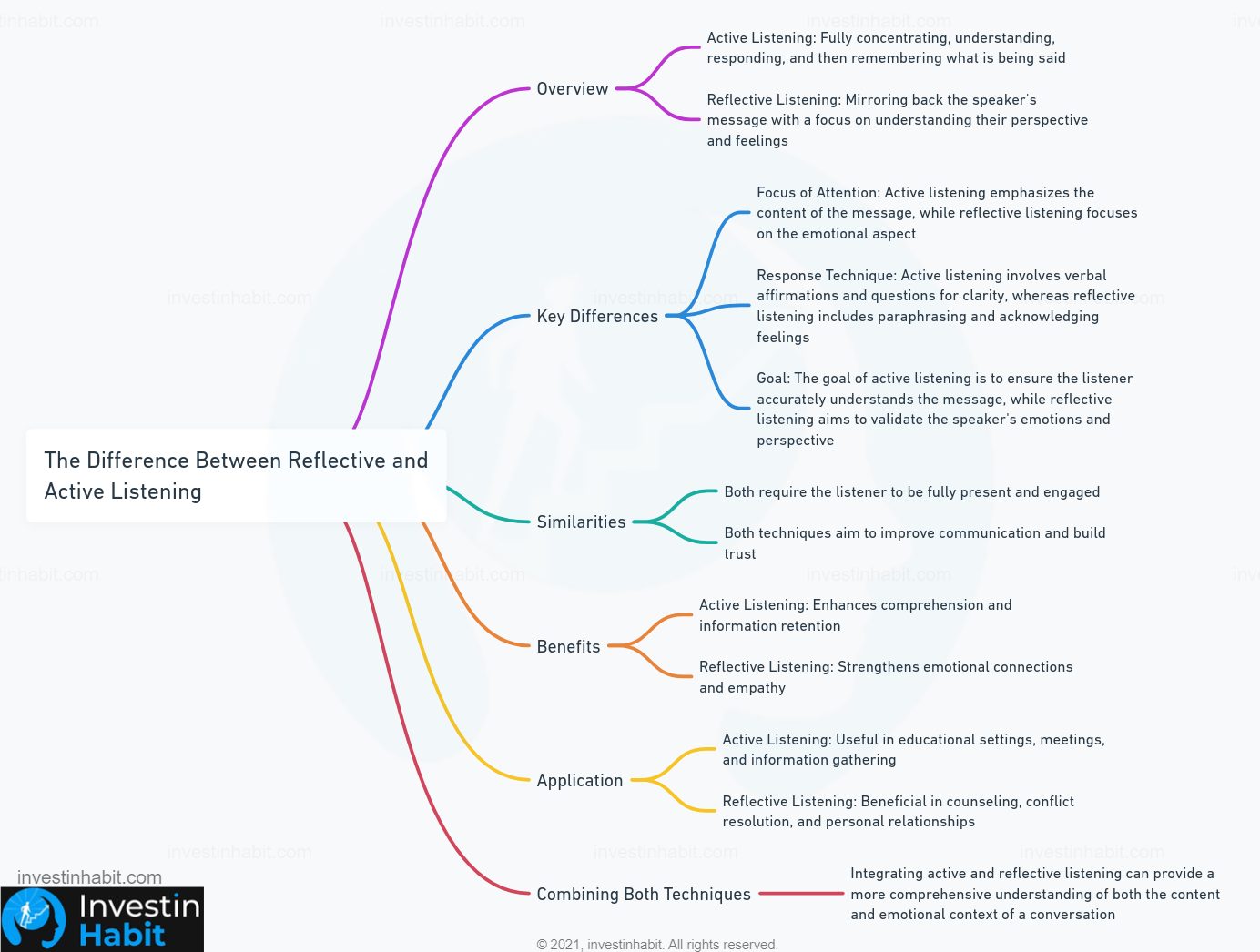
- Focus: Active listening focuses on understanding the content of the message, while reflective listening delves into understanding and mirroring back the speaker’s emotions and thoughts.
- Response: Active listening might involve paraphrasing the content or asking clarifying questions, whereas reflective listening requires articulating the speaker’s emotions and providing validation.
- Emotional Depth: Reflective listening demands a deeper level of empathy and emotional engagement compared to active listening.
Both active and reflective listening are vital for effective communication, and they can complement each other in creating a supportive and understanding communication environment.

Transform Your Life with InvestInHabit

Ready for real change? Join us and get over:
- 200+ Personal Development Worksheets,
- 100+ Blog Post MindMaps
for FREE! 😍 + Our newsletter offers the latest in habit formation and self-improvement, straight to your inbox.
Subscribe now and Start redefining your mindset today! Join our community committed to success!