In a world where words can be as impactful as actions, mastering the art of verbal self-defense isn’t just a skill; it’s a necessity. Every day, we navigate a maze of conversations, negotiations, and sometimes, confrontations. It’s in these moments that the power of words becomes evident. But how often do we find ourselves at a loss for the right words, especially when faced with verbal aggression?
This is where verbal self-defense comes into play, turning words into a shield and a tool for maintaining personal dignity and respect.
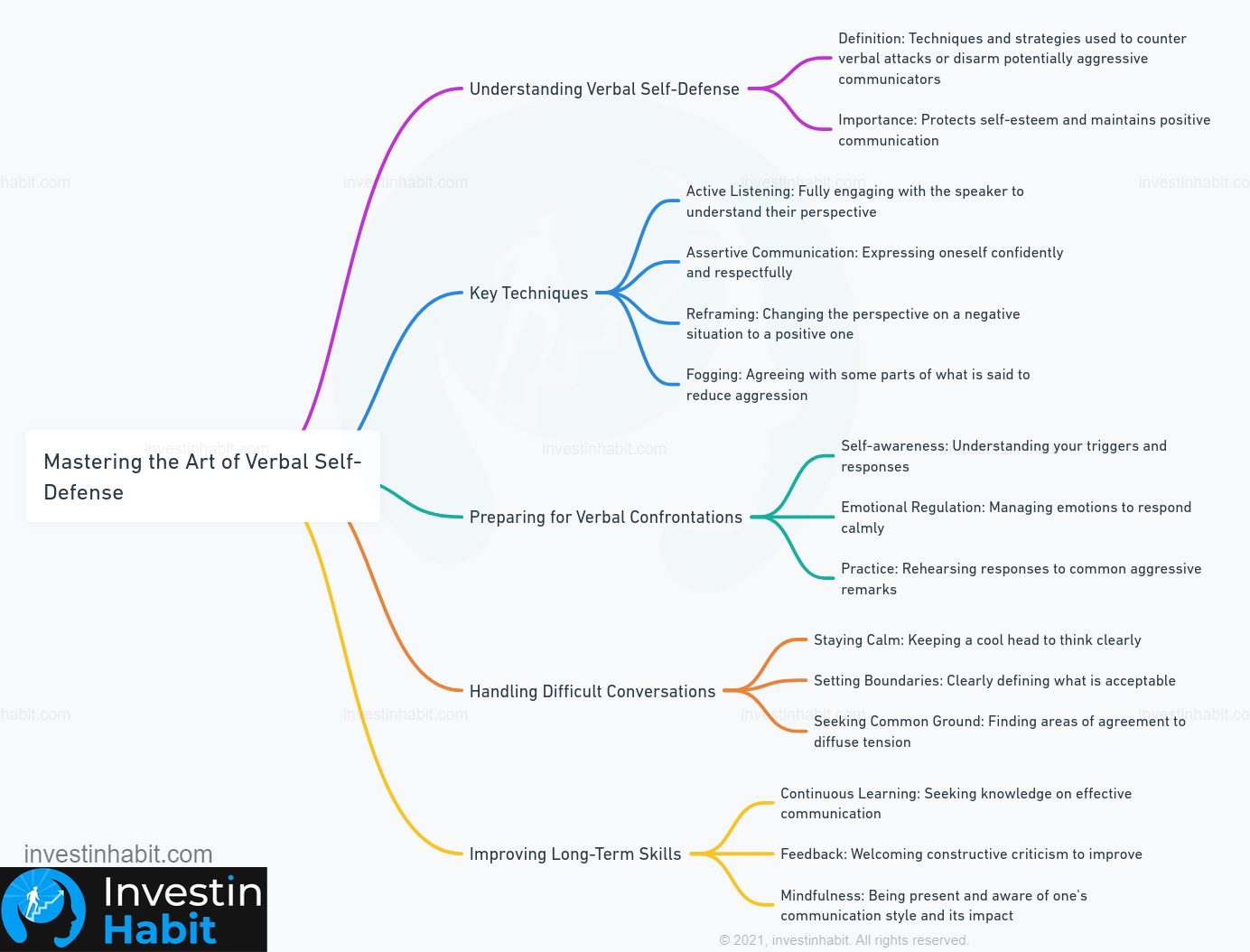
Unlike physical self-defense, which focuses on protecting oneself from physical harm, verbal self-defense is about defending your psychological well-being and preserving your personal boundaries. It’s not about winning an argument or having the last word; it’s about effectively managing confrontations through communication.
In this comprehensive guide, we’ll explore the nuances of verbal self-defense. From understanding what constitutes verbal aggression to learning specific techniques to handle various scenarios, this guide aims to empower you with the confidence to navigate even the most challenging conversations.
Whether you’re dealing with a difficult coworker, facing a bully, or simply want to improve your ability to stand your ground in everyday interactions, mastering verbal self-defense is an invaluable skill. So, let’s embark on this journey of turning words into your armor, ensuring that you’re never left feeling vulnerable in the face of verbal confrontations.
Inside this Article
Understanding Verbal Aggression
Let’s dive right in. When I say “verbal aggression,” what comes to your mind? Maybe it’s that heated argument with a friend, or the passive-aggressive comment from a colleague. Verbal aggression is any form of communication, be it words, tone, or even silence, intended to hurt, control, or intimidate another person. It’s not just about shouting or blatant insults; it’s also in the subtle jabs and the sarcastic remarks that leave a sting.
Think back to a time when someone’s words left you feeling small or attacked. That’s the psychological impact we’re talking about. These verbal attacks can chip away at your self-esteem, increase your stress levels, and even lead to anxiety or depression. It’s like a small splinter in your mind, seemingly insignificant but persistently painful.
Now, let’s identify the common forms of verbal abuse, because recognizing them is the first step in defending yourself. There’s the obvious name-calling and yelling, but there’s also gaslighting, where someone tries to make you doubt your own reality. Then there’s the guilt trip, loaded with blame and aimed at making you feel responsible for someone else’s emotions. And let’s not forget the silent treatment, a form of emotional manipulation that can be just as harmful as words.
You see, understanding these forms of verbal aggression is crucial. It’s like knowing the moves of your opponent in a chess game. Once you recognize them, you’re better equipped to respond in a way that protects your mental and emotional well-being. Stay tuned, because in the next sections, we’ll explore exactly how you can do that, turning your newfound knowledge into a powerful tool for verbal self-defense.
Transform Your Life with InvestInHabit
Ready for real change? Join us and get over:
200+ Personal Development Worksheets,
100+ Blog Post MindMaps
for FREE! 😍 + Our newsletter offers the latest in habit formation and self-improvement, straight to your inbox.
Subscribe now and Start redefining your mindset today! Join our community committed to success!
Key Principles of Verbal Self-Defense
Alright, let’s roll up our sleeves and get to the heart of verbal self-defense. You know, it’s a bit like learning a martial art for your mind and tongue. And just like in martial arts, there are some key principles you need to master.
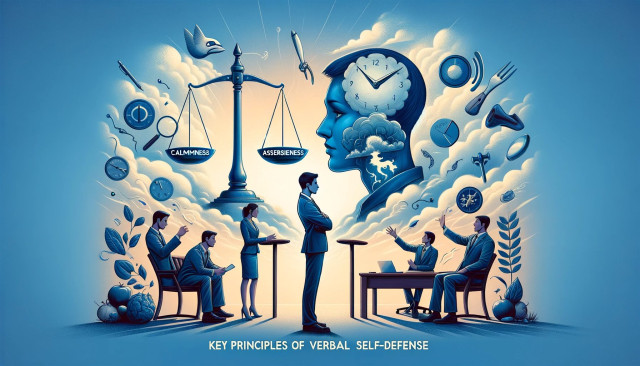
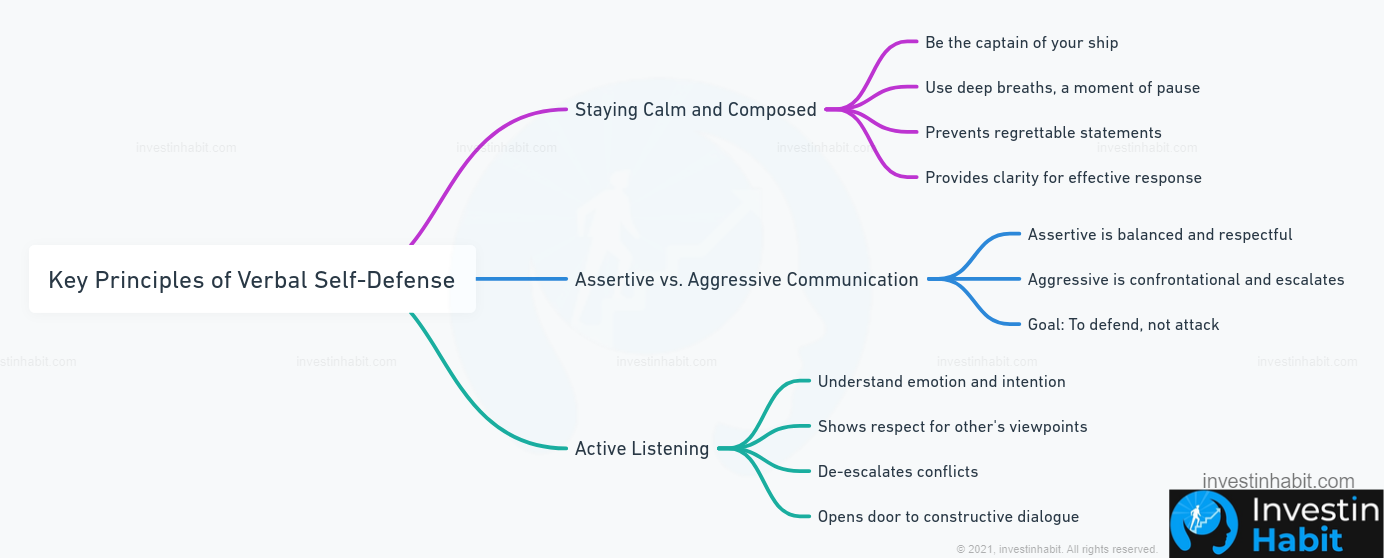
First up, staying calm and composed. I know, easier said than done, right? But think of it this way: when you stay calm, you’re in control, not your emotions. It’s like being the captain of your ship in a stormy sea. Deep breaths, a moment of pause, and a calm demeanor are your best friends here. They prevent you from saying something you might regret and give you the clarity to respond effectively.
Now, let’s talk about assertive vs. aggressive communication. Being assertive is like walking a tightrope; it’s all about balance. You’re standing up for yourself without trampling on someone else’s shoes. Assertive communication is clear, direct, and respectful. On the other hand, aggressive communication is like a bulldozer – it’s all about winning, often at the expense of others. It’s confrontational and can escalate the situation. Remember, the goal here is to defend, not attack.
And lastly, never underestimate the power of active listening in de-escalating conflicts. It’s like having a secret weapon. When you actively listen, you’re not just hearing words; you’re understanding the emotion and intention behind them. It shows the other person that you respect their point of view, even if you don’t agree. This can take the heat out of a fiery situation and open the door to a more constructive dialogue.
So there you have it – stay calm, be assertive, and listen actively. These are the building blocks of your verbal self-defense strategy. In the next section, we’ll delve into some effective techniques that you can use to put these principles into action. Stay tuned, because things are about to get even more interesting!
Effective Techniques for Verbal Self-Defense
Now, let’s get practical. I’m going to share some techniques with you that are like secret codes in the world of verbal self-defense. These are tried and tested strategies that can help you navigate through tricky conversations like a pro.
But first things first:
Step 1: Identify the Attack:
Not all negativity is an attack. Recognize if someone is genuinely upset, using manipulative tactics, or simply having a bad day. This helps tailor your response.
Step 2: Choose a self-defense technique
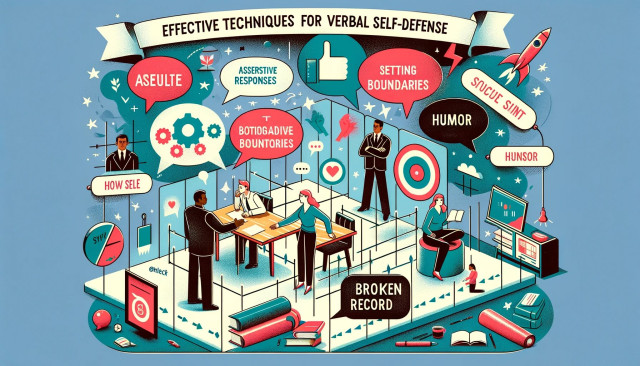
Technique 1: The Assertive Response Imagine you’re in a meeting and a colleague abruptly says, “Your ideas are always so unrealistic.” It’s a sharp comment that might make you want to either lash back or shrink back. But here’s where the assertive response comes in. Instead of getting defensive or backing down, you could say, “I hear that you think my ideas are too far-fetched. I value your perspective. Let’s explore how we can make them more practical.” This response acknowledges their viewpoint without undermining your own ideas. It shows you’re open to constructive feedback but also confident in your contributions. You’re engaging in a dialogue, not a battle.
Stay Calm and Collected:
It’s a common trap to react with anger or defensiveness. Take a deep breath and center yourself. This keeps you in control and avoids escalating the situation.
Technique 2: Using “I” Statements Now, let’s talk about “I” statements. These are like a magic formula for expressing yourself without sparking off World War III in a conversation. Instead of saying, “You never help around the house,” try “I feel overwhelmed when I have to handle household chores alone.” It shifts the focus from blaming to expressing your feelings, and trust me, it can really change the tone of a conversation.
Instead of accusatory statements (“You’re being rude!”), focus on how their behavior affects you. “I feel disrespected when…” is more constructive and opens communication.
Technique 3: Setting Clear Boundaries This one’s crucial. Setting boundaries is like putting up a fence around your personal space – it tells people how far they can go with you. If someone is being disrespectful, you might say, “I’m happy to discuss this when the conversation becomes more respectful.” It’s a polite yet firm way of saying, “Hey, that’s not okay with me.”
You have the right to respectful communication. If someone is verbally abusive, calmly state your boundaries. “I won’t tolerate being spoken to that way” followed by removing yourself if needed.
Technique 4: The Broken Record Technique Ever had someone who just doesn’t get the message? That’s where the broken record technique comes in. You calmly and persistently repeat your point until they get it. “I understand your point, but I am not available to work overtime this weekend.” Repeat it as needed, just like a broken record. It’s about being consistent in your message.
For someone being persistent or manipulative, repeat a calm, clear statement like “I’ve already said no” or “Let’s talk about this later.” Don’t engage in arguments.
Technique 5: Humor as a Diffusing Strategy Lastly, never underestimate the power of humor. It’s like the oil that eases friction. A well-timed joke or a light-hearted comment can de-escalate a situation faster than you can say “Oops!” But remember, the goal is to lighten the mood, not to mock or belittle the other person.
Sometimes, deflecting with humor or a simple “That’s interesting” can disarm the situation. If appropriate, redirect the conversation to a neutral topic.
There you have it – five techniques that can help you hold your ground in any verbal skirmish. Practice them, mix and match them, and soon you’ll find yourself navigating through tough conversations with ease and grace. Up next, we’ll
explore how to handle specific scenarios where these techniques can be your best allies. Whether it’s a challenging workplace conversation or a heated family debate, knowing how to apply these techniques can make all the difference. Stay tuned, because this is where things get really interesting – applying what we’ve learned to real-life situations!
Handling Specific Scenarios
Let’s put our verbal self-defense skills into action, shall we? I’m going to walk you through some common scenarios where these skills can really come in handy. Think of it as a playbook for those tricky moments we all face from time to time.
Scenario 1: Dealing with Workplace Bullying Imagine you’re at work, and a colleague makes a snide remark about your latest project. It’s not the first time, and it’s starting to feel like bullying. Here’s what you can do: Use an assertive response combined with “I” statements. For instance, “I feel disrespected when my work is criticized in this manner. Can we discuss this constructively?” This shows that you’re not just absorbing the negativity, but also standing up for yourself in a professional manner.
Scenario 2: Responding to Personal Attacks in Social Settings You’re at a social event and someone makes a personal comment that feels like an attack. Ouch, right? But here’s your move: the broken record technique. Calmly repeat a phrase like, “I don’t find that comment appropriate or funny.” It shows that you won’t engage on those terms and often, it’s enough to shut down further jabs.
Scenario 3: Managing Aggressive Confrontations in Public Spaces This one’s tricky. You’re in public, and someone confronts you aggressively. It’s important to stay calm. Use humor or a non-confrontational statement to diffuse the situation. For example, if they’re complaining about something you did, a response like, “I can see how that would be frustrating” can acknowledge their feelings without escalating the tension.
Tips for Customizing Your Response Based on the Scenario The key here is to assess the situation and choose your technique accordingly. Ask yourself: What’s the nature of the attack? What’s at stake? What’s the best outcome I can hope for? Your answers will guide you to the right response, whether it’s standing firm with assertive statements or using humor to lighten the mood.
Remember, each situation is unique, and there’s no one-size-fits-all solution. But with these tools in your arsenal, you’re well-equipped to handle whatever verbal challenges come your way. In the next section, we’ll look at how you can build and refine these skills over time, so they become second nature. Stay tuned, because the journey to becoming a verbal self-defense ninja is just beginning!
Building Your Verbal Self-Defense Skills
Alright, let’s wrap this up with some real talk about growing your skills. Think of verbal self-defense like a muscle. The more you work it, the stronger it gets. So, how do we build this muscle? Let’s break it down.
Regular Practice and Role-Playing First up, practice. And I mean regular, in-the-mirror, talking-to-yourself kind of practice. Sounds funny, right? But it works. Try role-playing different scenarios – maybe rope in a friend or family member to play the ‘opponent’. This isn’t just fun; it’s a safe way to try out different responses and see what feels natural for you. Plus, it’s a great confidence booster.
Seeking Feedback and Learning from Experiences Next, don’t be afraid to ask for feedback. After a tough conversation, reflect on what went well and what didn’t. If you can, talk to someone you trust about it. They might offer a perspective you hadn’t considered. Remember, every conversation, good or bad, is a learning opportunity. Embrace it.
Continuous Learning: Books, Workshops, and Courses And finally, keep learning. The world of communication is vast and fascinating. There are so many resources out there – books, workshops, online courses – that can offer new insights and strategies. I can’t stress this enough: invest time in learning. It pays off in ways you can’t even imagine.
So, there you have it. Regular practice to build confidence, seeking feedback to learn and grow, and continuous learning to keep your skills sharp. These are the keys to becoming proficient in verbal self-defense. And remember, this isn’t just about dodging verbal bullets; it’s about engaging in healthier, more respectful communication.
Thank you for joining me on this journey through the art of verbal self-defense. I hope you feel more equipped and empowered to handle whatever conversational challenges come your way. Keep practicing, keep learning, and most importantly, keep communicating!
Conclusion
We’ve navigated through the intricate world of verbal self-defense together, and it’s been quite a journey! Here are the key takeaways to remember:
Understanding Verbal Aggression: Recognize the different forms of verbal aggression to better defend against them.
Key Principles: Stay calm, be assertive, and practice active listening. These are your foundational tools.
Effective Techniques: From assertive responses to humor, these strategies are your playbook for various scenarios.
Handling Specific Scenarios: Adapt and apply these techniques based on the context, whether it’s at work, in social settings, or in public.
Building Skills: Regular practice, feedback, and continuous learning are essential for honing your verbal self-defense skills.
I encourage you to practice these skills in your daily life. It’s like training for a sport; the more you practice, the better you get. And always remember, the ultimate goal of verbal self-defense is not to win arguments, but to communicate with respect and empathy.
Additional Resources:
To further your journey, here are some resources that I highly recommend:
Books:
“Crucial Conversations” by Kerry Patterson and Joseph Grenny
“Nonviolent Communication” by Marshall B. Rosenberg
“The Gentle Art of Verbal Self-Defense” by Suzette Haden Elgin
MindTools: Resources for improving communication skills
Courses:
Look for communication skills courses on platforms like Coursera, Udemy, and LinkedIn Learning.
If you find yourself struggling or if the situation is too overwhelming, don’t hesitate to seek professional help. Counselors and communication coaches can provide personalized guidance and support.
Remember, your words have power. Use them wisely, kindly, and assertively. Here’s to your journey in mastering the art of verbal self-defense!
Transform Your Habits, Transform Your Life
Are you ready to turn the page to a new chapter in your life?