

Reading is a fundamental skill that forms the basis for lifelong learning and personal growth.
However, with the rise of digital distractions and busy schedules, developing a reading habit can be a challenge. Whether you are a student, an adult, a beginner, or a parent looking to encourage reading in children, cultivating a reading habit requires dedication, time, and effort.
In this blog post, I will explore practical tips and strategies for developing reading habits that stick.
Get ready to embark on a literary quest that will transform your life one page at a time. Welcome to the ultimate guide on how to develop reading habits that stick like glue, lift your spirit, and expand your mind. It’s time to unleash the bookworm within.
Here are the steps:
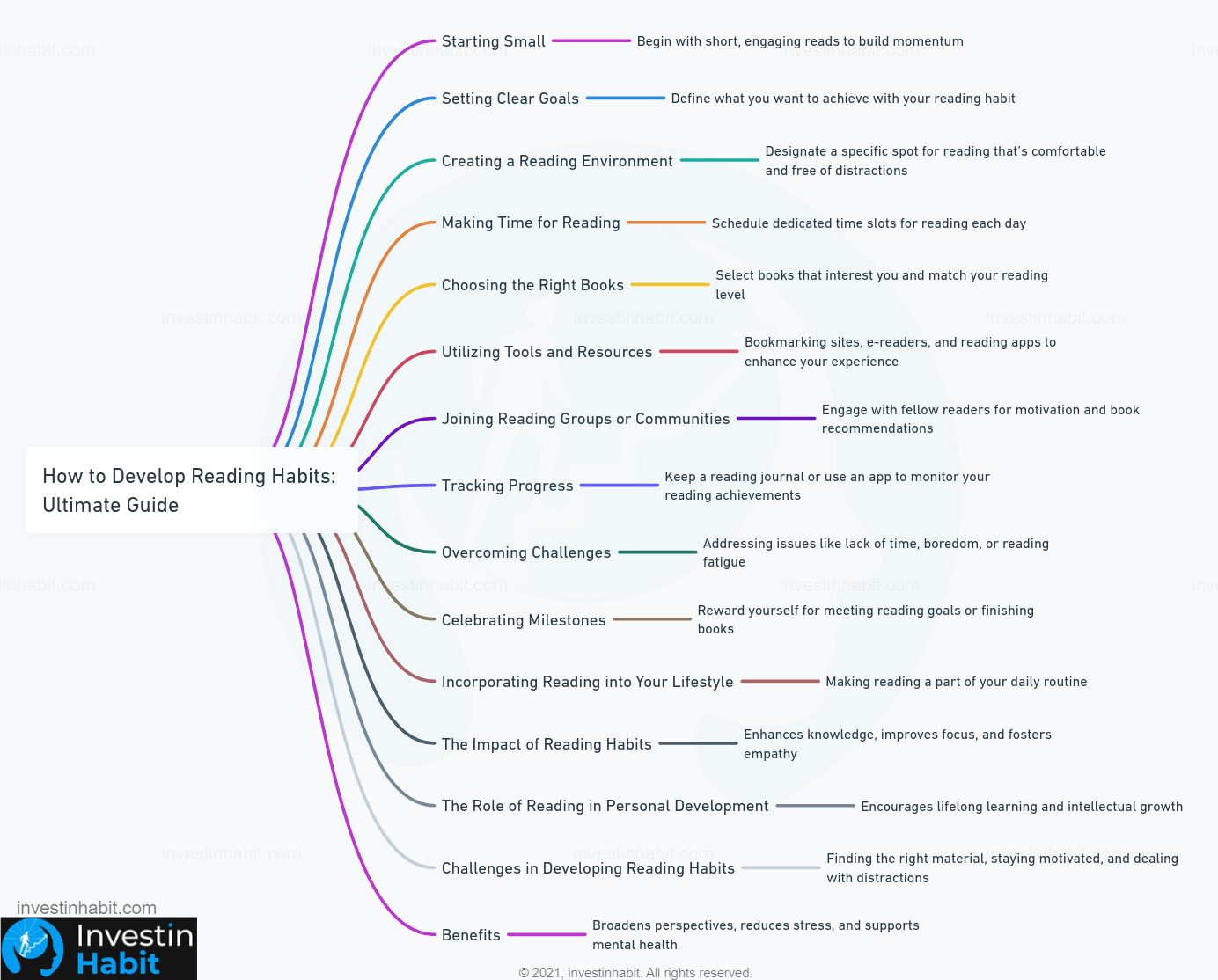
- Set a specific reading goal that aligns with your interests and priorities, and break it down into smaller, achievable steps. Example: Read 12 non-fiction books this year, aiming for one book per month and 5-10 pages per day. Write your goal in a journal or a note. Then pin it to a wall or desk calendar.
- Make your goal visible and track your progress consistently to hold yourself accountable. Example: Use a journal, a reading log or a mobile app to track the books you read and your reading time.
- Reward yourself when you finish reading a book and be kind to yourself if you miss a reading goal.
- Find reading material that aligns with your interests and goals, and explore new ideas and perspectives to keep reading enjoyable. Example: If you’re interested in history, explore historical fiction or biographies of notable figures.
- Prioritize reading by creating a routine and setting aside dedicated time to read each day or week. Example: Set aside 30 minutes before bedtime for reading every day.
- Start small and gradually build momentum to make reading a consistent habit, and adjust your goals and habits as needed to maintain flexibility. Example: Begin with 10 minutes of daily reading and gradually increase to 30 minutes over a few weeks. Like building any habit, consistency is key.
- Treat reading as an important part of self-care, promoting personal growth, empathy, and stress reduction.
- Pair reading with daily activities and schedule specific times for reading to make it a consistent habit. Example: Read during your daily commute or while enjoying your morning coffee.
- Eliminate distractions and create a comfortable reading environment by finding a quiet space, turning off devices, and using noise-canceling headphones or soft music. This will enhance your experience, improve focus, and help with information retention.Example: Set up a designated reading nook in your home, away from TV and other distractions, with a cozy chair, a reading lamp, and a warm blanket.
- Join a reading community to connect with like-minded individuals, gain new insights, and stay motivated and accountable in achieving your reading goals.Example: Participate in a local book club or join online reading groups on platforms like Goodreads or Facebook.

Most of us would like to read more books, which means forming a habit is super important.
And now, get ready to Discover the transformative power of reading and how developing this essential habit can unlock your potential while enriching your life with numerous benefits.
Inside this Article
Why is developing reading habits important?
Reading is like a superpower – it can take you to places you’ve never been, introduce you to people you’ve never met, and unlock knowledge you’ve never had before. It’s a magical journey that opens up new worlds and experiences for you to explore.
But reading isn’t just about entertainment – it’s also crucial for personal and academic development. Reading improves your vocabulary, communication skills, critical thinking abilities, and problem-solving skills all of which are essential for success in school and in life.
The habit of reading can expand your knowledge, broaden your perspective, and stimulate your imagination. By reading, you can explore new ideas, gain insights, and develop a deeper understanding of the world around you.
Furthermore, reading can reduce stress, enhance empathy, and boost cognitive skills, including memory and concentration, while also improving your mental health.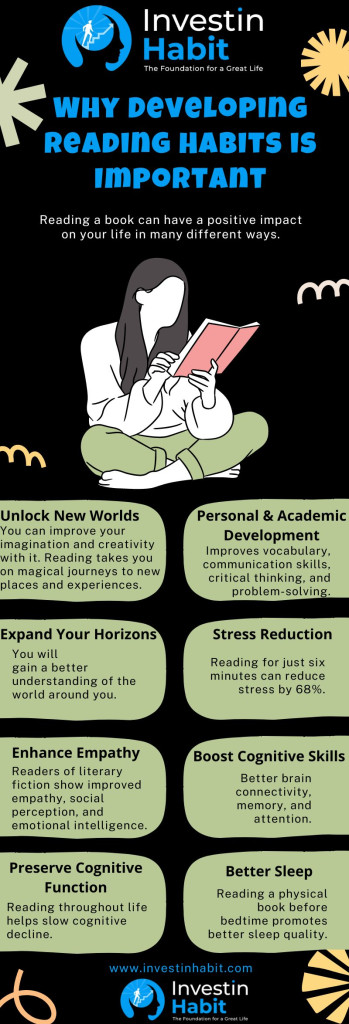
The scientific study published in the journal Brain Connectivity investigated how reading a novel affects the brain’s connectivity, which in turn, influences cognitive functions such as memory and attention.
The researchers found that after participants read a novel, their brain connectivity increased, particularly in the left temporal cortex, an area associated with language and semantic processing.
This enhanced connectivity persisted for several days after the completion of the novel, suggesting a lasting impact on cognitive skills.
A study published in the journal Science found that participants who read literary fiction performed better on tests measuring empathy, social perception, and emotional intelligence.
A study conducted at the University of Sussex found that reading for just six minutes can reduce stress levels by up to 68%, as it helps the mind to escape from worries.
Reading can help preserve cognitive function as we age. A 14-year scientific study also found that engaging in mentally stimulating activities, such as reading, throughout one’s life can help slow down cognitive decline.
By challenging your brain with new information, you can improve your mental agility and overall intellectual capacity.
Reading a physical book before bedtime has been found to be an effective way of signaling to the body that it’s time to sleep. In contrast, using electronic devices can negatively impact sleep quality due to the blue light emitted by their screens.
In short, reading is a powerful tool that can transform your life in countless ways. Whether you’re looking to learn new skills, explore new worlds, or simply unwind after a long day, picking up a book is one of the best things you can do for yourself.
So, grab a book, find a comfy spot, and let the adventure begin!
Set Your Reading Goal and Crush It!
Setting a reading goal is an effective way to build a reading habit and achieve your desired outcomes.
Without a clear goal, it can be challenging to stay motivated and focused on reading regularly. By setting a reading goal, you can establish a purpose for your reading and track your progress towards achieving it.
Whether you’re looking to read more books, learn new skills, or explore different genres, setting a reading goal can help you stay on track and make the most out of your reading experience.
In this section, I will discuss how to set achievable goals that align with your interests and priorities.
Importance of setting a reading goal
The importance of setting a reading goal cannot be overstated.
Without a clear goal in mind, it can be difficult to stay motivated and focused on reading regularly. Setting a reading goal can help you establish a purpose for your reading and track your progress towards achieving it.
Similar to achieving any worthwhile endeavor, setting goals is crucial for building better habits.
This can make your reading experience more fulfilling and rewarding.
When you set a reading goal, you are essentially creating a roadmap for yourself. You are identifying what you want to achieve through reading and how you plan to get there. This can help you stay on track and make the most out of your reading experience.
It can also help you prioritize your time and ensure that you are dedicating enough time to reading.
Moreover, setting a reading goal can help you overcome any obstacles that may come your way.
For instance, if you are struggling to find the motivation to read, having a clear goal in mind can provide the necessary push to keep going. Similarly, if you are finding it hard to choose what book to read next, having a specific goal in mind can help narrow down your choices and make the decision-making process easier.
Furthermore, setting a reading goal can help you develop discipline and consistency with reading a book. By committing to a specific goal, you are essentially making a promise to yourself that you will dedicate time and effort towards achieving it.
This can help build momentum and create positive habits that will benefit you in the long run.
In conclusion, setting a reading goal is an essential step towards making reading a regular habit and achieving your desired outcomes.
It provides direction, motivation, and accountability that can make your reading experience more fulfilling and rewarding. So take some time to think about what you want to achieve through reading and set a clear goal that aligns with your interests and priorities.
You won’t regret it!
Remember, the road that leads to reading 50 books starts with reading for 10 minutes a day.

Transform Your Life with InvestInHabit

Ready for real change? Join us and get over:
- 200+ Personal Development Worksheets,
- 100+ Blog Post MindMaps
for FREE! 😍 + Our newsletter offers the latest in habit formation and self-improvement, straight to your inbox.
Subscribe now and Start redefining your mindset today! Join our community committed to success!
How to set a reading goal
Ready to set some reading goals? Let’s do this!
First things first, start by thinking about what you want to achieve through reading. Do you want to read more books this year?
Learn new skills? Explore different genres?

Whatever it is, make sure it’s something that excites you and aligns with your interests and priorities.
Next, be specific about your goal. Don’t just say “read more books.” Instead, set a specific target like “read 20 books by the end of the year.” This will give you something concrete to work towards and help you track your progress along the way.
Now, break down your goal into smaller, achievable steps. If you want to read 20 books in a year, that’s roughly two books per month. Make a plan to read for a certain amount of time each day or week, and stick to it. Consistency is key!
Finally, make your goal visible and hold yourself accountable. Write it down somewhere you’ll see it often, like on a sticky note on your desk or in your planner. And don’t forget to celebrate your progress along the way – every book finished is a step closer to achieving your goal!
So there you have it – setting a reading goal doesn’t have to be daunting. With a little bit of planning and commitment, you’ll be well on your way to achieving your desired outcomes and enjoying all the benefits that come with regular reading. Happy reading!

Key Takeaways:
- Set a specific reading goal that aligns with your interests and priorities, and break it down into smaller, achievable steps.
- Make your goal visible and hold yourself accountable by tracking your progress consistently. Reward yourself when you hit a milestone. Be kind to yourself if you miss a reading goal.
- The first step to setting a reading goal is figuring out what you want to read.
- Measure progress by keeping track of books read, the time spent on reading, and personal improvements in enjoyment and focus.
- Celebrate your progress along the way to stay motivated and committed to your reading goals.
How to measure progress
So, you’ve set some reading goals and you’re ready to start making progress. Awesome! But how do you measure that progress? Here are a few tips to help you out:
First off, keep track of the books you’ve read. This might seem obvious, but it’s an important step in measuring your progress. You could use a journal or a spreadsheet to keep track of the titles, authors, and dates you finished each book. Seeing all those books add up over time is a great motivator!
Another way to measure progress is to track how much time you’re spending on reading each day or week. You could use a timer or an app to keep track of your reading sessions.
This will help you see if you’re consistently dedicating enough time to reading and if you’re making progress towards your goal.
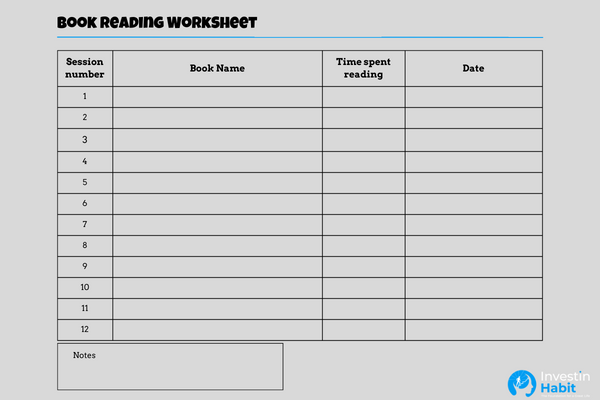
Lastly, pay attention to how you feel about your reading habit. Are you enjoying it more than before? Are you finding it easier to focus on reading for longer periods of time? These are all signs that you’re making progress towards your goal.
Remember, measuring progress doesn’t have to be complicated or stressful. Keep it simple and focus on the positive changes you’re experiencing as a result of your reading habit. Happy reading!
Discover Your Perfect Read: Finding Material
Finding the right reading material is crucial to make reading satisfying. It’s important to choose books that align with your interests and goals, but also challenge you to explore new ideas and perspectives.
One way to find the right literary content is to ask for recommendations from friends, family, or colleagues who share similar interests.

Another option is to browse bookstores or online book clubs for curated lists of books based on genre or theme. You can find a lots of reading lists online. Don’t be afraid to step out of your comfort zone and try something new – you might be pleasantly surprised by what you discover.
Remember, the key is to find books that inspire and engage you, so that reading becomes a pleasurable and enriching experience. This way you’ll increase your time reading.
Importance of finding the right reading material
The importance of finding the right reading material cannot be overstated. It can make the difference between a lackluster reading experience and a transformative one.
Reading books that resonate with your interests and values can spark new ideas, deepen your understanding of the world, and foster personal growth.
On the other hand, reading books that feel like a chore or are too challenging can quickly turn you off from reading altogether. That’s why it’s crucial to take the time to find books that speak to you on a personal level and align with your goals.
By doing so, you’ll be more likely to stick to your reading habit and reap all the benefits that come with it.
If you find a book too hard to read, find another book. It’s more important that you stay consistent and reading too challenging material might deter you from reading altogether. Remember: you can always come back to it at some point.
How to choose the right reading material
Choosing the right content can be a daunting task, especially if you’re new to reading or exploring unfamiliar genres. However, there are a few tips that can help simplify the process. Firstly, consider your mood and what type of book would best suit it.
Are you in the mood for something light and humorous, or do you want to dive into a thought-provoking novel?
Secondly, consider the author’s writing style and whether it resonates with you. Are they known for their descriptive prose or their fast-paced action scenes?
Lastly, don’t be afraid to read book reviews or ask for recommendations from trusted sources. This can help you get a better sense of what a book is about and whether it’s worth investing your time in. Remember, finding the right literary content is all about discovering what speaks to you personally and aligns with your goals.
Where to find reading material
Now that you know the importance of finding the right literary content, it’s time to explore different sources where you can find your next read.
One option is to visit your local library, which offers a vast collection of books across various genres and themes. Not only is borrowing books from the library cost-effective, but it also allows you to discover new authors and titles without committing to purchasing them.
Another option is to join online book clubs or forums, where you can connect with like-minded readers and exchange recommendations. Social media platforms such as Goodreads and Instagram are also great resources for discovering new books and following your favorite authors.
Lastly, don’t forget about independent bookstores, which often have knowledgeable staff who can offer personalized recommendations based on your interests and reading preferences. By exploring different sources, you’ll be able to broaden your reading horizons and find books that resonate with you on a deeper level.
Carve Out Time for Reading: Tips and Tricks
Making time for reading is an essential step towards developing a consistent reading habit. With busy schedules and endless distractions, it can be challenging to carve out dedicated reading time.
However, by prioritizing reading and creating a routine, you can make it a regular part of your day. One way to make time for reading is to schedule it into your daily or weekly routine, such as setting aside 30 minutes before bed or during your lunch break.
Another option is to eliminate distractions by turning off your phone or finding a quiet space where you can focus. Remember, the key to developing the habit is to make it a priority and treat it as an important part of your self-care routine. By doing so, you’ll be able to reap all the benefits that come with developing a consistent reading habit.
Importance of making time for reading
Let’s talk about why making time for reading is so important. First off, reading is like a mental workout. Just like how you need to go to the gym to keep your body healthy, reading helps keep your mind in tip-top shape. It improves your vocabulary, comprehension skills, and critical thinking abilities. Plus, it’s a great way to reduce stress and unwind after a long day.
But wait, there’s more! Reading can also help you become more empathetic and understanding towards others. When you read about different cultures and perspectives, it broadens your worldview and helps you see things from a different angle. This can be especially helpful in today’s world where we need more compassion and understanding towards one another.
Lastly, making time for reading is a form of self-care.
It’s important to take care of ourselves both physically and mentally, and reading is a great way to do that. By setting aside some time each day or week to read, you’re giving yourself the gift of relaxation and personal growth.
So go ahead, grab a book (or e-reader) and get lost in a good story. Your mind (and soul) will thank you for it!
How to make time for reading
Now that we’ve established the importance of making time for reading, let’s delve into some practical tips on how to do so.
One effective strategy is to start small and build momentum gradually. Instead of trying to read for hours on end, begin with just 10-15 minutes a day and gradually increase the duration as you become more comfortable.
This approach helps you avoid burnout and ensures that reading remains an enjoyable activity rather than a chore.
Another useful tip is to incorporate reading into your daily routine by pairing it with another activity. For example, you could read while commuting to work or during your morning coffee break. By integrating reading into your existing schedule, you’re more likely to stick with it in the long run.
Lastly, don’t be afraid to adjust your goals and habits as needed.
Life is unpredictable, and sometimes we need to adapt our routines accordingly. The key is to remain flexible and prioritize reading as much as possible.
By doing so, you’ll reap all the benefits that come with developing a consistent reading habit.

Key Takeaways:
- Find literary content that aligns with your interests and goals, and explore new ideas and perspectives to keep reading enjoyable.
- Ask for recommendations, browse bookstores or online book clubs, and explore libraries to find suitable content.
- Prioritize reading by creating a routine and setting aside dedicated time to read each day or week.
- Start small and gradually build momentum while adjusting your goals and habits as needed to maintain flexibility.
- Treat reading as an important part of self-care, promoting personal growth, empathy, and stress reduction.
Tips for incorporating reading into your daily routine
- 1. Pair reading with another activity: Incorporate reading into your daily routine by pairing it with another activity, such as reading while commuting to work or during your morning coffee break.
- 2. Set a specific time for reading: Schedule a specific time for reading each day, such as 30 minutes before bed or during your lunch break.
- 3. Start small and build momentum: Begin with just 10-15 minutes of reading per day and gradually increase the duration as you become more comfortable. This will help you to create a better reading experience.
- 4. Eliminate interruptions: Find a quiet space where you can focus on reading. Turn off your phone and other devices.

- 5. Keep a book with you at all times: Carry a book or e-reader with you wherever you go, so you can read whenever you have downtime. By carrying a book with you during the day, you can take advantage of unexpected moments to read and make the most of your day to read.
- 6. Join a book club: Joining a book club can help motivate you to read regularly and provide an opportunity to discuss books with others.
- 7. Make it a family activity: Encourage your family members to read together by setting aside time each day for family reading.
- 8. Use audiobooks: If you have trouble finding time to sit down and read, consider listening to audiobooks while doing other tasks like cooking or exercising.
- 9. Set achievable goals: Set achievable goals that align with your schedule and interests, such as finishing one book per month or reading for 30 minutes per day.
- 10. Prioritize reading: Treat reading as an important part of your self-care routine and prioritize it accordingly, just like you would with exercise or other healthy habits.
- 11. Read multiple books at the same time: By finding a way to read one book during the day and another before bed, you’ll have diverse reading experiences. Reading the first few chapters of a book and then switching to another can help you stay engaged and motivated.


Don’t hesitate to stop in the middle of a book if you’re not enjoying it; feel free to skip to the next one. Reading every time you have a few spare minutes will make this new habit more consistent, and that’s what you’ll ultimately end up cherishing.
Distraction-Free Reading: Tips and Strategies
Making reading a habit is essential, and eliminating distractions plays a crucial role in achieving consistency in your reading routine. In today’s world, we are constantly bombarded with notifications, emails, and other distractions that can make it difficult to focus on reading.
To create a conducive reading environment, find a quiet space where you can immerse yourself in a good book without interruptions. Turn off the TV, your phone or other devices, or use an app that blocks distracting websites and notifications.
Additionally, consider using noise-canceling headphones or playing soft instrumental music to help you concentrate.
Following the advice of James Clear, author of Atomic Habits, one of the best ways to make reading a habit is to make reading obvious in your environment. This can help you read more consistently and make reading attractive. For example, place a book on your pillow in the morning, so it’s waiting for you when you go to bed, or move reading apps like Kindle or Audible to the home screen of your phone to make them more accessible.
These small changes make it easier to develop a reading habit and ensure that you have reading material readily available when you need them.
Crafting Your Perfect Reading Space
Importance of creating a reading environment
First off, did you know that your surroundings can greatly impact your reading experience?
That’s right! By creating a comfortable and personalized place to read, you can enhance your overall enjoyment of the material.
Whether it’s adjusting the lighting or finding the perfect seat, taking the time to create a conducive space can make all the difference.
But that’s not all! Creating a reading environment can also help improve focus. By finding a quiet space and adjusting the temperature to your liking, you can fully immerse yourself in the book without any interruptions.
This can help you better engage with the material and retain information more effectively.
So, what are you waiting for? Take some time to create a reading environment that works for you. Whether it’s a cozy nook by the window or a comfy chair with soft lighting, find what speaks to you and make it your own.
Trust me, your future self will thank you for it!
Small Steps, Big Progress: Building Momentum
Starting small and building momentum is a key strategy to make reading easy. By beginning with just a few minutes of reading per day, you can gradually increase the duration and build up your stamina over time.
This approach helps to avoid burnout and makes it easier to stick to your goals.
As you continue reading, you’ll find that you can read a lot more than you initially thought. If you think you don’t have the time, try to read a few pages during breaks or while waiting for appointments. You’ll be amazed at how much you can read in those small moments.
If you sense that you might have a few spare minutes to read during your day, like during breaks or while waiting for appointments, always have a book or e-reader handy to seize those moments and make progress toward your reading objectives.
Joining a Reading Community: Perks and Benefits
Joining a reading community is an excellent way to connect with like-minded individuals and expand your reading horizons. Whether it’s through online forums, book clubs, or social media groups, a reading community can provide a wealth of resources and support for your reading journey.
You can even start your own book club. Book lovers will be excited to join.
By engaging in discussions, sharing recommendations, and participating in group activities, you can gain new insights and perspectives on the material.
Being part of a community can keep you accountable and motivated to achieve your goals. So why not take the leap and join a reading community today? You never know what new adventures await you in the world of literature.
Conclusion: Cultivate a Lifelong Reading Habit
In conclusion, developing a consistent reading habit can have numerous benefits for your personal and professional growth. In the course of this article, I gave you plenty of tips on how to develop this important habit. So, do you want to develop this habit?
As you can see there are plenty of easy ways to establish this habit.
By taking the first step to start reading, you’ll unlock the transformative power of this lifelong habit, enhancing your intellectual growth and enriching your life.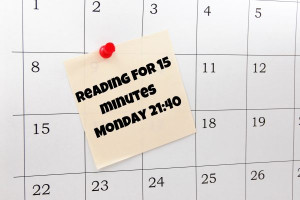
Through setting achievable goals, finding the right books, creating a conducive reading environment, eliminating distractions, starting small to build momentum, and joining a reading community, you can enhance your critical thinking skills, expand your knowledge, reduce stress, and experience the therapeutic benefits of reading.
Remember, the key is to find what works for you personally and make it a priority in your daily routine. By following the steps outlined in the article, you will make habit formation as easy as it gets.
So why not take the first step today and immerse yourself in a good book? Your future self will thank you for it!
Transform Your Habits, Transform Your Life
Are you ready to turn the page to a new chapter in your life?
Stop dreaming, start achieving. Our exclusive newsletter delivers:
- Science-backed hacks: Master the psychology of habit formation used by CEOs and Olympians.
- Actionable strategies: No fluff, just practical steps to crush procrastination and dominate your goals.
- + a FREE surprise bonus 🎁 to jumpstart your transformation!
Don’t settle for mediocre. Subscribe now!