

Building a habit of being more positive involves shifting your mindset, focusing on the bright side of situations, and cultivating an optimistic outlook on life.
Are you tired of feeling weighed down by negativity?
It’s time to make a change! Positivity is a powerful force that can transform your daily life, uplift your spirit, and lead to greater success and happiness.
Imagine waking up each morning with a brighter outlook, facing challenges head-on, and radiating joy and enthusiasm throughout your day. This is what positive thinking can do for you. Cultivating a positive mindset not only benefits your mental health but also improves your physical well-being and relationships with others.
Embracing positivity can unlock your potential, helping you live a more fulfilling life. In this guide, we’ll explore practical steps to build a habit of being more positive, empowering you to create a lasting change that brings out the best in you.
So, are you ready to take charge of your happiness and unleash the power of positivity? Let’s get started!
Inside this Article
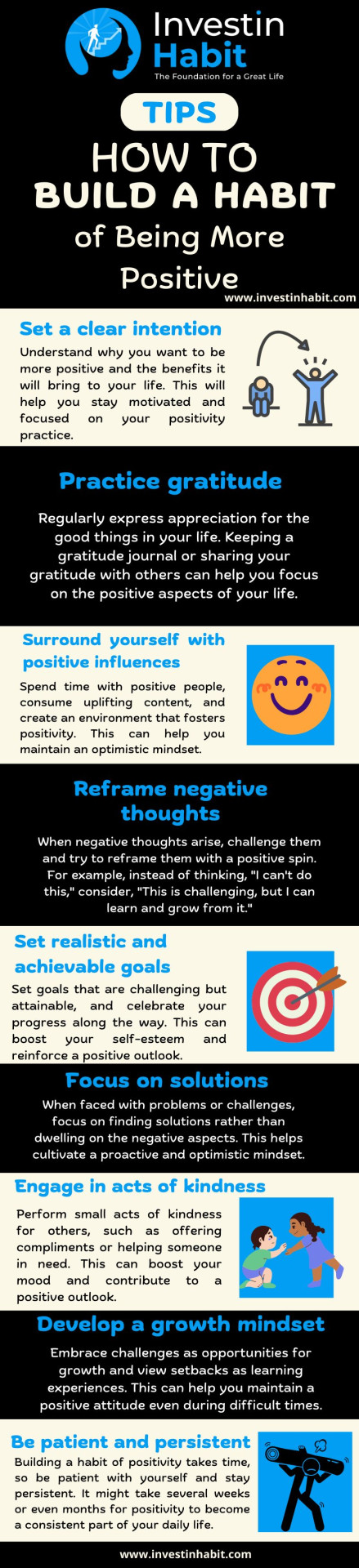
Set a Clear Intention
Before embarking on your journey to a more positive mindset, it’s crucial to set a clear intention.
Start by asking yourself why you want to be more positive. Are you seeking to improve your mental health, boost your self-esteem, or enhance your relationships? 
Identifying your reasons will help you stay motivated and focused on your goal. Take a moment to visualize the impact a positive mindset will have on your life.
Picture yourself waking up each day with a smile, eager to face new challenges, and spreading joy to those around you. Envision the obstacles you’ll overcome and the successes you’ll achieve, all thanks to your newfound positivity.
By creating a vivid mental image, you’ll strengthen your determination and commitment to cultivating a positive attitude. As you progress, keep checking in with your intentions and remind yourself why you embarked on this journey.
I recommend writing down your reasons and placing them somewhere you can see them regularly, like on your fridge or bathroom mirror. This way, you’ll have a constant reminder of the incredible benefits a positive mindset can bring, ensuring you stay on track and don’t lose sight of your goal.
Remember, I’m here to guide and support you along the way, so let’s work together to make your life a happier, more positive experience!

Transform Your Life with InvestInHabit

Ready for real change? Join us and get over:
- 200+ Personal Development Worksheets,
- 100+ Blog Post MindMaps
for FREE! 😍 + Our newsletter offers the latest in habit formation and self-improvement, straight to your inbox.
Subscribe now and Start redefining your mindset today! Join our community committed to success!
Practice Gratitude
One of the most powerful ways to cultivate a positive mindset is by practicing gratitude.
When you focus on the good things in your life, you’ll find it easier to maintain an optimistic outlook. So, let’s dive into some ways you can start incorporating gratitude into your daily routine.
First, I recommend keeping a gratitude journal. Each day, set aside some time to write down at least three things you’re grateful for.
These can be big or small, from a delicious meal you had to a kind gesture from a stranger. By doing this, you’re training your brain to focus on the positives, helping you build a habit of being more appreciative.
Plus, on days when you’re feeling down, you can look back at your journal entries and remind yourself of all the wonderful things in your life. Sharing your gratitude with others is another great way to strengthen your positive mindset.
Let people know when you appreciate their actions, whether it’s a simple “thank you” or a heartfelt note expressing your gratitude. You’ll not only boost your own mood but also brighten someone else’s day. 
It’s a win-win! I encourage you to try these strategies and see how they impact your overall outlook.
You might be surprised at the difference they can make. Remember, gratitude is a powerful tool in your journey to a more positive life, and I’m here to help you make the most of it!
Surround Yourself with Positive Influences
As you work towards developing a more positive mindset, it’s essential to surround yourself with positive influences.
These influences can come in the form of friends, role models, the content you consume, and the environment you create. Trust me, this will make a world of difference in your journey!
Start by examining your social circle. Are your friends and acquaintances generally positive and uplifting, or do they tend to bring you down with their negativity? 
It’s crucial to choose friends who support and encourage your positive mindset, as they will inspire you to stay on track. Look for role models, too—individuals who embody positivity and can serve as an example of the mindset you want to adopt.
Next, pay attention to the content you consume, whether it’s books, movies, social media, or news. Make a conscious effort to choose uplifting and inspiring content that leaves you feeling energized and optimistic.
This might mean unfollowing negative accounts on social media or seeking out books and podcasts that promote personal growth and positivity. Finally, create a positive environment for yourself.
Fill your living and working spaces with items that inspire joy and optimism, like uplifting quotes, photos of happy memories, or even a colorful piece of artwork. By surrounding yourself with positivity, you’ll be reinforcing your new mindset on a daily basis.
Remember, I’m here to support you in your journey, and together, we can create an environment that nurtures your positivity and helps you become the best version of yourself!
Reframe Negative Thoughts
As you work on cultivating a positive mindset, it’s crucial to address and reframe any negative thoughts that may arise.
Trust me, this is a game-changer when it comes to building a habit of positivity! So let’s explore how you can challenge and replace those negative thoughts with more positive and empowering ones.
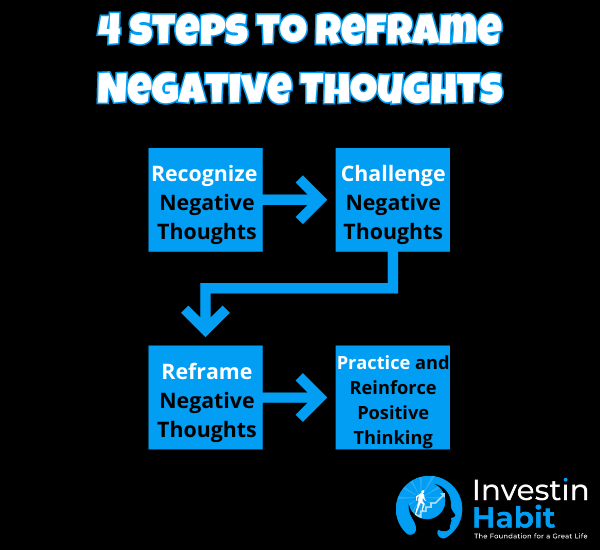
First, it’s essential to recognize when negative thoughts pop up. When you catch yourself dwelling on a negative thought, pause for a moment, and challenge it.
Ask yourself if it’s based on reality or if it’s simply a manifestation of your own fears or insecurities. By questioning the validity of your negative thoughts, you’ll be better equipped to replace them with more positive and constructive alternatives.
Now, let’s talk about some techniques for reframing negative thoughts. One of my favorites is to look for the silver lining in any challenging situation.
Instead of focusing on the negatives, try to identify any potential benefits or opportunities for growth. For instance, if you’re struggling with a difficult project at work, remind yourself that overcoming this challenge will make you stronger and more capable in the long run.
Let’s take a look at a example:
Step 1: Recognize Negative Thoughts Example: “I always mess up at work, and everyone thinks I’m incompetent.”
Step 2: Challenge Negative Thoughts Example: “Is it true that I always mess up, or have I also had successes at work? Do people genuinely think I’m incompetent, or is this just my own fear?”
Step 3: Reframe Negative Thoughts Example: “I may have made some mistakes at work, but I’ve also had accomplishments. I can learn from my mistakes and grow professionally. People may not see me as incompetent, but rather as someone who is still learning and improving.”
Step 4: Embrace Positive Thoughts Example: “I am capable of learning from my mistakes, and I can become better at my job. I have the strength to overcome challenges and prove my abilities to myself and others.”
Another helpful technique is to practice self-compassion. When you’re feeling down or overwhelmed, treat yourself with kindness, understanding, and patience, just as you would a close friend.
Recognize that nobody is perfect and that setbacks and challenges are a normal part of life. I encourage you to experiment with these techniques and find what works best for you.
Positive thinking is a mental attitude that focuses on the bright side of life and anticipates favorable outcomes. One key aspect of positive thinking is self-talk, which refers to the internal dialogue that constantly goes on in our minds. Our self-talk can be either positive or negative, and it significantly influences our emotions, behavior, and overall outlook on life.
When you engage in positive self-talk, you encourage yourself to focus on your strengths, successes, and the possibilities for growth and improvement. This optimistic internal dialogue helps you maintain a positive attitude, build self-confidence, and overcome challenges more easily.
Positive self-talk can also help reduce stress and anxiety by allowing us to reframe negative thoughts and situations, enabling us to cope better with life’s ups and downs.
On the other hand, negative self-talk can reinforce self-doubt, fear, and pessimism, ultimately undermining our ability to achieve our goals and enjoy a fulfilling life. To cultivate a habit of positive thinking, it is essential to become aware of your self-talk patterns and consciously replace negative thoughts with more optimistic, constructive, and solution-focused thoughts.
By doing so, you can foster a positive mindset that will enhance your overall well-being and help you achieve greater success and happiness in life.
Set Realistic and Achievable Goals
Setting realistic and achievable goals is another important aspect of cultivating a positive mindset. 
When you set attainable goals for yourself, you’re more likely to experience success, which in turn boosts your confidence and positivity. So let’s discuss some tips for setting goals that you can genuinely achieve.
First, break down your goals into smaller, more manageable steps. This will make them feel less daunting and more achievable, allowing you to make steady progress towards your ultimate objective.
For example, if your goal is to exercise more, start by committing to a short workout two or three times a week, and gradually increase the duration and frequency over time. Next, be specific with your goals.
Instead of setting vague intentions like “be happier” or “get healthier,” focus on concrete actions you can take to achieve these outcomes. For instance, you could aim to practice gratitude daily or incorporate more fruits and vegetables into your meals.
Lastly, set deadlines for your goals. This will help you stay accountable and motivated to keep working towards them.
Just remember to be realistic with your timeframes and give yourself enough room to make steady progress. As you work towards your goals, don’t forget to celebrate your progress and accomplishments.
Acknowledge your achievements, no matter how small they may seem, and take pride in the effort you’ve put in. This will help reinforce your positive mindset and motivate you to continue striving for success.
Practice Positive Affirmations
Another fantastic way to build a habit of being more positive is by practicing positive affirmations.
Affirmations are short, powerful statements that can help you challenge and replace negative thoughts with more uplifting and empowering beliefs. By incorporating them into your daily routine, you’ll be able to gradually shift your mindset and strengthen your positivity.
So let’s explore the power of daily affirmations and look at some examples you can use. The key to making affirmations work is repetition.
Consistently repeating your affirmations each day, preferably aloud, helps ingrain these positive beliefs into your subconscious mind. Over time, these affirmations will begin to replace negative thoughts and self-doubt, allowing you to maintain a more optimistic outlook on life.

When choosing or creating affirmations, make sure they’re positive, specific, and in the present tense. Here are some examples of positive affirmations you can try:
- “I am confident and capable of achieving my goals.”
- “I am worthy of love and happiness.”
- “I choose to focus on the positive aspects of my life.”
- “I am grateful for the abundance and opportunities that surround me.”
Feel free to personalize these affirmations to better suit your needs and goals, or create your own. I recommend starting with a few that resonate with you and repeating them daily, either during your morning routine, throughout the day, or before bed.
Remember, I’m here to support you in your journey to a more positive mindset, and practicing affirmations is a powerful tool to help you get there. Give it a try, and together, we’ll work on building a habit of positivity that can transform your life!
Focus on Solutions
Focusing on solutions is another essential aspect of building a habit of positivity.
By cultivating a solution-oriented mindset, you’ll be better equipped to tackle challenges and overcome obstacles with a sense of optimism and determination. So let’s discuss how you can develop this mindset and some strategies for problem-solving that will help you stay positive.
First, when you encounter a challenge or problem, resist the temptation to dwell on the issue itself. Instead, shift your focus towards finding potential solutions.
Ask yourself, “What can I do to improve this situation?” or “How can I turn this challenge into an opportunity for growth?” By doing this, you’re training your mind to think constructively and positively, even when faced with difficulties. One helpful strategy for problem-solving is brainstorming.
When faced with a challenge, take some time to jot down as many potential solutions as you can think of, no matter how unconventional they may seem. This exercise can help you think outside the box and may lead to creative solutions you wouldn’t have considered otherwise.
Another useful approach is to break down larger challenges into smaller, more manageable tasks. By doing this, you’ll be able to tackle each component of the problem one step at a time, making it less overwhelming and increasing your chances of success.
Engage in Acts of Kindness
Engaging in acts of kindness is another powerful way to build a habit of positivity.
When you perform acts of kindness, not only do you brighten someone else’s day, but you also boost your own mood and sense of well-being. So let’s discuss the benefits of kindness and some ideas for spreading positivity through kind actions.
Performing acts of kindness has been shown to increase happiness, reduce stress, and promote a sense of connection with others. It’s a win-win situation, as you’re not only helping others, but you’re also positively impacting your own mental and emotional health.
Plus, kindness can be contagious! When you’re kind to others, it often inspires them to pay it forward, creating a ripple effect of positivity.
Now, let’s explore some ideas for spreading kindness and positivity. Remember, even small gestures can make a big difference.
Here are a few suggestions to get you started: Compliment someone on a job well done or their appearance, hard work or their perseverance.
Offer to help a friend, family member, or coworker with a task or project. Pay for the coffee or meal of the person behind you in line.
Write a thank-you note or leave a positive review for someone who’s provided excellent service. Volunteer your time for a cause you’re passionate about.
The possibilities for acts of kindness are endless, so get creative and find ways to spread positivity that resonate with you.
Develop a Growth Mindset
Lastly, developing a growth mindset is crucial in your journey towards building a habit of positivity.
A growth mindset is the belief that you can learn, grow, and improve through effort and perseverance. By embracing this mindset, you’ll be more likely to view challenges as opportunities for growth and setbacks as valuable learning experiences.
So let’s talk about how you can cultivate a growth mindset and maintain a positive outlook in the face of adversity. First, learn to embrace challenges as opportunities for growth.

When faced with a difficult situation, remind yourself that it’s an opportunity to learn something new and develop your skills. Instead of being discouraged by obstacles, see them as chances to expand your abilities and become a stronger, more resilient person.
Next, view setbacks and failures as learning experiences. Nobody is perfect, and everyone experiences setbacks from time to time.
The key to maintaining a positive mindset in these situations is to learn from your mistakes and use them as fuel for growth. Ask yourself, “What can I learn from this experience?” or “How can I use this setback to improve and move forward?” By doing this, you’ll be better equipped to bounce back from challenges and continue on your path to success.
Embracing challenges and learning from setbacks are essential components of building a habit of positivity. By adopting this mindset, you’ll be more resilient in the face of adversity and better able to maintain a positive outlook, no matter what life throws your way.
Be Patient and Persistent
As we’ve discussed various strategies for building a habit of positivity, it’s important to remember that developing any habit takes time, patience, and persistence.
In this final section, let’s talk about the importance of being patient with yourself and staying committed to your positivity practice, even when progress may seem slow. First, recognize that building a habit takes time.

Change doesn’t happen overnight, and it’s normal to experience setbacks or challenges along the way. Be gentle with yourself and acknowledge that cultivating a positive mindset is a gradual process that requires consistent effort.
As you work on implementing the strategies we’ve discussed, give yourself the grace to stumble, learn, and grow. Next, stay committed to your positivity practice, even when it feels difficult.
It’s easy to become discouraged when progress is slow or when you experience setbacks. However, remember that consistency is key in developing any habit, including positivity.
Keep putting in the effort, even on days when it feels challenging, and you’ll gradually notice a shift in your mindset.
Be patient with yourself, trust the process, and stay committed to your practice.
Embracing Resilience: Cultivating a Positive Mindset to Overcome Life’s Challenges
Thinking positively is not about denying the existence of challenges, obstacles, or setbacks in life. It is unrealistic to assume that everything will always go smoothly or that we will never face difficulties.
Instead, positive thinking is about cultivating an attitude of resilience and confidence in our ability to confront and overcome the challenges that life inevitably brings our way.
A positive mindset allows us to acknowledge the negative aspects of a situation while also recognizing our own strengths, resources, and potential for growth. It encourages us to view challenges as opportunities to learn, adapt, and evolve, rather than as insurmountable obstacles.
This perspective can boost our self-esteem and empower us to face adversity with courage and determination.
By believing in your ability to overcome whatever life throws at you, you become more proactive in seeking solutions and taking constructive actions to address problems. This approach can significantly reduce stress, anxiety, and feelings of helplessness, as you focus on your capacity for resilience and growth, rather than dwelling on the negative aspects of a situation.
In summary, positive thinking is not about naively expecting a problem-free life, but about fostering an attitude of resilience, self-confidence, and optimism in the face of adversity. By adopting this mindset, you can better navigate life’s challenges, enhance your well-being, and ultimately lead a more fulfilling and successful life.
Conclusion
In conclusion, building a positive thinking habit can have a profound impact on your life, leading to greater happiness, well-being, and success.
Let’s quickly recap the key steps we’ve discussed for cultivating a positive mindset:
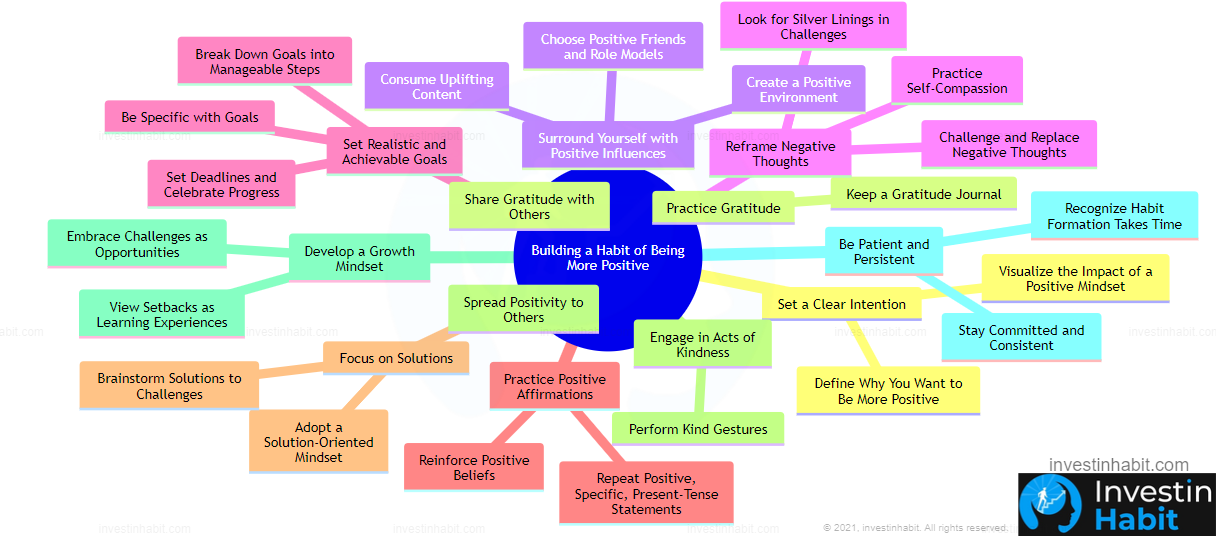
- Set a clear intention.
- Practice gratitude.
- Surround yourself with positive influences.
- Reframe negative thoughts.
- Set realistic and achievable goals.
- Practice positive affirmations.
- Focus on solutions.
- Engage in acts of kindness.
- Develop a growth mindset.
- Be patient and persistent.
Remember, each of these steps plays a crucial role in helping you create a more positive outlook on life. Embrace these practices, stay committed to your positivity journey, and be patient with yourself as you work on building this powerful habit.
As you continue to incorporate positivity into your daily life, you’ll begin to notice the many benefits it brings, from improved mental health to stronger relationships and greater overall happiness. So, keep working on your habit of positivity, and soon enough, you’ll be reaping the rewards of a happier, healthier, and more fulfilling life.
I’m here to cheer you on every step of the way – you’ve got this!
Transform Your Habits, Transform Your Life
Are you ready to turn the page to a new chapter in your life?
Stop dreaming, start achieving. Our exclusive newsletter delivers:
- Science-backed hacks: Master the psychology of habit formation used by CEOs and Olympians.
- Actionable strategies: No fluff, just practical steps to crush procrastination and dominate your goals.
- + a FREE surprise bonus 🎁 to jumpstart your transformation!
Don’t settle for mediocre. Subscribe now!