

Are you tired of feeling like you’re not making progress in your career or personal goals?
Do you struggle with motivation and find it hard to work consistently and efficiently? If so, you’re not alone.
Many people struggle to develop the habit of working hard, but the good news is that it’s a habit that can be cultivated with time and effort.
In this blog post, I’ll explore some practical tips and strategies for developing the habit of working hard, so that you can achieve your goals and realize your full potential.
From setting clear and achievable goals, to creating a schedule and routine that works for you, to building self-discipline and staying motivated, I’ll cover everything you need to know to develop the habit of working hard and achieve success.
Whether you’re a student, a professional, or simply someone looking to improve your productivity and achieve your goals, this blog post is for you.
So, let’s dive in and explore the power of hard work and the habits that can help you reach your full potential!
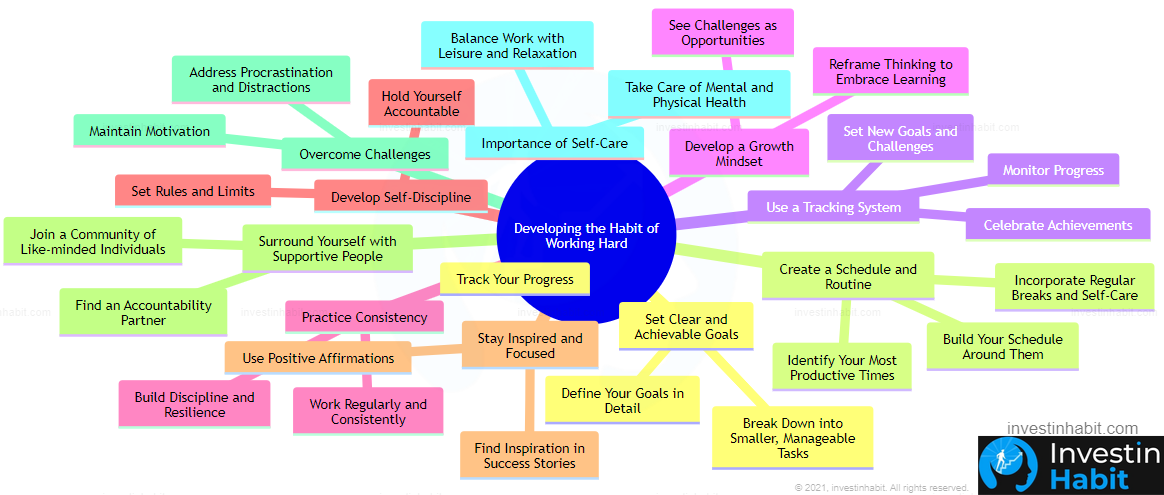
Inside this Article
The Essential Role of Hard Work in Achieving Your Goals
Hard work is an essential ingredient in achieving any kind of goal, whether it’s personal or professional.
Hard work is the foundation upon which success is built, and it’s the key to unlocking your full potential and achieving your dreams. Without hard work, even the most talented individuals will struggle to reach their goals.
Hard work is the backbone of success. It is the driving force that propels you towards your goals and aspirations.
Hard work enables you to overcome challenges and obstacles, and to persist even in the face of adversity. Hard work is also a way of demonstrating your commitment to your goals, and it shows others that you’re serious about achieving what you set out to do.
Moreover, hard work is essential for personal growth and development. By pushing yourself to work hard, you’ll develop discipline, perseverance, and resilience – qualities that are essential for success in any area of life.
So, hard work is not just about putting in long hours, but it also involves dedication, persistence, and a willingness to push oneself beyond limits.
Hard work also helps you to develop a growth mindset, which allows you to view challenges and setbacks as opportunities for learning and growth.
Hard work is not just about putting in long hours, but it also involves dedication, persistence, and a willingness to push oneself beyond limits. It is a habit that requires consistent effort and discipline, but the rewards are immeasurable. Hard work is a key to success.
Finally, hard work is important because it brings a sense of satisfaction and accomplishment.
When you work hard and achieve your goals, you’ll feel a sense of pride and fulfillment that comes from knowing that you put in the effort required to succeed.
This sense of satisfaction and accomplishment can be a powerful motivator, driving you to continue working hard and pursuing your goals even when the going gets tough.
In short, hard work is essential for achieving your goals, developing your skills and character, and experiencing the satisfaction and fulfillment that comes from knowing that you gave it your all.
So, whether you’re striving for personal growth, career success, or any other kind of goal, remember that hard work is the key to unlocking your full potential and achieving your dreams.

Transform Your Life with InvestInHabit

Ready for real change? Join us and get over:
- 200+ Personal Development Worksheets,
- 100+ Blog Post MindMaps
for FREE! 😍 + Our newsletter offers the latest in habit formation and self-improvement, straight to your inbox.
Subscribe now and Start redefining your mindset today! Join our community committed to success!
Common Challenges in Developing the Habit of Working Hard
While the benefits of hard work are clear, developing the habit can be challenging.
One of the biggest obstacles is motivation. Many individuals struggle to establish consistent and effective work habits, leading to feelings of frustration, burnout, and even failure.
Some of the most common challenges in developing the habit of working hard include:
Procrastination: One of the biggest obstacles to developing the habit of working hard is procrastination. Many people put off tasks until the last minute, which often leads to poor results and a feeling of failure. It’s all too easy to put off tasks and projects, especially when they seem daunting or overwhelming.
Distractions: In today’s digital age, distractions are everywhere. Whether it’s social media, television, a constant flow of notifications or other people, distractions can be a major obstacle to developing the habit of working hard. It’s easy to get sidetracked and lose your focus.
Lack of motivation: Sometimes, we’re just not motivated to work hard. We feel like our goals are out of reach, or we don’t think we have what it takes to achieve them. We may be tired, sick, or just not feeling up to it.
Lack of discipline: Developing the habit of working hard requires discipline and self-control. Without these qualities, it can be difficult to stay on track and make consistent progress.
Overcommitment: Finally, many individuals struggle with over-commitment. They take on too many tasks or projects, leaving little time or energy for the hard work required to make meaningful progress.
Overcoming these challenges requires a combination of self-awareness, discipline, and effective strategies. By recognizing the obstacles that stand in your way and developing strategies to address them, you can develop the habit of working hard and achieve your goals with greater ease and efficiency.
- Hard work is essential for success, personal growth, and satisfaction, as it enables you to overcome challenges and develop valuable skills like discipline, perseverance, and resilience.
- Common challenges in developing the habit of working hard include procrastination, distractions, lack of motivation, lack of discipline, and overcommitment. Overcoming these challenges requires self-awareness, discipline, and effective strategies.
- Developing a growth mindset is an important aspect of working hard, as it allows you to view challenges and setbacks as opportunities for learning and growth.
- Achieving your goals and working hard brings a sense of satisfaction and accomplishment, which can serve as a powerful motivator to continue pursuing your goals even when faced with difficulties.
- Recognizing and addressing the obstacles that hinder the development of a strong work ethic can help you establish the habit of working hard and make consistent progress towards achieving your goals.
Unlock Your Potential: Practical Tips for Developing the Habit of Working Hard
Developing the habit of working hard is no easy feat, but with the right strategies, it can be achieved. It is important to understand that what works for one person may not work for another, so it’s essential to implement practical strategies that work for you.
To begin with, one of the most effective ways to develop the habit of working hard is to set clear and achievable goals. When you have a specific goal in mind, it becomes easier to focus your efforts and stay motivated towards achieving it.
However, setting goals alone isn’t enough; breaking down larger goals into smaller, more manageable tasks can help prevent overwhelm and make it easier to stay on track.
Moreover, creating a schedule and routine that works for you is also a crucial strategy for developing the habit of working hard.
By establishing a consistent routine, you can train your brain to associate certain activities with certain times of day, making it easier to stay focused and productive. A well-planned routine not only helps you manage your time effectively but also ensures that you are not wasting time on unimportant tasks.
In addition to this, building self-discipline is essential for developing the habit of working hard.
It means setting boundaries, avoiding distractions, and holding yourself accountable for your actions. Self-discipline requires commitment and consistency; it’s not something that can be developed overnight.
However, by practicing self-discipline regularly, you can gradually improve your ability to stay focused and motivated towards achieving your goals.
Finally, staying motivated is essential for maintaining a hardworking habit. This can involve finding inspiration from others who have achieved success, rewarding yourself for your hard work, or simply reminding yourself of why you started in the first place.
To conclude, developing the habit of working hard takes time and effort but can be accomplished by implementing practical strategies such as setting clear goals, breaking them down into smaller tasks, creating a well-planned routine and building self-discipline.
With dedication and persistence in following these strategies, anyone can develop the habit of working hard and achieve their desired level of success.
STEP 1: Set Clear and Achievable Goals
Define your goals and break them down into smaller, achievable tasks.
Setting clear and achievable goals is essential for developing the habit of working hard.
Without clear goals, it’s difficult to know what you’re working towards, and it’s hard to stay motivated. To start, define your goals in detail.
Ask yourself, what do you want to achieve? What does success look like for you?
Make sure that your goals are specific, measurable, and achievable.
Once you have a clear idea of your goals, break them down into smaller, achievable tasks. This can help make your goals feel more manageable and less daunting.
Breaking down your goals into smaller tasks also allows you to track your progress along the way. This is important because seeing progress can be a huge motivator. When you feel like you’re making progress towards your goals, it can help you stay motivated, even when things get tough.
Remember that goals can change, and it’s okay to adjust them as you go. The important thing is to stay focused and committed to the process. With clear goals and achievable tasks, you’ll be well on your way to developing the habit of working hard and achieving your dreams.
STEP 2: Create a timeline and schedule for completing each task
Once you have set your goals, it’s important to create a schedule and routine that works for you. This helps you to stay focused and motivated and ensures that you’re making progress towards your goals.
To create an effective schedule, start by identifying the times of day when you’re most productive and focused. For some people, this may be early in the morning, while others may find that they work best late at night.
Once you’ve identified your most productive times, build your schedule around them. Try to schedule your most important tasks during these times, when you’re most likely to be productive and focused.
It’s also important to build in regular breaks throughout the day. Taking short breaks can help you recharge and stay motivated, so you can come back to your work feeling refreshed and energized.
In addition to scheduling your work tasks, it’s also important to schedule time for self-care. This includes things like exercise, meditation, and spending time with loved ones. Taking care of yourself is essential for maintaining your mental and physical well-being, which in turn can help you stay motivated and productive.
Remember that your schedule is a tool to help you stay organized and focused. It’s okay to adjust your schedule as needed, based on your changing priorities and goals. By creating a schedule that works for you and building in time for self-care, you’ll be well on your way to developing the habit of working hard and achieving your goals.
STEP 3: Use a tracking system to monitor progress and stay motivated
Using a tracking system can be a game-changer when it comes to developing the habit of working hard and achieving success.
Using a tracking system is a powerful way to monitor your progress and stay motivated. Whether it’s a simple checklist or a more complex spreadsheet, having a system in place can provide a visual representation of how far you’ve come and help you stay on track.
Tracking your progress can also help you measure your success and identify areas for improvement. With so many different tracking systems available, it’s important to find one that works for you.
Here are a few popular options:
- To-do list: This is a simple tracking system that involves writing down your daily tasks and checking them off as you complete them. You can use a paper or digital list, whichever works best for you.
- Journal or planner: You can use a journal or planner to document your successes and challenges, and to schedule your tasks and goals. This can be a great way to stay organized and focused.
- Habit tracking app: There are many apps available that allow you to track your progress towards developing a new habit or behavior. These apps can provide reminders and motivation, and can help you stay on track.
- Spreadsheets: If you prefer a more data-driven approach, you can use a spreadsheet to track your progress over time. This can be especially useful for tracking long-term goals or projects.
By using a tracking system consistently and regularly, you’ll be well on your way to developing the habit of working hard and achieving your goals.
But don’t just stop at tracking your progress. Use your tracking system to set new goals and challenge yourself to go further. Celebrate your achievements along the way, no matter how small they may seem. Remember, every step forward is progress towards your ultimate goal.
So, whether you’re working towards a big project or just trying to develop the habit of working hard, using a tracking system can be an incredibly helpful tool. Give it a try and see how it can help you achieve your dreams with greater ease and efficiency. You got this!
Key Takeaways:
- Set clear and achievable goals, breaking them down into smaller tasks to make them more manageable and trackable.
- Create a schedule and routine that works for you, optimizing your most productive times and incorporating self-care.
- Use a tracking system to monitor progress, stay motivated, and identify areas for improvement.
- Build self-discipline and hold yourself accountable to stay focused and motivated towards achieving your goals.
- Stay motivated by finding inspiration, rewarding yourself for hard work, or reminding yourself of your initial purpose.
Growth Mindset: Key to Working Hard
Many people believe that talent or innate ability is the key to success.
However, research has shown that having a growth mindset is actually a better predictor of success. A growth mindset is the belief that your abilities can be developed through hard work, persistence, and learning from mistakes.
It’s the opposite of a fixed mindset, which is the belief that your abilities are fixed and cannot be changed.
One of the most important aspects of developing a growth mindset is to see challenges as opportunities for learning and growth.
When you encounter a difficult task or obstacle, don’t get discouraged. Instead, approach it with a positive attitude and a willingness to learn. Embrace the challenge as an opportunity to develop new skills and knowledge.
To develop a growth mindset, start by reframing your thinking. Instead of saying, “I can’t do this,” say, “I can’t do this yet, but I can learn.” Focus on the process of learning and improvement, rather than the outcome. Celebrate your progress and small victories along the way.
It’s also important to seek out feedback and constructive criticism. Feedback can help you identify areas for improvement and can guide you towards better performance. Don’t be afraid to make mistakes or fail; use them as opportunities to learn and grow.
By developing a growth mindset and seeing challenges as opportunities for learning and growth, you’ll be able to overcome obstacles and achieve your goals. So, start embracing challenges today and watch as you develop the habit of working hard and achieving success.
The Power of Consistency: Developing Good Work Habits
Another key factor in developing good work habits is consistency.
Consistency means doing something regularly and consistently over time, regardless of how you feel or what obstacles you may face. By consistently working towards your goals, you’ll be able to build up momentum and make progress even when things get tough.
When you consistently work towards your goals, you develop a routine and create a sense of accountability for yourself. This routine helps you to stay focused and motivated even when faced with obstacles or setbacks.
Consistency also helps to reinforce positive habits and behaviors. When you consistently practice good work habits, they become ingrained in your daily routine and become second nature. This makes it easier to maintain these habits over time and to continue making progress towards your goals.
Furthermore, consistency helps to build discipline and resilience. By consistently working towards your goals, you develop the discipline to resist distractions and overcome obstacles. This resilience allows you to push through difficult times and to continue making progress towards your goals even when things get tough.
In short, consistency is key to developing good work habits because it allows you to build momentum, reinforce positive habits, and develop discipline and resilience. By consistently working towards your goals, you can achieve success in all areas of your life.
Develop Self-Discipline: Set Limits
Self-discipline is a key factor in developing good work habits and achieving your goals. It means setting rules and limits for yourself and sticking to them, even when it’s difficult. By practicing self-discipline, you can develop the ability to control your impulses and resist temptation, which is essential for achieving success.
One way to practice self-discipline is to set rules and limits for yourself. For example, you might decide to limit your social media use to certain times of the day, or to set a rule that you must complete a certain task before allowing yourself to watch TV. These rules and limits can help you stay focused and avoid distractions, which is essential for developing good work habits.
It’s also important to hold yourself accountable for your actions. When you set rules and limits for yourself, make sure you follow through on them. If you find yourself breaking your own rules or giving in to temptation, take a step back and reassess. Identify what caused you to slip up, and come up with a plan to avoid that situation in the future.
Remember, developing self-discipline takes time and effort. It’s not something that can be developed overnight. However, with practice and dedication, you can gradually improve your ability to stay focused and motivated towards achieving your goals. So, start by setting some rules and limits for yourself today, and watch as your self-discipline and work habits improve over time.
Stay Inspired and Focused with Positive Affirmations
When it comes to developing the habit of working hard, staying motivated and inspired is crucial. One way to stay motivated is to use positive affirmations.
Positive affirmations are short, positive statements that you repeat to yourself regularly. These statements help to reinforce positive beliefs and attitudes and can help to keep you focused and motivated towards achieving your goals.
Here are ten affirmations, to help you stay motivated and focused on your goals.
- I am fully committed to working hard and achieving my goals.
- I am motivated and energized by the challenges of hard work.
- I welcome hard work as an opportunity to grow and improve.
- I am disciplined and focused on working hard every day.
- I am dedicated to putting in the effort required to achieve success.
- I have the perseverance and resilience needed to work hard and overcome obstacles.
- I am capable of achieving great things through hard work and determination.
- I am grateful for the ability to work hard and make progress towards my goals.
- I am confident in my ability to work hard and achieve the success I desire.
- I embrace the mindset of hard work and see it as a key to my personal and professional growth.
In addition, using affirmations to develop the habit of working hard can also help to reduce stress and increase feelings of confidence and self-esteem.
By focusing on positive affirmations, you can shift your mindset to one of possibility and abundance, which can help you to see opportunities where you may have previously seen obstacles.
By repeating positive statements to yourself regularly, you can reinforce a growth mindset, stay motivated, and overcome any obstacles that may arise.
Affirmations help to create a positive internal dialogue that reinforces your commitment to working hard and achieving your goals.
In summary, affirmations can be a powerful tool for making hard work a habit. By incorporating positive statements into your daily routine, you can stay motivated, focused, and committed to achieving your goals, and ultimately create a successful and fulfilling life.
Supportive People: Key to Achieving Goals
When you have a strong support system, you are more likely to stay motivated and focused on your goals.
These people can provide valuable feedback, advice, and encouragement when you need it most.
By seeking out people who share your values and aspirations, you can create a network of like-minded individuals who will help you stay accountable and motivated as you work towards achieving your dreams.
With the right support system in place, you’ll be well on your way to developing the habit of working hard and achieving success.
Joining a community of like-minded people who are also working hard to achieve their goals is a great way to stay motivated and focused on your own goals. Whether it’s a group of coworkers, friends, or an online community, being around others who share similar values and aspirations can help you stay accountable and inspired.
Finding an accountability partner can also be incredibly helpful in developing the habit of working hard. An accountability partner is someone who will hold you responsible for following through on your commitments and who can offer support and encouragement when you need it. This person can be a friend, coworker, or even a coach or mentor.
Working with an accountability partner can help you stay on track and motivated by providing you with regular check-ins, feedback, and support. It can also help you stay committed to your goals, as you will be more likely to follow through on your commitments when you know that someone else is counting on you.
Overall, joining a community of like-minded people and finding an accountability partner can be powerful ways to develop the habit of working hard. By surrounding yourself with supportive people who share similar goals and aspirations, you can stay motivated, accountable, and committed to achieving success.
Key Takeaways:
- Consistency is key to developing good work habits, as it helps build momentum, reinforce positive behaviors, and develop discipline and resilience.
- Practice self-discipline by setting rules and limits for yourself, holding yourself accountable, and gradually improving your focus and motivation.
- Utilize positive affirmations to stay inspired and focused, reinforcing a growth mindset and commitment to working hard.
- Surround yourself with supportive people, join communities of like-minded individuals, and find an accountability partner to stay motivated and accountable on your journey to success.
Scientific studies on developing the habit of working hard
Based on my search, here are some relevant studies and papers on developing the habit of working hard:
- “Grit: Perseverance and Passion for Long-Term Goals” by Angela Duckworth et al. – This study examines the concept of grit, which is the combination of perseverance and passion for long-term goals, and its role in achievement [1].
- “The Impact of Time Management on the Students’ Academic Achievements” by Husam Al Khatib – This research paper explores the relationship between time management and academic achievement, suggesting that effective time management is crucial for success [2].
- “Self-Discipline Outdoes IQ in Predicting Academic Performance of Adolescents” by Angela Duckworth and Martin Seligman – This study highlights the importance of self-discipline in predicting academic success, even more so than IQ [3].
- “The Influence of Work Ethic on Organizational Commitment: A Study on Teachers” by Ilhami Yücel – This research investigates the impact of work ethic on organizational commitment, emphasizing the importance of a strong work ethic for job satisfaction and performance [4].
- “Self-control and grit: Related but separable determinants of success” by Brian Galla and Angela Duckworth – This study explores the distinctions between self-control and grit, and their roles in predicting success across various life outcomes [5].
- “Deliberate Practice and Performance in Music, Games, Sports, Education, and Professions: A Meta-Analysis” by Brooke Macnamara et al. – This meta-analysis investigates the role of deliberate practice in the development of expertise and performance across domains, emphasizing the importance of focused, purposeful practice [6].
- “The Science of Self-Control” by Roy Baumeister and John Tierney – This research paper discusses the concept of self-control, its relation to success in various aspects of life, and strategies to improve self-control [7].
- “The role of goal setting in workforce development” by Edwin Locke and Gary Latham – This paper examines the impact of goal setting on workforce development, highlighting the importance of setting specific and challenging goals to enhance motivation and performance [8].
These studies provide valuable insights into the development of habits related to hard work, discipline, and time management. You can find more information by checking out the links provided below.
Concluding Thoughts on How to make hard work a habit
In conclusion, developing the habit of working hard is essential for achieving success and reaching your goals.
By setting clear and achievable goals, practicing self-discipline, and maintaining consistency, you can build momentum and make progress towards your objectives. It’s also important to cultivate a growth mindset, and use positive affirmations and other motivational techniques to stay inspired and focused.
Surrounding yourself with supportive people who encourage your progress and joining a community of like-minded individuals can also be powerful ways to stay motivated and on track.
Finding an accountability partner who can offer feedback and support can help you stay committed to your goals, even when faced with obstacles. Ultimately, developing the habit of working hard is a process that takes time, effort, and dedication.
But with the right mindset and strategies in place, anyone can achieve their goals and realize their full potential. So keep working hard, stay motivated, and never give up on your dreams.
Transform Your Habits, Transform Your Life
Are you ready to turn the page to a new chapter in your life?
Stop dreaming, start achieving. Our exclusive newsletter delivers:
- Science-backed hacks: Master the psychology of habit formation used by CEOs and Olympians.
- Actionable strategies: No fluff, just practical steps to crush procrastination and dominate your goals.
- + a FREE surprise bonus 🎁 to jumpstart your transformation!
Don’t settle for mediocre. Subscribe now!