

In this blog post, we’ll explore some powerful habit building techniques that can help you develop and maintain good habits for lasting success. Each of these techniques is like a precious gemstone that, when combined with others, creates a beautiful mosaic of self-mastery.
You know, when people have solid habits, they usually don’t find it hard to resist just chilling on the couch, grabbing some greasy takeout, putting off work, or watching one more viral video before heading out. That’s because they’re on autopilot, and temptation isn’t really a factor anymore.
Once they’ve got those good habits down, they don’t need much willpower to make smart choices.
Get ready to be captivated by the brilliance of these strategies and the way they come together to help you achieve your goals. Whether you’re looking to improve your health, productivity, or relationships, these techniques can help you get there. So, let’s dive in and discover the secrets to building habits that stick!
- The Habit Loop: Understand the cue, routine, and reward system that governs habits and use it to your advantage to make habits stick.
- SMART Goals: Set Specific, Measurable, Achievable, Relevant, and Time-bound goals to guide your habit formation.
- Self-Assessment: Regularly evaluate your existing habits and identify areas for improvement or replacement.
- Small, Incremental Changes: Start with manageable changes and gradually build upon them to establish lasting habits. You know, to form new habits, it’s best to make them as easy as possible in the beginning. Making the changes super small and easy, pretty much guarantees you’re going to succeed in building good habits. Instead, of making drastic changes to your life, focus on incremental improvement. This was you will avoid backsliding into your old habits. Concentrate on changing just one behavior at a time. Once that habit is really solid, you can move on to the next one.
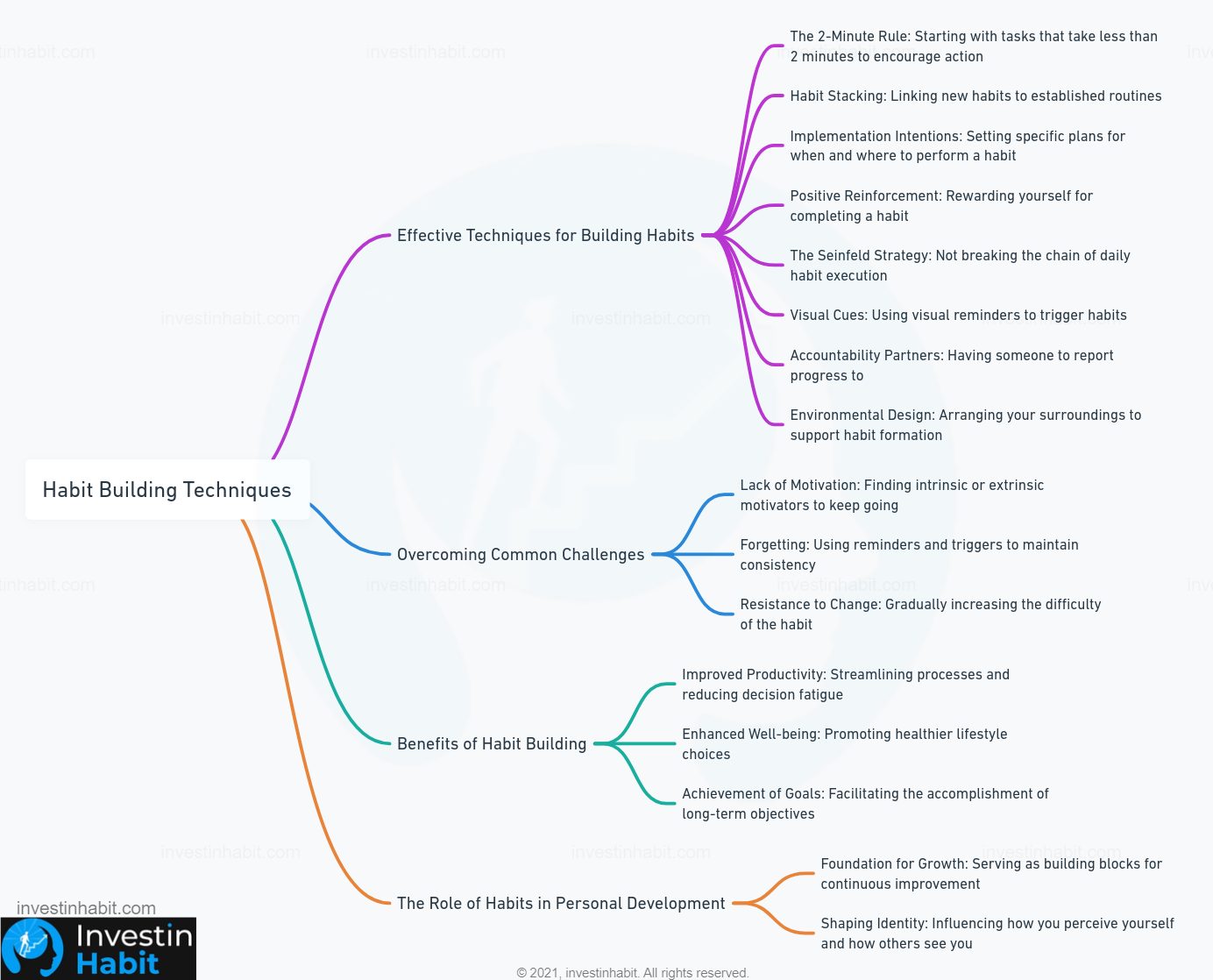
- Habit Stacking: Pair a new habit with an existing one, creating a sequence that reinforces both habits.
- The Two-Minute Rule: Break down new habits into tasks that can be completed in two minutes or less, making them easier to start.
- Consistency: Practice your new habit daily, even if only for a short time, to establish a strong foundation. A habit is far more likely to stick if you practice it consistently. So, stay consistent.
- Visual Reminders: Use sticky notes, calendars, or other visual cues to remind you of your new habit.
- Habit Tracker: Monitor your progress with a habit tracker app or journal to maintain motivation and accountability.
- Routines and Rituals: Establish morning and evening routines to anchor your new habits within your daily schedule.
- Same time, Same place, Same context. If you’re looking to start exercising, it’s a good idea to go at the same time and to the same spot for the first thirty days. When things like the time, location, and situation are consistent, it’s just easier to stick to habits.
- Positive Reinforcement: Reward yourself for completing a new habit, reinforcing the behavior and increasing motivation.
- Accountability Partners: Share your goals with a friend or family member who can provide encouragement and hold you accountable. Studies have found that your odds of success go way up when you share your intentions with someone you see as having a higher status, or someone whose opinion you really care about.
- Social Support: Join a group or online community focused on habit formation to share experiences, challenges, and successes.
- Overcoming Obstacles: Identify potential challenges in advance and develop strategies to address them.
- Embrace Setbacks: Treat setbacks as opportunities to learn and refine your habit-building techniques.
- Regular Review: Periodically assess your habits to ensure they continue to align with your goals and values.
- Adaptability: Stay flexible and adjust your habits as needed to accommodate changes in your life and priorities.
- Growth Mindset: Cultivate a mindset that embraces continuous learning, improvement, and personal growth.
- Environmental Design: Optimize your surroundings to support and encourage the formation of new habits.
- Mindfulness: Practice being present and aware, recognizing when old habits emerge and consciously choosing new ones.
- Reflection: Regularly reflect on your progress, recognizing your achievements and identifying areas for improvement.
- Swish – an NLP technique: Picture yourself doing the bad habit. Then, imagine yourself pushing that habit away and doing something different instead. Finish up by visualizing yourself in a super positive state. For example, see yourself grabbing a cigarette, then putting it down and snapping your fingers, and finally, picture yourself running and breathing freely. Practice this a few times until the new pattern comes to mind automatically before you even think about doing the old habit. Also, you can visualize yourself performing your new habit to increase motivation and reinforce the behavior.
- Time Management: Allocate specific time slots for your new habits, ensuring they become an integral part of your daily routine.
- Prioritization: Focus on building the most impactful habits first, allowing you to experience the benefits more quickly.
- Replacing Negative Habits: Identify the underlying need behind a negative habit and replace it with a positive habit that fulfills the same need.
- Trigger Adjustment: Modify or eliminate triggers that lead to undesirable habits, making it easier to avoid engaging in them.
- Temptation Bundling: Combine a new habit with an activity you enjoy, making the habit more appealing and enjoyable.
- The Five-Second Rule: When you notice yourself hesitating to start a habit, count down from five and commit to taking action.
- Progress Journal: Keep a journal to document your habit-building journey, noting successes, challenges, and insights.
- Patience and Persistence: Recognize that building lasting habits takes time and effort, and be prepared to persevere through setbacks and obstacles.
By incorporating these habit-building techniques into your life, you can create a solid foundation for lasting change and personal growth. Keep experimenting with different methods to find the strategies that work best for you, and remember that the journey to success is a marathon, not a sprint.
Creating new habits is crucial for a fulfilling life. That’s probably why experts like behavioral scientists and psychologists have spent tons of time figuring out how to create and maintain good habits.
Things like getting enough sleep, exercising regularly, eating well, sticking to a structured routine, and practicing mindfulness can make a huge difference in our work, relationships, and mental well-being if we do them consistently.
So, are you ready to build a new habit?

Transform Your Life with InvestInHabit

Ready for real change? Join us and get over:
- 200+ Personal Development Worksheets,
- 100+ Blog Post MindMaps
for FREE! 😍 + Our newsletter offers the latest in habit formation and self-improvement, straight to your inbox.
Subscribe now and Start redefining your mindset today! Join our community committed to success!