

Developing good habits is essential for personal growth and success. Habits shape our behavior, thinking, and ultimately, our lives. However, forming a habit is not an easy task, and it requires commitment, persistence, and self-awareness.
Fortunately, there are various frameworks and approaches to habit formation that can help us create positive changes in our lives. One such framework is the Gretchen Rubin Habit Formation Framework, developed by bestselling author and happiness expert Gretchen Rubin.
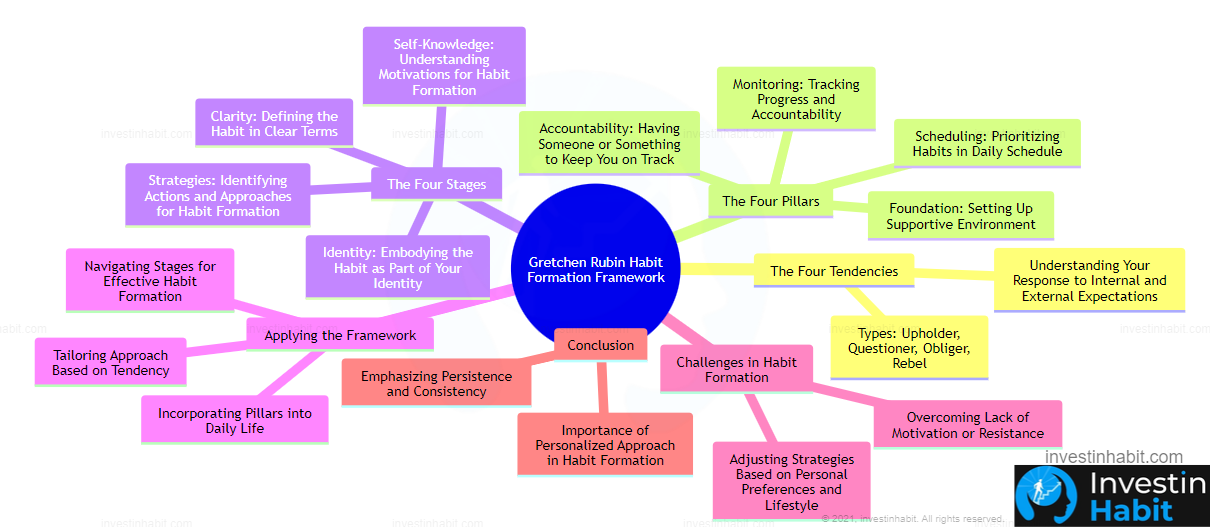
The Gretchen Rubin Habit Formation Framework is a comprehensive approach to forming habits that are sustainable and long-lasting. It consists of three elements: The Four Tendencies, The Four Pillars, and The Four Stages.
In this blog post, we will provide an overview of the Gretchen Rubin Habit Formation Framework and discuss each of the three elements in detail. By the end of this post, you’ll have a better understanding of how to form habits that stick and transform your life for the better.
Inside this Article
First Element: The Four Tendencies
Alright, let’s dive into the first element of the Gretchen Rubin Habit Formation Framework: The Four Tendencies framework. This is all about understanding your personality and how you respond to both internal and external expectations when forming habits.
So, what are the Four Tendencies?
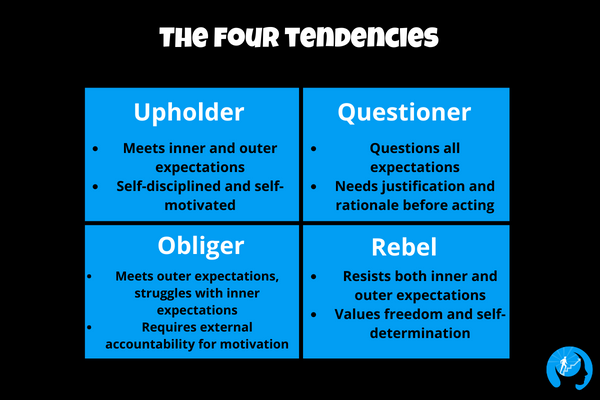
There’s Upholder, Questioner, Obliger, and Rebel. Upholders are those who readily meet both internal and external expectations, Questioners need reasons and justifications before they act, Obligers are motivated by external accountability and expectations from others, and Rebels resist both internal and external expectations and prefer to act on their own terms.
Knowing your tendency is crucial when forming habits because it helps you understand how to motivate yourself and what strategies work best for you. For example, if you’re an Obliger, you might find it easier to stick to a workout routine if you have a workout buddy or a personal trainer who holds you accountable.
So, obligers readily meet outer expectations, but struggle to meet inner expectations.
Understanding your tendency can also help you avoid common pitfalls that may hinder your progress when forming habits.
For example, if you’re a Rebel, you may find it challenging to stick to a routine that feels too rigid or prescribed. In that case, you might want to try a more flexible approach that allows you to choose your own path and make your own rules.
The bottom line is, knowing your tendency can help you tailor your habit formation approach to your personality and preferences, making it more likely that you’ll stick with it in the long run.
So, take some time to identify your tendency and experiment with different strategies to find what works best for you. You’ve got this!

Transform Your Life with InvestInHabit

Ready for real change? Join us and get over:
- 200+ Personal Development Worksheets,
- 100+ Blog Post MindMaps
for FREE! 😍 + Our newsletter offers the latest in habit formation and self-improvement, straight to your inbox.
Subscribe now and Start redefining your mindset today! Join our community committed to success!
Second Element: The Four Pillars
Alright, let’s move on to the second element of the Gretchen Rubin Habit Formation Framework: The Four Pillars. These are the key principles that can help you build better habits and make them a permanent part of your daily routine.
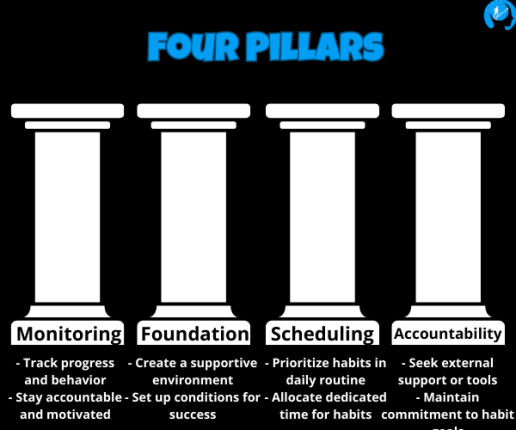
The Four Pillars are Monitoring, Foundation, Scheduling, and Accountability. Let’s break them down, shall we?
First up, Monitoring.
This pillar is all about tracking your progress and keeping yourself accountable. By monitoring your behavior and progress, you can see where you’re doing well and where you need to improve.
This can help you stay motivated and focused on your goals.
Next, we have Foundation.
This pillar is all about setting up the right environment to support your habits. For example, if you want to establish a daily meditation routine, you might create a quiet space in your home where you can meditate without distraction.
By setting up a supportive environment, you’re more likely to stick with your habits in the long run.
Moving on to Scheduling. This pillar is all about making time for your habits and prioritizing them in your daily schedule. Whether it’s scheduling time for exercise, meal prep, or meditation, having a set schedule can help you stay on track and make your habits a regular part of your routine.
Finally, we have Accountability.
This pillar is all about having someone or something that keeps you accountable for your habits. It could be a workout buddy, a coach, or even a habit tracker app.
By having some form of accountability, you’re more likely to stick with your habits and achieve your goals.
So, how can you apply these pillars in real-life situations?
Let’s say you want to establish a daily workout routine. You could use Monitoring by tracking your progress and recording your workouts in a journal.
You could use Foundation by setting up a dedicated workout space in your home. You could use Scheduling by blocking off a set time each day for your workout, and you could use Accountability by finding a workout buddy or coach to keep you motivated and accountable.
By incorporating these Four Pillars into your habit formation approach, you’ll be well on your way to building better habits that last. So, give them a try and see how they work for you!
Third Element: The Four Stages
Alright, let’s dive into the third and final element of the Gretchen Rubin Habit Formation Framework: The Four Stages.
These are the stages that you’ll go through when forming a new habit, and understanding each one can help you navigate the process more effectively.
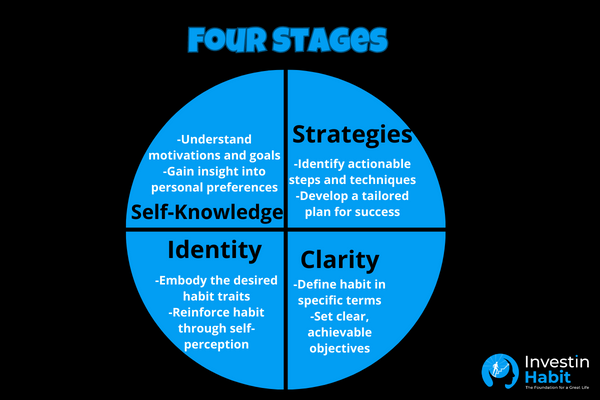
The Four Stages are Self-Knowledge, Clarity, Strategies, and Identity. Let’s break them down, shall we?
 First up, Self-Knowledge.
This stage is all about understanding yourself and your motivations for forming a new habit. It’s important to take some time to reflect on why you want to form the habit and what you hope to achieve by doing so.
This can help you stay motivated and committed to your goal. Next, we have Clarity.
This stage is all about defining your habit in clear and specific terms. For example, if you want to establish a daily meditation routine, you might define your habit as “meditating for 10 minutes each morning.” By being clear and specific about your habit, you’re more likely to stick with it in the long run.
Moving on to Strategies. This stage is all about identifying the specific actions and strategies that will help you form your habit.
For example, if you want to establish a daily meditation routine, you might identify strategies like setting a reminder, finding a quiet space, and using a guided meditation app. By having a plan in place, you’re more likely to succeed in forming your habit.
Finally, we have Identity.
This stage is all about seeing yourself as someone who embodies the habit you want to form. For example, if you want to establish a daily meditation routine, you might start to see yourself as someone who is calm, centered, and mindful.
By identifying with your habit in this way, you’re more likely to make it a permanent part of your identity.
So, how can you navigate each stage effectively?
First, take some time to reflect on your motivations for forming the habit (Self-Knowledge). Then, be clear and specific about your habit (Clarity).
Next, identify the specific actions and strategies that will help you form your habit (Strategies). Finally, see yourself as someone who embodies the habit you want to form (Identity).
By following these tips, you’ll be well on your way to forming better habits and transforming your life for the better. Remember, habit formation is a process, and it takes time and effort to succeed.
So, be patient, stay committed, and enjoy the journey!
Conclusion
In conclusion, the Gretchen Rubin Habit Formation Framework is a powerful approach to forming habits that stick.
It consists of three elements: The Four Tendencies, The Four Pillars, and The Four Stages. By understanding each of these elements and incorporating them into your approach to habit formation, you can create positive, lasting changes in your life.
The Four Tendencies help you understand your personality and how you respond to both internal and external expectations when forming habits. The Four Pillars provide key principles for building better habits and making them a permanent part of your routine.
And the Four Stages guide you through the process of forming a new habit, from self-knowledge to identifying with your new habit as part of your identity. It’s important to remember that forming a new habit takes persistence and consistency.
Habits don’t form overnight, and it can take time to see results. But by applying the Gretchen Rubin Habit Formation Framework and staying committed to your goals, you can create positive changes in your life that will last.
Change your habits, change your life.
So, if you’re looking to form better habits and transform your life for the better, I encourage you to give the Gretchen Rubin Habit Formation Framework a try. Identify your tendency, incorporate the Four Pillars, and navigate the Four Stages with intention and purpose.
With time and effort, you can form habits that stick and achieve your goals. Best of luck on your habit formation journey!
Transform Your Habits, Transform Your Life
Are you ready to turn the page to a new chapter in your life?
Stop dreaming, start achieving. Our exclusive newsletter delivers:
- Science-backed hacks: Master the psychology of habit formation used by CEOs and Olympians.
- Actionable strategies: No fluff, just practical steps to crush procrastination and dominate your goals.
- + a FREE surprise bonus 🎁 to jumpstart your transformation!
Don’t settle for mediocre. Subscribe now!